
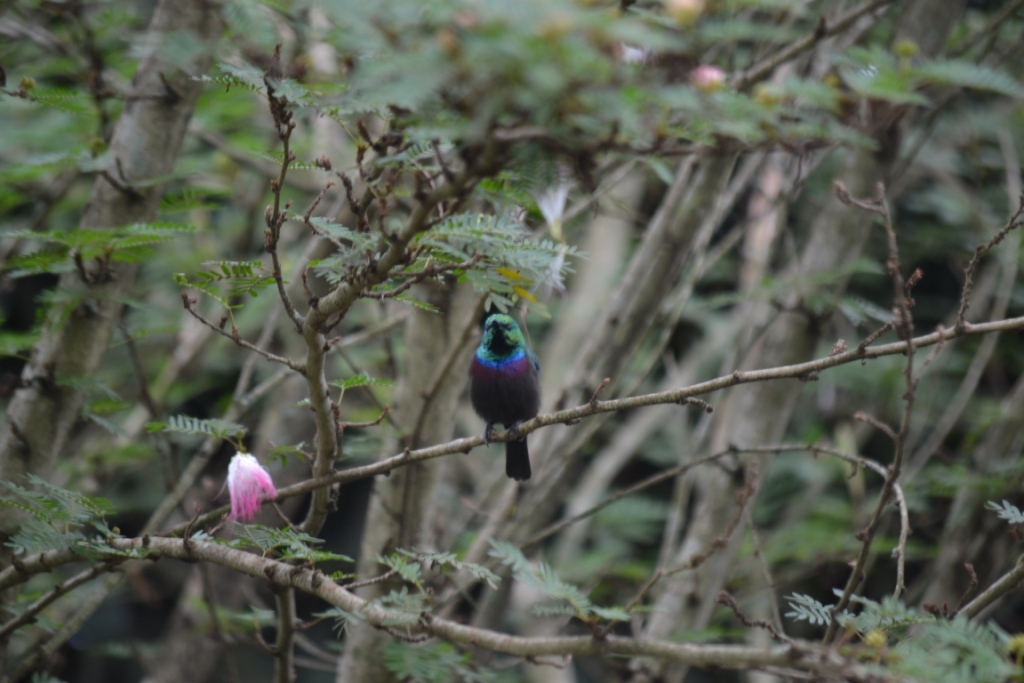
Birdwatching Excursion in Volcanoes National Park
A birdwatching excursion in Volcanoes National Park offers travelers an opportunity to explore one of Rwanda’s most remarkable mountain ecosystems from a different perspective. The park is internationally famous for its mountain gorillas and golden monkeys, but its forests, bamboo zones, wetlands, grasslands and montane habitats also support a rich variety of bird species.
Located in northwestern Rwanda, Volcanoes National Park forms part of the larger Virunga conservation landscape. Its volcanic mountains, dense forests and high-altitude environment create different habitats for birds and other wildlife. A guided birdwatching excursion allows visitors to move beyond the better-known gorilla experience and spend time observing the smaller creatures that live throughout this protected landscape.
Birdwatching here requires patience. Some birds remain high in the canopy, while others move quickly through dense vegetation. You may hear a distinctive call several times before finally seeing the bird responsible. For many travelers, this process is part of the attraction because every sighting feels earned rather than guaranteed.
The Landscape of Volcanoes National Park
The scenery around Volcanoes National Park provides much of the character of a birdwatching excursion. The park is dominated by a chain of volcanic mountains, including Mount Karisimbi, Mount Bisoke, Mount Muhabura, Mount Gahinga and Mount Sabyinyo. Their slopes contain a mixture of forest, bamboo, montane vegetation and other habitats.
Elevation plays an important role in determining the types of birds encountered. As the landscape rises, vegetation changes, and bird species associated with lower forest environments may be replaced by species adapted to higher elevations.
The cool mountain climate also makes walking enjoyable for many visitors, although conditions can change quickly. Mist, cloud and rain can move across the mountains, particularly around the higher slopes. A birdwatching excursion therefore becomes as much an exploration of the mountain environment as it is a search for individual species.
Birdwatching Around the Forest
The forested sections of Volcanoes National Park are particularly interesting for birdwatchers because they provide shelter, nesting areas and feeding opportunities for numerous species. Thick vegetation can make sightings challenging, but it also creates the feeling of entering a genuinely wild environment.
A trained guide can help visitors identify birds by their calls, behavior, flight patterns and habitat preferences. Instead of simply pointing out a bird, the guide can explain why a particular species is found in a certain part of the forest and what it may be feeding on.
Walking slowly is important. Sudden movements and loud conversations can cause birds to disappear into the vegetation before everyone has had an opportunity to see them. Groups that maintain a quiet pace generally have a better chance of enjoying prolonged sightings.
Albertine Rift Endemic Birds
One of the major attractions for serious birdwatchers is the opportunity to search for birds associated with the Albertine Rift. This region contains a number of species with restricted ranges, making it an important destination for bird enthusiasts interested in specialized mountain and forest birds.
Volcanoes National Park forms part of this biologically important region. Depending on the location, season and conditions, birdwatchers may search for species such as Rwenzori turaco, Rwenzori double-collared sunbird, strange weaver and other birds associated with the highland forests and surrounding habitats.
Exact sightings cannot be guaranteed because wild birds move freely through the landscape. A good birding experience therefore focuses not only on a checklist but also on understanding the habitats and observing natural behavior.
Rwenzori Turaco and Forest Species
The Rwenzori turaco is one of the birds that can attract attention from birdwatchers exploring the Albertine Rift region. Its distinctive appearance and behavior make turacos particularly interesting subjects for people interested in African forest birds.
Turacos can be difficult to observe clearly because they often remain within vegetation or move through the canopy. Experienced guides can use their calls and knowledge of feeding areas to improve the chances of locating them.
The search for a turaco can turn a short section of trail into an extended observation session. Rather than rushing onward, visitors may spend several minutes listening and scanning branches before the bird finally becomes visible.
Sunbirds in the Mountain Environment
Sunbirds are another group that can make a birdwatching excursion in Volcanoes National Park rewarding. These small birds are often associated with flowering plants, where they feed on nectar and sometimes insects.
Their activity can make areas with flowering vegetation particularly interesting. Because sunbirds are small and fast-moving, binoculars are extremely useful. A pair of lightweight binoculars can transform a distant movement in the vegetation into a detailed observation.
Photographers may find sunbirds challenging subjects because of their size and speed, but their bright plumage and interaction with flowers can create excellent photographic opportunities when conditions are favorable.
Bird Calls and Forest Sounds
One of the most memorable parts of birdwatching in Volcanoes National Park may be hearing birds before seeing them. The forest can appear visually quiet while remaining acoustically active.
Different calls can indicate territorial behavior, communication between individuals, feeding activity or warnings. With an experienced guide, visitors can begin to recognize patterns in the sounds around them.
This is one reason why birdwatching is best experienced without rushing. Standing quietly for several minutes can reveal activity that would otherwise remain unnoticed. A visitor who initially sees only vegetation may suddenly notice several different bird calls coming from different levels of the forest.
Combining Birdwatching with Gorilla Trekking
Birdwatching works particularly well alongside gorilla trekking in Rwanda. Many visitors travel to Volcanoes National Park specifically to spend time with mountain gorillas, but adding birdwatching provides a different way to experience the same ecosystem.
Gorilla trekking involves following forest trails in search of a habituated gorilla family and observing the animals within strict visitor guidelines. Birdwatching has a much broader focus. Instead of searching for one particular species, visitors explore the forest and observe whatever birdlife appears along the route.
This combination is especially useful for travelers staying several nights in the Musanze area. A birdwatching excursion can be scheduled before or after a gorilla trek, depending on the overall itinerary and the traveler’s energy level.
Birdwatching and Golden Monkey Tracking
Volcanoes National Park is also known for golden monkeys, another primate species associated with the Virunga region. Travelers interested in both birds and primates can combine the experiences during a longer stay.
Golden monkey tracking generally involves walking through bamboo and forest habitats while searching for habituated groups. Birdwatching provides a quieter activity that encourages visitors to pay attention to smaller animals and the surrounding vegetation.
Together, the experiences demonstrate the ecological diversity of Volcanoes National Park. The same landscape can support large primates, small forest birds, insects, plants and countless other organisms.
The Importance of Bamboo Habitat
Bamboo is an important component of the vegetation in parts of the Virunga mountain ecosystem. Bamboo zones can attract different birds from those found deeper in mature forest.
Walking through these areas can therefore change the birdwatching experience. Some species may be easier to hear or observe where vegetation is less dense, while others may remain concealed among bamboo stems.
The transition between habitats is particularly useful for birdwatchers. Instead of staying in one environment for the entire excursion, a route that passes through different vegetation types can increase the range of potential sightings.
Birdwatching Outside the Main Forest
Birdwatching does not always have to take place deep inside the national park. The wider landscape around Volcanoes National Park also contains farms, wetlands, grassland, gardens and community areas where birds can be observed.
These habitats can support species that are less strongly associated with dense montane forest. Open areas may make some birds easier to spot because there are fewer layers of vegetation blocking the view.
A well-planned excursion can therefore combine different habitats rather than concentrating exclusively on thick forest. This approach can produce a broader birding experience and introduce visitors to the relationship between the protected area and the surrounding communities.
The Role of a Professional Birding Guide
A professional guide can significantly improve the quality of a birdwatching excursion. Bird identification requires more than recognizing colors. Calls, habitat, flight patterns, feeding behavior and body shape can all provide important clues.
Guides familiar with Volcanoes National Park can also understand where different species are likely to occur. They know where to slow down, where to listen and how to search the canopy without unnecessarily disturbing wildlife.
For travelers booking through All In Africa Safaris, discussing birdwatching interests before the safari can help determine how much time should be allocated to the activity and whether a guide with strong birding knowledge is appropriate for the trip.
Binoculars and Birdwatching Equipment
Binoculars are one of the most useful pieces of equipment for birdwatching in Volcanoes National Park. Many birds remain at a distance or high in the canopy, making them difficult to identify with the naked eye.
A camera with a suitable telephoto lens can also be useful for travelers interested in photography. However, equipment should not become a burden during forest walks. A lightweight setup is generally more practical in mountainous terrain.
A notebook or birding application can help record sightings, although visitors should avoid becoming so focused on recording every species that they forget to enjoy the actual experience.
Weather and Trail Conditions
Weather is an important consideration when planning a birdwatching excursion in the volcanic highlands. Rain can occur even when the morning begins with clear skies. Cloud and mist can also reduce visibility, particularly at higher elevations.
Wet conditions may make some sections of the trail slippery. Proper walking shoes with good traction are therefore recommended. A lightweight waterproof jacket is also useful.
Cloudy conditions are not necessarily bad for birdwatching. Soft light can sometimes make it easier to observe birds without the harsh shadows created by strong sunlight. The main challenge is maintaining visibility when mist becomes dense.
Best Time for Birdwatching
Volcanoes National Park can be visited for birdwatching throughout the year. Seasonal conditions can influence vegetation, bird activity and trail conditions, so there is no single period that guarantees the best experience for every traveler.
Birdwatchers interested in migratory species may consider timing their visit around periods when migratory birds are present in Rwanda. Travelers focused on resident mountain species can plan their trip around gorilla trekking availability and other safari activities.
Early mornings are generally valuable for birdwatching because many birds are active during the cooler hours of the day. Starting early also allows visitors to spend more time listening and searching before the forest becomes busier.
Photography During the Excursion
Bird photography in a mountain forest requires patience and realistic expectations. Birds may appear for only a few seconds before disappearing behind leaves or flying into another section of the canopy.
A telephoto lens is helpful for distant subjects, while faster shutter speeds can help capture birds in flight. However, visitors should avoid getting so focused on photography that they disturb wildlife or fall behind the group.
The landscape itself also provides photographic opportunities. Volcanoes rising behind forest vegetation, mist moving through the mountains, flowering plants and birds perched against the surrounding greenery can all contribute to memorable images.
Conservation and Birdwatching
Birdwatching can contribute to a greater appreciation of conservation. Visitors who learn about the specialized species living in the Albertine Rift are often able to better understand the importance of protecting forests and mountain habitats.
Volcanoes National Park is part of a conservation landscape where habitat protection supports not only birds but also mountain gorillas, golden monkeys and many other species.
Responsible birdwatching means staying on designated trails, avoiding unnecessary noise, not attempting to touch or feed birds, and following guidance from park staff and guides. The objective is to observe wildlife without changing its natural behavior.
A Family-Friendly Nature Experience
Birdwatching can also be adapted for families, particularly when children are interested in animals and nature. The activity encourages observation and patience and can turn the forest into an outdoor learning environment.
Children may enjoy searching for colorful birds, listening for calls and learning how different species use the forest. The guide can explain the environment in an age-appropriate way, making the experience more engaging than simply walking through the forest.
Families should consider the length and terrain of the selected route when planning the activity. Younger children may benefit from shorter excursions with plenty of time for observation rather than a long, demanding hike.
Adding Culture to a Birdwatching Safari
A birdwatching excursion can be combined with cultural experiences around the Volcanoes region. Rwanda’s communities have a strong connection to the agricultural landscape surrounding the park, and cultural activities can provide insight into local traditions and daily life.
Combining nature and culture gives travelers a broader understanding of the destination. The protected forest is one part of the landscape, while farms, villages and community activities form another.
This combination can be particularly attractive to travelers who want a more varied Rwanda safari rather than a trip centered exclusively on gorilla trekking.
Planning Your Volcanoes Birdwatching Excursion
A successful birdwatching excursion starts with realistic planning. Travelers should decide whether they want a short introductory nature walk or a more focused birding experience designed around specific species.
Those with strong birding interests may want to allocate additional time to the activity and communicate their priorities before traveling. Those who simply want to experience Rwanda’s forest birdlife can combine a shorter excursion with gorilla trekking, golden monkey tracking or cultural activities.
All In Africa Safaris can incorporate birdwatching into a wider Rwanda itinerary, allowing the activity to fit naturally around accommodation, transportation, gorilla permits and other planned experiences.
Experiencing Volcanoes Beyond Gorillas
A birdwatching excursion in Volcanoes National Park reveals an aspect of Rwanda that can easily be overlooked. The park’s identity is strongly associated with mountain gorillas, but its forests and volcanic landscapes support a much wider range of wildlife.
Birdwatching encourages visitors to slow down and pay attention to the smaller details of the environment. A distant call, movement in a tree, a flash of color among leaves or a bird feeding on flowers can become one of the most memorable moments of the trip.
For travelers exploring Rwanda with All In Africa Safaris, adding birdwatching to a Volcanoes National Park itinerary creates a more varied experience. It provides time to appreciate the forest, discover Albertine Rift birdlife, learn from local guides and experience the volcanic landscape beyond its famous gorilla encounters.
Total Word Count: Approximately 2,000 words


No comment