
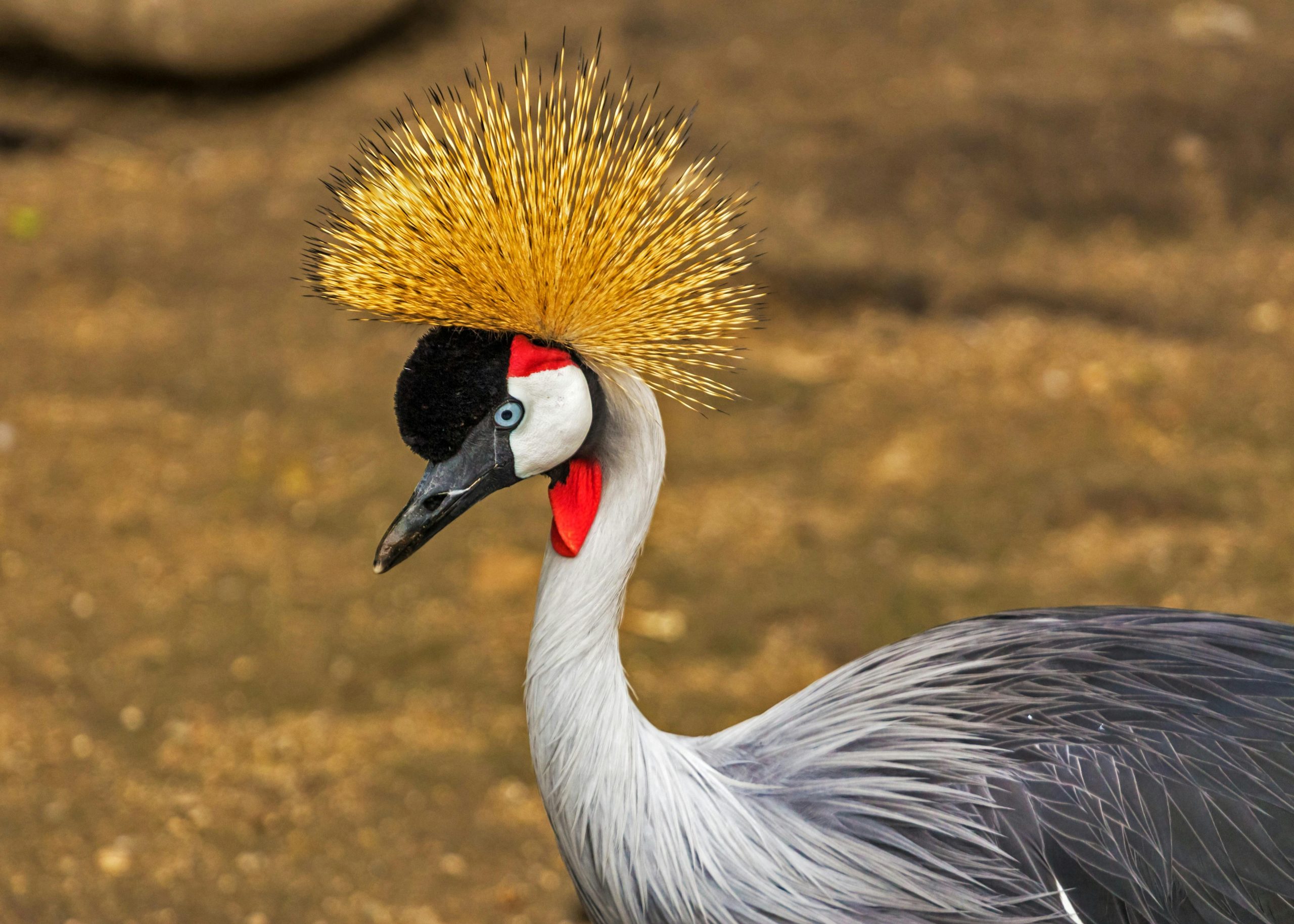
Guided Birdwatching Walk in Bwindi Impenetrable National Park
A guided birdwatching walk in Bwindi Impenetrable National Park is one of the best ways to discover the extraordinary birdlife hidden within one of Uganda’s oldest and most biologically diverse forests. While Bwindi is internationally famous for its mountain gorillas, the forest offers much more than gorilla trekking. Its dense vegetation, steep valleys, streams, bamboo zones and forest edges create habitats for an impressive variety of birds, including several species associated with the Albertine Rift.
Walking through Bwindi in search of birds is a completely different experience from a conventional wildlife safari. There are no open savannah plains where animals can easily be spotted from a vehicle. Instead, birdwatchers enter a dense rainforest where birds may be high in the canopy, moving quietly through thick vegetation or announcing their presence through distinctive calls.
This is why having an experienced birdwatching guide is so important. A skilled guide can recognize bird calls, identify movement in the vegetation, locate birds that may otherwise remain hidden and explain the ecological importance of the forest. Uganda Wildlife Authority identifies Bwindi as an exceptional birding destination, with several forest trails offering opportunities to search for rare forest species and Albertine Rift endemics.
What Is a Guided Birdwatching Walk in Bwindi?
A guided birdwatching walk is a walking excursion through the forest accompanied by a knowledgeable guide who specializes in identifying and locating birds. Instead of simply walking through Bwindi and hoping to see birds, visitors learn how to observe the forest carefully and listen for the sounds that reveal where different species are hiding.
The experience requires patience. A bird may call several times from somewhere deep inside the vegetation without appearing immediately. The guide may stop, listen carefully and identify the direction of the call before slowly leading the group toward the bird.
Sometimes the reward is a clear view of a colourful bird sitting on a branch. At other times, the bird may remain partially hidden, providing only a brief glimpse through leaves and branches. For experienced birdwatchers, even hearing a rare species can be an important sighting.
The walk therefore becomes an exercise in observation, listening and understanding the forest rather than simply counting birds.
Bwindi Impenetrable National Park as a Birdwatching Destination
Bwindi Impenetrable National Park is part of the Albertine Rift, one of Africa’s most biologically important regions. Its varied elevations and habitats contribute to the exceptional diversity found within the forest.
The park covers approximately 321 square kilometres and contains a mixture of lowland and montane forest vegetation. Its position within the Albertine Rift gives it particular importance for species that have restricted distributions in this region.
The dense forest creates a very different birdwatching environment from Uganda’s savannah parks. Instead of watching large flocks crossing open plains, birders explore layers of vegetation extending from the forest floor to the canopy.
Streams, clearings, forest edges and different vegetation zones can each attract different species.
This variety makes Bwindi particularly rewarding for serious birdwatchers who want to explore Uganda’s forest birds.
Why You Need a Guide for Birdwatching in Bwindi
The biggest advantage of a guided birdwatching walk is the knowledge of the guide.
Bwindi is an extremely dense forest. Many birds are small, fast-moving and well camouflaged. Some remain high in the canopy, while others stay within thick undergrowth.
An experienced guide knows how to interpret bird calls and movements. A sound that may be meaningless to a first-time visitor can immediately tell an experienced birder that a particular species is nearby.
Guides can also distinguish between different calls and help visitors understand bird behaviour.
This is particularly valuable when searching for Albertine Rift endemics and other forest specialists.
A guide can also help visitors move through the forest safely and responsibly while ensuring that the birdwatching activity causes minimal disturbance to wildlife.
The River Ivi Trail
The River Ivi Trail is one of the trails highlighted for birdwatching in Bwindi. It follows an old road through the forest between the Buhoma and Nkuringo areas.
The trail provides an opportunity to experience the forest while searching for birds along the route. Because the trail passes through different forest environments, birdwatchers can encounter a variety of species during a single walk.
The surrounding vegetation creates opportunities to watch birds feeding, calling and moving through the forest canopy.
The River Ivi Trail is particularly attractive to visitors who want to combine birdwatching with a longer forest walk.
The changing scenery also makes the trail rewarding even when a particular bird species proves difficult to locate.
The Munyanga River Trail
Another important birdwatching area is the Munyanga River Trail around Buhoma.
The trail is associated with forest-edge birding, where the transition between different habitats can increase the variety of species encountered.
Forest edges are particularly interesting because birds from the interior forest may move toward areas where food and vegetation are different.
The presence of the river also adds another ecological element to the walk.
Birdwatchers should pay attention not only to the trees but also to vegetation around the water, where different species may feed or drink.
Birdwatching in Ruhija
Ruhija is one of Bwindi’s most famous birdwatching areas and is particularly important for visitors interested in Albertine Rift birds.
The area contains several trails and habitats that provide opportunities for specialist birdwatching.
The Bamboo Trail is particularly notable. Uganda Wildlife Authority identifies the Bamboo Trail, which climbs toward Rwamunyonyi Peak, as one of the areas where birdwatchers can search for Albertine Rift endemics.
The changing altitude along the trail can produce changes in vegetation and bird activity.
This makes the walk especially rewarding for birders who want to experience different forest habitats rather than staying in one area.
Mubwindi Swamp Trail
The Mubwindi Swamp Trail is another major attraction for serious birdwatchers visiting Bwindi.
The trail passes through forest toward a swamp environment, creating opportunities to observe species associated with both forest and wetland habitats.
It is particularly famous among birdwatchers searching for Albertine Rift species.
One of the birds associated with the Ruhija area is the Green Broadbill, a highly sought-after forest bird. Uganda Wildlife Authority specifically identifies the Mubwindi Swamp Trail and Bamboo Trail as areas renowned for Albertine Rift endemics, including the localized Green Broadbill.
For serious birdwatchers, this makes Ruhija an important part of a Bwindi birding itinerary.
Albertine Rift Endemic Birds
One of the biggest reasons birdwatchers travel to Bwindi is the opportunity to search for birds restricted to the Albertine Rift region.
The Albertine Rift stretches across parts of Uganda, Rwanda, Burundi, Tanzania and the Democratic Republic of the Congo and contains many species with limited geographic ranges.
For a birder, finding one of these species can be considerably more meaningful than simply adding another common bird to a checklist.
Bwindi’s forests provide habitat for several species associated with this region.
The possibility of encountering these birds is one reason experienced birdwatchers may spend several days exploring different trails rather than attempting to complete their birding in a single walk.
The Green Broadbill
The Green Broadbill is one of the birds that attracts specialist birdwatchers to Bwindi.
This striking forest bird is associated with high-quality forest habitats and is particularly sought after because of its localized distribution.
Finding it requires patience and careful observation.
A guide who knows its calls and preferred habitat can significantly improve the chances of encountering it.
Even when the bird does not appear immediately, searching for it teaches visitors how closely bird species are connected to specific forest environments.
Forest Canopy Birdwatching
One of the challenges of birdwatching in Bwindi is the height of the forest canopy.
Many birds spend much of their time above the forest floor, meaning visitors need to develop the habit of looking upward.
The canopy can appear almost completely still from below, but careful observation often reveals movement among the leaves.
A flash of colour, a moving branch or a distant call may indicate the presence of a bird.
Guides are particularly valuable here because they know where to look and can sometimes use their knowledge of calls to narrow down the location.
Birdwatchers should therefore avoid focusing only on the trail immediately ahead. Looking into the canopy is an essential part of the experience.
Listening for Birds in Bwindi
Birdwatching in a rainforest is often more about listening than seeing.
Dense vegetation can prevent clear views, but birds cannot always hide their calls.
An experienced guide may stop the group and ask everyone to remain silent.
The forest can suddenly seem completely different.
Instead of focusing on footsteps and conversation, visitors begin to notice distant calls, wing movements, insects, flowing water and rustling leaves.
The guide can then identify a bird from its call and attempt to locate it visually.
This listening experience is one of the most educational aspects of a guided birdwatching walk.
The Best Time for a Guided Birdwatching Walk
Early morning is generally an excellent time for birdwatching in Bwindi because many birds are active during the cooler hours of the day.
Birds may be feeding, calling and moving through the forest before temperatures rise.
The morning forest can also be particularly atmospheric, with mist, moisture and filtered sunlight creating beautiful conditions for photography.
However, birdwatching opportunities are not limited to the early morning.
Different species have different activity patterns, and an experienced guide can help determine the best timing according to the birds being targeted.
Visitors interested in specialist species may benefit from dedicating substantial time to birding rather than treating it as a short activity between other excursions.
Bird Photography in Bwindi
Bwindi offers excellent opportunities for bird photography, although photographing rainforest birds can be challenging.
Dense vegetation, low light and fast-moving subjects can make it difficult to obtain clear photographs.
A telephoto lens can be useful because many birds remain high in the canopy or at a distance.
Patience is essential.
Rather than trying to photograph every bird immediately, photographers can wait for a bird to move into a clearer position.
The forest itself can also become part of the photograph. A bird surrounded by green vegetation can create a more natural image than a tightly cropped photograph.
Bird photography in Bwindi is therefore as much about understanding the environment as it is about camera equipment.
Bwindi Birdwatching and Gorilla Trekking
Many visitors come to Bwindi primarily for mountain gorilla trekking and later discover that the forest offers outstanding birdwatching opportunities.
Combining the two experiences provides a broader understanding of Bwindi’s biodiversity.
Gorilla trekking takes visitors deep into the forest in search of habituated mountain gorilla families, while birdwatching encourages a different kind of observation.
Instead of focusing primarily on large mammals, birders look into the canopy, listen to calls and study small movements within the vegetation.
This combination makes Bwindi an ideal destination for travelers interested in wildlife beyond gorillas.
Bwindi Birdwatching Beyond Gorillas
Bwindi’s international reputation is strongly connected to mountain gorillas, but its ecological importance extends far beyond these famous primates.
The forest is home to numerous plants, mammals, butterflies, amphibians, reptiles and birds.
The birdwatching experience demonstrates how much biodiversity exists within the forest.
A traveler can spend hours walking through Bwindi without seeing a gorilla and still have an extraordinary wildlife experience.
A colourful bird moving through the canopy, the call of an Albertine Rift species or the discovery of a rare forest bird can become the highlight of the day.
This makes guided birdwatching an important activity for visitors who want to explore the wider biodiversity of Bwindi.
Birdwatching and Forest Conservation
Birdwatching is closely connected to forest conservation.
Many forest birds depend on intact habitats, meaning that protecting their populations requires protecting the forest ecosystem in which they live.
Bwindi’s importance as an Important Bird Area demonstrates the connection between bird conservation and forest protection. The park is also recognized for its exceptional biodiversity and its importance within the Albertine Rift.
Tourism can contribute to conservation when visitors, guides, communities and park authorities work together to protect the ecosystem.
Uganda Wildlife Authority’s conservation mandate includes sustainable management of protected areas and collaboration with neighboring communities.
A guided birdwatching walk therefore becomes more than a recreational activity. It provides visitors with a direct opportunity to appreciate why forest conservation matters.
Respecting the Forest During a Birdwatching Walk
Responsible behavior is essential during birdwatching.
Birds should never be chased simply to obtain a photograph.
Visitors should avoid making excessive noise and should follow the instructions of their guide.
Staying on designated trails helps minimize damage to vegetation and reduces unnecessary disturbance to wildlife.
Plastic and other waste should never be left in the forest.
Birdwatchers should also remember that the forest is a living ecosystem rather than a photography studio. Sometimes the best experience may simply be hearing a rare bird calling from deep within the vegetation.
Guided Birdwatching for Beginners
You do not have to be an experienced birder to enjoy Bwindi.
A guided walk can be an excellent introduction to birdwatching because the guide explains what to look for and how to recognize different species.
Beginners quickly learn that birdwatching is not simply about seeing birds.
It involves understanding habitats, identifying calls, watching behaviour and recognizing movement.
The guide can introduce visitors to the differences between forest specialists, generalist species and birds associated with rivers, wetlands and forest edges.
By the end of the walk, even first-time birdwatchers may find themselves paying much more attention to sounds and movement in the forest.
Guided Birdwatching for Experienced Birders
For experienced birdwatchers, Bwindi offers the opportunity to target specialist species and Albertine Rift endemics.
Experienced birders may arrive with specific species they want to see and work with their guide to identify suitable trails and habitats.
This is where spending more time in the forest becomes valuable.
A single trail may produce several interesting sightings, but repeated walks in different habitats can significantly expand a birdwatcher’s list.
Ruhija, Buhoma and the different forest trails offer different possibilities, allowing serious birders to build a more comprehensive Bwindi birding experience.
How Long Should You Spend Birdwatching in Bwindi?
The amount of time required depends on your goals.
A traveler who simply wants to experience forest birdwatching may enjoy a half-day or shorter guided walk.
A serious birder interested in Albertine Rift endemics should consider allocating more time.
Longer stays provide opportunities to explore different trails, revisit productive habitats and search for species that may not appear during the first attempt.
Birdwatching is inherently unpredictable, and spending more time in the right habitat generally increases the opportunity to encounter rare or difficult species.
The Experience of Walking Through Bwindi
The birdwatching walk itself is part of the attraction.
Bwindi is a dense, ancient-looking forest filled with towering vegetation, vines, mosses, ferns and constantly changing sounds.
Walking beneath the canopy creates a sense of entering another world.
The air is often cool and moist, and the forest can feel dramatically different from Uganda’s savannah parks.
The sound of birds provides a natural soundtrack as visitors move along the trail.
Even when no major bird sighting occurs for several minutes, the environment remains fascinating.
This is why a guided birdwatching walk should be viewed as a forest experience rather than simply a checklist exercise.
Why Guided Birdwatching Should Be Part of Your Bwindi Safari
Bwindi is often marketed primarily as a gorilla destination, but its birdlife provides another compelling reason to visit.
A guided birdwatching walk introduces travelers to the ecological complexity of the forest and gives them an opportunity to search for species that cannot be easily found elsewhere.
The experience is particularly valuable for travelers who enjoy nature, photography, conservation and wildlife.
It also provides a quieter alternative to the excitement of gorilla trekking.
Instead of searching for a large primate family, visitors slow down and become aware of the smaller details of the forest.
That change in pace can make birdwatching one of the most peaceful and rewarding experiences of a Bwindi safari.
Conclusion
A guided birdwatching walk in Bwindi Impenetrable National Park is an extraordinary way to experience one of Uganda’s most important forests.
The experience goes beyond simply looking for birds. It involves walking through a remarkable Albertine Rift ecosystem, listening to calls, studying the canopy, observing forest edges and learning how different bird species depend on particular habitats.
From the River Ivi Trail and Munyanga River area around Buhoma to the Bamboo Trail and Mubwindi Swamp Trail around Ruhija, Bwindi provides a variety of opportunities for birdwatchers with different interests and levels of experience.
The possibility of encountering Albertine Rift endemics, including sought-after species such as the Green Broadbill, gives the forest particular importance for specialist birdwatchers.
Most importantly, a guided birdwatching walk reveals that Bwindi is much more than a gorilla destination. It is a complex forest ecosystem where birds, primates, insects, plants and countless other forms of life exist together.
For travelers planning a Uganda wildlife safari, adding guided birdwatching to a Bwindi itinerary can transform the visit from a gorilla-focused adventure into a deeper exploration of Uganda’s extraordinary biodiversity.
Bwindi’s birds may sometimes be hidden, but that is part of the magic. The search encourages visitors to slow down, listen carefully and look beyond what is immediately visible. In a forest as rich and mysterious as Bwindi, every call from the canopy can be the beginning of another unforgettable wildlife discovery.



No comment