The Question Almost Every Safari Traveller Asks
It happens on nearly every safari.
A vehicle stops beside a herd of zebras grazing on the African plains. Cameras come out. People begin taking photographs. After a few moments, someone inevitably asks the same question:
“Why do zebras have stripes?”
It sounds like a simple question, yet scientists have spent decades trying to answer it. For many years, people believed the stripes existed mainly to confuse predators such as lions and hyenas. The theory made sense. A moving herd of black and white animals can create a visual effect that makes it difficult to focus on a single target.
But as researchers studied zebras more closely, they discovered that the story is far more complicated.
Today, evidence suggests that zebra stripes may serve several purposes at the same time. Surprisingly, predators may not even be the main reason stripes evolved in the first place.
The more scientists learn about zebras, the more fascinating these famous black and white patterns become.
A Pattern Unlike Any Other in Nature
At first glance, all zebras appear similar.
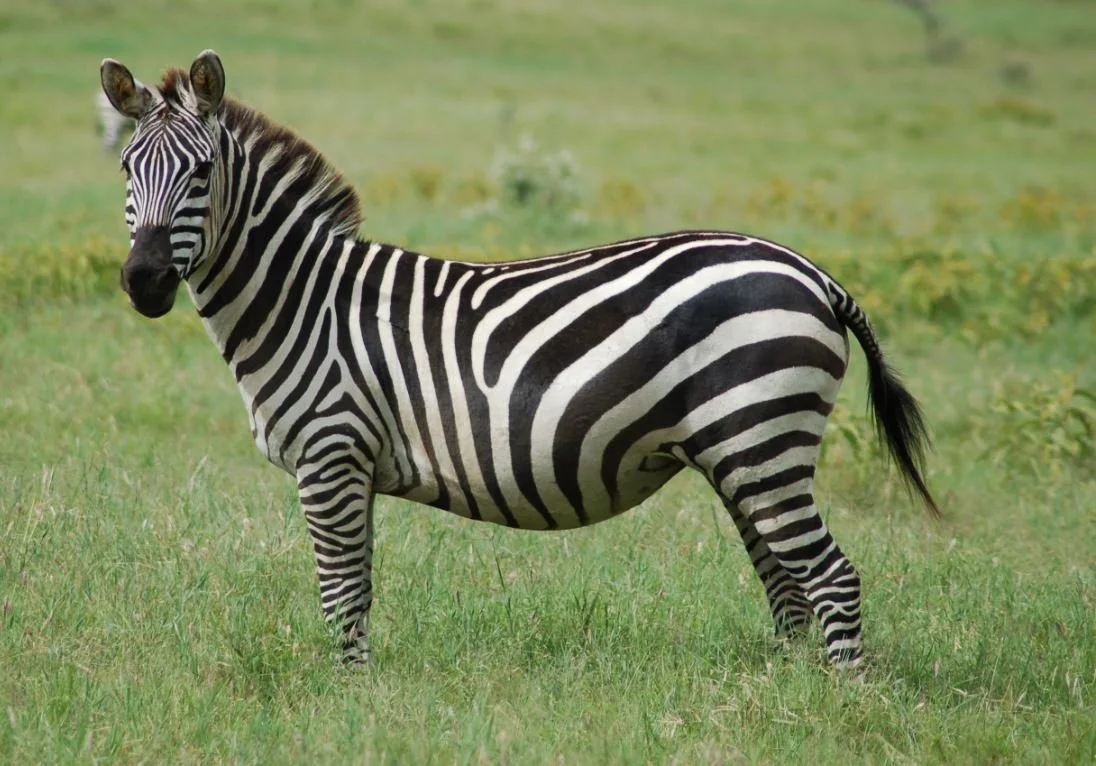
Spend enough time watching them, however, and you begin noticing differences. Some have wider stripes across their bodies. Others display narrow, tightly packed patterns. The arrangement around the face, neck, and legs varies from one individual to another.
In fact, no two zebras have exactly the same stripe pattern.
Researchers often compare zebra stripes to human fingerprints because every animal carries a unique design. Scientists use photographs of stripe patterns to identify individual zebras during long term studies. This allows them to track movements, social relationships, births, and survival rates within populations.
For the zebras themselves, these patterns may also help individuals recognise one another within a herd.
When hundreds or even thousands of zebras gather together, the ability to distinguish family members becomes extremely important.
The Predator Confusion Theory
For many years, the most widely accepted explanation for zebra stripes focused on predator avoidance.
Imagine a lion watching a herd of zebras.
Instead of seeing one clearly defined animal, the predator is faced with dozens of moving black and white patterns blending together. As the herd begins running, the visual effect becomes even more dramatic.
Some researchers believe this makes it harder for predators to isolate and track a single target.
This phenomenon is sometimes called motion dazzle. The rapidly moving stripes may interfere with depth perception and make it difficult to judge speed and direction accurately.
Watching a large herd gallop across open grassland certainly makes the theory seem believable. The stripes appear to merge into a constantly shifting pattern that can be difficult even for humans to follow.
Yet scientists eventually discovered that predator confusion alone could not fully explain zebra stripes.
The Surprising Role of Biting Flies
One of the most important discoveries came from research involving biting insects.
Africa is home to numerous species of flies that feed on animal blood. These include horseflies and tsetse flies, both of which can transmit diseases and cause significant stress to wildlife.
Researchers noticed something interesting.
Animals with striped coats appeared to attract fewer biting flies than animals with solid coloured coats.
Experiments using striped surfaces, striped horse blankets, and painted animals produced similar results. Flies consistently landed less often on striped patterns.
Scientists are still investigating the exact reasons, but evidence suggests that stripes interfere with the visual systems flies use when approaching a landing site.
For zebras, this advantage could be extremely valuable.
Reducing fly bites means reducing irritation, blood loss, and disease transmission. Over thousands of generations, even a modest reduction in insect attacks could provide a strong evolutionary advantage.
Today, many researchers consider fly deterrence one of the strongest explanations for the existence of zebra stripes.
A Natural Air Conditioning System?
Another theory focuses on temperature regulation.
African environments can become extremely hot, particularly during the dry season. Managing body temperature is critical for survival.
Scientists have observed that black stripes absorb more heat than white stripes. This creates slight temperature differences across the zebra’s body surface.
Some researchers suggest these differences may generate tiny air currents along the coat, improving heat dissipation and helping the animal stay cool.
The idea remains debated within the scientific community, and studies continue to investigate its significance. While temperature control may not be the sole purpose of stripes, it could contribute to their overall value.
Nature often favours traits that serve multiple functions rather than just one.
Why Humans Find Stripes Confusing Too
Interestingly, zebra stripes do not confuse only predators.
They often confuse people as well.
Anyone who has watched a large herd moving together has experienced this firsthand. At a distance, individual animals become surprisingly difficult to distinguish. The stripes blend together into a moving mass of black and white patterns.
Photographers frequently encounter this challenge.
A single zebra is easy to focus on. A herd containing dozens of individuals can become visually overwhelming. The eye struggles to settle on one subject because the repeating patterns compete for attention.
Researchers working with zebra populations face similar difficulties. Identifying specific animals requires careful examination of stripe patterns because the herd can appear almost uniform from afar.
The same patterns that may help zebras survive can also make them surprisingly difficult for humans to study.
Living in a World of Constant Threats
To understand why stripes matter, it helps to understand life as a zebra.
Unlike predators, zebras spend their lives avoiding danger.
Lions, hyenas, leopards, wild dogs, and crocodiles all represent potential threats. Young foals are particularly vulnerable, but adults are also targeted regularly.
As a result, zebras have evolved a range of survival adaptations.
They possess excellent hearing. Their eyes provide a wide field of view. They live in social groups that increase collective vigilance. They communicate through vocalisations, body language, and facial expressions.
Stripes form part of this broader survival strategy.
Rather than serving a single purpose, they likely contribute to several different protective mechanisms at once.
The Importance of Herd Life
The effectiveness of stripes becomes even more apparent when zebras gather in large groups.
During migrations in ecosystems such as the Serengeti, thousands of zebras may move together across the landscape.
When viewed from a distance, the herd becomes a sea of moving patterns.
Predators attempting to select a target must process enormous amounts of visual information in a very short period. Even a slight delay in decision making can improve a zebra’s chances of escape.
At the same time, each individual benefits from the collective awareness of the group. More eyes and ears mean earlier detection of danger.
The stripes work alongside social behaviour rather than replacing it.
What Scientists Still Don’t Know
One of the most fascinating aspects of zebra stripe research is that there is still no single universally accepted explanation.
Different studies support different theories.
Some point strongly towards fly deterrence. Others provide evidence for predator confusion. Some suggest temperature regulation plays a role. Researchers continue exploring whether social recognition contributes to the evolution of stripe patterns as well.
The truth may be that stripes evolved because they offered several advantages simultaneously.
Evolution rarely works towards a single goal. Traits that improve survival in multiple ways are often the ones most likely to persist over time.
A Design Millions of Years in the Making
Zebras belong to a lineage that has adapted to African landscapes over millions of years.
Every aspect of their appearance reflects countless generations of natural selection.
Their powerful legs help them outrun danger. Their digestive systems allow them to process tough grasses. Their social structures improve survival within predator rich environments.
Their stripes are part of this remarkable package.
What appears simple at first glance is actually the result of a long evolutionary history shaped by predators, insects, climate, and social interactions.
More Than Just a Beautiful Pattern
Standing beside a herd of zebras on safari, it is easy to admire their appearance without thinking much about why they look the way they do.
Yet those black and white stripes represent one of the most intriguing mysteries in the animal kingdom.
They may confuse predators attempting to hunt. They appear to discourage biting flies. They could assist with temperature regulation. They may help zebras recognise one another within a crowded herd.
Perhaps most remarkably, they continue to challenge scientists searching for definitive answers.
The next time you see a zebra standing on the African plains, take a closer look at those stripes. What seems like a simple pattern is actually a sophisticated survival tool shaped by thousands of generations.
They confuse lions. They confuse flies. They confuse researchers. They even confuse safari travellers trying to count animals in a moving herd.
And that is precisely what makes them so fascinating.