The Day I Found a Shoebill in Mabamba Swamp
There are some wildlife encounters that stay with you for life. They are the moments you remember years later, the stories you tell friends and family, and the experiences that make every early morning wake-up call worthwhile. Finding a shoebill in Mabamba Swamp is one of those moments.
For many visitors to Uganda, the shoebill is a dream bird. Birdwatchers travel thousands of kilometers hoping for a glimpse of this rare and prehistoric-looking species. Photographers spend hours waiting for the perfect shot. Nature lovers simply want to witness one of Africa’s most extraordinary creatures in its natural habitat.
My journey to find a shoebill began before sunrise on the shores of Lake Victoria. The air was cool, the water was calm, and the papyrus wetlands of Mabamba Swamp stretched endlessly into the distance. Somewhere within that vast green wilderness was the bird I had come to see.
An Early Start on Lake Victoria
The day started long before most people were awake.
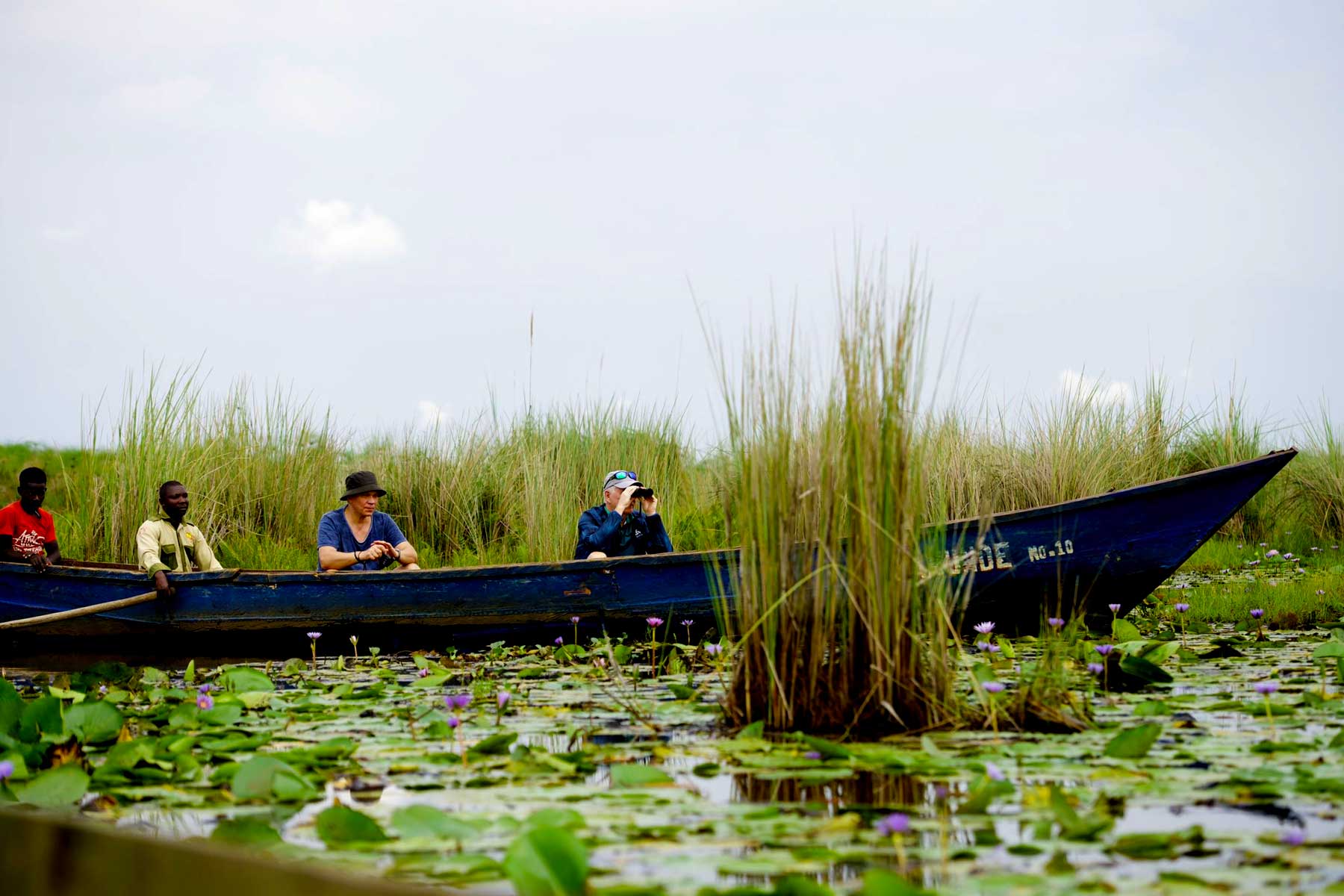
As the first light appeared over Lake Victoria, I arrived at the Mabamba landing site where local guides were preparing their small wooden boats. The morning was quiet except for the distant sounds of birds calling across the wetland.
Mabamba Swamp lies west of Entebbe and has become one of the most famous birdwatching destinations in Uganda. The wetland is internationally recognized for its importance to bird conservation and is home to hundreds of species.
Despite the incredible diversity of birds found here, there was only one species occupying my thoughts.
The shoebill.
My guide smiled when I mentioned it.
“We will look for him,” he said confidently as we pushed away from the shore.
Entering the Papyrus Maze
The deeper we moved into the swamp, the more the outside world seemed to disappear.
Tall papyrus plants rose on both sides of the narrow channels, creating green walls around us. The boat moved slowly through winding waterways that appeared almost identical to one another.
The wetland felt alive.
Small birds darted between the reeds. African jacanas walked across floating vegetation. Pied kingfishers hovered above the water before diving for fish.
Every few minutes my guide would stop paddling and scan the distance carefully.
Finding a shoebill is never guaranteed.
Even though Mabamba offers some of the best chances in Africa, these birds remain wild and free to move wherever they choose within the swamp.
That uncertainty is part of the excitement.
Listening to Stories from the Guides
As we continued searching, my guide shared stories about the shoebill.
He explained how local fishermen often help trackers locate birds by reporting recent sightings. He talked about the bird’s favorite hunting areas and described how patient visitors sometimes watch a shoebill standing motionless for nearly an hour.
The guides know the swamp remarkably well.
Many have spent years navigating these waterways and have developed an incredible ability to spot wildlife hidden among the vegetation.
While we searched, I began to appreciate how much local knowledge contributes to the shoebill experience.
Without experienced guides, finding one of these birds would be far more difficult.
The First Sign
After nearly an hour on the water, another boat approached us.
The guides exchanged a few words.
Suddenly, our guide turned the boat and began paddling more purposefully through a narrow channel.
“There is one nearby,” he said.
My excitement immediately grew.
The possibility of seeing a shoebill transformed into a real opportunity.
The boat moved quietly through the reeds as everyone scanned the landscape ahead.
Every grey shape in the distance seemed capable of becoming the bird.
Every opening in the papyrus looked promising.
The Moment It Appeared
Then it happened.
Standing alone in a patch of shallow water was a large grey bird unlike anything else in the swamp.
Even from a distance, there was no mistaking it.
The enormous bill, massive body, and upright posture immediately identified it as a shoebill.
For a few moments, nobody spoke.
The bird stood perfectly still, watching the water below.
Its size was astonishing.
Photographs had prepared me for the appearance of the shoebill, but they had not prepared me for its presence.
It looked ancient.
It looked powerful.
It looked completely at home in a landscape that seemed untouched by time.
Watching a Master Hunter
The shoebill remained motionless as we drifted closer.
Its concentration was remarkable.
The bird appeared completely focused on the water beneath it. Every movement seemed deliberate. Every glance appeared calculated.
Then, without warning, it struck.
The massive bill shot into the water with incredible speed.
Within seconds, the shoebill lifted its head holding prey.
The entire action was so fast that it was difficult to believe what I had just witnessed.
Moments earlier the bird had looked almost frozen.
Now it had demonstrated why it is considered one of Africa’s most effective wetland predators.
Watching that hunting sequence alone made the journey worthwhile.
The Famous Shoebill Stare
As the bird finished feeding, it slowly turned its head toward our boat.
For several seconds, it seemed to look directly at us.
The shoebill’s stare is famous among birdwatchers for a reason.
Its eyes appear unusually focused and intelligent.
There is something captivating about standing only a short distance from a bird that seems to be studying you as carefully as you are studying it.
Everyone in the boat fell silent.
The moment felt personal.
In a world filled with constant movement and noise, the calm presence of the shoebill was surprisingly powerful.
Taking Photographs
Photographers dream of encounters like this.
Unlike many birds that fly away at the first sign of people, the shoebill remained relaxed and confident.
Its willingness to stand still provided excellent opportunities for photography.
Every angle revealed another fascinating detail.
The texture of the feathers.
The enormous hooked bill.
The striking eyes.
The prehistoric profile.
As cameras clicked, the bird continued going about its business as if we were not there.
Understanding Why People Travel So Far
Before visiting Mabamba, I knew the shoebill was famous.
After seeing one in the wild, I understood why.
The experience goes beyond adding a species to a bird list.
The shoebill creates an emotional connection.
It represents something rare in today’s world. It is a reminder that wild places still exist and that extraordinary creatures continue to thrive within them.
Many wildlife experiences are exciting because of action and movement.
The shoebill is different.
Its power comes from stillness.
The Importance of Mabamba Swamp
As we prepared to leave, my guide spoke about the importance of protecting Mabamba.
The wetland provides critical habitat for shoebills and countless other bird species. It also supports local communities through fishing and tourism.
Without healthy wetlands, the future of the shoebill would be uncertain.
Conservation efforts have helped make Mabamba one of Uganda’s greatest wildlife success stories.
Visitors who come to see shoebills contribute to the protection of the swamp by creating economic incentives for conservation.
Every successful shoebill tracking excursion demonstrates the value of preserving these unique habitats.
Leaving the Swamp
Eventually, it was time to return.
The boat slowly turned away from the shoebill and began the journey back through the papyrus channels.
Even as the bird disappeared into the distance, the memory remained vivid.
The quiet wetlands.
The anticipation of the search.
The sudden appearance of the giant bird.
The hunting display.
The unforgettable stare.
Some wildlife encounters fade quickly after they happen.
This was not one of them.
A Wildlife Experience Unlike Any Other
Finding a shoebill in Mabamba Swamp is not simply about seeing a rare bird.
It is about exploring one of Uganda’s most beautiful wetlands, learning from knowledgeable local guides, and experiencing a species that seems to belong to another age.
For birdwatchers, photographers, and nature lovers, the shoebill remains one of Africa’s greatest wildlife treasures.
The day I found a shoebill in Mabamba Swamp was a reminder that some of the most rewarding adventures are not measured by distance traveled or challenges overcome.
Sometimes they are measured by a single unforgettable moment when a prehistoric-looking bird steps into view and leaves you completely amazed.