The Shoebill’s Bizarre Anatomy Explained
The wetlands of East Africa are home to one of the world’s amazing birds. The Shoebill stands tall above the reeds with a look like something from a long time ago. The Shoebill has fascinated people who watch birds, take pictures, and love nature for a very long time. At first it looks too strange to be real. The Shoebill’s huge bill, stare, and slow movements make it look like a creature from another time, not a modern bird.
Many people who visit Uganda’s swamps, like Mabamba Wetland, want to see the Shoebill in its natural home. Seeing the Shoebill often leaves people amazed and curious. Why does the Shoebill have such a beak? Why does it stand still for long? How do all its strange features help it survive?
Understanding the Shoebill’s Bizarre Anatomy Explained
Nature does not make things without a reason. Every strange thing about The Shoebill has developed over thousands of years to help it thrive in wetlands with animals, thick plants, and changing water levels.
Of thinking The Shoebill looks strange it helps to see it as a collection of special tools. Each feature helps The Shoebill succeed as one of Africas hunters.
Learning about The Shoebills body changes the way people see The Shoebill. What looks awkward at first becomes an example of how The Shoebill adapts to its environment.
The Shoebills Big Bill Is Made for Precision
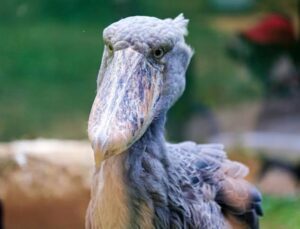
The Shoebills huge bill is its recognizable feature. The bill is 20 to 24 centimeters long and almost as wide like an old wooden shoe. This is how The Shoebill got its name.
The Shoebills bill is not like the beaks of herons or egrets. The Shoebills bill works like a trap. When animals get close The Shoebill strikes fast. The Shoebill can catch fish, frogs, lungfish, young crocodiles, water snakes and even small turtles.
The sharp hook on the top of the bill is very important. It helps The Shoebill grip animals tear through plants and hold onto struggling animals before swallowing them.
The bill is very precise even though it is big. The Shoebill does not waste energy on missing its targets because it waits for a time before striking.
The Shoebills Eyes Are Positioned for Accurate Hunting
Another interesting thing about The Shoebill is where its eyes are. The Shoebills eyes are more in the front of its head not on the sides like other birds.
This helps The Shoebill see better when it is hunting underwater. The Shoebill can judge how away its prey is, which is very important in murky swamps where fish only appear for a short time.
The Shoebills pale eyes often make it look very intense. Many photographers say that looking into The Shoebills eyes is unforgettable because its stare is very direct.
The Shoebills vision is one of its advantages when hunting. It can detect movements under plants, which requires a lot of focus.
The Shoebills Long Legs Are Made for Wetlands
Walking in marshes is hard for animals but The Shoebill is very comfortable.
Its long legs help The Shoebill move through water while keeping most of its body above the surface. This helps The Shoebill balance in environments.
The Shoebills broad toes spread its weight over ground so it does not sink into the mud. This is, like how snowshoes work. The Shoebill developed this naturally over many years.
The Shoebills powerful legs also help it stand still for a time. This saves energy while The Shoebill waits for prey to come close.
The Shoebills Neck Is Strong and Flexible
The Shoebills neck looks thick compared to water birds. This strong neck supports The Shoebills bill and helps it move quickly when hunting.
When The Shoebill sees prey its neck acts like a spring. The head moves fast toward the target with a lot of force.
Lifting such a bill requires a lot of muscle strength. Every successful catch depends on The Shoebills neck, shoulders and head working
This combination of strength and flexibility helps The Shoebill catch prey that’s surprisingly big compared to its own body size.
Wings Made for Travel
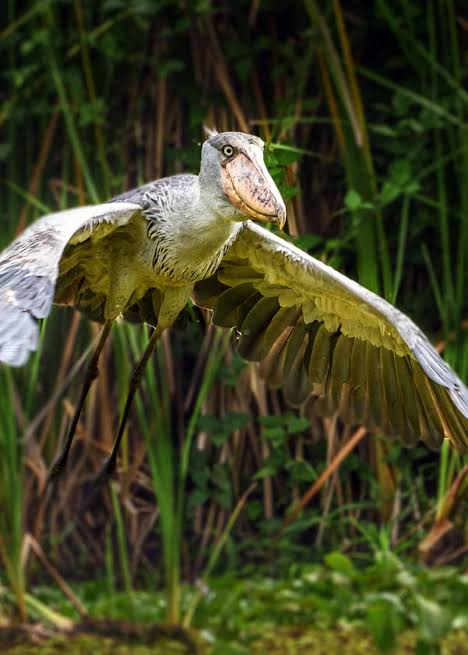
The shoebill spends a lot of time standing still but it is a really good flyer.
Its wings can be as wide as 2.6 metres, which gives the shoebill powerful wings.
The shoebill uses these wings to carry its body over wetlands.
The shoebill does not flap its wings fast when it flies instead it uses steady strokes.
This helps the shoebill save energy when it is flying from one place to another to find food.
When you see a shoebill flying quietly over the papyrus swamps it is a reminder that you should not judge something by how it looks.
The shoebill looks heavy when it is on the ground. It looks really nice when it is flying.
Feathers That Blend Into the Landscape
The shoebill has grey feathers that help it blend in with its surroundings.
Wetlands have a lot of colours like grey, brown, green and old plants.
The shoebills grey colour helps it blend in with all these colours.
This helps the shoebill because it can stay hidden from animals.
Fish are less likely to see the shoebill when it is still and big animals do not notice the shoebill when it is not moving.
The shoebill is different from birds that have bright colours and like to be seen.
The shoebill likes to stay hidden and not be noticed.
The Famous Motionless Stance
One of the interesting things about the shoebill is that it can stay completely still.
Some shoebills can stand still for twenty minutes or more while they wait for food.
The shoebill can do this because it has legs and good eyesight.
The shoebill is also very patient which helps it wait for a time.
When the shoebill is still it gives photographers a chance to take a look at it.
They can see the shoebill blink. Move its head and it can be a really great moment.
Built for Ambush Hunting
The shoebills body is made for hunting in a way.
The shoebills eyes find the food, legs help it stay steady, neck helps it move quickly to catch the food, bill grabs the food tightly., feet help it stay balanced, grey colour helps it stay hidden.
All these things work together to help the hunt in a really good way.
The shoebill does not need to run or be strong to hunt it just needs to be precise and wait for the right moment.
Living Successfully in Challenging Habitats
Wetlands are always changing because of the rain, water levels and flooding.
The shoebills body helps it adapt to these changes, strong legs help it walk in the water and flooded plants, big wings help it fly to places to find food, good eyesight helps it find food in cloudy water, body shows how animals are connected to their surroundings.
When the wetlands are healthy the shoebill can keep doing what it has been doing for a time.
Lessons Hidden Within Nature
Looking at the shoebill can make you think about things.
People often judge how something looks quickly.
The shoebill looks strange to some people. Every part of its body is important.
The same thing can happen in our lives.
Things that seem weird now might become really important later.
The things that make us different can become the things that make us special.
The shoebill shows us that being successful is not about looking like everyone it is about using what we have in a good way.
The shoebill is also very patient. This teaches us an important lesson.
In a world where everyone is always moving the shoebill shows us that waiting for the moment can be really powerful.
Photographers often wait for hours to take a picture and the shoebill waits for a long time to catch its food.
Waiting can often give us results than rushing.
Why Conservation Matters
The shoebill has some good adaptations but it still faces some big challenges.
One of the threats is that its home is being destroyed.
Wetlands are being used for farming, houses and other things.
Pollution and people disturbing the area can also make it hard for the shoebill to live and have babies.
Organisations that help the environment, local people, tour guides and responsible tourism operators all play a role, in protecting the wetlands.
When people visit the wetlands in a way they help take care of the shoebill and its home.
If we protect the shoebill we are also protecting all the animals and plants that live in the wetlands.
Appreciating Nature Through Knowledge
The Shoebills body is really strange. It is perfect for staying alive. Every part of the Shoebill like its bill and feathers and muscles and bones has a job that helps it survive in East Africas wetlands.
The Shoebill is not a bird with weird parts. It is actually an example of how animals can adapt to their homes. When you see the Shoebill, either in pictures or in person in Ugandas swamps take a look. Notice how it stands still and quiet with its strong bill and sharp eyes.
You will see that the Shoebill is more than a cool bird. You will see how strong and patient it is and how it has learned to live in its home. This is really amazing. It can teach us a lot.
When we understand the Shoebill and its strange body we can learn to appreciate it and other animals. We can see that being different is what makes us strong. The Shoebills Bizarre Anatomy Explained shows us that even the weirdest animals are often the best at what they do. This makes us want to learn more about animals and respect them.
Even after we leave the wetlands we will remember the Shoebill. We will be inspired to learn more about the world and all the amazing things in it. The Shoebills Bizarre Anatomy Explained is a story that teaches us about nature and its incredible designs. People who are lucky enough to see the Shoebill will understand why The Shoebills Bizarre Anatomy Explained is so loved by people who like birds, around the world. The Shoebills Bizarre Anatomy Explained is an example of how amazing nature is.