The Tribes Of Uganda.
The Tribes of Uganda: Known as the Pearl of Africa, Uganda is home to a variety of stunning natural resources, including hills, valleys, mountains, plants, and water. The lovely people of Uganda look after and surround all of the aforementioned treasures.
Although Uganda lacks a coastline due to its landlocked status, it has borders with South Sudan to the north, Rwanda and Tanzania to the south, Kenya to the east, and the Democratic Republic of the Congo to the west. Finding out that Uganda’s amazing neighbors share some of the same tribes and languages is astounding.
With more than 56 tribes and more than 60 languages spoken, Uganda is endowed with amazing and welcoming people. These tribes come from its major ethnic groupings, which include the Nilotes, which have tribes like the Acholi, Langi, Alur, Itesots, and Karamojong, and the Bantu, which has tribes like the Baganda, Basogo, Bagishu, Banyankole, Banyoro, Bakiga, and others. The Kakuwa, Lendu, and Bari belong to the Nilo Hamites. In addition to the Pygmies, which include the Batwa people of far western Uganda, the Hamites also include the Bahima, Tutsi, and Hutu.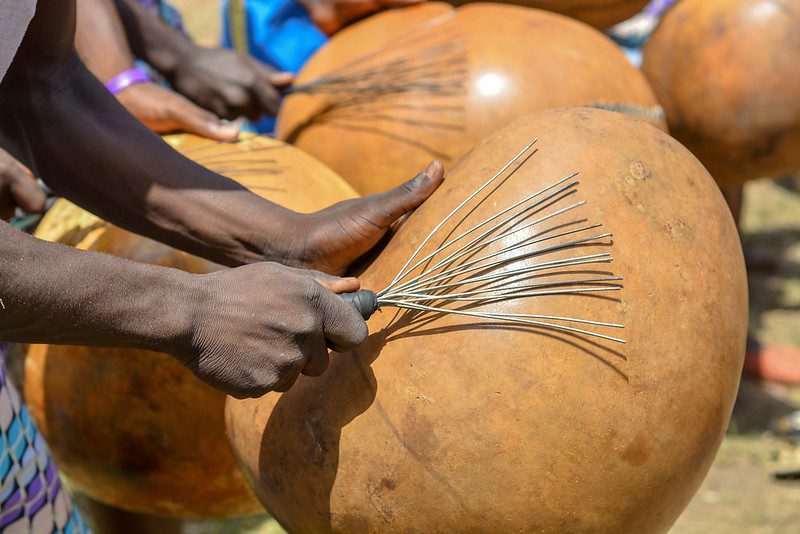
The principal tribes in Uganda are listed below.
Tribe of Baganda
The Baganda tribe primarily inhabits central Uganda, where Kampala, the country’s capital, is located. These individuals belong to the Bantu ethnic group, which is Uganda’s largest ethnic tribe. They are said to have moved to the central and western regions of Uganda thousands of years ago from the southwestern region of Africa around the Niger River.
Under the leadership of their king, known as the Kabaka, the Baganda people are also the most organized tribe in Uganda. Kabaka Muwenda Mutebi II is the name of the Kabaka in existence today. Because it has a palace and a parliament, the Buganda Kingdom is structured.
The four deceased former monarchs were interred in the Kasubi tombs, a UNESCO-accredited world historic site. One can take a royal tomb tour at Kasubi tomb while in the Central Region of Uganda. Speaking the Luganda language, the Baganda people have many folk songs about food, alcohol, fishing, death, women, and children, as well as educational songs.
Their most popular traditional dances are Bakisimba, Muwogola, and Nankasa. There are many folktales that will make a Ugandan culture tour in Buganda Kingdom truly complete. The Baganda have been able to maintain and modernize their rich cultural heritage. To name a few districts, the Baganda tribe includes Kampala, Mukono, Sembabule, Masaka, Luwero, Mubende, Mpigi, Rakai, Kalangala, Kiboga, and Wakiso.
Tribe of Basoga
Known as the Busoga Region, the eastern section of Uganda is home to the Basoga tribe, a Bantu group that includes the districts of Jinja, Kamuli, Bugiri, Iganga, Namayingo, Mayuge, Luuka, Namutumba, Kaliro, Bugweri, and Buyende. The Kyabazinga of Busoga is the king who rules over the entire Busoga region.
He is William Wilberforce Kadhumbula Gabula Nadiope IV, the Kyabazinga of Busoga today. Lusoga is the name of the language used by the Basoga people. The Basoga Kingdom is located near Jinja, a popular tourist destination with a wealth of attractions. After visiting the Busoga kingdom and learning about its history, myths, and beautiful traditional dance and songs, as well as the Railway Museum, one can add exciting and fun activities to a Uganda cultural tour or safari.
These include, but are not limited to, white water rafting at Bujagali Falls, visiting the Nile’s source and Speke monument, bungee jumping, zip lining, horseback riding along the Nile’s shores, sport fishing, and birdwatching along the river’s shores. To name a few, one can also visit the several fish landing locations in the area, such as Masese, the sugar plantations, and the factories.
Tribe of Batoro
Located in the western region of Uganda, the Batoro tribe is one of the organized tribes and belongs to the Bantu ethnic group. Fort Portal, located in Kabarole, is the Batoro’s principal town. This Ugandan tribe is renowned for its well-behaved and attractive females. The Toro kingdom, which is led by the King, is the umbrella under which the Batoro are arranged.
Known locally as Omukama, King Oyo Nyimba Kabamba Iguru Rukidi IV has ruled Toro Kingdom as Omukama for the past three and a half years. The kingdom is situated in the center of Port Portal, a popular tourist destination, and the Batooro culture has a long and varied history.
Amabere Ga Nyina Mwiru, Tooro Kingdom, Village Walks, Semuliki National Park, Sempaya Hot Springs, and hiking are just a few of the stunning cultural sites that may be visited at Fort Portal during a Uganda cultural trip. The Batooro people have lovely traditional songs and dances called Entogoro or Orunyege. The districts of Kabarole, Kyenjojo, Kyegegwa, Kitagwenda, Kamwenge, Kasese, and Ntoroko are home to the majority of the Batoro people.
Tribe of Banyankole
The tribe is a Bantu ethnic group that lives in the southwest region of Uganda. Ugandans refer to them as Westerners. They are well-known for raising cattle, particularly dairy cattle and the uncommon long-horned Ankole breed. Because they are voluptuous, attractive, and have wonderful skin, Banyankole ladies are renowned for their beauty.
Although the Banyankole are not formally organized as a kingdom, they are a friendly, helpful group of people who help one another out as fellow tribe members. They have lovely traditional dances called Ekitaguriro dances, speak the Runyankole language, and dress in busuti for men and mushanana for women.
Why Uganda’s 56-Tribe Diversity Genuinely Reflects the Country’s Position at a Regional Cultural Crossroads
Since Uganda genuinely borders five different nations and shares ethnic groups with several of them, this geographic position genuinely explains why the country hosts such an unusually rich concentration of distinct tribes and languages within one relatively compact territory. All in Africa Safaris can arrange cultural tours highlighting Uganda’s remarkable ethnic diversity.
How the Baganda’s Structured Kingdom System Genuinely Distinguishes Them From Uganda’s Less Formally Organized Tribes
Since the Buganda Kingdom genuinely maintains an active palace, parliament, and reigning Kabaka, this level of political organization genuinely sets the Baganda apart from tribes like the Banyankole, who maintain strong community bonds without a comparable formal kingdom structure.
Why Visiting the Kasubi Tombs Genuinely Offers Direct Access to Baganda Royal History and Living Tradition
Since this UNESCO site genuinely holds four former monarchs and remains an active spiritual center, a visit here genuinely connects travelers to centuries of continuous Baganda royal tradition rather than a purely historical artifact. All in Africa Safaris can arrange a guided tour of the Kasubi Tombs.
How Jinja’s Basoga Cultural Attractions Genuinely Pair Naturally With the Region’s Adventure Tourism Scene
Since white-water rafting, bungee jumping, and the Nile’s source genuinely sit within the same Busoga region as the Basoga Kingdom’s historical sites, travelers genuinely find it efficient to combine cultural learning with adrenaline activities in a single visit.
Why the Batoro Kingdom’s Location Near Fort Portal Genuinely Makes It Easy to Combine With Semuliki National Park
Since these attractions genuinely sit within the same western region, travelers genuinely can pair Batoro cultural sites like Amabere Ga Nyina Mwiru with wildlife viewing and hot springs exploration during one western Uganda circuit. All in Africa Safaris can combine Batoro cultural tours with a Semuliki National Park visit.
How the Ankole Cattle Tradition Genuinely Remains Central to Banyankole Identity Despite Modernization
Since the distinctive long-horned Ankole breed genuinely continues to hold cultural and economic significance for the Banyankole, this pastoral tradition genuinely persists as a defining feature of their identity even as the broader region modernizes.
Why Learning Even Basic Phrases in Luganda or Runyankole Genuinely Deepens Cultural Exchange During a Visit
Since locals genuinely respond warmly to visitors making an effort with their specific tribal language, even simple greetings genuinely open up richer, more personal interactions than relying entirely on English throughout a cultural tour. All in Africa Safaris can share useful local phrases ahead of your cultural visit.
How the Batwa’s Inclusion Among Uganda’s Hamite Groups Genuinely Reflects a Distinct Forest-Based Heritage
Since this Pygmy group genuinely traces its origins to a forest-dwelling lifestyle distinct from the pastoral and agricultural traditions of Uganda’s larger tribes, understanding this heritage genuinely adds important context to any Batwa cultural encounter.
Why Traditional Dances Like Bakisimba and Ekitaguriro Genuinely Offer a Direct Window Into Each Tribe’s Values
Since these performances genuinely encode specific cultural narratives and social occasions particular to each tribe, watching or participating in them genuinely reveals more about a community’s values than observation alone could convey. All in Africa Safaris can arrange traditional dance performances as part of your cultural tour.
How Combining Visits to Multiple Kingdoms Genuinely Builds a Broader Understanding of Uganda’s Cultural Landscape
Since each kingdom genuinely offers distinct language, dress, and tradition despite geographic proximity, travelers who visit several genuinely gain a far richer understanding of Uganda’s diversity than a single-tribe visit alone would provide.
Planning Your Uganda Cultural Tour
From the Buganda Kingdom to Batoro traditions, genuinely Uganda’s tribes offer a rich, varied cultural experience alongside its famous wildlife. All in Africa Safaris can turn this overview into a fully confirmed itinerary tailored to your travel dates.