Giraffes and their habitats.
Giraffes and their habitats: Standing at up to 5.9 meters (19.4 feet) tall, giraffes are the tallest mammals on the planet. They can reach foliage and fruits on higher trees thanks to their long necks. possess speckled coats, which help them blend in with their savanna surroundings. They consume leaves, fruits, and flowers because they are herbivores. By extending their front legs widely apart, these creatures have a special method of sipping water.
In sub-Saharan Africa, giraffes can be found in open forests, grasslands, and savannas. With populations in South Africa, Uganda, Kenya, Tanzania, and Botswana, they are widely dispersed throughout Africa. They choose areas close to rivers, lakes, or wetlands where there is a plenty of food and water. And they can be found in both highland and sea level settings.
Giraffes consume leaves, fruits, and flowers from trees and shrubs since they are browsers. They can break down the cellulose found in plant cell walls because of the unique nature of their digestive tract. The giraffes can consume up to 30 kg (66 lbs) of food each day, and they must frequently drink water, particularly in hot and arid climates.
After 450–460 days of gestation, giraffes give birth to a single calf. Giraffe calves at birth weigh between 50 and 60 kilos (110 and 132 pounds) and stand about 1.8 meters (6 feet) tall. Giraffe calves are protected and fed by the milk of their moms. Giraffes mature between the ages of three and four.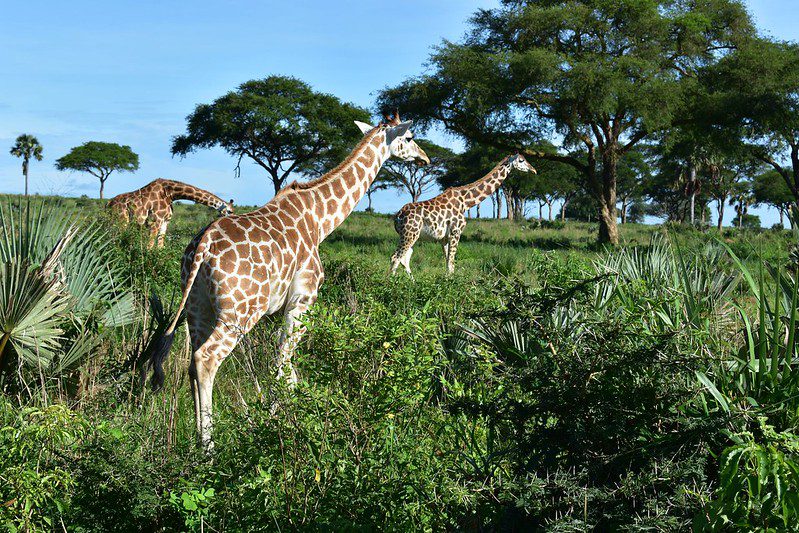
Because they have the highest blood pressure of any mammal, giraffes are able to defy gravity and pump blood to their brains. They use a range of sounds, body language, and scent markers to communicate with one another in a distinctive fashion. The top speed at which these large creatures can run is 50 kilometers per hour (31 miles per hour).
Large tracts of habitat are necessary for giraffes to wander and forage, usually in places with plenty of food and water. Through their browsing habits and function as predatory prey, they significantly influence their environments. With a variety of unique physical and behavioral adaptations, giraffes are suited to live in hot, dry climates.
A dominant male usually leads the intricate social groups in which giraffes live. Their social system is hierarchical, with dominating people in charge of subordinates.
Numerous illnesses, including as TB and trypanosomiasis (sleeping sickness), can affect giraffes. Ticks, lice, and fleas are among the parasites that live in these giraffes.
Among the many predators of giraffes are hyenas, leopards, and lions. Conflict between humans and wildlife, as well as habitat loss and fragmentation, pose threats to them. Although it is against the law in many nations, giraffes are occasionally hunted for their meat and hides.
Humans and giraffes occasionally clash, especially in regions where human settlements or agricultural land border giraffe habitats. Conflicts with people may result from giraffes damaging property and crops.
Because of habitat loss, fragmentation, and degradation, as well as conflict between humans and wildlife, the giraffe is classified as Vulnerable on the IUCN Red List. To save giraffe populations and their habitats, a number of conservation initiatives are underway.
Giraffes and their natural environments
Giraffes can be found at Murchison Falls National Park, Queen Elizabeth National Park, Lake Mburo National Park, Serengeti National Park, Amboseli National Park, and Akagera National Park in Uganda, Kenya, Tanzania, and Rwanda, respectively. These are the most well-known countries featuring giraffes in their parks.
To see giraffes in their native environment, you can travel to any of these nations at any time of year. The benefit of visiting any national park is that you will have the chance to witness a wide variety of other species.
Why Lake Mburo Offers a Genuinely Different Giraffe Sighting
Lake Mburo National Park introduced giraffes as part of a conservation program rather than hosting a naturally occurring population. This makes sightings here feel more guaranteed than in larger, wilder parks. All in Africa Safaris can confirm current giraffe viewing conditions at Lake Mburo.
What Makes the Rothschild Giraffe Subspecies Notable
Murchison Falls hosts the endangered Rothschild giraffe, a subspecies with a genuinely limited range. Spotting one here is a rarer wildlife encounter than seeing more common giraffe subspecies elsewhere.
Why Giraffes Rarely Need to Drink Daily
Much of a giraffe’s water intake actually comes from the leaves they eat. This lets them survive several days without visiting a water source directly, a genuine adaptation to dry savanna conditions.
How Giraffe Necking Behavior Reveals Social Rank
Male giraffes swing their necks and heads at each other in a behavior called necking. This isn’t just play. It’s how they establish dominance within a group, and it can look genuinely dramatic to witness on a game drive.
Why Their Height Comes With a Genuine Physiological Cost
Pumping blood up such a long neck requires an unusually powerful heart. Giraffes have evolved special valves in their neck veins specifically to manage blood pressure changes when they lower their heads to drink.
Combining Giraffe Viewing With a Broader Game Drive
Giraffes rarely appear as the sole highlight of a safari. Most parks pair giraffe sightings with lions, elephants, and other iconic species within the same drive. All in Africa Safaris can build a game drive itinerary around this full range of wildlife.
Why Calves Face Genuine Danger in Their First Weeks
Newborn giraffes are vulnerable to predators despite their size. Mothers keep close watch during this period, and calf mortality remains meaningfully higher than for adult giraffes.
What the Vulnerable Conservation Status Actually Means
Giraffe populations have declined significantly across parts of Africa in recent decades, a trend sometimes called a silent extinction due to how little attention it receives compared to other species.
Why Photographing Giraffes Rewards a Wide-Angle Lens
Given their height, a giraffe standing near an acacia tree makes for a genuinely striking wide shot. A telephoto lens works for close portraits, but wide framing captures their scale against the landscape.
How National Parks Help Protect Remaining Habitat
Protected areas like Serengeti and Akagera give giraffes room to roam without the habitat fragmentation affecting populations outside park boundaries. This protection matters directly for the species’ long-term survival.
Why Giraffes Sleep Far Less Than Most Mammals
Giraffes often sleep less than two hours a day, frequently in short standing naps. Their size and vulnerability to predators likely explain this unusually minimal sleep pattern.
What Best Time of Year Means for Giraffe Sightings
Unlike migratory species, giraffes remain visible year-round in their home parks. This makes them a reliable sighting regardless of when you plan your safari.
Why Community Conservation Programs Genuinely Matter Here
Programs engaging communities bordering giraffe habitat help reduce human-wildlife conflict over crops and land. This kind of local buy-in is genuinely essential to giraffe conservation working long-term.
Why Their Speckled Pattern Is Genuinely Unique to Each Animal
No two giraffes share the exact same coat pattern, similar to human fingerprints. Researchers actually use these patterns to identify and track individual animals across a park over time.
What Makes Giraffe Herds Different From Elephant Herds
Giraffe social groups are looser and more fluid than the tight family bonds seen in elephants. Individuals move between groups regularly, so the herd you see in the morning may look different by afternoon.
Why Akagera’s Giraffe Population Reflects a Conservation Comeback
Rwanda’s Akagera National Park rebuilt much of its wildlife population, including giraffes, after years of habitat loss. Seeing giraffes here today reflects a genuine conservation success story worth appreciating during your visit.
How Guides Help You Spot Giraffes From a Distance
Given their height, giraffes are often visible from far away, sometimes before any other wildlife. Experienced guides use this to their advantage, spotting giraffes early and using them as a marker for surrounding wildlife activity. All in Africa Safaris works with guides who read these landscape cues well.
Why Giraffes Make a Great Introduction to African Wildlife
Their calm, deliberate movement and sheer visibility make giraffes a genuinely approachable starting point for travelers new to safari. They rarely startle easily, giving visitors extended, relaxed viewing time.
Why Their Long Legs Present a Genuine Vulnerability
Despite their height advantage, giraffes are surprisingly vulnerable while drinking, since spreading their front legs to reach water leaves them briefly unable to run. Predators sometimes target this exact moment, which is why giraffes drink cautiously and rarely all at once.
Why Kenya and Tanzania Offer the Highest Sighting Odds
Serengeti and Amboseli both host genuinely large, stable giraffe populations. Travelers prioritizing near-guaranteed sightings often find these two parks the most reliable choice among East Africa’s options.
Why Their Diet Shapes the Landscape Around Them
By browsing high foliage that other herbivores can’t reach, giraffes reduce competition for food across an ecosystem. This browsing habit genuinely shapes tree growth patterns over time in the parks where they live.
Planning Your Giraffe-Focused Safari
From Murchison Falls’ rare Rothschild giraffes to Lake Mburo’s reliable sightings, East Africa offers genuinely rewarding opportunities to see the world’s tallest mammal in the wild. All in Africa Safaris can turn this overview into a fully confirmed itinerary tailored to your travel dates, bringing you face to face with these remarkable animals.