What Is An Interesting Fact About The Shoebill Stork?
What Is An Interesting Fact About The Shoebill Stork? The tourism sector has developed as a result of the rare shoebill stork, a distinctive bird species that draws tourists from all over the world. Spotting the rare shoebill stork is always at the top of birders’ lists. This species is typically found in tropical African nations like Western Tanzania, Rwanda, Uganda, Eastern Congo, Northern Zambia, South Sudan, and many more.
Its habitats include dense forests and fresh swamps. Birdwatchers can, however, also see the endangered shoebill stork in other locations, such as Northern Cameroon, Malawi, Ethiopia, and Botswana.
However, of all these locations, Uganda is thought to be the best place to see the rare shoebill because it has roughly 1000 of them, and they can be seen in a variety of locations, including the Bigodi swamp near Kibale National Park, Queen Elizabeth National Park in the Ishasha sector, Lake Mburi National Park, Ziwa Rhino Sanctuary, Semiliki Wildlife Reserve, and Nabajuzi swamp in Masaka.
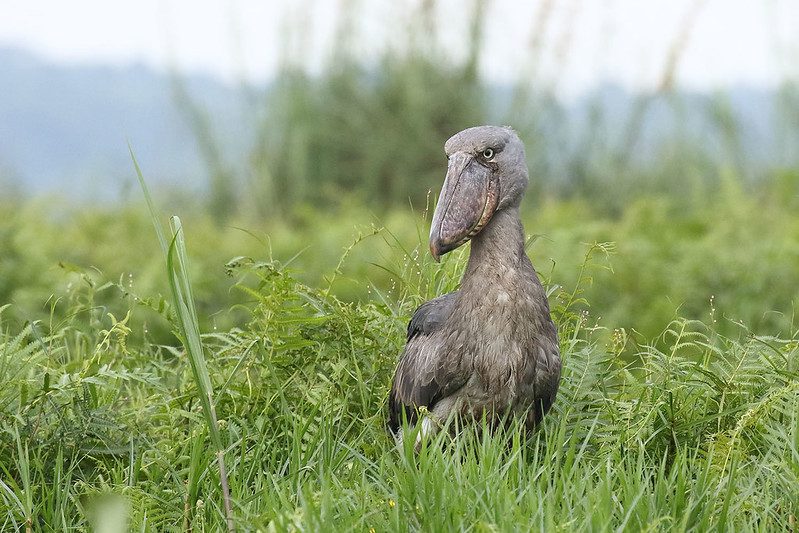
A foot-long bill that resembles a dutch clog and is five inches wide with sharp edges and a sharp hook at the end makes the Rare Shoebill Stork a unique bird species when compared to other bird species. Furthermore, this particular bill is crucial since it aids the shoebill in capturing its prey, which includes eels, snakes, lung fish, and tilapia fish, among others. Furthermore, travelers should be aware of additional fascinating facts regarding the endangered shoebill stork, some of which are as follows:
The Shoebill stork’s lifespan.
Compared to other bird species, the unusual shoebill stork is known to live longer, with a lifespan of more than 35 to 50 years.
description of the body.
When upright, the unusual shoebill stork is roughly 4 to 5 feet tall and has lengthy feet that measure about 18 cm. It weighs around 5 kilos, while the female shoebill stork always weighs about 6 kilograms. Furthermore, it should be mentioned that the shoebill stork, also known as the whale-headed stork or the whale-healed stork, got its name from its enormous shoe-shaped bill or beak.
The shoebill stork’s diet.
When hunting their food, the uncommon shoebill stork employs a special and charming technique called “Freeze and Seize.” Furthermore, aquatic mammals like as frogs, lung fish, catfish, mad fish, infant crocodiles, snails, water snakes, eels, Nile monitors, small waterfowl, and many more constitute part of the unusual shoebill stork’s diet.
The gestational period.
Rare shoebill storks typically have a gestation period of 30 days during which the female lays one to three eggs. The storks are roughly 80 to 90 meters high and 56 to 61 meters wide. Furthermore, it deposits eggs in nests that are one to 1.7 meters broad and up to three meters deep.
Furthermore, after the chicks arrive, their parents are always in charge of caring for them until they are around 105 days old, at which point they are able to fledge, and both parents must cooperate to construct the nests from the floating platform. Last but not least, the most crucial fact regarding young shoebill storks is that, even at three years old, they are always sexually mature.
characteristics of motion.
With the aid of their broad wings, which can extend up to 2.5 meters, the shoebill storks are always able to fly. They also always move their heads backwards while in the air in order to stay in the air for longer. Their large wings also help them maintain their balance as they move from one location to another throughout their flight.
In addition to the previously mentioned information, tourists should be aware of more interesting facts about the endangered shoebill stork, such as its habitat, behaviors, and mannerisms, as well as its protection area.
For more fascinating information on the endangered shoebill stork, get in touch with our reliable tour operators. All In Africa Safaris, for example, offers the best tour packages for your Ugandan birding safaris.
Why the Shoebill’s Motionless Hunting Style Genuinely Fascinates Observers
Standing completely still for extended periods before striking genuinely earns this bird a reputation as one of Africa’s most patient predators. All in Africa Safaris can arrange a dedicated shoebill-spotting excursion during your Uganda visit.
What Makes Uganda’s Population Genuinely Significant Globally
Hosting roughly a thousand individuals, Uganda genuinely holds one of the largest concentrations of this rare species anywhere on the continent.
Why Mabamba Swamp Ranks Among the Genuinely Best Viewing Sites
This wetland near Entebbe genuinely offers some of the most reliable shoebill sightings, making it a favored stop for birders with limited time.
How the Bird’s Prehistoric Appearance Genuinely Adds to Its Mystique
With its statuesque posture and massive bill, the shoebill genuinely looks like it stepped out of an earlier geological era, adding to its bucket-list appeal.
Why Its Extended Lifespan Genuinely Sets It Apart From Other Birds
Living thirty-five to fifty years genuinely places the shoebill well beyond the typical lifespan of most other African bird species.
What the Freeze and Seize Technique Genuinely Reveals About Its Hunting Skill
This specific method genuinely requires remarkable patience and precision, striking suddenly only once prey comes within perfect range.
Why Lungfish Feature So Prominently in the Shoebill’s Diet
Swamp habitats genuinely favor this specific prey, explaining why lungfish appear so consistently alongside catfish and small crocodiles in shoebill sightings.
How Both Parents Genuinely Share Chick-Rearing Responsibilities
Unlike many bird species, shoebill parents genuinely cooperate equally in nest building and chick care until fledging around 105 days.
Why Early Sexual Maturity Genuinely Surprises Many Birders
Reaching maturity by age three genuinely happens faster than many long-lived bird species, an interesting contrast to the shoebill’s otherwise slow-paced behavior.
What Makes the Distinctive Backward Head Movement Genuinely Unique
This unusual flight behavior genuinely helps the bird conserve energy during longer flights, a trait rarely seen in other large wading birds.
Why Combining Shoebill Spotting With Other Birding Activities Makes Sense
Pairing a shoebill excursion with broader wetland birding genuinely rounds out a trip beyond chasing just this single, elusive species. All in Africa Safaris can build a comprehensive birding itinerary around multiple wetland sites.
How Ziwa Rhino Sanctuary Genuinely Offers a Two-Species Experience
Combining shoebill sightings with rhino tracking at this single sanctuary genuinely gives travelers two rare wildlife encounters in one visit.
Why the Bird’s Conservation Status Genuinely Deserves Attention
As an endangered species, the shoebill genuinely benefits from tourism revenue that supports ongoing habitat protection across its African range.
What the Massive Nest Size Genuinely Says About Parental Investment
Building floating platforms up to three meters deep genuinely reflects the significant effort shoebill pairs invest before their eggs even hatch.
Why Early Morning Excursions Genuinely Improve Sighting Odds
Shoebills tend to be most active during cooler hours, making a dawn departure genuinely more productive than a midday search.
How Patient Guides Genuinely Improve Your Chances of a Sighting
Given how still and camouflaged shoebills can remain, experienced local guides genuinely know exactly where and how to look within dense swamp vegetation. All in Africa Safaris works only with guides experienced specifically in shoebill tracking.
Why Photography Rewards Extra Patience With This Specific Bird
Waiting quietly for the shoebill’s brief burst of movement genuinely produces far better photos than attempting to rush the encounter.
What Makes This Bird a Genuine Highlight for Serious Birders
Few African birding experiences carry the same bucket-list weight as a confirmed shoebill sighting, genuinely justifying dedicated time and effort.
Why Wetland Conservation Directly Protects This Species’ Future
Ongoing protection of swamp habitats across Uganda and neighboring countries genuinely determines whether future generations can still encounter this remarkable bird.
Why the Ishasha Sector Adds a Second Reliable Shoebill Location
Beyond Mabamba, Queen Elizabeth’s Ishasha sector genuinely gives travelers already visiting for lion tracking a chance to add shoebill sightings without a separate trip. All in Africa Safaris can combine both experiences into a single Queen Elizabeth itinerary.
How the Bird’s Enormous Bill Genuinely Functions as a Precision Tool
Despite its bulky appearance, the sharp-edged, hooked bill genuinely allows remarkably precise strikes on slippery prey like eels and catfish.
Why Comparing Male and Female Shoebills Reveals Subtle Differences
With females weighing slightly more than males, this size distinction genuinely offers experienced birders a way to identify individuals during longer observation sessions.
What Makes a Boat-Based Shoebill Search Different From a Walking One
Approaching swamps by canoe genuinely allows quieter, closer access to shoebill habitat than trying to navigate dense wetland vegetation on foot.
Why Silence and Stillness Genuinely Improve Your Own Sighting Odds
Just as the shoebill hunts through patient stillness, observers who stay quiet and minimize movement genuinely see more than those moving frequently through the swamp.
Why This Species Consistently Tops Serious Birders’ Uganda Wish Lists
Between its rarity, unusual appearance, and genuinely fascinating behavior, few African birds generate as much anticipation among dedicated wildlife travelers.
Planning Your Shoebill Stork Birding Safari
From its prehistoric appearance to its patient hunting style, the shoebill stork genuinely delivers one of Africa’s most memorable birding encounters. All in Africa Safaris can turn this overview into a fully confirmed itinerary tailored to your travel dates.