Birdwatching in Rwanda
Birdwatching in Rwanda: With a total of 703 bird species, 29 endemics of the Albertine Rift, a variety of habitats, and the best highland birding in Africa, Rwanda is a birdwatcher’s heaven.
The majority of travelers prefer to visit Akagera National Park in the east and Nyungwe National Park in the west of Rwanda. However, the best places to go bird watching are located around the nation particularly in the vicinity of Kigali. Any location in Rwanda offers a variety of noteworthy bird species, making it a worthwhile destination to stay.
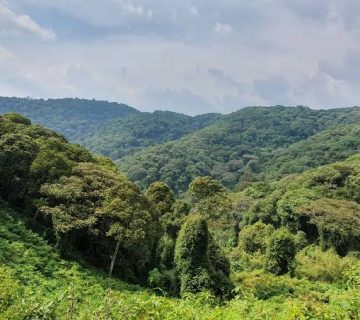
Renowned for its highland rainforest, Nyungwe National Park is home to 322 bird species, more than 13 primate species, and a number of rare plant species. The only secure location to visit this ideal bird is Rwanda, and seeing the rare Red-collared Babbler is really an adventure. Among other beautiful birds are the Handsome Francolin, Rwenzori Nightjar, Rwenzori Turaco, Blue-headed and Purple Breasted Sunbirds, Neumann’s Warbler, and Grauer’s Warbler.
With the assistance of the park’s knowledgeable bird guides, all of these species are easily visible from a well-maintained network of trails. If you’re lucky on your day in Rwanda, you can also see Willard’s Sooty Boubou, Kivu Ground Thrush, and Kungwe Apalis. Ideally, you will be able to witness Nyungwe’s documented Congo Bay Owl, Albertine Owlet, Shelley’s Crimson Wing, and Rockefeller Sunbird. You can take nighttime walks, which may help you find the park’s secretive nocturnal creatures.
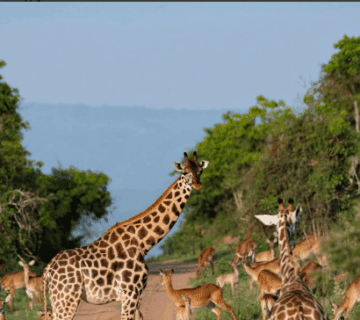
A savannah park with rolling hills, lakes, wetlands, and forests makes up Akagera National Park. All five of Africa’s safari animals can be observed in the park during the game drive. Furthermore, there are more than 500 different types of birds in Akagera, and visitors can take a boat tour on Lake Ihema to get a good look at the many kinds of waterbirds.
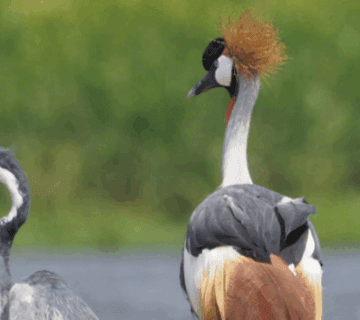
The Northern Brown-throated weaver, Papyrus gonolek, White-winged swamp warbler, White collared olive back, Grey-crowned cranes, and others are among the birds that may be seen in Akagera National Park.
Among other nocturnal bird species, the park’s night game drive offers the chance to witness Verreaux’s Eagle Owl.
In addition to being home to gorillas, Volcanoes National Park in northeastern Uganda has excellent birding opportunities. Of the 200 bird species known to exist there, 17 are Albertine Rift Endemics. Although the bird species are comparable to those found in Nyungwe, the scarlet-tufted sunbirds are unique to Rwanda, and the most rewarding hike is to the top of Mount Bisoke.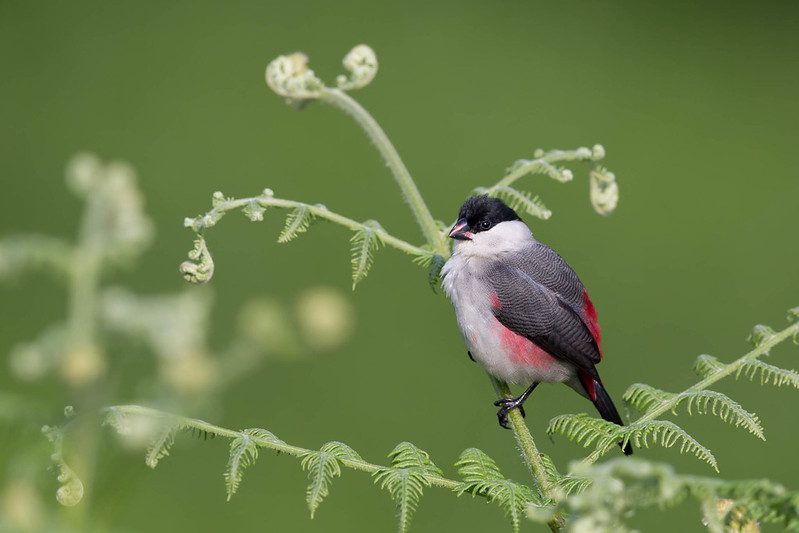
Red-faced woodland warbler, Lagden’s bush shrike, Dusky crimson wing, Handsome francolin, African long-eared owl, Brown-necked parrot, Doherty bush-shrike, Ruwenzori apalis, and Brown woodland warbler are some of the other bird species.
Go birdwatching in Gishwati Mukuru National Park;
Gishwati Mukura National Park is located in the foothills above Lake Kivu in western Rwanda. The park’s forest is home to more than 232 different species of birds, making it an excellent place to go birdwatching.
City of Kigali
The city is also an excellent place to go bird watching; it’s always a pleasant experience to see urban birds in hotel gardens, Nyarutarama Lake, or at the edge of the Kigali gold course. White-collared Olive-bellied, African Swamphen, Bat Hawk, Narina Trogon, Lesser Honeyguide, Brown-backed Honeybird, Black Cuckoo-shrike, Olive-bellied, Red-chested sunbird, Palm Nut vulture, Crested Barbet Grey-backed Fiscal, African Goshawk, Ruppel’s Starling, and Black-headed weaver are a few of the bird species that can be seen in the city.
The Rwanda Environment Management Authority intends to establish a park in Kigali’s outskirts. The location will be ideal for urban birding if the concept is successful. In addition, marshes on the outskirts of the city offer a lot of excellent locations.
See the Ruppel’s Starling at Lake Kivu
One of Rwanda’s top birding destinations is Lake Kivu, which is home to numerous bird species that may be seen from its shores, such as Osprey, Pied Kingfisher, and White-breasted Cormorants. Among these bird species are the Brown-throated wattled eye, Spot-flanked Barbet, Familiar Chat, Yellow-bellied Waxbill, and others. The area near Kinunu is also a fantastic place to go birdwatching.
Wetland
About 10% of Rwanda’s marshes and wetlands, including Rugezi, Akanyaru, and Nyabarongo wetlands, have been designated as Important Bird Areas by Birdlife International.
Rugezi Marsh, which is located close to Gicumbi in northwest Rwanda, is home to a variety of species, including Papyrus canary, Grey-crowned cranes, and Papyrus yellow warbler.
Why Nyungwe’s Altitude and Rainforest Canopy Genuinely Create Such Concentrated Endemism
Nyungwe sits along the Albertine Rift, a geological feature that has isolated pockets of highland forest for millions of years, allowing species like the Red-collared Babbler and Rockefeller Sunbird to evolve nowhere else on Earth. This isolation is exactly why serious birders travel specifically to Rwanda rather than treating it as a stopover on a broader East African itinerary: a meaningful share of what you’ll see here simply doesn’t exist anywhere else. The park’s well-maintained trail network and knowledgeable local guides mean this rarity is genuinely accessible rather than theoretical, with most Albertine Rift endemics realistically achievable within a few focused days. All in Africa Safaris can build a Nyungwe-focused birding itinerary around the specific endemics you’re hoping to tick off.
How Akagera’s Savannah Habitat Genuinely Complements Nyungwe’s Forest Birding
Where Nyungwe delivers dense-forest specialists, Akagera’s open savannah, wetlands, and lakeshore habitat bring an entirely different bird community into view, including waterbirds best seen from a boat on Lake Ihema. Pairing the two parks in one trip genuinely maximizes species diversity in a way that visiting either alone cannot, since forest and savannah birding require different techniques, timing, and even different physical stamina. Akagera’s night game drives add a further layer, opening up sightings of nocturnal species like Verreaux’s Eagle Owl that daytime visitors would never encounter.
Why Kigali Itself Genuinely Deserves a Place on a Rwanda Birding Itinerary
It’s easy to assume serious birding only happens deep in national parks, but Kigali’s hotel gardens, Nyarutarama Lake, and the edges of the city’s golf course consistently turn up an impressive list of species, from the Narina Trogon to the Palm Nut Vulture. This matters practically: most visitors pass through Kigali at the start and end of their trip anyway, and a few unhurried hours in these urban green spaces can add meaningfully to a trip list without costing an extra travel day. All in Africa Safaris can build short Kigali birding stops around your arrival and departure days.
What Makes Rwanda’s Protected Wetlands Genuinely Significant for Regional Bird Conservation
Roughly a tenth of Rwanda’s marshes and wetlands, including Rugezi, Akanyaru, and Nyabarongo, carry Important Bird Area status from Birdlife International, reflecting their outsized role in sustaining species like the Grey-crowned Crane and Papyrus Yellow Warbler. Rugezi Marsh near Gicumbi is a standout example, and visiting it genuinely connects birdwatching to a broader conservation story rather than treating sightings as isolated checklist items. Travelers with a serious interest in conservation often find these wetland visits among the most meaningful parts of a Rwanda birding trip.
Why Volcanoes National Park Genuinely Offers More Than Just Gorilla Trekking for Birders
With 200 recorded species and 17 Albertine Rift endemics, Volcanoes National Park rewards birders who build in time beyond the standard gorilla trek, particularly the hike up Mount Bisoke, which genuinely delivers the best chance at species found nowhere else in the park. The scarlet-tufted sunbird stands out as a Rwanda-specific highlight here, distinct from what overlaps with Nyungwe’s species list. Combining a gorilla permit with a dedicated birding morning turns a single-purpose trek into a genuinely fuller wildlife experience. All in Africa Safaris can add dedicated birding time to your Volcanoes National Park gorilla trekking itinerary.
How Timing Your Visit Genuinely Affects Which Species You’re Likely to See
Rwanda’s birding calendar shifts with the seasons, and migratory species passing through during certain months can add considerably to what a fixed resident list would suggest. Dry season months generally offer easier trail access and more predictable viewing conditions, but some specialists prefer the wetter months when certain forest species become more vocal and active. A knowledgeable local guide who tracks these patterns closely can meaningfully improve your odds regardless of when you travel.
Why Local Guides Genuinely Make the Biggest Difference Between a Good and Great Birding Trip
Rwanda’s forest specialists are often heard well before they’re seen, and a guide who can identify a species from a snatch of call deep in the canopy will consistently turn up sightings that an unguided visitor would simply walk past. This expertise is especially valuable for the genuinely elusive species, the Congo Bay Owl or Albertine Owlet, where knowing exactly where and when to look is the difference between a lucky glimpse and returning home without the sighting at all. Investing in guides with real local knowledge pays off far more in Rwanda’s dense forest habitats than it would on a typical open-savannah game drive. All in Africa Safaris can pair you with birding guides who specialize in Rwanda’s Albertine Rift endemics.
Planning Your Rwanda Birding Safari
From Nyungwe’s rare endemics to Akagera’s wetland species and Kigali’s surprisingly rewarding urban birding, Rwanda genuinely offers one of Africa’s most rewarding and underrated birding destinations. All in Africa Safaris can turn this overview into a fully confirmed birding itinerary tailored to your travel dates and target species.