
Where to see hippos up close: Boat safaris on Uganda’s rivers and lakes
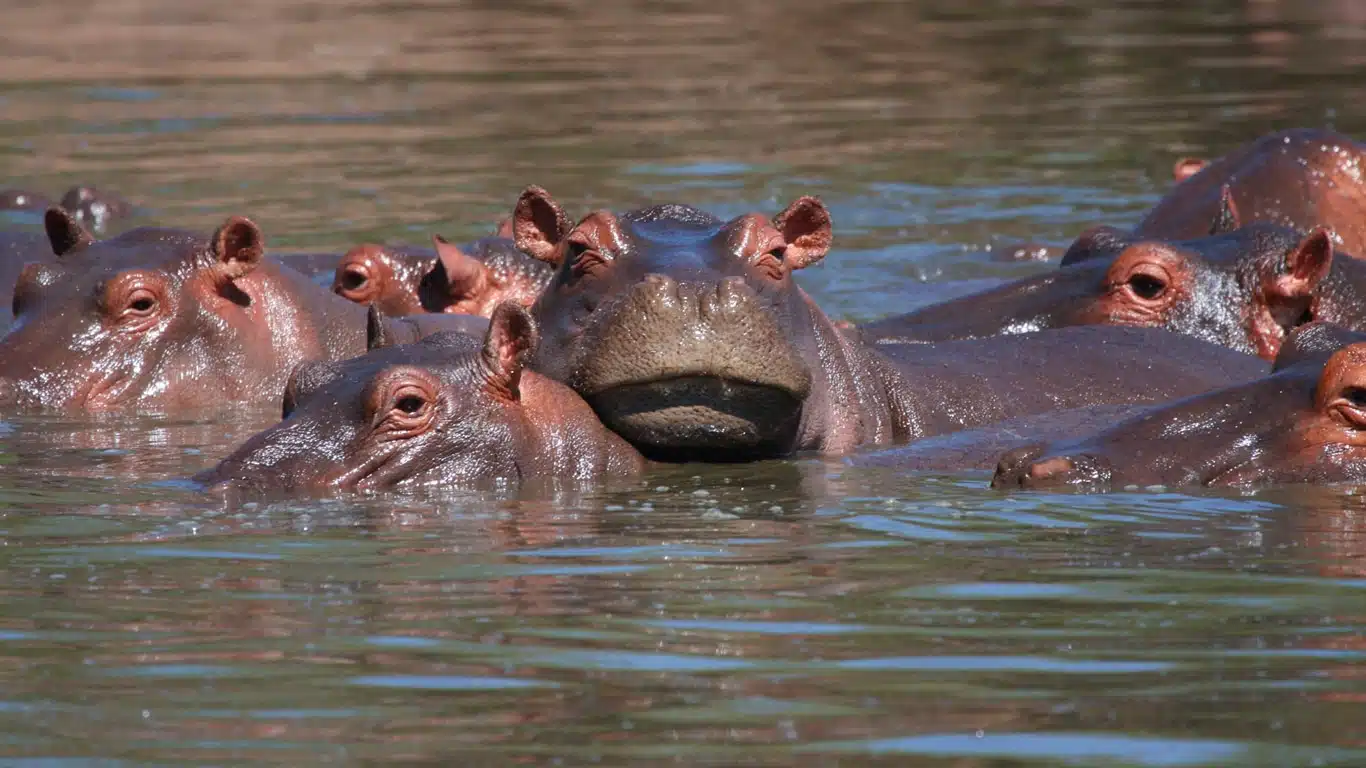
Uganda is one of the best destinations in East Africa for seeing wild hippopotamuses in their natural habitat. The country has extensive freshwater systems, including the River Nile, Lake Victoria, Lake Albert, Lake Edward and several smaller lakes that support large hippo populations. These animals spend much of the day in water, where they keep their bodies cool and protect their sensitive skin from the sun.
A boat safari is one of the most effective ways to observe hippos in Uganda. From the water, you can watch groups resting in shallow areas, surfacing to breathe, opening their mouths and communicating through loud grunts. You may also see Nile crocodiles, elephants, buffaloes and waterbirds along the same shorelines.
The Kazinga Channel in Queen Elizabeth National Park is particularly famous for its large hippo population. Murchison Falls National Park offers another excellent experience, with boat trips along the Victoria Nile towards the bottom of the falls. Lake Mburo National Park provides a quieter lake cruise, while the Semliki River offers a less frequently visited opportunity in western Uganda.
Each destination has a different landscape and wildlife experience. Understanding where the boat trips operate, what you can expect to see and how to observe hippos safely will help you choose the right destination for your Uganda safari.
Why Uganda is a good destination for hippo viewing
Uganda’s rivers and lakes provide suitable habitats for common hippopotamuses, scientifically known as Hippopotamus amphibius. These large mammals depend on permanent or seasonal water sources for much of their daily routine. They usually spend daylight hours submerged or resting in shallow water before leaving at night to graze on grass.
Hippos are social animals and commonly live in groups called pods. A pod may contain several females, young animals and a dominant male, although group size and structure vary depending on the habitat. They often gather in areas with suitable water depth and nearby grazing grounds.
Uganda’s protected areas contain several important hippo habitats. The Kazinga Channel connects Lake George and Lake Edward, while the Victoria Nile flows through Murchison Falls National Park before reaching Lake Albert. Lake Mburo and the surrounding wetlands also provide suitable conditions.
The concentration of hippos around these water bodies makes boat safaris particularly rewarding. Unlike a game drive across open grassland, a boat trip follows the habitat where hippos spend much of their day. You can observe their behaviour without approaching them on foot or disturbing the shoreline.
Kazinga Channel, Queen Elizabeth National Park
The Kazinga Channel is one of Uganda’s best places to see hippos. Located in Queen Elizabeth National Park in western Uganda, this natural waterway connects Lake George to Lake Edward. Its banks attract large numbers of hippos, Nile crocodiles, elephants, buffaloes and numerous waterbirds.
The most popular way to explore the channel is through a launch cruise departing from Mweya Peninsula. The boat travels along sections of the channel, passing areas where hippos gather in shallow water and along the banks. The journey usually takes around two hours, although the exact duration depends on the boat service and operating arrangements.
Hippos are often the main attraction. You may see several groups resting close together, with only their heads and backs visible above the water. Some animals remain submerged for several minutes before rising to breathe. Others open their mouths widely, grunt or splash water as they interact with nearby hippos.
The channel also offers opportunities to observe Nile crocodiles resting on muddy banks. These reptiles often remain motionless in the sun, making them easy to overlook until the boat approaches their resting areas. Elephants and buffaloes sometimes come down to drink, while waterbirds feed along the shoreline.
Birdwatching is another important part of the Kazinga Channel experience. You may encounter African fish eagles, pied kingfishers, malachite kingfishers, cormorants, herons, pelicans and saddle-billed storks. The combination of large mammals and waterbirds makes the cruise worthwhile even when the hippos are resting quietly.
Mweya Peninsula is a convenient base for exploring the channel. It lies within the park and has accommodation, visitor facilities and access to the boat landing area. Visitors staying elsewhere in Queen Elizabeth National Park can also arrange transport to Mweya for a scheduled cruise.
What to expect on the Kazinga Channel boat cruise
The boat journey gives you an opportunity to observe hippos from a controlled distance. The captain may slow down when approaching a group, allowing passengers to watch the animals without disturbing them.
One of the most interesting sights is a hippo lifting its head above the surface and opening its mouth. This behaviour can look like a yawn, but it may also form part of a threat display or social interaction. Hippos have large canine teeth and powerful jaws, so this behaviour should never be treated as an invitation to approach.
You may also hear hippos making deep grunting sounds. These vocalisations help them communicate with other members of the group, especially when several animals occupy the same stretch of water.
The boat cruise is suitable for travellers interested in wildlife photography and birdwatching. A camera with a telephoto lens can help you capture facial details, while binoculars are useful for identifying birds along the banks. Keep your equipment secure and avoid leaning over the side of the boat.
Morning and afternoon cruises may be available, depending on the operator and current schedule. Many visitors choose an afternoon cruise after a morning game drive on the Kasenyi Plains. This combination gives you a chance to see savanna wildlife before exploring the channel.
Murchison Falls National Park and the Victoria Nile
Murchison Falls National Park is another outstanding destination for hippo viewing in Uganda. The Victoria Nile flows through the park, creating a major wildlife corridor with large concentrations of hippos and crocodiles.
The most popular boat safari follows the river upstream from the Paraa landing area towards the bottom of Murchison Falls. The journey takes you through a stretch of the Nile where hippos rest in the water and along the banks. You may see groups spread across shallow sections, with crocodiles basking on exposed sandbanks.
As the boat approaches the falls, the scenery changes. The river narrows and the water becomes more turbulent as it moves towards the rocky gorge. Murchison Falls is formed where the Nile forces its way through a narrow opening in the rocks before plunging into the river below.
The boat trip offers opportunities to see more than hippos. Elephants and buffaloes sometimes approach the river to drink, while waterbucks graze near the shoreline. Nile crocodiles are also common along suitable sections of the river.
Birdlife adds to the experience. African fish eagles are frequently seen near the water, while kingfishers, cormorants, bee-eaters and herons may be spotted along the banks. With patience, you may also encounter other water-associated species.
The upstream cruise to the bottom of the falls is the main option for visitors interested in combining hippo viewing with the park’s famous waterfall. It is a popular activity and can be arranged through the Uganda Wildlife Authority or authorised safari operators.
The Albert Delta boat trip
Murchison Falls National Park also offers a different boat experience towards the Nile Delta, where the Victoria Nile enters Lake Albert. This route provides another opportunity to see hippos, crocodiles and waterbirds.
The delta landscape is generally flatter and more open than the river section leading to the falls. Wetlands, papyrus vegetation and shallow water create suitable feeding and resting areas for birds and other wildlife.
One of the main attractions of the delta trip is the possibility of seeing the shoebill. This large wetland bird is particularly associated with papyrus swamps and shallow freshwater habitats. Sightings are never guaranteed, but the delta is an important area to consider if you want to combine hippo viewing with specialised birdwatching.
The trip is longer than the standard cruise to the falls, so it requires additional time in your itinerary. Departure arrangements and availability should be confirmed before travelling.
Lake Mburo National Park
Lake Mburo National Park offers a different hippo-viewing experience in western Uganda. The park is located between Kampala and the southwestern safari circuit, making it a convenient stop for visitors travelling towards Queen Elizabeth National Park or Bwindi Impenetrable National Park.
Lake Mburo is one of the park’s main attractions and supports hippos, Nile crocodiles and several waterbird species. Boat trips depart from the lake’s designated landing area near Rwonyo, depending on current operating arrangements.
During the cruise, you can observe hippos resting in the water or gathering near the papyrus-lined shoreline. The groups may be smaller or more spread out than those encountered on the Kazinga Channel, but the setting provides a quieter experience.
Crocodiles may be seen resting on exposed banks, while African fish eagles, kingfishers, herons and other waterbirds use the lake’s edges. You may also spot buffaloes and other mammals near the water.
The surrounding park is known for its zebras, impalas, elands, topis and giraffes. This makes Lake Mburo a useful destination for travellers who want to combine a boat safari with a game drive or walking safari.
A typical itinerary may include a game drive in the morning followed by a boat cruise later in the day. Visitors with limited time can also use Lake Mburo as a stopover between Kampala or Entebbe and the larger parks in western Uganda.
Semliki River and Lake Albert
The Semliki River provides another habitat for hippos in western Uganda. It flows through the Semliki Valley along part of the Uganda-Democratic Republic of Congo border before reaching Lake Albert.
The river passes through a landscape of wetlands, forest edges and open areas. Hippos inhabit suitable sections of the waterway, although sightings and visitor access are less predictable than at the Kazinga Channel or Murchison Falls.
Boat trips in this area may be arranged depending on local conditions, access and available operators. Visitors should confirm whether a suitable excursion is operating before including it in an itinerary. It is not as established or straightforward a hippo-viewing activity as the main launch cruises in Uganda’s larger national parks.
The Semliki region also attracts birdwatchers because of its varied habitats and location within the Albertine Rift. The surrounding area supports forest, wetland and savanna species, making it interesting for visitors who want to explore less frequently visited parts of western Uganda.
Hippos along the Nile near Jinja
The River Nile around Jinja is another part of Uganda’s freshwater landscape, but it should not be treated as a reliable alternative to the national park boat safaris.
The river supports several different activities, including white-water rafting, kayaking and boat excursions. Hippos occur in parts of the wider Nile system, but their presence and visibility vary between stretches of the river. Dams, water conditions, human activity and habitat changes also influence where animals can be found.
If seeing hippos is your main objective, the Kazinga Channel, Murchison Falls and Lake Mburo are more practical choices. A general boat trip near Jinja should not be booked with the expectation of guaranteed hippo sightings.
Can you see hippos on Lake Victoria?
Hippos occur in parts of the Lake Victoria basin, although they are not a dependable attraction on every island or shoreline. Their distribution depends on suitable habitat, water conditions, human activity and access to grazing areas.
Lake Victoria is better known for its fishing communities, islands, beaches and boat excursions. Some areas may support hippos, but visitors should not assume that a standard lake cruise will include them.
If your main interest is observing hippos from a boat, choose a destination where wildlife cruises operate specifically within established hippo habitats. Lake Mburo and the Kazinga Channel are more suitable choices for this purpose.
What is the best time to see hippos in Uganda?
Hippos live in Uganda’s major rivers and lakes throughout the year. You do not need to plan your entire safari around a migration season or a short wildlife event. However, seasonal conditions can influence how easily you observe them and how comfortable your boat trip will be.
During the dry months, grass and other natural water sources become less abundant in some areas. Wildlife may concentrate around permanent water, making rivers and lakes important places to observe animals. The surrounding vegetation may also become shorter, improving visibility along certain shorelines.
The wetter months bring greener landscapes and can make some park roads muddy. Water levels and river conditions may change, and rain can affect visibility during a cruise. However, boat safaris continue to provide opportunities to see hippos in suitable conditions.
Morning and afternoon departures can both be productive. Hippos generally spend daylight hours in water, so their presence does not depend on a narrow viewing window. The main advantage of choosing a particular departure time is often the quality of light, weather and the way the cruise fits into your wider safari itinerary.
For photography, early morning and late afternoon may provide softer light than the middle of the day. However, the available departure times depend on the park and boat operator.
How close can a boat get to hippos?
Boat safaris allow visitors to observe hippos at relatively close range without entering their habitat on foot. However, the captain must maintain a safe distance and adjust the boat’s position according to the animals’ behaviour.
Hippos can be dangerous even when most of their bodies remain underwater. They are territorial in water and may react aggressively if they feel threatened or if a boat approaches too closely. They can also surface unexpectedly, sometimes close to a vessel.
A responsible captain will avoid driving directly into a pod or positioning the boat where animals have limited room to move. Passengers should follow instructions and remain seated unless the crew gives permission to move.
Do not ask the captain to approach a hippo for a photograph. A closer position does not guarantee a better image, and disturbing the animals can create unnecessary risks.
Understanding hippo behaviour during a boat safari
Hippos spend much of the day in water because their skin is sensitive to prolonged exposure to sunlight. They can remain submerged for several minutes before rising to breathe. Although they spend a lot of time underwater, they are capable of moving along the bottom of a river or lake.
At night, hippos usually leave the water to graze. They feed mainly on grass and may travel several kilometres from their resting areas in search of suitable feeding grounds. Their strong jaws and large teeth help them cut and chew vegetation.
A group of hippos may appear peaceful while resting together, but social interactions can become aggressive. Males may defend access to particular sections of water, while females protect young calves. Visitors should never interpret a quiet group as harmless.
A hippo opening its mouth widely may be displaying its large teeth as a warning. Grunting, splashing and sudden movements can also occur during interactions between individuals. These behaviours are natural and should be observed without attempting to influence them.
Safety rules for hippo boat safaris
Hippos are among Africa’s most dangerous large mammals. Their size, powerful jaws and territorial behaviour mean that visitors must take boat safety seriously.
Always follow the captain’s instructions and remain seated while the boat is moving. Keep your hands, arms and legs inside the vessel, particularly when passing close to groups of hippos. Do not attempt to touch, feed or attract the animals.
Never enter the water to swim near hippos. The same warning applies to areas inhabited by Nile crocodiles, particularly along the Kazinga Channel and the Nile in Murchison Falls National Park. A shoreline that looks quiet may still contain dangerous animals beneath the surface.
Avoid approaching hippos on foot. If you are staying at a lodge near a river or lake, follow the property’s instructions when walking around the grounds. Hippos leave the water at night to graze and may cross areas used by visitors.
Use only authorised boat services and experienced operators. Check that the boat has appropriate safety equipment, including life jackets, and wear one when instructed. Children should remain seated and supervised throughout the trip.
Photographing hippos from a boat
Hippos provide excellent opportunities for wildlife photography. Their large heads, visible teeth, rounded ears and textured skin make them distinctive subjects. You can also capture groups resting together or individuals surfacing to breathe.
A telephoto lens helps you photograph facial details without asking the boat to move closer. A lens in the 70-300mm or 100-400mm range is useful for many boat-based wildlife situations. Binoculars are also valuable when watching animals farther along the banks.
Try to focus on the eyes when a hippo raises its head above the water. If the animal opens its mouth, leave enough space around the subject to show the behaviour and surrounding water.
The light can be bright and reflective, particularly around midday. Adjust your exposure to avoid losing detail in bright areas of the water. A faster shutter speed can help freeze splashes and sudden movements.
Remember that a boat is not a fixed photography platform. It may move with the water, and other passengers may also need space. Keep your camera secure and avoid standing or leaning over the edge to obtain a better angle.
How to combine hippo boat safaris with other Uganda activities
Uganda’s hippo-viewing destinations fit naturally into several safari routes.
A Queen Elizabeth National Park itinerary can combine a Kazinga Channel cruise with game drives on the Kasenyi Plains. The plains are known for Uganda kob, elephants, buffaloes and several predators. Visitors can also explore the Ishasha sector, which is famous for its tree-climbing lions, although sightings are never guaranteed.
In Murchison Falls National Park, you can combine the Nile boat cruise with game drives in the northern sector. This area supports giraffes, elephants, buffaloes, lions, hartebeests and several antelope species. A visit to the top of Murchison Falls provides another perspective of the river as it passes through the narrow gorge.
Lake Mburo works well as a shorter stop on a western Uganda journey. You can combine the boat cruise with a game drive, nature walk or cycling experience where authorised. The park is also known for its zebras and impalas, which are not commonly encountered in several other Ugandan national parks.
Travellers with more time can combine Murchison Falls, Kibale Forest, Queen Elizabeth and Bwindi on a longer circuit. This route includes savanna wildlife, chimpanzee trekking, gorilla trekking and boat safaris. The order of destinations depends on your arrival point, accommodation preferences and available travel days.
Which Uganda boat safari is best for seeing hippos?
The Kazinga Channel is one of the strongest choices if your main objective is to see large numbers of hippos from a boat. Its extensive shoreline and resident wildlife make it a dependable part of a Queen Elizabeth National Park safari.
Murchison Falls National Park is another excellent option. The Victoria Nile cruise combines hippo viewing with crocodiles, elephants, buffaloes and the scenery of one of Uganda’s most famous waterfalls. The Albert Delta provides a different experience for visitors with additional time and an interest in wetland birds.
Lake Mburo is a good choice for a quieter lake cruise, particularly if you are travelling between Kampala and western Uganda. It offers opportunities to see hippos and crocodiles while exploring a park known for zebras, impalas and other savanna wildlife.
The Semliki River is worth considering for travellers interested in less frequently visited areas, but boat access and sightings need to be confirmed locally. Jinja and Lake Victoria should not be the first choices if you are planning a trip specifically around hippo viewing.
Uganda gives you several opportunities to observe hippos in their natural freshwater habitats. A well-planned boat safari on the Kazinga Channel, the Victoria Nile or Lake Mburo provides a memorable way to watch these powerful animals while also discovering the birds and other wildlife that depend on the country’s rivers and lakes.



No comment