
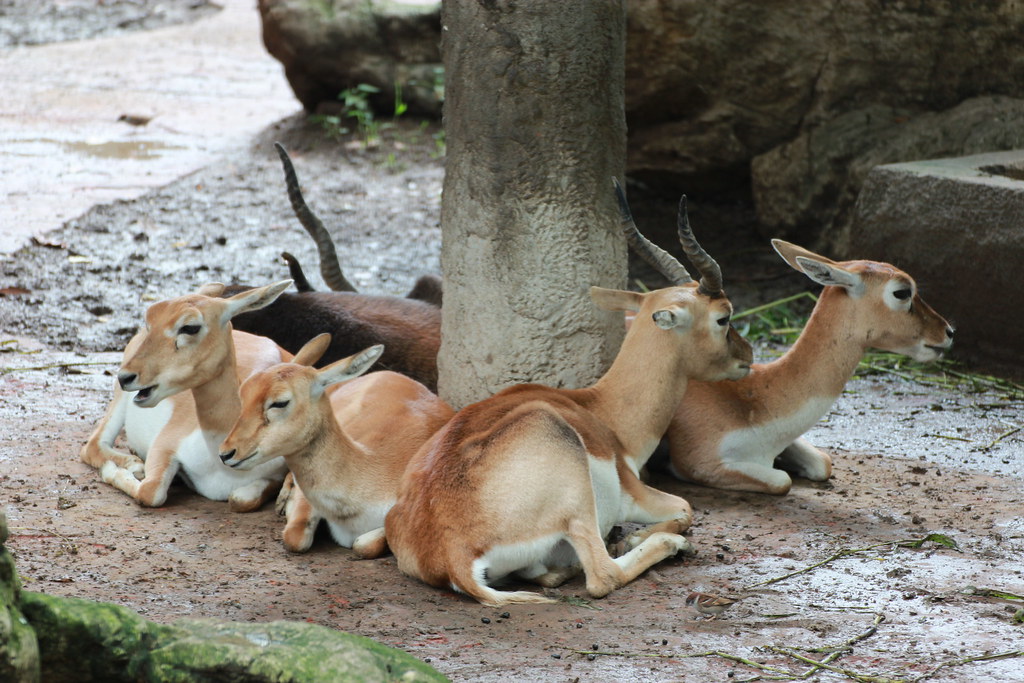
Where to see antelope species found nowhere else in East Africa
East Africa is home to an extraordinary variety of antelopes, from the familiar impala and Uganda kob to rare species that occupy very small geographical ranges. Some are found only in the Horn of Africa, while others survive in isolated mountain forests, dry coastal plains or remote semi-arid landscapes. A few have disappeared from much of their former range and now depend on a handful of protected areas.
For wildlife enthusiasts, these restricted-range antelopes offer a different kind of safari experience. Seeing a common impala in the Maasai Mara is relatively straightforward, but finding a hirola in northeastern Kenya or a mountain bongo in the Aberdare forests requires more specialised planning. Some species are so rare and elusive that even visiting their known habitat does not guarantee a sighting.
This guide focuses on antelopes with particularly restricted distributions in East Africa and the Horn of Africa. It also distinguishes genuinely endemic species from animals that are simply uncommon in other parts of the region. Important destinations include northeastern Kenya, the highland forests of central Kenya, Ethiopia’s Bale Mountains, Somalia’s dry landscapes and Uganda’s Pian Upe Wildlife Reserve.
Hirola: Kenya’s rarest antelope
The hirola is one of the most geographically restricted antelopes in Africa. Also known as Hunter’s hartebeest, it is native to the border region between southeastern Kenya and southwestern Somalia. Its natural range has contracted dramatically, and Kenya now holds the main surviving wild population.
The hirola has a slender body, long legs, a sandy-brown coat and distinctive facial markings. Large pre-orbital glands beneath its eyes create dark, spectacle-like patches that give the impression of having four eyes. Both males and females have ringed horns, although males generally have heavier horns.
Hirolas prefer open grassland, lightly wooded plains and dry scrubland. They feed mainly on grasses and depend on landscapes where grazing areas remain connected to suitable cover and water. They can form small groups or larger herds, sometimes gathering in open plains where visibility is good.
Where to see hirolas: The strongest opportunity is in northeastern Kenya, particularly the Ijara, Bura and Galma Galla areas of Garissa County. These landscapes form part of the species’ remaining natural range. A small population was also established in Tsavo East National Park through conservation translocations, giving visitors another potential location.
The Ishaqbini Hirola Community Conservancy is particularly important for hirola conservation. It was established to protect the species and its habitat through community involvement. Conservation efforts include habitat management, population monitoring and protection against poaching.
Tsavo East offers a more familiar safari setting, but visitors should not assume that hirolas are easy to find there. The animals occupy specific areas, and sightings depend on current population movements and the availability of suitable guiding arrangements.
Best time to visit: The drier months can make wildlife observation easier because grass is shorter and animals may concentrate around available water. However, the hirola’s movements depend on local rainfall, and a specialist guide should confirm current sightings before you travel.
Mountain bongo: Kenya’s rare forest antelope
The mountain bongo is one of Africa’s most endangered antelopes. It is a forest-dwelling form of the bongo, a large antelope recognised by its rich chestnut coat, narrow white vertical stripes and long spiral horns.
Unlike the lowland bongo found in parts of Central and West Africa, the mountain bongo is restricted to the highland forests of Kenya. It formerly occurred in several areas of the Kenyan highlands and was also recorded in Uganda historically. Today, its remaining wild populations are extremely small and fragmented.
An adult mountain bongo has a muscular body, large ears and a reddish-brown coat crossed by numerous white stripes. Both sexes can carry spiral horns, although males usually have larger and heavier horns. Its markings help it blend into forest vegetation and filtered light.
Mountain bongos prefer montane forests with thick vegetation, forest clearings and bamboo zones. They feed on leaves, shoots, herbs and other vegetation. Their shy behaviour and preference for dense forest make them difficult to observe.
Where to see mountain bongos: The main wild conservation areas are associated with the Aberdare forests, Mount Kenya and parts of the Mau Forest complex. Important locations include Aberdare National Park, Mount Kenya forest habitats and sections of the Mau forest landscape.
The Mount Kenya Wildlife Conservancy is an important conservation destination. It operates a breeding and recovery programme designed to support the long-term survival of mountain bongos and contribute to efforts to restore populations in their natural habitat. Visitors may be able to learn about the species and conservation work there, but seeing bongos in a managed conservation setting is different from encountering a free-ranging animal in the forest.
In the wild, mountain bongos are difficult to locate. Researchers often rely on camera traps, field signs and indirect monitoring because the animals spend much of their time in thick vegetation.
Best time to visit: Forest visits are possible throughout the year, but conditions on mountain trails and forest roads vary with rainfall. For a conservation-focused visit, contact the relevant conservancy or park authorities before travelling to confirm access and available activities.
Mountain nyala: Ethiopia’s highland specialist
The mountain nyala is one of the most distinctive antelopes in the Horn of Africa. It is endemic to Ethiopia, meaning that its natural wild distribution is restricted to that country. It is particularly associated with the highlands of the southeast.
Adult males are large, grey-brown antelopes with long spiral horns, white markings on the flanks and a noticeable pale stripe along the back. Females are smaller and generally lack horns. Their coats are usually lighter brown, with markings that help them blend into grassland and woodland vegetation.
Mountain nyalas inhabit high-altitude grasslands, woodland edges, heathland and montane forests. They feed on grasses, leaves, shoots and other vegetation. Their habitat often includes open areas where they can feed and nearby cover where they can retreat when disturbed.
Where to see mountain nyalas: The Bale Mountains in southeastern Ethiopia are the principal destination. Bale Mountains National Park protects important highland habitats and is one of the strongest places to search for the species.
The Harenna Forest, Sanetti Plateau and surrounding highland landscapes form part of the wider conservation area. Mountain nyalas are also found in other highland locations in Ethiopia, including parts of the Arsi and Chercher mountains.
The Bale Mountains offer an unusual wildlife experience compared with the savanna parks of Kenya and Tanzania. Visitors can explore Afro-alpine landscapes, high-altitude grasslands and montane forest while looking for mountain nyalas. The region also supports Ethiopian wolves, giant mole-rats and several highland bird species.
Mountain nyalas are not always easy to spot. They can move through woodland and dense vegetation, and their distribution varies between habitat types. A local guide familiar with recent records can improve your chances.
Best time to visit: The drier months are generally more convenient for exploring the highlands, although temperatures can be cold at altitude. Conditions vary considerably across the mountain landscape, so pack for both sunshine and low temperatures.
Beira: A rare antelope of the Horn of Africa
The beira is a small antelope found in the Horn of Africa. Its natural range is concentrated in the dry, rocky landscapes of Djibouti, Somaliland and parts of northern Somalia. It is among the region’s most specialised antelopes and is not a typical species of the East African savanna.
Beiras are small, delicate-looking animals with large ears, slender legs and a greyish-brown coat. Their appearance is adapted to dry, rocky country. They are particularly well suited to hillsides, stony slopes and areas with scattered shrubs.
The species feeds on leaves, shoots, grasses and other vegetation available in its arid habitat. It can survive in dry environments where water is limited, obtaining much of its moisture from food.
Where to see beiras: The species is associated with rocky hills and dry mountain slopes in Somaliland and neighbouring parts of the Horn of Africa. Areas around the Golis Mountains and other suitable rocky landscapes are important within its range.
Beira viewing is not a conventional safari activity. Much of its habitat is remote, and tourism infrastructure is limited. Security, local access arrangements and the availability of specialist guides must be assessed carefully before considering a trip.
For most visitors, beira is a species of particular interest to specialist naturalists rather than a practical target for an ordinary East African safari.
Best time to visit: Cooler, drier conditions can make travel through rocky landscapes more manageable. However, the most important consideration is arranging a safe and knowledgeable local expedition.
Dibatag: The antelope with the unusual tail
The dibatag, also called Clarke’s gazelle, is another highly restricted antelope of the Horn of Africa. It occurs mainly in Somalia, Somaliland and parts of eastern Ethiopia, with its distribution associated with dry scrubland and semi-arid plains.
Its most distinctive feature is its long, dark-tipped tail, which it often holds upright when moving. The dibatag has a slender body, long legs and a sandy coat that blends into dry vegetation. Both sexes carry horns, although males generally have more developed horns.
Dibatags are adapted to arid environments. They browse on leaves, shoots and shrubs, feeding on vegetation that remains available when grasses become scarce. Their ability to obtain moisture from food helps them survive in areas where permanent water is limited.
Where to see dibatags: The species is associated with the Ogaden region of eastern Ethiopia and suitable dry habitats in Somalia and Somaliland. Its distribution is patchy, and sightings can be difficult even in areas where it is known to occur.
The species is not associated with mainstream safari destinations such as the Maasai Mara, Serengeti or Amboseli. Visitors interested in seeing it need a specialist itinerary and reliable local information about current distribution.
Best time to visit: Travel is generally easier during cooler, drier periods, but local conditions and security arrangements are more important than a fixed wildlife season.
Gerenuk: The long-necked antelope of northern Kenya
The gerenuk is one of East Africa’s most unusual antelopes. Its name is often translated as giraffe-necked gazelle, a reference to its long neck and ability to stand upright on its hind legs while feeding.
It has a slim body, long legs, large ears and a relatively small head. Males carry short, curved horns, while females do not. Its reddish-brown coat is lighter underneath, and the facial markings are often noticeable.
Gerenuks are adapted to dry bushland and thorn scrub. They browse on leaves, shoots, flowers and fruits, often reaching vegetation that other antelopes cannot access. Their ability to stand upright allows them to feed on higher branches without competing directly with many grazing species.
The gerenuk is not endemic to East Africa alone, as it also occurs in parts of the Horn of Africa. However, northern Kenya is one of the best places for visitors to see it in a natural safari setting.
Where to see gerenuks: Samburu National Reserve is among the best-known locations. The surrounding Buffalo Springs and Shaba reserves also support suitable dry-country habitat.
Laikipia conservancies provide further opportunities, while the wider northern Kenyan landscape contains populations in areas of thorn scrub and semi-arid grassland.
Gerenuks are also found in parts of southern Ethiopia and Somalia. Their distribution makes them a useful species to include in a northern Kenya and Horn of Africa wildlife itinerary.
Best time to visit: June to October is generally favourable for wildlife viewing in Samburu and the surrounding reserves. The drier conditions can make animals easier to locate around remaining water sources, although gerenuks obtain much of their moisture from vegetation.
Lesser kudu: The striped antelope of East Africa’s dry bushland
The lesser kudu is a beautifully marked antelope found in parts of East Africa and the Horn of Africa. It is smaller than the greater kudu and is particularly associated with dry woodland, thorn scrub and dense bushland.
Its coat is reddish-brown, with several narrow white vertical stripes along the body. Males are darker and carry long spiral horns, while females are generally smaller and do not have horns.
Lesser kudus are browsers. They feed on leaves, shoots, fruits and other vegetation, often moving through thick cover where predators and vehicles may have difficulty detecting them.
Where to see lesser kudus: Samburu, Buffalo Springs and Shaba are among the best-known safari destinations in Kenya for this species. They can also be found in parts of northern Kenya, southern Ethiopia and Somalia.
Tsavo East and other suitable dry habitats in Kenya may offer additional opportunities, although sightings vary by location.
The species is not restricted to one country, but its association with dry northern landscapes makes it a valuable target for travellers exploring beyond the more familiar southern Kenya safari circuit.
Best time to visit: The dry season is generally useful because animals may be easier to locate around vegetation and water sources. Early morning and late afternoon are productive periods for searching along woodland edges and quiet tracks.
Roan antelope: Uganda’s rare surviving population
The roan antelope is one of Africa’s largest antelopes. It has a strong build, reddish-brown coat, long ears and distinctive black-and-white facial markings. Both sexes carry backward-curving horns, although those of males are generally larger.
Roan antelopes occur in several parts of sub-Saharan Africa, so they are not endemic to East Africa. However, their status in Uganda makes the country particularly important for anyone interested in rare regional antelope populations.
The species once occurred in several Ugandan protected areas, including Kidepo Valley National Park and Lake Mburo National Park. It has since disappeared from those locations. The surviving Ugandan population is now associated with Pian Upe Wildlife Reserve in the Karamoja region.
Where to see roan antelopes: Pian Upe Wildlife Reserve is the key destination. It protects open savanna and grassland habitat suitable for the species. The reserve is also known for cheetahs, elands, Jackson’s hartebeests and other wildlife.
Roan antelopes usually form herds and feed on grasses. They are alert animals that use speed and their senses to detect approaching predators. Their size and powerful horns also provide some protection against threats.
Uganda’s 2026 wildlife report identifies Pian Upe as the country’s only remaining location for roan antelopes and records 352 individuals in the 2023 assessment. This makes the reserve an important conservation destination.
Visitors should arrange a guided trip in advance and ask about recent sightings. Pian Upe is less developed for tourism than Uganda’s major national parks, so accommodation, transport and guiding require careful planning.
Best time to visit: The drier months are generally more convenient for exploring Pian Upe and observing wildlife across open grasslands. However, sightings depend on where herds are moving within the reserve.
Sitatunga: The antelope that lives in swamps
The sitatunga is one of Africa’s most unusual antelopes. It is strongly associated with permanent swamps, papyrus marshes and densely vegetated wetlands. Its long, splayed hooves help it move across soft, muddy ground and floating vegetation.
Sitatungas have shaggy coats that can range from reddish-brown to dark brown. Males are larger and carry spiral horns, while females are generally smaller and lack horns. Their bodies are adapted to a life in wet environments, and they are capable swimmers.
Although sitatungas occur in several parts of Africa, East Africa contains important populations. They are not restricted to one country, but their secretive behaviour and specialised habitat make them a distinctive target for wetland wildlife enthusiasts.
Where to see sitatungas: In Uganda, Katonga Wildlife Reserve is a worthwhile destination. Its network of swamps and riverine wetlands provides suitable habitat, and guided walks or canoe excursions can offer opportunities to search for the species.
Other Ugandan locations include the Lake Victoria wetland system and parts of the Lake Mburo landscape. Around Kibale, Bigodi Wetland Sanctuary is also associated with sitatunga, although sightings are not guaranteed.
In Kenya, Saiwa Swamp National Park near Kitale is particularly important. The park was established to protect the sitatunga and its wetland habitat. In Tanzania, Rubondo Island National Park and other Lake Victoria wetlands provide additional opportunities.
Best time to visit: Early morning is often productive because the swamp is quieter and animals may be feeding near open channels. Visitors should move slowly, keep noise low and use binoculars to search for animals partly hidden among papyrus.
Where to plan a specialist antelope safari
The best destination depends on which species you want to see. These antelopes do not share one common habitat, and several require travel to remote areas outside the main safari routes.
| Antelope | Main East African range | Useful viewing destination |
|---|---|---|
| Hirola | Southeastern Kenya and southwestern Somalia | Ishaqbini Community Conservancy, Tsavo East |
| Mountain bongo | Kenyan highland forests | Aberdare forests, Mount Kenya conservation areas |
| Mountain nyala | Ethiopian highlands | Bale Mountains National Park |
| Beira | Djibouti, Somaliland and northern Somalia | Golis Mountains and surrounding rocky habitats |
| Dibatag | Somalia, Somaliland and eastern Ethiopia | Ogaden region |
| Gerenuk | Northern Kenya and the Horn of Africa | Samburu, Buffalo Springs, Shaba |
| Lesser kudu | Northern and eastern Kenya, Horn of Africa | Samburu and surrounding reserves |
| Roan antelope | Several African regions, with a remaining Ugandan population | Pian Upe Wildlife Reserve |
| Sitatunga | Wetland regions across East and Central Africa | Katonga, Saiwa Swamp, Rubondo Island |
How to plan a trip to see rare antelopes
A specialist antelope safari needs more preparation than a conventional wildlife trip. Some species occur in remote locations where accommodation, roads and guiding services are limited. Others live in dense forest or swamp habitat where sightings depend on patience and local knowledge.
Start by choosing one or two target species. Trying to see the hirola, mountain bongo, mountain nyala and dibatag on one short holiday would involve considerable travel across different countries and habitats.
For the hirola, focus on northeastern Kenya and arrange the visit with a conservation organisation or specialist operator. For the mountain bongo, contact the relevant Kenyan conservation authorities or conservancies to understand which areas offer visitor access. For the mountain nyala, plan around the Bale Mountains in Ethiopia.
If you want to see several dry-country species, northern Kenya is a practical choice. Samburu, Buffalo Springs and Shaba offer opportunities for gerenuk and lesser kudu, alongside other antelopes and large mammals. A longer journey into the Horn of Africa can include species such as beira and dibatag, but only after checking access and security arrangements.
Uganda offers a different combination. Pian Upe is the main destination for the country’s remaining roan population, while Katonga provides opportunities to search for sitatungas. These reserves can be combined with other wildlife destinations depending on your route and available time.
Protecting East Africa’s rare antelopes
Many restricted-range antelopes face serious conservation challenges. Habitat loss, agricultural expansion, livestock competition, poaching, drought and fragmentation can reduce populations and isolate herds.
Mountain bongos depend on healthy highland forests, which are affected by human settlement, habitat degradation and other pressures. Hirolas face challenges linked to habitat changes, drought and disease. Mountain nyalas are affected by habitat loss and pressure on highland ecosystems. Wetland species such as sitatungas depend on marshes that can be drained or disturbed.
Conservation requires more than protecting individual animals. It also means maintaining connected habitats, involving local communities, monitoring populations and reducing conflict between wildlife and people.
Responsible tourism can contribute when visitors use authorised guides, support community conservation initiatives and respect access restrictions. In sensitive habitats, a sighting should never come at the cost of disturbing an animal or damaging its environment.
East Africa’s rare antelopes reveal how varied the region’s wildlife can be. From the hirola’s restricted range in northeastern Kenya to the mountain bongo’s highland forests, Ethiopia’s mountain nyala and Uganda’s remaining roan population, each species represents a different conservation landscape. Planning around their actual distribution gives you a more realistic chance of seeing them and helps direct attention towards the places that need continued protection.



No comment