
Rewilding Efforts in East Africa: Reintroductions That Have Worked
Rewilding efforts in East Africa are helping restore wildlife populations in places where animals disappeared because of poaching, habitat destruction and human activity. Countries such as Rwanda, Kenya and Uganda have introduced conservation programmes that return endangered species to protected habitats.
These projects involve more than transporting animals into national parks. Conservation teams must ensure suitable habitats, sufficient food, effective security and long-term monitoring before releasing wildlife.
Some reintroductions have already produced encouraging results. Rwanda’s Akagera National Park has successfully restored lions and rhinoceroses, while Kenya’s community conservancies have established new breeding populations of endangered rhinos. Uganda has also made progress through rhino breeding and reintroduction programmes.
Understanding these conservation achievements helps travellers appreciate the importance of wildlife protection and responsible tourism.
What Is Rewilding in Wildlife Conservation?
Rewilding involves restoring natural environments and helping wildlife populations recover.
In East Africa, this can include returning animals to areas where they previously lived but became locally extinct.
Rewilding projects may involve:
Reintroducing locally extinct wildlife species.
Restoring damaged habitats.
Protecting important wildlife corridors.
Reducing illegal hunting.
Supporting natural breeding populations.
Working with communities surrounding protected areas.
However, releasing animals into a protected area does not automatically create a successful rewilding programme.
Long-term success depends on whether the animals survive, reproduce and establish populations that can persist with appropriate management.
1. Akagera National Park, Rwanda: The Return of Lions
One of East Africa’s clearest reintroduction successes occurred in Akagera National Park.
Located in eastern Rwanda, Akagera contains savannah grasslands, woodland, wetlands and lakes.
The park historically supported lions, but their population disappeared following years of habitat pressure and human-wildlife conflict.
By the early 2000s, lions were no longer established in the park.
Lion Reintroduction in 2015
In 2015, conservation authorities reintroduced seven lions into Akagera.
The group included five females and two males transported from South Africa.
Before the release, park management strengthened security and introduced measures to reduce conflict between wildlife and nearby communities.
The lions adapted to their new environment and began reproducing.
By 2020, the population had grown to approximately 35 animals.
This represented an important achievement for Rwanda’s wildlife conservation.
What Made the Programme Successful?
Several factors supported the reintroduction.
Improved park management helped reduce poaching and illegal entry.
Monitoring teams followed the lions’ movements and reproductive progress.
Measures to reduce livestock predation also helped address concerns among surrounding communities.
Today, Akagera is once again recognised as a destination where visitors may encounter lions during game drives.
2. Black Rhino Reintroduction in Akagera
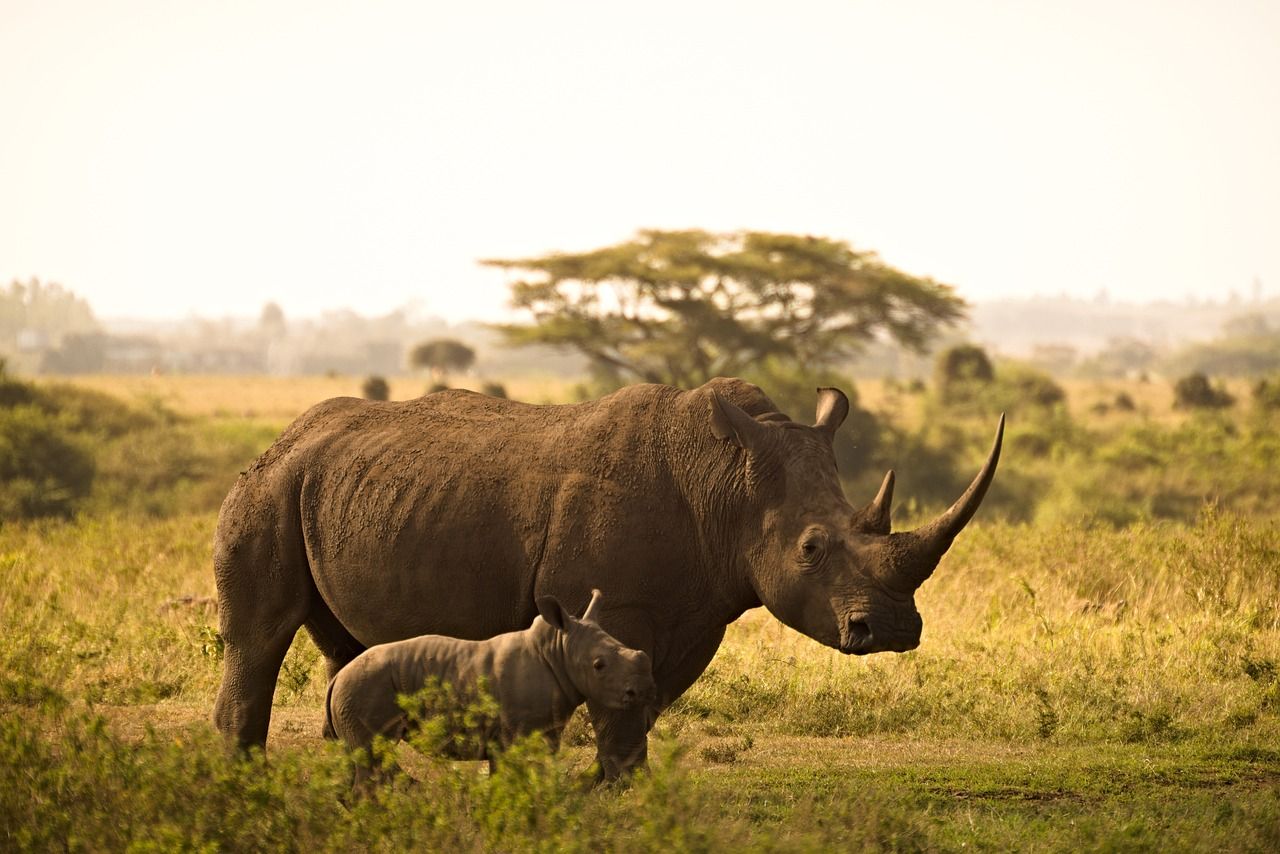
Rwanda’s rhinoceros recovery programme represents another important conservation achievement.
Eastern black rhinos historically occurred in Akagera but disappeared following extensive poaching.
In 2017, conservation authorities returned 18 eastern black rhinos to the park.
Additional rhinos were introduced in 2019.
Restoring an Endangered Species
Black rhinos are critically endangered and require intensive protection.
Their reintroduction involved careful planning, veterinary assessments and monitoring.
The animals were released into suitable habitats where conservation teams could follow their movements.
The programme restored a breeding population within the species’ historical range.
Protecting the Reintroduced Rhinos
Conservation teams use monitoring and security measures to protect the animals.
Because rhino poaching remains a serious threat, some information about individual animals and their locations is kept confidential.
Tourists visiting Akagera may see rhinos, although sightings are never guaranteed.
3. White Rhinos Return to Rwanda
Akagera’s rhino restoration continued with the introduction of southern white rhinos.
In November 2021, 30 southern white rhinos were transferred to the park from South Africa.
By June 2025, this founding population had grown to 43 animals.
Later that month, another 70 southern white rhinos were introduced.
Why This Reintroduction Is Important
White rhinos are primarily grazers, making suitable grassland habitats essential.
Akagera’s savannah provides opportunities to support these animals under managed conservation conditions.
The programme has already demonstrated population growth among the first group.
However, the additional rhinos introduced in 2025 will require continued monitoring before their long-term establishment can be fully assessed.
4. Kenya’s Sera Wildlife Conservancy: Community-Led Rhino Recovery
Sera Wildlife Conservancy in northern Kenya provides an important example of community involvement in wildlife reintroduction.
The conservancy established a black rhino sanctuary in 2015.
Ten black rhinos were introduced as the founding population.
The project involved cooperation between local communities, Kenya Wildlife Service and conservation organisations.
Why Sera Is Different
Sera is recognised for its community-owned and managed rhino sanctuary.
Local involvement is central to the programme.
Community members participate in conservation activities and benefit through employment and tourism opportunities.
The conservancy has also expanded its conservation efforts.
In 2024, four white rhinos were introduced, and the sanctuary recorded its first white rhino calf.
These developments demonstrate encouraging progress.
Benefits for Local Communities
Community conservancies can support livelihoods through:
Wildlife guiding.
Ranger employment.
Tourism accommodation.
Conservation education.
Community development activities.
When local people benefit from wildlife protection, conservation programmes can gain stronger long-term support.
5. Uganda’s Rhino Recovery at Ziwa Rhino Sanctuary
Uganda’s indigenous rhino populations disappeared during the twentieth century.
Poaching and political instability contributed to the loss of both black and northern white rhinos from the country.
For many years, Uganda had no free-ranging wild rhinos.
Establishing a Breeding Programme
Ziwa Rhino Sanctuary began its breeding programme in 2005.
Southern white rhinos were introduced to establish a protected population.
The sanctuary provided suitable habitat, security and veterinary monitoring.
Over time, successful breeding helped increase the number of rhinos.
By 2025, Ziwa had recorded 49 rhinos.
The programme demonstrated that rhinos could reproduce successfully under protected conditions in Uganda.
Tourism at Ziwa
Visitors can participate in authorised rhino tracking activities accompanied by trained guides.
These experiences provide opportunities to learn about rhino behaviour and conservation.
Tourism revenue can also support sanctuary operations.
6. Rhinos Return to Kidepo and Ajai in Uganda
Uganda entered another stage of rhino restoration in 2026.
Wildlife authorities began relocating southern white rhinos into protected areas where rhinos had disappeared decades earlier.
These included Ajai Wildlife Reserve and Kidepo Valley National Park.
Kidepo Valley National Park
In March 2026, Uganda began returning rhinos to Kidepo after an absence of approximately 43 years.
This marked an important milestone in restoring wildlife to its former range.
Ajai Wildlife Reserve
Ajai also received southern white rhinos as part of Uganda’s national restoration programme.
However, these reintroductions are still relatively new.
Their long-term success will depend on survival, breeding, habitat conditions and effective protection.
They should therefore be regarded as promising restoration projects rather than fully established breeding successes.
7. Comparing Successful Reintroductions in East Africa
| Destination | Wildlife species | Reintroduction period | Conservation outcome |
|---|---|---|---|
| Akagera, Rwanda | Lions | 2015 | Established breeding population |
| Akagera, Rwanda | Eastern black rhinos | 2017 and 2019 | Restored protected population |
| Akagera, Rwanda | Southern white rhinos | 2021 and 2025 | Initial population growth; expansion ongoing |
| Sera Conservancy, Kenya | Black rhinos | 2015 | Established community-managed sanctuary |
| Sera Conservancy, Kenya | White rhinos | 2024 | First calf recorded |
| Ziwa, Uganda | Southern white rhinos | From 2005 | Successful breeding programme |
| Kidepo and Ajai, Uganda | Southern white rhinos | 2026 | Early-stage restoration |
These projects demonstrate different levels of progress.
An established breeding population provides stronger evidence of success than a recently completed release.
8. What Makes Wildlife Reintroduction Successful?
Successful rewilding requires several important conditions.
Suitable Habitat
Animals need enough food, water, shelter and space.
Before introducing wildlife, conservation teams assess whether the habitat can support the species.
Effective Protection
Reintroduced animals may face poaching, conflict or other threats.
Ranger patrols and monitoring systems help reduce these risks.
Genetic Diversity
A small founding population can experience genetic problems over time.
Conservation specialists may introduce additional animals to support healthy breeding.
Community Participation
Communities living near protected areas should participate in conservation planning.
Employment and fair economic benefits can encourage cooperation.
Long-Term Monitoring
Wildlife authorities track survival, breeding and movement.
Monitoring helps identify problems before they threaten the entire population.
9. Challenges Facing Rewilding Projects
Reintroductions are complex and expensive.
Animals may struggle to adapt after relocation.
Predators can affect prey populations, while expanding wildlife populations may increase conflict with nearby communities.
Habitat loss is another challenge.
Protected areas sometimes become isolated by agriculture, roads and settlements.
Without suitable wildlife corridors, animal movement and genetic exchange may become restricted.
Conservation programmes must therefore plan beyond the initial release.
10. How Rewilding Supports Safari Tourism
Wildlife restoration can improve tourism opportunities.
The return of lions and rhinos to Akagera has strengthened Rwanda’s savannah safari offering.
Visitors can now experience wildlife species that were previously absent.
In Kenya, community conservancies provide opportunities to learn about rhino protection.
Uganda’s rhino recovery programme has also introduced important conservation tourism activities.
However, tourism must remain carefully managed.
Animals should never be released simply to increase visitor numbers without considering their welfare and habitat requirements.
11. How Tourists Can Support Rewilding Efforts
Travellers can contribute to wildlife restoration through responsible choices.
Visit Established Conservation Areas
Entrance fees and authorised conservation activities may support wildlife monitoring and protection.
Choose Responsible Safari Operators
Book with companies that follow park regulations and support credible conservation initiatives.
Respect Wildlife Viewing Rules
Maintain appropriate distances and avoid disturbing recently introduced animals.
Support Community Tourism
Choose locally operated services where possible.
This helps surrounding communities benefit from wildlife conservation.
Contribute to Conservation Projects
Consider supporting reputable organisations involved in habitat restoration, wildlife monitoring and anti-poaching activities.
Ask how donations are used and whether projects publish measurable results.
Rewilding efforts in East Africa demonstrate that wildlife populations can recover when suitable habitats, effective protection and long-term conservation planning are available.
Rwanda’s successful lion and rhino reintroductions, Kenya’s community-led rhino programmes and Uganda’s breeding achievements provide encouraging examples.
Newer projects in Kidepo and Ajai offer further opportunities for restoration, although their results will take time to assess.
For travellers, visiting responsible conservation destinations supports the people and institutions working to protect these animals.
Continued cooperation between governments, communities and conservation organisations will determine whether these restored populations remain healthy for future generations.




No comment