
Saving the Shoebill: What the Latest Population Counts Show
Saving the shoebill has become an important conservation priority in East Africa as researchers warn that this unusual wetland bird remains vulnerable to extinction. With its enormous shoe-shaped bill, tall body and distinctive appearance, the shoebill attracts birdwatchers and wildlife photographers visiting Uganda, South Sudan and other African wetland destinations.
However, the species faces serious threats from habitat destruction, disturbance around nesting sites and illegal wildlife trade.
Conservation organisations are working to protect breeding habitats, monitor populations and involve local communities in wetland management.
Understanding the latest shoebill population estimates is important because these birds live in remote swamps where accurate counting is difficult.
This article examines what conservation assessments reveal about shoebill numbers, why populations are declining and how responsible tourism can contribute to their protection.
What Is a Shoebill?
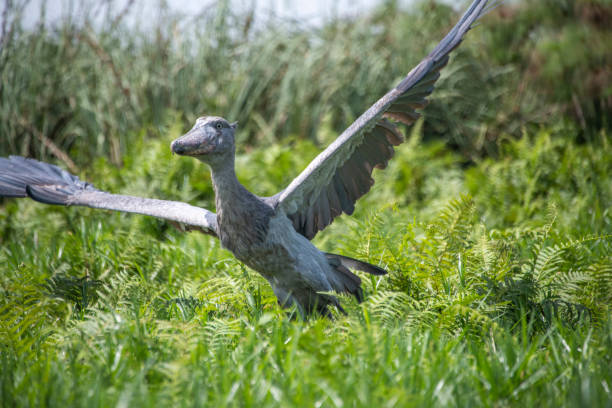
The shoebill, scientifically known as Balaeniceps rex, is a large African waterbird recognised by its broad, shoe-shaped bill.
Adults can reach approximately 1.2–1.5 metres in height.
Their grey plumage, long legs and powerful bills make them easily recognisable.
Shoebills usually inhabit freshwater swamps, papyrus wetlands and other marshy environments.
They feed primarily on fish, particularly lungfish, although they may also catch catfish, frogs and other aquatic animals.
Unlike many waterbirds, shoebills often remain motionless while waiting for prey.
They depend on healthy wetlands that provide suitable feeding and nesting conditions.
1. How Many Shoebills Are Left in the Wild?
The most widely cited conservation estimate suggests that approximately 3,300–5,300 mature shoebills remain in the wild.
This estimate is used by BirdLife International and reflects the species’ established global conservation assessment.
The International Union for Conservation of Nature classifies the shoebill as Vulnerable.
Its overall population trend is considered declining.
Are These the Latest Population Counts?
The figures represent the best widely used global estimate, but they should not be confused with a complete census conducted in 2026.
The IUCN assessment underlying these numbers dates to 2018.
More recent conservation activities provide information about local populations, nesting success and individual birds.
However, a newer comprehensive global count has not been established through the material currently available.
This distinction is important because population estimates can remain in use for several years while researchers collect additional evidence.
2. Why Shoebills Are Difficult to Count
Counting shoebills is challenging because they inhabit remote wetlands.
Many of their habitats contain dense papyrus vegetation, flooded grasslands and areas that are difficult to reach.
Remote Habitats
Researchers may need boats, specialised equipment or aerial surveys to access suitable areas.
Some wetlands become inaccessible during particular seasons.
Solitary Behaviour
Shoebills are generally solitary birds.
They may spend long periods feeding alone, making them harder to detect than species that gather in large flocks.
Seasonal Water Changes
Water levels influence where shoebills feed and nest.
Changes in flooding can alter their distribution.
Limited Monitoring Resources
Comprehensive surveys require trained personnel, equipment and funding.
Some important habitats have not been monitored frequently enough to produce precise population trends.
3. Where Are Shoebills Found in Africa?
Shoebills occur in freshwater wetlands across parts of central and eastern Africa.
Important range countries include Uganda, South Sudan, Zambia, Tanzania and the Democratic Republic of Congo.
Other countries support smaller or less consistently documented populations.
Important Shoebill Habitats
| Destination | Country | Conservation importance |
|---|---|---|
| Mabamba Wetland | Uganda | Important birdwatching and wetland habitat |
| Murchison Falls region | Uganda | Suitable marshes and Nile-associated wetlands |
| Bangweulu Wetlands | Zambia | Major shoebill conservation programme |
| Sudd wetlands | South Sudan | Extensive natural wetland habitat |
| Malagarasi wetlands | Tanzania | Important freshwater wetland landscape |
| Eastern Congo wetlands | DR Congo | Potential habitat requiring continued monitoring |
Although Zambia lies outside East Africa geographically, its Bangweulu programme provides important lessons for shoebill conservation across the species’ range.
4. Shoebill Conservation in Uganda
Uganda is one of Africa’s best-known destinations for observing shoebills.
The country’s wetlands provide feeding and nesting habitats for the species.
However, the exact national population remains uncertain.
Published estimates vary because surveys use different methods and cover different areas.
Mabamba Wetland
Mabamba Wetland is located along the northern shores of Lake Victoria, west of Entebbe.
The area is internationally recognised for birdwatching.
Visitors can explore suitable wetland channels with experienced local guides.
Shoebill sightings are possible, although they cannot be guaranteed.
Why Mabamba Is Important
Mabamba supports wetland biodiversity and provides economic opportunities through birdwatching tourism.
Local guides earn income by taking visitors into the swamp.
This creates an incentive to protect the habitat.
However, tourism must be carefully managed to avoid disturbing feeding and nesting birds.
5. Shoebills in South Sudan’s Sudd Wetlands
The Sudd is one of Africa’s largest wetland systems.
Its extensive marshes provide important habitat for shoebills and numerous other waterbirds.
However, population monitoring is difficult because of the wetland’s size and accessibility challenges.
Conservation Challenges
Shoebills in the Sudd face pressures associated with habitat disturbance and human activities.
Reliable population monitoring is necessary to understand their long-term status.
Protecting these wetlands is important for wildlife and the communities that depend on fishing and other natural resources.
6. Bangweulu Wetlands: A Shoebill Conservation Example
Bangweulu Wetlands in Zambia supports an important shoebill conservation programme.
African Parks works with government institutions and local communities to protect the area.
Nest Protection Programme
A dedicated shoebill nest protection programme began in 2012.
The initiative works to protect breeding sites and reduce threats affecting eggs and chicks.
Local community participation is an important part of this work.
Rehabilitation and Release
A specialised shoebill rehabilitation facility was established in 2022.
The programme supports vulnerable chicks that require intervention.
In 2024, two hand-reared shoebill chicks were released and later observed feeding independently.
These results demonstrate encouraging progress.
However, successful release of individual birds should not be interpreted as proof that the entire wild population is increasing.
7. Main Threats Facing Shoebill Populations
Shoebills face several threats throughout their range.
Wetland Habitat Loss
Agricultural expansion and drainage can reduce suitable wetland habitats.
When swamps are converted into farmland or other developments, shoebills may lose feeding and nesting areas.
Disturbance Around Nests
Human activity near breeding sites can disturb adults and affect reproductive success.
Repeated disturbance may discourage birds from remaining at important nesting locations.
Illegal Wildlife Trade
Shoebills are sometimes targeted for illegal capture and sale as exotic birds.
Removing individuals from the wild threatens already vulnerable populations.
Fire and Vegetation Changes
Uncontrolled burning and changes in wetland vegetation can damage nesting habitats.
Pollution
Pollution and changes in water quality may affect fish populations and wetland conditions.
8. How Shoebill Populations Are Monitored
Conservation teams use different methods to study shoebills.
| Monitoring method | Main purpose |
|---|---|
| Ground surveys | Recording birds in accessible habitats |
| Boat surveys | Observing shoebills in wetland channels |
| Aerial surveys | Assessing larger wetland areas |
| Nest monitoring | Recording breeding activity and chick survival |
| Satellite tracking | Studying movement and habitat use |
| Community reporting | Collecting local sighting information |
Combining these methods can improve understanding of population trends.
However, researchers must account for birds that remain undetected during surveys.
9. What Do the Population Figures Tell Us?
The available evidence suggests that shoebills remain vulnerable and require continued protection.
Three points are particularly important.
The Global Population Is Small
An estimated 3,300–5,300 mature individuals represents a relatively limited breeding population.
The Overall Trend Remains Concerning
The species is considered to be declining.
This indicates that conservation programmes must address threats before populations become more fragmented.
Local Successes Are Encouraging
Nest protection, rehabilitation and community-based conservation can improve conditions for individual birds.
However, these activities require long-term monitoring to demonstrate population-wide recovery.
10. How Birdwatching Tourism Can Help Save Shoebills
Responsible birdwatching can provide financial benefits to communities living near shoebill habitats.
In Uganda, local guides earn income by accompanying visitors through suitable wetland areas.
This creates employment connected to habitat protection.
Tourism Benefits
Birdwatching can support:
Local guiding services.
Boat operators.
Community accommodation.
Conservation education.
Wetland management activities.
However, not every tourism payment directly funds conservation.
Travellers should choose responsible operators and ask how their activities support local communities.
11. Responsible Shoebill Watching in Uganda
If you plan to photograph shoebills at Mabamba or another wetland, follow appropriate wildlife viewing practices.
Maintain Suitable Distances
Never ask a boat operator to approach a bird too closely.
Allow the shoebill to continue feeding naturally.
Avoid Disturbing Nesting Birds
Do not request access to sensitive nesting locations.
Keep Noise Low
Shoebills may remain motionless for long periods while hunting.
Avoid shouting or making noises to attract their attention.
Choose Experienced Guides
Local guides understand wetland conditions and appropriate viewing behaviour.
Their knowledge can improve your experience while reducing disturbance.
12. How Travellers Can Support Shoebill Conservation
Tourists can contribute through practical choices.
Support responsible birdwatching: Choose authorised guides who respect wildlife.
Protect wetlands: Avoid littering or damaging vegetation.
Reject illegal wildlife trade: Never purchase live shoebills or other protected birds.
Support conservation organisations: Consider contributing to credible wetland protection programmes.
Report suspicious activities: Inform appropriate authorities if you encounter suspected wildlife trafficking.
Share photographs responsibly: Avoid publishing sensitive nesting locations.
These actions can support conservation without interfering with the birds.
Saving the shoebill requires long-term protection of Africa’s freshwater wetlands.
The widely used estimate of 3,300–5,300 mature individuals indicates that the global population remains small, while the overall trend continues to cause concern.
Conservation programmes in places such as Uganda’s Mabamba Wetland and Zambia’s Bangweulu Wetlands demonstrate the importance of community involvement, habitat protection and scientific monitoring.
However, more comprehensive surveys are needed to determine whether global populations are stabilising.
Responsible birdwatching tourism can contribute by supporting local livelihoods and encouraging wetland conservation.
Protecting these habitats will help preserve shoebills and the many other species that depend on healthy freshwater wetlands.





No comment