
Rainfall and the Migration
Rainfall and the Migration: How Grass Quality Sets the Route
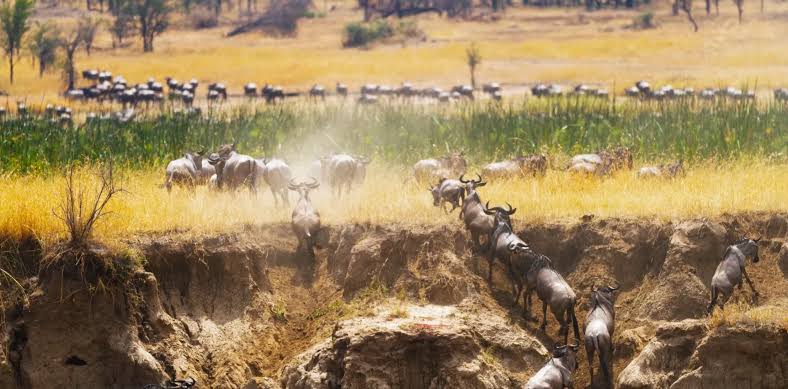
Rainfall and the Great Migration are closely connected because seasonal rainfall determines where fresh grass grows across Tanzania’s Serengeti National Park and Kenya’s Maasai Mara ecosystem. Every year, enormous herds of wildebeest, zebras and gazelles move between different grazing areas, responding to changing vegetation conditions and the availability of water. Their movements create one of Africa’s most remarkable wildlife events, attracting safari travellers throughout the year.
Although the Great Migration is famous for dramatic Mara River crossings and large gatherings of wildebeest, the main reason behind these seasonal movements is food. Wildebeest depend on grass that provides enough nutrients to support their daily activities, reproduction and the growth of young calves. When grazing conditions decline in one area, the animals move towards places offering more suitable vegetation.
Rainfall influences the timing, quantity and nutritional value of grass growth. However, wildebeest do not simply follow every rainstorm. Their movements are shaped by several factors, including soil nutrients, grass height, water availability and competition between grazing animals.
For travellers planning a Serengeti or Maasai Mara safari, understanding how rainfall affects grass quality provides a useful explanation for why migration routes change and why large herds sometimes appear earlier or later than expected.
Why Rainfall Controls Wildebeest Migration
The Serengeti–Mara ecosystem experiences seasonal rainfall patterns that influence vegetation growth across extensive grasslands.
Rainfall is not distributed evenly throughout the region. Some areas receive more rain than others, while soil conditions also affect how grasses respond.
When suitable rainfall reaches dry grasslands, new shoots begin to develop. Fresh grass is often more nutritious and easier for grazing animals to digest than older, fibrous vegetation.
This encourages wildebeest to move towards areas where feeding conditions are favourable.
As the dry season progresses, some grasslands lose nutritional value or become less productive, encouraging the herds to seek alternative grazing areas.
Quick Facts About Rainfall and the Great Migration
| Feature | Description |
|---|---|
| Main ecosystem | Serengeti–Mara |
| Countries | Tanzania and Kenya |
| Main migrating animal | Blue Wildebeest |
| Scientific name | Connochaetes taurinus |
| Main migration driver | Seasonal availability of suitable grass and water |
| Important environmental factor | Rainfall distribution |
| Preferred wildebeest grazing | Short, nutritious grasses |
| Main calving region | Southern Serengeti and Ndutu |
| Important dry-season region | Northern Serengeti and Maasai Mara |
| Migration timing | Changes according to seasonal conditions |
1. Fresh Grass Provides Essential Nutrition
Wildebeest are grazing mammals that depend heavily on grass.
However, not all grasses provide the same nutritional benefits.
Young grasses generally contain higher concentrations of digestible nutrients than mature plants with tougher leaves and stems.
As grasses age, their fibre content often increases and their feeding value may decline.
For wildebeest, access to suitable grass is particularly important during pregnancy, lactation and periods of rapid calf development.
Why Short Grass Is Important
Wildebeest frequently select short grasses because these can provide accessible, nutritious forage when growing under favourable conditions.
Short grasslands also allow animals to graze efficiently.
However, grass height alone does not determine quality.
A short grassland affected by prolonged drought may offer little food, while recently growing grass in another location may provide better nutrition.
The animals respond to a combination of grass abundance, growth stage and nutritional value.
2. Soil Nutrients Influence Where Grass Grows
Rainfall is essential for grass growth, but soil conditions help determine the nutritional quality of the vegetation.
Different parts of the Serengeti contain soils with varying mineral concentrations and water-holding capacities.
The southern Serengeti plains are particularly important because their volcanic-influenced soils support nutrient-rich short grasses during suitable rainy periods.
These grasslands attract large wildebeest herds during the calving season.
Why the Southern Serengeti Is Important
The southern plains receive seasonal rainfall that encourages grass growth across extensive open habitats.
When these grasses are fresh and plentiful, they provide valuable grazing for pregnant wildebeest and nursing mothers.
This helps explain why the main calving season occurs in southern Serengeti and adjoining areas around Ndutu.
However, when rainfall declines, the shallow soils of some southern grasslands lose moisture relatively quickly.
Grass growth slows, and the animals begin moving towards other feeding areas.
3. How Rainfall Starts the Migration Cycle
The Great Migration is a continuous seasonal movement rather than a journey with a fixed beginning and end.
Rainfall influences where wildebeest gather at different times of the year.
As rains return to southern Serengeti, fresh grasses begin growing across the plains.
Large herds may gradually move towards these areas to take advantage of suitable feeding conditions.
During the drier months, many animals travel towards western and northern parts of the ecosystem.
The precise timing changes between years because rainfall patterns are variable.
Do Wildebeest Follow Rain Clouds?
Wildebeest do not simply travel directly towards visible rain clouds.
They respond to environmental conditions that develop after rainfall, particularly changes in grass growth and available water.
A storm may produce fresh vegetation in one area, while another location receives too little rain to support useful grazing.
Animals must therefore respond to actual feeding conditions rather than rainfall alone.
4. The Calving Season Depends on Grass Quality
The wildebeest calving season is closely associated with the nutrient-rich grasslands of southern Serengeti.
Large numbers of calves are born between January and March, with February often representing the busiest period.
During a major calving season, approximately 400,000–500,000 calves may be born within a relatively short period, although estimates vary.
Pregnant females require sufficient nutrition before giving birth.
After calving, mothers also need suitable grazing to support milk production.
Fresh grasses growing after seasonal rainfall provide an important food resource.
Why Calving Usually Takes Place in the South
The southern Serengeti plains offer extensive open grasslands and nutritious grazing when rainfall conditions are favourable.
These habitats support large concentrations of wildebeest during late pregnancy and early calf development.
The synchronised calving period also creates a large concentration of young animals, which may reduce the proportion taken by predators.
However, rainfall variability can influence exactly where herds gather.
Not every calving season occurs in precisely the same locations.
5. Why Wildebeest Leave the Southern Plains
As the rainy season comes to an end, grass conditions change across southern Serengeti.
Some areas begin drying, reducing the availability of fresh vegetation.
Although grass may remain visible, its nutritional quality and accessibility can decline.
Large grazing herds also consume substantial quantities of vegetation.
When suitable forage becomes limited, many wildebeest begin moving towards central and western Serengeti.
This movement generally develops during April and May, although the timing varies.
How Grazing Pressure Influences Movement
Wildebeest consume considerable quantities of grass.
When large numbers gather in one location, grazing pressure increases.
However, migration is not simply caused by animals eating all available grass.
It also reflects seasonal changes in rainfall, plant growth and forage quality.
The animals must continually balance feeding opportunities against the energy required to move between habitats.
6. Why Herds Move Towards the Western Corridor
The Western Corridor becomes important during the period when many migrating wildebeest move away from southern Serengeti.
This region contains grasslands, woodland and riverine habitats associated with the Grumeti and Mbalageti rivers.
Seasonal rainfall and soil conditions can maintain suitable grazing after some southern areas have begun drying.
As a result, large herds may gather across western Serengeti during May and June.
Some animals encounter the Grumeti River, where crocodiles and difficult water conditions create additional challenges.
Does Rainfall Determine Grumeti Crossings?
Rainfall influences the general movement of herds into the Western Corridor.
However, it does not determine the precise moment a wildebeest enters the river.
Crossing behaviour also depends on herd movements, river conditions and available crossing locations.
Some groups cross quickly, while others remain near the banks before moving away.
This makes individual Grumeti River crossings difficult to predict.
7. Why the Northern Serengeti and Maasai Mara Become Important
During the dry season, many migrating wildebeest move towards northern Serengeti and Kenya’s Maasai Mara.
These regions often retain useful grazing when southern Serengeti becomes drier.
Differences in rainfall patterns, soil conditions and vegetation growth help explain this seasonal shift.
The northern parts of the ecosystem generally receive more rainfall than the southern short-grass plains.
This supports grass growth and can provide suitable feeding conditions during periods when southern grazing areas are less productive.
Why the Mara River Becomes an Obstacle
As wildebeest travel between northern Serengeti and the Maasai Mara, some herds encounter the Mara River.
The animals may need to cross to reach grazing areas on the opposite side.
However, crossings are not a compulsory one-way stage of migration.
Some herds cross the river several times, while others remain on one side for extended periods.
Their movements continue to respond to grazing conditions rather than an exact geographical schedule.
8. How Zebras and Wildebeest Use Grass Differently
Zebras and wildebeest frequently occur in the same migration landscape.
Both depend on grass, but their digestive systems and feeding preferences differ.
Wildebeest are ruminants that generally benefit from nutritious, relatively short grasses.
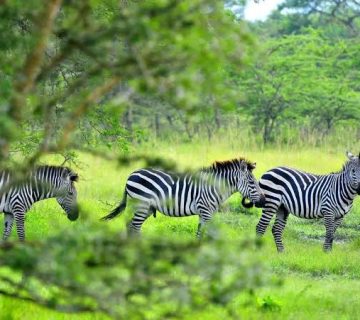
Zebras are hindgut fermenters capable of processing larger quantities of fibrous vegetation.
This allows zebras to make use of some taller or coarser grasses.
How Their Feeding Habits Compare
| Feature | Wildebeest | Plains Zebra |
|---|---|---|
| Digestive system | Ruminant | Hindgut fermenter |
| Common feeding preference | Short, nutritious grasses | Wider range of grass heights |
| Response to grazing changes | Strongly influenced by forage quality | Can use relatively fibrous grasses |
| Water requirements | Require access to water | Require regular access to water |
| Seasonal movement | Respond to rainfall and grazing | Respond to grazing, water and other conditions |
These differences influence how the two species distribute themselves across the landscape.
Zebras may sometimes graze taller vegetation before wildebeest arrive, although the species also compete for available food.
They do not maintain a fixed arrangement in which zebras always lead wildebeest.
9. Why Grass Protein Matters During Migration
Protein is an essential nutrient for wildebeest growth, reproduction and body maintenance.
Grass contains nitrogen, which researchers use as an indicator when examining forage protein content.
Young, actively growing grass often provides higher protein concentrations than older vegetation.
However, rainfall and soil fertility both influence the nutrients available in plants.
A grassland receiving plentiful rainfall does not necessarily produce the most nutritious forage if its soils are relatively poor.
What Scientific Research Reveals
A 2009 study by Ricardo Holdo and colleagues examined the environmental factors influencing wildebeest migration.
The researchers found that models combining the amount of green grass animals could consume, its nitrogen concentration and the effects of tree cover best explained observed migration patterns.
This supports the idea that wildebeest respond not merely to the presence of grass but also to its nutritional value.
A separate 2006 modelling study found that new vegetation growth was a stronger predictor of wildebeest movements than rainfall alone.
These findings help explain why the migration cannot be predicted accurately by looking at rainfall totals in isolation.
10. What Happens When Rainfall Arrives Late?
Rainfall can vary substantially between migration seasons.
Some years experience delayed rains, while others receive unusually heavy rainfall or extended dry periods.
These differences can change the availability of fresh grass across the ecosystem.
When rains arrive late, suitable grazing may develop later than usual.
Wildebeest can remain in existing feeding areas for longer or move towards alternative locations.
This can shift the timing of major herd movements.
Can Drought Affect Wildebeest Survival?
Yes. Prolonged drought can reduce the availability and nutritional value of grazing.
When food becomes insufficient, wildebeest may lose body condition.
Pregnant females and nursing mothers may face additional nutritional challenges.
Calves can also be affected when mothers struggle to obtain enough suitable forage.
Severe dry-season food shortages have been identified as an important factor influencing wildebeest mortality in the Serengeti ecosystem.
This highlights why access to different seasonal grazing areas is essential.
11. How Heavy Rainfall Changes Migration Routes
Heavy rainfall can create fresh grazing opportunities in places that were previously dry.
However, excessive rain may also produce flooded grasslands, muddy tracks and swollen rivers.
Animals may respond by spreading across different habitats rather than remaining in one concentrated area.
Large herds can also alter their movements when feeding conditions improve in unexpected locations.
For safari visitors, heavy rainfall may affect travel conditions even when wildlife viewing remains excellent.
Some tracks become muddy, and certain areas may be difficult to access.
An experienced guide can help adjust game-drive routes according to local conditions.
12. Can Scientists Predict Migration Using Satellite Images?
Satellite technology provides information about rainfall and vegetation growth across the Serengeti–Mara ecosystem.
Researchers can use satellite observations to monitor changing grassland conditions.
One commonly used measurement is the Normalised Difference Vegetation Index, or NDVI, which helps estimate vegetation greenness.
Changes in vegetation growth can indicate areas where fresh grazing may become available.
However, these measurements do not directly reveal the nutritional quality of every grass species.
Why Satellite Tracking Has Limitations
Satellite images can show broad environmental changes, but they cannot explain every decision made by migrating animals.
Two areas with similar vegetation greenness may differ in soil nutrients, grass species, water availability and grazing conditions.
Wildebeest also respond to environmental conditions over large distances.
For this reason, researchers combine satellite information with field observations, rainfall measurements and animal movement data.
For safari travellers, recent reports from experienced local guides remain particularly useful.
13. Why the Migration Calendar Changes Every Year
Many safari itineraries describe the Great Migration according to particular months.
These calendars are useful for general planning but cannot guarantee exactly where migrating animals will be found.
The seasonal pattern remains broadly consistent because the Serengeti–Mara ecosystem has established rainfall and vegetation gradients.
However, the timing of individual herd movements varies.
A delayed rainy season may keep herds in one region longer than expected.
Unexpected rainfall elsewhere may encourage movement towards alternative grazing areas.
Typical Great Migration Calendar
| Period | General migration location | Main environmental influence |
|---|---|---|
| January–March | Southern Serengeti and Ndutu | Nutritious grass and calving conditions |
| April–May | Central Serengeti | Changing rainfall and grazing |
| June | Western Corridor | Seasonal forage availability |
| July–August | Northern Serengeti | Dry-season grazing conditions |
| August–October | Northern Serengeti and Maasai Mara | Access to suitable grazing |
| November–December | Central and southern Serengeti | Returning rains and new grass growth |
The dates are approximate and should always be considered alongside current seasonal conditions.
Best Places to See the Migration After Rainfall
Different areas of the Serengeti–Mara ecosystem become attractive as vegetation conditions change.
Southern Serengeti and Ndutu
Southern Serengeti and Ndutu are particularly important during the wet season and wildebeest calving period.
Fresh, nutrient-rich grasses attract pregnant females, newborn calves and other grazing animals.
Lions, cheetahs and spotted hyenas may also be observed around large herbivore concentrations.
Central Serengeti
Central Serengeti provides opportunities to observe seasonal herd movements and resident wildlife.
The Seronera region supports predators and herbivores throughout the year.
During suitable migration periods, large groups of wildebeest may move through surrounding grasslands.
Western Corridor
The Western Corridor becomes important when herds move towards the Grumeti region.
Visitors may encounter large grazing concentrations and possible Grumeti River crossings during late May, June and early July.
Northern Serengeti
Northern Serengeti provides dry-season grazing areas and opportunities to observe wildebeest near the Mara River.
The Kogatende and Lamai areas are particularly well known for migration activity.
Maasai Mara National Reserve
Kenya’s Maasai Mara offers suitable seasonal grazing for many migrating wildebeest.
Large herds may arrive during the dry season, although the timing varies.
Visitors may witness river crossings, predator activity and extensive grazing concentrations.
How Rainfall Affects Safari Photography
Rainfall changes the appearance of the Serengeti landscape.
During the wet season, fresh grass creates green backgrounds for photographing wildebeest, zebras and predators.
Cloud cover can provide softer natural light, particularly during morning game drives.
Dry-season landscapes often contain golden grasses and more open vegetation.
Large herds may gather around remaining suitable grazing areas, creating impressive opportunities for wide landscape photographs.
Travellers should protect camera equipment from dust and rain and avoid asking guides to enter restricted or environmentally sensitive areas.
Planning a Migration Safari Around Grass Growth
The best migration safari depends on the wildlife experience you want.
For travellers interested in wildebeest calving, January to March is generally favourable for southern Serengeti and Ndutu.
For those interested in the Western Corridor and Grumeti River, June is often a strong planning month.
Visitors hoping to observe Mara River crossings commonly travel between July and October.
However, rainfall and herd movement reports should always influence final decisions.
Practical Safari Planning Tips
Choose your safari region according to the season rather than relying on one fixed migration route.
Allow at least three or four nights in an important migration area when possible.
Ask your safari operator about recent rainfall and herd sightings.
Stay in accommodation reasonably close to expected migration habitats.
Travel with guides who understand local grassland conditions.
Maintain flexible expectations about river crossings and major herd concentrations.
A well-planned safari should also include opportunities to observe resident wildlife, because the migration may not be concentrated in the expected location every day.
Why Protecting Migration Routes Matters
The Great Migration depends on the ability of wildebeest and other herbivores to move between seasonal grazing areas.
If important routes become blocked by fences, settlements or other barriers, animals may lose access to suitable grasslands.
Changes in river flow and water availability can also affect migration conditions.
Climate variability creates additional uncertainty because changes in rainfall timing may influence vegetation growth.
Conservation efforts therefore need to protect connected habitats rather than concentrating only on individual river-crossing locations.
Maintaining the wider Serengeti–Mara ecosystem allows migrating animals to respond naturally to changing rainfall and grazing conditions.
Grass Quality Shapes the Great Migration
Rainfall and the Great Migration are connected through the seasonal growth of grass across Tanzania and Kenya.
Rain provides the moisture needed for vegetation growth, while soil fertility influences the nutritional value of the grasses available.
Wildebeest respond to these changing conditions by moving between southern Serengeti, the Western Corridor, northern Serengeti and the Maasai Mara.
Their movements are not controlled by a fixed calendar or a single rainfall event.
Instead, the migration reflects a continuing search for suitable food and water across a vast ecosystem.
For safari travellers, understanding this relationship makes it easier to appreciate why herds sometimes arrive early, remain in one area longer than expected or follow slightly different routes.
The Great Migration is therefore not simply a journey between Tanzania and Kenya. It is a remarkable response to changing environmental conditions, with grass quality playing a central role in determining where millions of grazing animals find the resources they need to survive.


No comment