
Toro-Semliki Wildlife Reserve
Savanna Beside the Albertine Rift
Toro-Semliki Wildlife Reserve in western Uganda is one of the country’s most scenic yet less-visited safari destinations. Located on the floor of the Albertine Rift Valley, the reserve combines open savannah grasslands, acacia woodland, riverine forests and wetlands stretching towards Lake Albert. Its dramatic landscape is framed by the Rwenzori Mountains, the Kijura Escarpment and the distant Blue Mountains of the Democratic Republic of Congo.
Unlike Uganda’s busiest national parks, Toro-Semliki offers a quieter wilderness experience where visitors can explore wildlife habitats without encountering numerous safari vehicles. The reserve supports Uganda kobs, elephants, buffaloes, waterbucks, primates and an impressive variety of birds.
For travellers exploring Fort Portal, Semuliki National Park or the wider Albertine Rift, Toro-Semliki provides opportunities for game drives, birdwatching, guided walks and cultural encounters.
Where Is Toro-Semliki Wildlife Reserve?
Toro-Semliki Wildlife Reserve lies in the Ntoroko and Kabarole districts of western Uganda, northwest of Fort Portal City.
The reserve occupies approximately 542 square kilometres of protected land along the Albertine Rift Valley.
Its headquarters are accessible from Karugutu, along the Fort Portal–Bundibugyo road.
The surrounding landscapes include the shores of Lake Albert, lowland grasslands and scenic escarpments.
Quick Facts About Toro-Semliki
| Feature | Description |
|---|---|
| Country | Uganda |
| Region | Western Uganda |
| Districts | Ntoroko and Kabarole |
| Size | Approximately 542 km² |
| Established | 1926 |
| Management | Uganda Wildlife Authority |
| Main habitat | Savanna, woodland and wetlands |
| Major wildlife | Uganda kob, buffalo, elephant and waterbuck |
| Activities | Game drives, birdwatching and guided walks |
| Recommended stay | Two to three days |
1. Why Toro-Semliki Is Special
Toro-Semliki is among Uganda’s oldest protected wildlife areas.
It was established as a game reserve in 1926, primarily to protect large populations of Uganda kob.
The reserve’s setting makes it different from conventional savannah safari destinations.
Its low-lying grasslands stretch towards Lake Albert, while surrounding mountains create impressive panoramic views.
Visitors experience a mixture of savannah, wetland and forest-edge environments.
This variety supports wildlife species with different feeding and habitat requirements.
2. Understanding the Albertine Rift Landscape
The Albertine Rift is the western branch of the East African Rift System.
It contains mountains, valleys, lakes and important biodiversity habitats.
Toro-Semliki occupies part of the Rift Valley floor, at elevations beginning around 700 metres above sea level.
What Makes the Scenery Remarkable?
On clear days, visitors may see the Rwenzori Mountains towards the southwest.
The Kijura Escarpment rises above surrounding lowlands.
Across the western horizon, the Blue Mountains of the Democratic Republic of Congo may be visible.
These geographical features create excellent opportunities for landscape photography.
3. Wildlife You May Encounter
Toro-Semliki supports several mammals also found in Uganda’s larger savannah national parks.
However, wildlife densities and viewing conditions differ.
Visitors should expect patient game drives rather than guaranteed sightings.
Uganda Kob
Uganda kobs are among the reserve’s historically important animals.
These reddish-brown antelopes inhabit open grasslands, where they feed on suitable vegetation.
Males have distinctive curved horns.
African Buffalo
Buffaloes use grasslands and woodland habitats.
They may occur individually or in groups.
Visitors should observe them from a safe distance because buffaloes can behave unpredictably.
Elephants
Elephants inhabit Toro-Semliki, although sightings may be less frequent than in Uganda’s major elephant-viewing parks.
The reserve is particularly interesting because both savannah and forest elephant ancestry have been reported within the local population.
Other Mammals
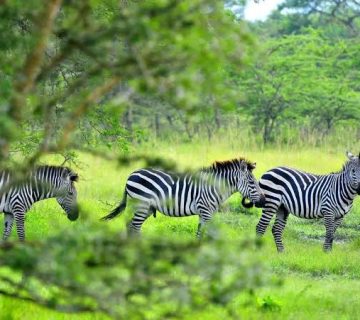
Waterbucks, bushbucks, reedbucks, warthogs and giant forest hogs are among the mammals associated with the reserve.
Lions and leopards have been recorded historically, but large predator sightings should not be expected during an ordinary visit.
4. Game Drives Through the Savanna
Game drives allow visitors to explore the reserve’s open grasslands and woodland.
The experience is especially attractive for travellers who appreciate quiet natural environments.
An experienced guide helps identify animals, interpret tracks and explain the surrounding vegetation.
Best Time for Game Drives
Early morning is often favourable because temperatures are relatively cool.
Late afternoon may also provide rewarding wildlife encounters.
During hot periods, animals may rest beneath trees or move towards sheltered habitats.
Visitors should use authorised tracks and avoid disturbing wildlife.
5. Birdwatching in Toro-Semliki
Birdwatching is one of the reserve’s strongest attractions.
More than 400 bird species have been recorded across its diverse habitats.
Grasslands attract birds of prey, while wetlands and woodland support specialised species.
Birds to Look For
Abyssinian Ground Hornbill: A large terrestrial bird associated with open savannah and woodland.
Red-necked Falcon: A small falcon that may be observed around suitable open habitats.
Black-billed Barbet: A distinctive bird associated with woodland environments.
Kingfishers: Different species occur around watercourses and wetland habitats.
Herons and Egrets: These birds search shallow waters for fish and other aquatic prey.
Birdwatchers should carry binoculars and allow additional time for observing less conspicuous species.
6. Shoebill Watching Near Lake Albert
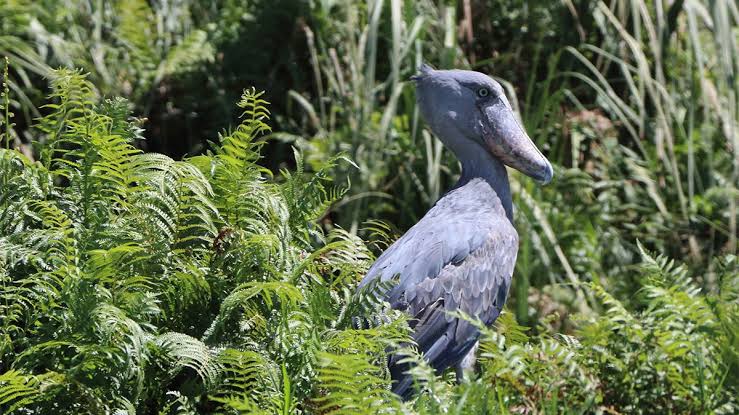
The wetlands surrounding Lake Albert provide opportunities to search for the remarkable Shoebill.
This large bird is famous for its enormous shoe-shaped bill and unusual appearance.
Shoebills inhabit papyrus swamps and other suitable freshwater wetlands.
Can Visitors Take Boat Trips?
Boat excursions may be arranged around the Ntoroko and Lake Albert area, subject to water conditions and operator availability.
Visitors should confirm current arrangements before travelling.
A Shoebill sighting is never guaranteed.
Experienced local guides can help identify suitable wetland areas while maintaining appropriate distances from birds.
7. Chimpanzees in the Riverine Forest
Toro-Semliki also supports a population of eastern chimpanzees.
Researchers have studied chimpanzees in the Mugiri River forest and surrounding habitats.
This population is particularly interesting because its environment includes savannah woodland and riverine forest.
Is Chimpanzee Tracking Available?
Toro-Semliki is not comparable to Kibale National Park, where established chimpanzee tracking programmes serve regular visitors.
Research activities and chimpanzee access arrangements may be restricted.
Travellers should confirm whether any authorised primate experience is available before including it in an itinerary.
For reliable visitor-focused chimpanzee tracking, Kibale remains the more established option.
8. Guided Nature Walks
Guided walking experiences provide opportunities to explore the reserve at a slower pace.
Visitors may learn about animal tracks, trees, insects and the ecological importance of different habitats.
Walking activities must be arranged through authorised guides or wildlife authorities.
What to Expect
Some routes pass through grasslands, while others explore woodland or areas near watercourses.
The difficulty depends on the selected route.
Visitors should wear comfortable walking shoes, carry drinking water and follow ranger instructions.
Independent walking in wildlife habitats is not recommended.
9. Cultural Experiences Around the Reserve
Several communities live around Toro-Semliki.
These include Batuku pastoralists, Bakonjo farming communities and fishing families around Ntoroko.
Their livelihoods are connected to livestock, agriculture, fishing and local trade.
Community Visits
Arranged cultural experiences may introduce visitors to traditional livestock keeping, farming activities and everyday community life.
These experiences should involve willing local participants.
Visitors should respect cultural practices, request permission before photographing people and support businesses that provide fair community benefits.
10. Best Time to Visit Toro-Semliki
Toro-Semliki can be visited throughout the year.
However, relatively dry months generally provide more convenient road conditions and outdoor experiences.
December to February and June to August are often practical periods for visiting western Uganda.
What About Rainy Months?
Rainfall can transform the grasslands into attractive green landscapes.
Birdwatching may remain productive.
However, internal tracks may become muddy, and some activities may be affected by wet conditions.
A four-wheel-drive safari vehicle is recommended.
11. How to Reach Toro-Semliki
Most travellers reach the reserve through Fort Portal.
From Kampala, the common route passes through Mubende towards Fort Portal.
The reserve headquarters are approximately 30 kilometres beyond Fort Portal, using the Karugutu access route.
Road Travel Advice
Travellers should confirm current road conditions before departure.
Some sections may require additional driving time during rainy weather.
A reliable vehicle, sufficient fuel and an experienced driver are important.
Those combining several western Uganda destinations should arrange their route carefully.
12. Accommodation Near the Reserve
Accommodation choices are more limited than around Queen Elizabeth or Murchison Falls national parks.
Semliki Safari Lodge is an established accommodation option within the reserve.
It provides a wilderness setting suitable for travellers interested in game viewing and nature experiences.
Additional accommodation may be available around Fort Portal.
Choosing Where to Stay
| Location | Main advantage |
|---|---|
| Inside Toro-Semliki | Convenient access to reserve activities |
| Fort Portal | Wider accommodation and restaurant choices |
| Nearby Albertine Rift areas | Scenic surroundings and regional travel opportunities |
Travellers should confirm current room availability and access arrangements before booking.
13. Toro-Semliki and Semuliki National Park
These two protected areas are often confused because of their similar names.
However, they offer different wildlife experiences.
Toro-Semliki Wildlife Reserve mainly protects savannah, woodland and wetland habitats.
Semuliki National Park is known for lowland tropical forest, the Sempaya Hot Springs and Central African forest-associated wildlife.
Combining both destinations provides an interesting contrast between savannah and rainforest environments.
14. Suggested Two-Day Toro-Semliki Safari
Day One: Arrival and Wildlife Viewing
Travel from Fort Portal towards Toro-Semliki.
Enter the reserve after completing the necessary arrangements.
Enjoy a guided game drive through suitable grassland habitats.
Look for Uganda kobs, buffaloes, waterbucks and other wildlife.
Spend the evening at your accommodation.
Day Two: Birdwatching and Departure
Begin with an early morning birdwatching activity.
Explore suitable habitats with a knowledgeable guide.
If available and arranged in advance, consider a Lake Albert wetland excursion.
Later, return towards Fort Portal or continue your western Uganda journey.
15. Conservation Challenges
Toro-Semliki is important for biodiversity conservation within the Albertine Rift.
However, the reserve faces pressures associated with land use, livestock grazing, human-wildlife conflict and wider development.
Maintaining suitable habitats is essential for both resident mammals and birdlife.
Why Responsible Tourism Matters
Tourism can generate income while encouraging habitat protection.
Visitors should follow wildlife regulations, avoid littering and respect nearby communities.
Supporting responsible operators also contributes to the long-term value of protected landscapes.
Why Toro-Semliki Is Worth Visiting
Toro-Semliki Wildlife Reserve provides a rewarding alternative to Uganda’s busiest safari parks.
Its combination of open savannah, riverine forest, wetlands and Rift Valley scenery creates a distinctive wildlife experience.
Visitors can search for Uganda kobs, elephants, buffaloes and birds while enjoying peaceful landscapes near Lake Albert.
Although sightings can be unpredictable, the reserve is particularly attractive to travellers interested in conservation, photography and lesser-known destinations.
For anyone exploring Fort Portal and the Albertine Rift, Toro-Semliki offers an opportunity to discover a remarkable part of western Uganda’s natural heritage.


No comment