Meeting the Shoebill: Uganda’s Prehistoric-Looking Bird
Uganda is known for mountain gorillas, tree-climbing lions, chimpanzees, and breathtaking landscapes, but one bird often leaves an impression on visitors. Standing tall in the wetlands with a posture and a striking bill, the shoebill appears as though it has stepped out of another era. Watching this bird in its natural habitat is one of Uganda’s most rewarding wildlife experiences, especially for birdwatchers, photographers, and nature lovers looking for something beyond the traditional safari.
Meeting the Shoebill: Uganda’s Prehistoric-Looking Bird is an experience that combines patience, adventure, and appreciation for Uganda’s biodiversity. Every sighting feels special because the shoebill is elusive, highly territorial, and found in selected wetlands across East and Central Africa. Uganda has become one of the destinations in the world to observe this remarkable species thanks to its protected swamps, experienced guides and accessible birding locations.
Whether you are visiting Uganda for the first time or returning to discover its lesser-known attractions, adding a shoebill excursion to your itinerary offers a completely different perspective on the country’s wildlife.
Why the Shoebill Fascinates Bird Lovers
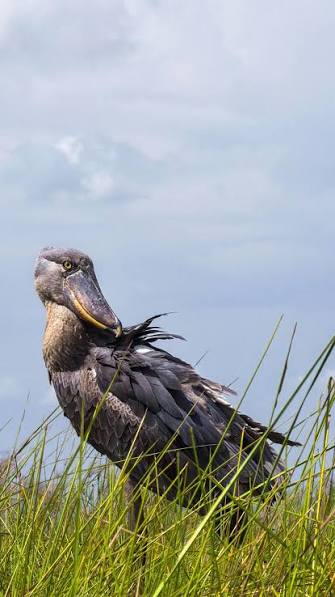
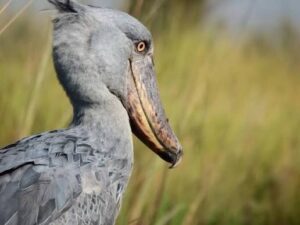
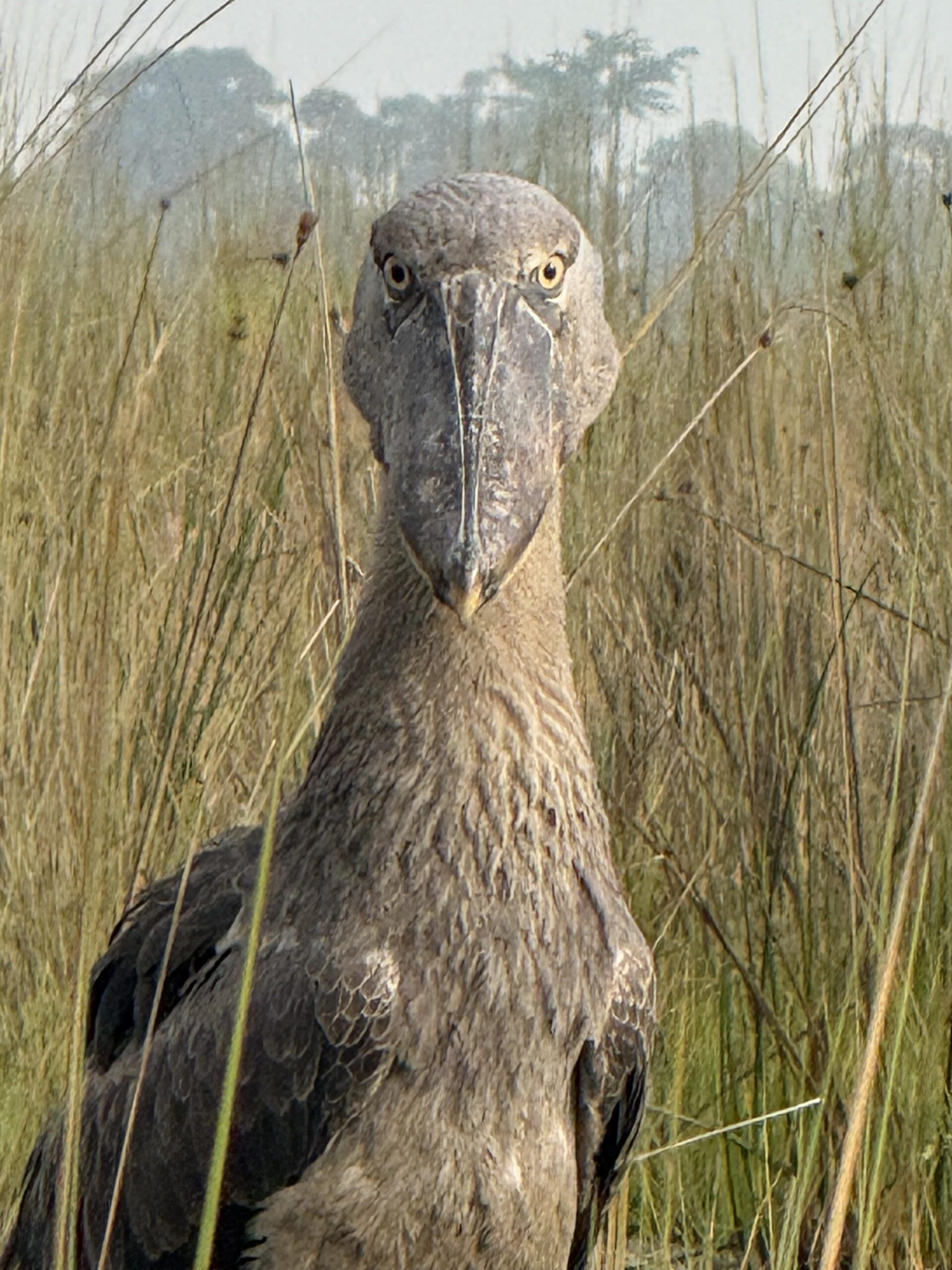
The shoebill is instantly recognizable because of its shoe-shaped bill, piercing pale eyes, and impressive height that can exceed four feet. Its grey feathers blend perfectly with papyrus swamps, allowing it to remain hidden despite its size.
Scientists classify the shoebill as one of Africa’s unusual birds. Although it resembles a creature, it continues to thrive in isolated wetlands where fish are abundant. Watching one stand perfectly still for minutes before suddenly striking its prey demonstrates remarkable hunting precision.
Unlike birds that move constantly, shoebills conserve energy by waiting patiently for lungfish, catfish, frogs, snakes, and other aquatic animals to come within reach. This behavior makes every successful hunt fascinating to observe.
Their calm appearance often surprises visitors until they witness the speed with which the bird captures prey. Within seconds, the massive bill scoops up fish from the water before the bird calmly returns to its statuesque pose.
 The Best Places to See Shoebills in Uganda
Uganda is a place to see shoebills. There are good locations where you can spot these amazing birds. Each place is different. You will see different animals.
Mabamba Swamp
Mabamba Swamp is on the side of Lake Victoria. This is the famous place in Uganda to see shoebills. You can drive from Entebbe. Then take a canoe ride to get deep into the swamp. Local guides will help you find the birds.
It is best to go in the morning because shoebills are more active when it is cool. The water is calm. The sunlight is soft, which is great for taking pictures.
Mabamba Swamp is home to other birds like kingfishers, herons, and African fish eagles. You will see birds when you take a canoe trip.
Murchison Falls National Park
Murchison Falls National Park is another place to see shoebills. You can take a boat ride on the Nile Delta. See the birds eating in the marshes.
There are also other animals in the park like elephants, buffaloes and giraffes. You can go on a game drive. See these animals and also go birdwatching.
Queen Elizabeth National Park
You can also see shoebills in Queen Elizabeth National Park. It is not as easy as in Mabamba Swamp. You can take a boat ride on the Kazinga Channel. See many different birds.
Ziwa Rhino Sanctuary
Ziwa Rhino Sanctuary is mainly for seeing rhinos. You can also see shoebills in the wetlands. You can go birdwatching. See many different animals.
Understanding the Shoebills Wetland Habitat
Shoebills need wetlands to survive. The wetlands have plants that give the birds shelter and protection. The shallow water has fish, which are food for the shoebills.
Shoebills like to eat lungfish, which live in the wetlands. They also eat catfish, frogs, and small turtles. The birds hunt by waiting and then striking quickly.
The wetlands are home to other animals and plants, which all work together to make a healthy ecosystem. We need to protect the wetlands so that many animals, including the shoebill, can survive.
Why Uganda Is Among the World’s Best Shoebill Destinations
Uganda is a place to see shoebills. Many other African countries have seen their shoebill populations decrease because of people destroying their homes and being too active. Uganda is working hard to protect its wetlands and make sure the birds have a safe place to live.
Uganda is also helping local people start tourism businesses, which means they can make money from visitors coming to see the birds. This is good for the birds because it means people will try to protect them.
Local guides in Uganda are really good at finding shoebills without scaring them. These guides have been watching the birds for a long time, so they know where to find them. This makes it more likely that visitors will see the birds.
It is also easy to get to the places where the shoebills live. If you fly into Entebbe, you can get to Mabamba Swamp quickly. This means you can even go for a half-day trip to see the shoebills before you start your journey.
Photography Tips for Capturing the Shoebill
If you want to take pictures of shoebills, you need to be prepared and patient. These birds often stay still for a time so you have time to get your camera ready.
The best time to take pictures is early in the morning when the light is soft. This makes the colors look nicer. There are no harsh shadows. It is also a good idea to use a special lens that lets you take pictures from far away.
When you are in a boat, it is helpful to have something to hold your camera steady. When the shoebill is eating, you need to take pictures quickly because it can move fast.
You should be quiet. Still when you are near the birds so you do not scare them away. This is good for you and the birds.
It is also nice to take pictures of the shoebills in their home, which’s the papyrus habitat. This tells a story about where they live of just taking close-up pictures.
Conservation Challenges Facing Shoebills
Even though Uganda is a place for shoebills, they still face many dangers. People are destroying their homes by draining the wetlands to grow food.
When people build houses, it can break up the places where the shoebills have their babies. When the water is dirty, it can hurt the birds and the fish they eat.
Some people have taken shoebills from the wild to sell, which is very bad for the birds. Now people are working hard to stop this from happening.
The weather is also changing, which can affect the water levels and the food the shoebills eat. People who care about the birds are watching what is happening so they can help.
If people visit Uganda to see the shoebills, it helps the local people understand that protecting the birds is important. This way they will not destroy the wetlands.
Other Wildlife You May Encounter
When you go to see the shoebills, you will see other amazing animals. The wetlands in Uganda are some of the places in Africa to see wildlife.
You can see birds like the African jacana, the malachite kingfisher, and the great egret. There are also animals like monitor lizards, Nile crocodiles, and otters.
In the forests and grasslands, you can see monkeys, antelopes, and many other types of birds. This makes for an exciting day even before you see the shoebill.
Planning Your Shoebill Adventure
To have a chance of seeing the shoebills, you need to plan carefully.
You should go with a guide who knows where the shoebills live. This will make it more likely that you see the birds. You will also be helping to protect them.
Wear light clothes and the same color as the wetlands so you do not scare the birds away. It is also a good idea to wear comfortable shoes that can get wet.
Bring binoculars, sunscreen, water, and a camera. Do not forget a jacket in case it rains.
It is best to go in the morning when the birds are most active. If you want to take pictures, you should allow time so you are not in a hurry.
A Wildlife Experience Unlike Any Other
Seeing the shoebill in Uganda is a special experience. It is not about seeing a bird; it is about being in a place where nature is still wild and free.
When you are in a canoe watching a shoebill, it is a peaceful moment. There are no crowds, just the sounds of the wetlands and the excitement of seeing one of Africa’s rarest birds.
This experience teaches you to slow down and appreciate the things. Instead of trying to see as many birds as possible, you learn to enjoy every moment, every movement, and every detail of the wetlands.
As people continue to protect these places, future generations will be able to see the shoebill in its home. Seeing the shoebill in Uganda is one of the wildlife experiences you can have, and it will stay with you forever.