
Mabira forest zip-lining and walks: is it worth a day trip?
Mabira Forest is one of the most accessible rainforest destinations in Uganda, making it an appealing choice for travellers who want an outdoor experience without travelling far from Kampala. Located along the Kampala–Jinja highway, the forest offers canopy zip-lining, guided nature walks, birdwatching, primate viewing and hiking through tropical vegetation. It is also a convenient stop for visitors travelling to or from Jinja.
The main attraction for adventure seekers is the canopy zip-line near Griffin Falls Camp. For nature lovers, the appeal lies in walking beneath tall trees, listening to forest birds and learning about the plants and wildlife that inhabit this ecosystem. Combining these experiences creates a rewarding day out for couples, families, friends and travellers who want a break from busy towns.
So, is Mabira Forest worth a day trip? Yes, especially if you enjoy nature, outdoor activities and manageable travel distances. The best experience comes from combining zip-lining with a guided forest walk rather than treating the visit as a quick stop for photographs. However, visitors expecting extensive wildlife viewing or a dramatic waterfall on the scale of Uganda’s major waterfall destinations should keep their expectations realistic.
Where Mabira Forest is located
Mabira Forest lies in central Uganda, between Kampala and Jinja, with access points around Najjembe and Lugazi. The main highway makes the forest convenient for both self-drivers and travellers using public transport.
From Kampala, allow approximately one to two hours by road, depending on your starting point and traffic. From Jinja, the drive is generally shorter, often around 30 to 45 minutes to the main access areas. Reaching the zip-line at Griffin Falls Camp may take longer because the camp is reached via a separate access road away from the highway.
There are two main areas to distinguish when planning a visit. The Mabira Ecotourism Centre near Najjembe is a useful starting point for forest walks and birdwatching. Griffin Falls Camp is associated with the canopy zip-line, the walk to Griffin Falls and other outdoor activities.
These locations form part of the wider Mabira Forest experience, but they are not interchangeable. If zip-lining is your priority, confirm the exact meeting point with the operator before travelling. This helps prevent confusion and avoids losing time trying to reach the wrong entrance.
What makes Mabira Forest special?
Mabira is a large tropical forest reserve with a rich variety of plants, birds, insects and primates. Its dense vegetation creates a different atmosphere from Uganda’s savannah parks, where wildlife is often observed across open plains.
Inside the forest, the canopy filters much of the sunlight, the air feels humid and the sounds of birds and insects become more noticeable. A guided walk gives visitors time to observe these details instead of simply passing through the forest.
Mabira is particularly appealing to birdwatchers because it supports a wide range of forest bird species. Visitors may also encounter monkeys, butterflies and other small wildlife, although sightings are never guaranteed. Animals can remain hidden in the vegetation, and the experience depends on the season, time of day and skill of the guide.
The forest also has ecological importance. Its vegetation provides habitat for wildlife, helps protect soil and water systems, and contributes to the environmental health of the surrounding landscape. Visiting responsibly and using established trails helps reduce disturbance to this sensitive habitat.
Zip-lining through the forest canopy
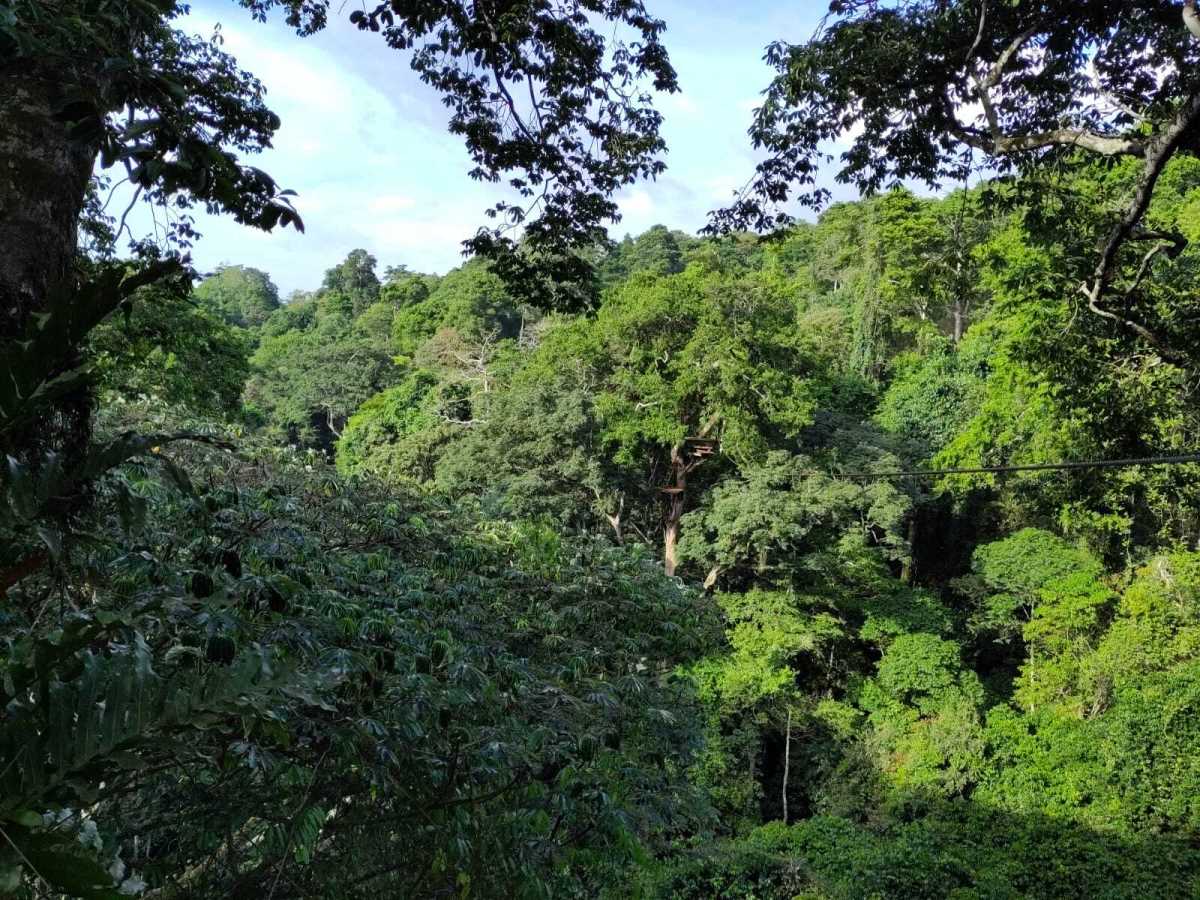
The canopy zip-line is the headline adventure at Griffin Falls Camp. Rather than simply walking along a forest trail, participants travel between elevated platforms using a series of zip-lines suspended among the trees.
The experience combines adventure with a different perspective on the forest. From above the ground, visitors can appreciate the height of the trees, the layers of vegetation and the space between the canopy and the forest floor. Depending on the conditions and what is visible, you may also notice birds or monkeys moving through nearby branches.
The course has traditionally been described as a network of five lines extending across the forest and the Musamya River area. The complete experience includes equipment fitting, a safety briefing, movement between platforms and walking through the forest. Allow several hours rather than expecting the activity to take only a few minutes.
Participants are normally supported by trained guides who explain how to use the equipment and follow the course safely. Listen carefully to the briefing, follow all instructions and disclose any relevant medical or mobility concerns before participating. Confirm current age, height and weight requirements directly with the operator, especially when travelling with children.
Zip-lining is a good option for visitors who enjoy heights and want something more active than a conventional nature walk. It can also suit people who are new to adventure activities, provided they meet the operator’s requirements and feel comfortable with the equipment.
However, it may not be the right choice for someone with a strong fear of heights. You do not need to participate in every activity to enjoy Mabira. A guided forest walk can provide a worthwhile visit on its own.
Walking to Griffin Falls
The walk to Griffin Falls is an important part of the experience at Griffin Falls Camp. The route passes through forest vegetation, with opportunities to observe trees, insects, birds and other details that are easy to miss when travelling quickly.
The waterfall itself is relatively modest compared with Uganda’s larger waterfall destinations. Its appeal comes partly from the surrounding forest and the walk needed to reach it. Visitors who expect a vast cascade may find the falls less impressive than anticipated, but those who appreciate quiet woodland scenery can enjoy the setting.
The route can be slippery after rain, and exposed roots, uneven ground and muddy sections may make walking more challenging. Wear shoes with good grip and follow the guide’s advice, particularly around wet rocks and stream crossings.
Allow enough time to walk at a comfortable pace. Rushing through the trail to reach the waterfall reduces the value of the visit, since much of Mabira’s appeal lies in observing the forest along the way.
If you are combining the falls walk with zip-lining, ask the operator how the activities are arranged. Some packages incorporate forest walking into the overall experience, while others charge for activities separately.
Guided nature walks at the Mabira Ecotourism Centre
Visitors who prefer walking without zip-lining can explore the forest trails around the Najjembe ecotourism area. These walks offer a slower experience and can be suitable for people who enjoy natural history, photography and outdoor exercise.
A knowledgeable guide can explain the forest’s tree species, medicinal plants, insects, bird calls and ecological relationships. You may also learn how the reserve supports surrounding communities and why conserving forest habitat matters.
Trail lengths and walking times vary. Some routes are suitable for a short visit, while longer excursions require several hours. Choose a trail according to your fitness, available time and interests rather than assuming that every route is equally easy.
Birdwatchers should consider starting early, when forest birds are often more active. Binoculars can help you identify birds high in the canopy, and a guide familiar with local species can make the walk more informative.
For families, a shorter guided walk may be more enjoyable than a long hike. Children can focus on spotting butterflies, listening for bird calls and learning about different trees. Keep everyone on the established path and follow the guide’s instructions around insects, wildlife and uneven terrain.
Other activities to consider
Although zip-lining and forest walks are the main reasons many people visit, Mabira offers other ways to spend time outdoors.
Birdwatching is a strong choice for visitors who enjoy observing wildlife without needing to travel to a remote national park. The forest supports many bird species, and a specialist guide can improve the chances of identifying them.
Primate viewing may provide opportunities to see monkeys and, in some areas, grey-cheeked mangabeys. Sightings depend on where the animals are at the time, so avoid treating a particular species as guaranteed.
Mountain biking is available in parts of the wider forest area and can appeal to visitors who want a more physically active experience. Check route conditions, equipment availability and whether a guide is recommended before setting out.
Camping and overnight stays offer a chance to experience the forest beyond a short day visit. Staying overnight can be particularly attractive for birdwatchers and travellers who prefer a slower itinerary. Facilities vary, so confirm the type of accommodation, meals, sanitation and other arrangements before booking.
You do not need to fit all these activities into one trip. For most day visitors, zip-lining and a guided walk provide a good balance between adventure and nature.
Is Mabira Forest suitable for families?
Mabira can be a good family destination because it offers activities that do not all require the same level of fitness or confidence. Adults and older children may enjoy the canopy zip-line, while other family members can choose a guided walk or spend time relaxing at the camp.
The key is to check age and size restrictions before travelling. Zip-line operators apply specific requirements, and children may need to meet minimum age or height limits and follow additional supervision rules.
Forest walks should also be matched to the ages and abilities of the group. Young children may enjoy a shorter route with frequent stops, while older children may be comfortable with a longer walk.
Bring drinking water, insect repellent, suitable footwear and a change of clothing if you plan to participate in activities that could get you wet or muddy. Keep children close to the guide and discourage them from touching unfamiliar plants, insects or animals.
For families travelling with very young children or anyone who has difficulty walking on uneven ground, ask about trail conditions and accessibility before choosing a route.
How much does a Mabira Forest day trip cost?
The total cost depends on the activities you select, transport arrangements, group size and whether meals or guiding services are included. Prices can also differ between Ugandan citizens, residents and international visitors.
The canopy zip-line is generally the largest individual expense. Guided nature walks are usually less expensive, while specialist birdwatching or primate-tracking excursions may involve additional guide fees.
Rather than relying on an old price list, request a current quotation before travelling. Ask whether the price covers forest entry, equipment, the guide, the walk to Griffin Falls and any refreshments or meals. Confirm whether separate charges apply to each activity.
Transport is another consideration. A private vehicle or organised excursion offers more flexibility, especially if you want to visit Griffin Falls Camp and the main forest walking area in the same day. Public transport can reduce costs, but you may need to arrange local transport for the final section to the activity site.
If you are travelling as a group, ask whether a package is available. A combined arrangement may simplify transport and scheduling, although it is worth comparing the inclusions rather than assuming that a package always provides the lowest price.
The best time to visit Mabira Forest
Mabira can be visited throughout the year, but weather affects walking conditions, road access and the comfort of outdoor activities.
The relatively drier periods, commonly December to February and June to August, can be convenient for walking and cycling because trails are often easier to navigate. These months are not completely rain-free, however, and the forest remains humid.
During wetter periods, the vegetation can look particularly lush, and birdwatching may be rewarding. On the other hand, trails can become muddy and the access road to Griffin Falls Camp may be more difficult to navigate after heavy rain.
Morning visits are often a sensible choice. Starting early gives you more time for activities and may provide better conditions for birdwatching before the heat and humidity build. It also leaves room for lunch and a relaxed return journey.
Check the forecast and road conditions if you are visiting during the rainy seasons. If you are relying on a hired saloon car, ask the camp whether the road is currently suitable before committing to the drive.
What to pack for a day trip
Wear comfortable clothing that suits walking in a warm, humid environment. Long trousers and a lightweight long-sleeved shirt can help protect against insects and vegetation along the trails.
Closed shoes with good grip are preferable to sandals, especially if your itinerary includes the waterfall walk. Carry drinking water, insect repellent, sunscreen and a light waterproof jacket.
A small backpack is useful for carrying personal items without making the walk uncomfortable. Birdwatchers should bring binoculars, while photographers may want a camera or phone with a secure strap. Avoid carrying loose equipment during zip-lining unless the operator confirms that it can be safely secured.
Bring some cash for activity fees, refreshments and other local purchases. Confirm payment methods in advance rather than assuming that card or mobile payment will be available at every location.
A practical one-day itinerary from Kampala
A day trip works best when you choose a clear priority and leave enough time for travel between the highway and the forest activity site.
Morning: travel to Mabira Forest. Leave Kampala early and travel east towards Najjembe. Allow for traffic, particularly if departing during a busy period. Confirm whether you should meet at the ecotourism centre or continue to Griffin Falls Camp.
Mid-morning: canopy zip-lining. Complete the safety briefing, equipment checks and zip-line course. Allow several hours for the full experience rather than scheduling another activity immediately afterwards.
Lunch: take a break. Arrange lunch at the camp or stop around Najjembe, where roadside food stalls offer familiar Ugandan options such as roasted plantain, maize and other local dishes. Check food availability if you have specific dietary requirements.
Afternoon: guided forest walk. Walk towards Griffin Falls or arrange a separate guided nature walk, depending on the location and time available. If you have already completed a long canopy course and hike, a shorter walk may be enough.
Late afternoon: return to Kampala or continue to Jinja. Travellers returning to Kampala should allow time for traffic. Those continuing to Jinja can use Mabira as a nature stop before reaching the town, provided the activities finish early enough.
This itinerary is a planning guide, not a fixed schedule. Confirm the operator’s departure times and the expected duration of each activity before setting off.
Should you visit Mabira Forest or spend the day in Jinja?
Mabira and Jinja offer different kinds of experiences, so the better choice depends on what you want from the day.
Mabira is more suitable for travellers who want rainforest scenery, guided walking, birdwatching and canopy zip-lining. Its location along the highway makes it particularly convenient for a short outdoor excursion from Kampala.
Jinja is a stronger choice for visitors interested in the Nile and a wider range of water-based adventures, including white-water rafting, kayaking and boat trips. The town also offers restaurants, accommodation and other activities that can support a longer stay.
If you have two days available, you do not necessarily need to choose between them. Spend part of one day exploring Mabira and dedicate the remaining time to Jinja. This combination gives you both a forest experience and an opportunity to explore the river.
For travellers with only one day, avoid trying to include too many activities in both locations. Travel time, briefings and activity durations can quickly turn a relaxed outing into a rushed schedule.
Is Mabira Forest worth visiting without zip-lining?
Yes. Zip-lining is the main draw for many adventure visitors, but the forest has value beyond the canopy course.
A guided walk can be rewarding if you enjoy birds, plants, insects and the atmosphere of a tropical rainforest. It is also a more affordable way to experience the reserve, particularly if you are travelling with people who are not interested in high-adrenaline activities.
Birdwatchers and nature enthusiasts may prefer to spend more time on the trails than on the zip-line. Visitors who simply want a quiet break from the city can also enjoy a shorter walk without turning the outing into a demanding expedition.
The important point is to choose the correct entry area for your preferred activity. The Najjembe ecotourism centre is convenient for forest walks, while Griffin Falls Camp is the better-known base for zip-lining and the falls trail.
Planning your Mabira Forest visit
Mabira Forest is worth a day trip if you want an accessible combination of outdoor adventure and nature. The canopy zip-line provides the excitement, while the forest walks offer time to appreciate Uganda’s rainforest environment. Together, they make a more complete experience than visiting only for a quick photograph or a short stop beside the highway.
Before travelling, confirm your activity location, booking arrangements, current fees, road conditions and the time needed to complete the programme. Choose footwear suited to muddy trails, bring water and insect repellent, and leave enough time to return without rushing.
For visitors based in Kampala, Mabira is a practical escape into nature. For those heading to Jinja, it can also be a worthwhile stop along the way, especially when planned around a morning zip-line session and a guided walk through the forest.



No comment