
Human-Wildlife Conflict in Uganda: Crop Raiding and Chilli Fences
Human-wildlife conflict in Uganda is a serious challenge for communities living near national parks and wildlife reserves. Farmers sometimes lose crops to elephants, baboons, monkeys and other wild animals, affecting household income and food security.
In areas surrounding Queen Elizabeth National Park, Murchison Falls National Park and Kibale National Park, wildlife occasionally moves beyond protected boundaries into neighbouring farmland.
For families depending on agriculture, a single night of crop raiding can destroy weeks or months of work. Elephants may damage banana plantations and maize fields, while primates frequently target crops growing near forest boundaries.
To reduce these problems, communities, conservation organisations and the Uganda Wildlife Authority have introduced different methods of protecting farmland.
One approach involves chilli fences, which use the irritating properties of chilli peppers to discourage elephants from entering cultivated areas.
Understanding human-wildlife conflict in Uganda helps travellers appreciate the challenges facing rural communities and the importance of conservation programmes that protect both people and animals.
What Is Human-Wildlife Conflict?
Human-wildlife conflict occurs when interactions between people and wild animals produce harmful consequences.
These may include crop destruction, livestock losses, property damage or injuries.
Conflict becomes particularly common where farms and settlements border wildlife habitats.
Animals do not recognise national park boundaries. They move according to food availability, water sources, breeding behaviour and established movement routes.
As human settlements expand, some traditional wildlife habitats and movement corridors become smaller or increasingly fragmented.
This can bring people and animals into closer contact.
In Uganda, crop raiding is among the most frequently reported forms of human-wildlife conflict.
Why Wildlife Raids Crops in Uganda
Wild animals may enter farmland because cultivated crops provide accessible food.
Agricultural fields sometimes contain concentrated supplies of nutritious plants.
For example, elephants travelling near a national park boundary may encounter a maize plantation at a stage when the crop is particularly attractive.
A single elephant can consume substantial quantities of vegetation and damage additional plants while moving through a field.
Other factors contribute to crop raiding.
Habitat Changes
Agricultural expansion and settlement can reduce natural feeding areas or interrupt animal movement routes.
Wildlife may consequently encounter farms while moving between habitats.
Seasonal Food Availability
Natural food supplies change throughout the year.
During some periods, cultivated crops may provide an attractive alternative to available wild vegetation.
Farms Close to Protected Areas
Fields bordering forests and national parks are often more exposed to crop-raiding animals.
Research around Kibale National Park has identified distance from the park boundary as one factor influencing crop damage.
However, the level of risk also depends on the species involved, local conditions and available protection measures.
Animals Commonly Involved in Crop Raiding
Different wildlife species cause different types of agricultural damage.
| Animal | Common Conflict | Typical Concern |
|---|---|---|
| Elephants | Entering plantations and destroying crops | Extensive crop and property damage |
| Baboons | Feeding on cultivated crops | Repeated daytime crop losses |
| Vervet monkeys | Taking fruit and other crops | Damage to small farms |
| Bushpigs | Feeding in cultivated fields | Damage to roots and other crops |
| Buffaloes | Entering farmland and grazing areas | Crop damage and danger to people |
| Chimpanzees | Occasionally feeding on cultivated fruit | Crop losses and potentially dangerous encounters |
The animals involved vary between regions.
Elephant conflict is particularly significant around some savannah parks, while primate-related crop damage is common near certain forest habitats.
Human-Wildlife Conflict Around Queen Elizabeth National Park
Queen Elizabeth National Park is surrounded by communities involved in agriculture, fishing and livestock keeping.
Some villages and cultivated areas lie close to wildlife habitats.
Elephants moving beyond the park boundary may enter farmland and damage crops.
Research in areas surrounding the park has examined the effectiveness of physical barriers, including trenches and planted barriers, in reducing elephant crop raiding.
Community conservation projects have also worked with farmers to identify practical ways of protecting their livelihoods.
However, the effectiveness of any barrier depends on its construction, maintenance and location.
Crop Raiding Around Murchison Falls National Park
Communities surrounding Murchison Falls National Park also experience interactions with wildlife.
Elephants sometimes move between park habitats and neighbouring agricultural land.
Research on elephant movements has examined how farming expansion, settlement and land-use changes influence conflict around the park.
In affected communities, farmers may lose crops or face difficulties protecting their fields.
Human-wildlife conflict can become particularly challenging when people encounter elephants at night.
Farmers should avoid approaching elephants directly and instead report dangerous situations to trained wildlife personnel.
Human-Wildlife Conflict Near Kibale National Park
Kibale National Park protects tropical forest and several primate species.
Communities living near its boundaries sometimes experience crop losses involving monkeys, baboons and other wildlife.
The damage may occur repeatedly during the growing season.
For smallholder farmers, even modest losses can affect household food supplies.
Protecting crops near forest boundaries requires approaches suited to the species involved.
Methods intended to deter elephants may not work against monkeys or baboons.
This makes local wildlife assessments important before selecting a crop protection strategy.
What Are Chilli Fences?
Chilli fences are crop protection barriers designed to discourage elephants from entering farmland.
They use materials containing chilli compounds that irritate sensitive tissues.
The active compound in chilli peppers is called capsaicin.
Elephants have sensitive trunks and may avoid barriers carrying strong chilli irritants.
Different chilli deterrent systems have been tested in African elephant landscapes.
Some use ropes or cloth treated with chilli-based mixtures, while others involve chilli-containing materials placed around vulnerable fields.
The objective is to discourage elephants without injuring them.
However, chilli fences do not guarantee complete protection.
Their performance depends on correct installation, maintenance, environmental conditions and elephant behaviour.
How Chilli Fences Help Protect Crops
A chilli fence usually forms part of a wider crop protection programme.
Farmers or trained conservation teams establish a barrier around selected agricultural areas.
The chilli-treated materials act as a deterrent when elephants approach.
Because rain and environmental exposure can reduce effectiveness, maintenance is important.
A poorly maintained fence may become ineffective.
Advantages of Chilli Fences
Chilli-based deterrents have several potential advantages.
They can use materials available through agricultural supply systems and may be less expensive than substantial permanent barriers.
They also provide a non-lethal method of discouraging elephants.
When appropriately managed, chilli deterrents can form part of a community-based wildlife protection strategy.
Limitations of Chilli Fences
Chilli fences require regular inspection and maintenance.
Heavy rain may reduce the strength of treated materials.
Elephants may also find unprotected entry points or respond differently to deterrents.
Another concern is that diverting elephants away from one farm could increase pressure on neighbouring fields.
For these reasons, coordinated community protection is preferable to isolated interventions.
Farmers should work with trained conservation personnel when choosing and maintaining deterrents. Chilli mixtures can irritate skin, eyes and breathing passages, so they require careful handling.
Other Methods Used to Reduce Crop Raiding
Uganda uses several approaches to managing human-wildlife conflict.
These methods vary according to the animals involved and the surrounding landscape.
| Protection Method | Main Purpose | Important Limitation |
|---|---|---|
| Chilli fences | Discourage elephant entry | Require maintenance |
| Elephant trenches | Create physical barriers | Can erode or become blocked |
| Electric fences | Restrict wildlife movement | Require specialist maintenance |
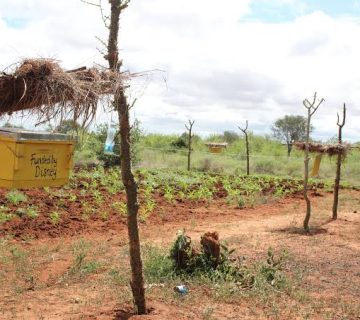
| Beehive fences | Deter some elephants | Require suitable conditions and management |
| Community monitoring | Identify and report wildlife movements | Requires coordination |
| Land-use planning | Reduce conflict in vulnerable areas | Requires long-term cooperation |
No single method works everywhere.
Successful programmes often combine several approaches.
Elephant Trenches
Trenches have been used in some areas bordering Queen Elizabeth National Park.
They create physical obstacles intended to discourage elephants from crossing into farmland.
However, trenches require maintenance because erosion and accumulated materials can reduce their effectiveness.
Electric Fencing
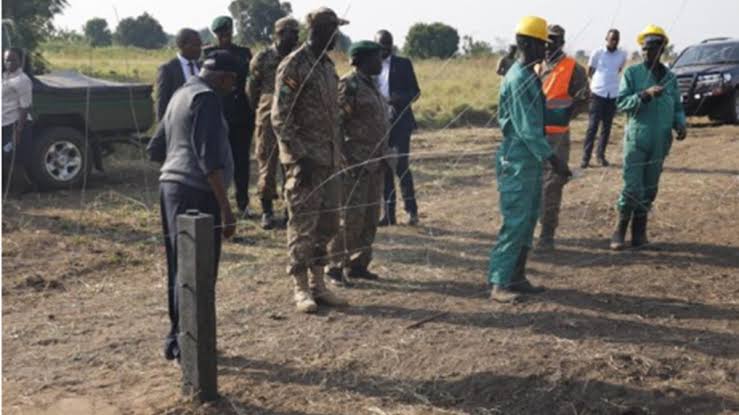
Uganda Wildlife Authority has implemented electric fencing in selected high-conflict areas.
Properly designed conservation fences can reduce elephant movement into vulnerable settlements and farms.
Installation and maintenance require trained personnel.
Communities should never interfere with electrical equipment or attempt unauthorised repairs.
Community Wildlife Monitoring
Community reporting systems can help identify areas where wildlife frequently enters farmland.
Information about animal movements allows conservation teams to assess risks and organise appropriate responses.
Local knowledge is particularly valuable because residents understand seasonal farming patterns and common wildlife routes.
How Crop Raiding Affects Rural Families
Crop destruction creates financial and social difficulties.
A farmer who loses maize shortly before harvest may struggle to purchase food or agricultural supplies for the next season.
Repeated losses can reduce household savings.
Some families may spend additional time guarding their fields, affecting school attendance or other daily activities.
Fear of dangerous animals can also restrict movement after dark.
These challenges explain why wildlife conservation programmes must consider community livelihoods.
People living near protected areas experience costs that visitors may never encounter during a safari.
Does Uganda Compensate Farmers for Wildlife Damage?
Uganda’s Wildlife Act of 2019 provides a legal framework for compensation concerning specified wildlife-related harm.
However, eligibility depends on the legal provisions, species involved and applicable procedures.
Compensation should not be assumed for every incident of crop damage.
Farmers affected by wildlife should report incidents promptly through relevant local authorities and Uganda Wildlife Authority channels.
Where a claim may qualify, officials can explain the necessary documentation and verification procedures.
Affected residents should avoid relying on informal promises of payment.
How Tourism Supports Conflict Reduction
Safari tourism generates revenue through park entrance fees, wildlife permits and related activities.
Uganda Wildlife Authority operates community conservation and revenue-sharing programmes intended to benefit people living near protected areas.
These programmes can help support community development and conservation-related activities.
Tourism businesses can also contribute through local employment, purchasing and partnerships with community organisations.
However, travellers should recognise that tourism income does not automatically eliminate crop losses or other wildlife-related problems.
Long-term solutions require cooperation between communities, conservation authorities and other stakeholders.
What Safari Visitors Should Know
Visitors to Uganda’s national parks may encounter farms and villages close to wildlife habitats.
These communities depend on agriculture and may face difficult relationships with wild animals.
You can contribute to responsible tourism by following park regulations and respecting local communities.
Avoid encouraging guides to approach wildlife dangerously.
Do not feed animals or support activities that attract wildlife towards settlements.
If you visit a community conservation project, ask how its activities benefit local residents.
Choose operators that communicate honestly about their conservation partnerships.
The Future of Human-Wildlife Conflict Management in Uganda
Reducing human-wildlife conflict requires practical protection measures and long-term land management.
Chilli fences, trenches and electric barriers can reduce some forms of crop raiding when properly managed.
However, protecting wildlife movement routes, supporting communities and responding quickly to dangerous incidents are equally important.
Conservation programmes must also consider the financial costs faced by farmers.
Where communities receive meaningful benefits and participate in decisions, cooperation becomes easier to maintain.
Human-wildlife conflict in Uganda remains a significant challenge around several national parks and forest habitats.
Crop raiding by elephants, primates and other animals can affect food security, household income and community safety.
Chilli fences provide one non-lethal approach to reducing elephant-related crop damage, although they require maintenance and cannot guarantee protection.
Other measures, including trenches, electric fencing and community monitoring, also play important roles.
For wildlife conservation to succeed, communities must have practical ways to protect their farms while animals retain suitable habitats.
Understanding these challenges allows safari visitors to appreciate the importance of protecting both wildlife and the livelihoods of people living near Uganda’s national parks.



No comment