
Beehive Fences Against Elephants: A Low-Cost Method Used in East Africa
Beehive fences against elephants are an innovative method of protecting farmland in parts of East Africa where people and wild elephants share the same landscape. These fences use the natural behaviour of elephants and African honeybees to reduce crop raiding without harming wildlife.
In Kenya and Tanzania, communities have tested beehive fences as an alternative or additional measure to conventional barriers. The approach is particularly relevant where elephants leave protected areas and enter neighbouring farms.
For smallholder farmers, elephant crop raiding can cause serious financial losses. A single elephant may destroy maize, bananas or other crops that a family has spent months growing.
Beehive fences offer a possible solution by discouraging elephants from entering cultivated land. They may also provide additional income through honey production when the hives become occupied.
However, these fences require maintenance, suitable environmental conditions and proper management.
This guide explains how beehive fences work, where they have been used in East Africa, their advantages, costs and limitations.
What Are Beehive Fences?
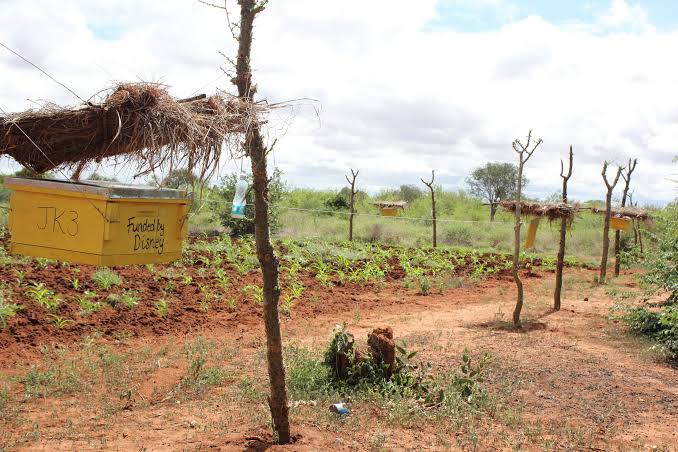
A beehive fence is a protective barrier made from beehives suspended between posts and connected using strong wires.
The system takes advantage of the relationship between elephants and African honeybees.
Elephants can respond strongly to disturbed bees, particularly when the insects swarm around sensitive areas such as the trunk and eyes.
Researchers have studied how elephants react to bee sounds and encounters.
These observations helped conservation specialists develop fences that use beehives as wildlife deterrents.
Unlike a conventional fence designed to physically stop a large animal, a beehive fence aims to discourage an elephant from attempting to cross.
How Beehive Fences Work Against Elephants
A typical beehive fence consists of wooden posts supporting suspended hives.
The hives are connected with wires that move when an elephant pushes against the barrier.
When the fence is disturbed, the movement can agitate bees living inside the hives.
The resulting bee activity may encourage elephants to retreat.
Even when bees do not emerge immediately, elephants familiar with occupied beehives may avoid approaching them.
However, empty hives generally provide less reliable protection.
The effectiveness of the system depends partly on whether the hives contain active bee colonies.
Basic Components of a Beehive Fence
Common materials include:
Wooden support posts.
Suitable beehives.
Strong connecting wire.
Protective hive covers.
Appropriate suspension materials.
Maintenance and beekeeping equipment.
Some projects also use artificial or dummy hives between occupied hives to reduce construction costs.
A commonly studied design spaces hive positions approximately 10 metres apart.
However, exact construction requirements should follow an established technical design and local conditions.
Why Elephants Avoid Bees
Elephants have thick skin, but some parts of their bodies remain sensitive.
The trunk, eyes and areas around the mouth can be vulnerable to insect stings.
When elephants encounter disturbed bees, they may shake their heads, move away or communicate with other elephants.
Researchers have observed defensive responses to bee sounds and activity.
These behaviours help explain why beehive fences can discourage elephants from approaching farms.
However, elephant reactions vary.
Some individuals may cross a fence despite the presence of bees, particularly when food is attractive or alternative routes are limited.
Beehive Fences in Kenya
Kenya has played an important role in developing and testing beehive fences.
Researchers associated with Save the Elephants have conducted studies in areas experiencing human-elephant conflict.
The Sagalla region near Tsavo National Park is among the best-known locations for this work.
Farmers in the area have experienced crop damage when elephants move beyond wildlife habitats into cultivated land.
Beehive fences were introduced as one method of reducing these encounters.
What Research in Kenya Has Found
A nine-year study published in 2024 examined beehive fences protecting small farms near Tsavo.
Researchers recorded thousands of elephant approaches during the study period.
The fences deterred an annual average of approximately 76% of approaching elephants across the full study.
During peak crop-growing seasons, the average deterrence rate was approximately 86%.
These results demonstrate that beehive fences can provide meaningful protection under suitable conditions.
However, the figures should not be interpreted as a guaranteed success rate for every farm.
Beehive Fences in Tanzania
Beehive fences have also been tested in Tanzania.
Research has examined whether connected beehives can reduce elephant movement into agricultural areas.
The approach has attracted interest because many rural communities experience wildlife conflict near protected habitats.
However, Tanzania’s landscapes vary considerably.
A system performing well in one region may be less effective elsewhere.
Factors such as rainfall, vegetation, bee colony survival and elephant movement patterns influence results.
Projects therefore require local assessment before large-scale installation.
Can Beehive Fences Work in Uganda?
Uganda also experiences crop raiding by elephants, particularly around certain national parks.
Communities surrounding Queen Elizabeth and Murchison Falls national parks have reported elephant-related crop damage.
Beehive fences may offer an additional option for selected locations.
However, successful results from Kenya should not automatically be treated as proof that the method will work equally well everywhere in Uganda.
Local conditions, bee species, community capacity and elephant behaviour must be assessed.
Wildlife authorities and qualified conservation specialists should guide any proposed installation.
Benefits of Beehive Fences for Farmers
Beehive fences can provide several advantages when properly established.
Reducing Crop Losses
Their main purpose is to discourage elephants from entering agricultural fields.
Reducing crop raids can help farmers protect household food supplies and agricultural income.
Additional Honey Income
Occupied beehives may produce honey that farmers can harvest and sell.
This creates a possible additional source of income.
However, honey production is not guaranteed.
It depends on healthy bee colonies, flowering plants, weather conditions and appropriate beekeeping practices.
Supporting Pollination
Honeybees can contribute to the pollination of some nearby flowering plants and crops.
The extent of this benefit depends on the crops grown and the availability of other pollinators.
Non-Lethal Wildlife Protection
Beehive fences aim to discourage elephants without injuring them.
This makes them useful within wider programmes promoting coexistence between people and wildlife.
How Much Does a Beehive Fence Cost?
Beehive fences are sometimes described as a low-cost conservation method because they may require less infrastructure than substantial electric or permanent physical barriers.
However, affordability depends on the size of the farm and local material prices.
Costs can include:
Beehives and suspension equipment.
Wooden posts and connecting materials.
Protective clothing.
Installation labour.
Beekeeping training.
Repairs and regular maintenance.
For example, a 200-metre protected boundary using hive positions approximately 10 metres apart would require about 20 positions, depending on the final design.
Some positions may use dummy hives to reduce equipment costs.
Actual expenses should be calculated locally.
A fence surrounding a large farm could require considerable investment.
Beehive Fences Compared With Other Elephant Deterrents
Farmers use different methods to protect crops from elephants.
| Method | Main Advantage | Main Limitation |
|---|---|---|
| Beehive fences | Can deter elephants and produce honey | Depend on bee colonies and maintenance |
| Chilli fences | Use chilli-based deterrents | Require repeated treatment |
| Electric fences | Can provide strong physical deterrence | Expensive installation and specialist maintenance |
| Elephant trenches | Create physical obstacles | Require regular clearing and repairs |
| Community monitoring | Helps identify approaching elephants | Requires coordination |
| Land-use planning | Reduces conflict over time | Requires long-term cooperation |
No single method provides complete protection.
Combining suitable approaches may produce better results than depending on one barrier.
Challenges Facing Beehive Fence Projects
Despite promising research, several problems affect beehive fence performance.
Empty Beehives
One major challenge is attracting and maintaining bee colonies.
When hives remain empty, the fence may provide weaker deterrence.
Some research projects have experienced substantial numbers of unoccupied hives.
Drought and Limited Flowers
Honeybees require suitable food and water sources.
During droughts, limited flowering vegetation can affect colony survival.
Reduced bee activity may weaken the effectiveness of the fence.
Maintenance Requirements
Broken wires, damaged posts and poorly maintained hives can create gaps.
Regular inspection is necessary.
Farmers also need suitable training to manage bees safely.
Wildlife Moving Elsewhere
A barrier protecting one farm may redirect elephants towards neighbouring properties.
This makes coordinated protection across communities important.
Conservation teams should consider how deterrents influence animal movement throughout the surrounding landscape.
Are Beehive Fences Safe for Communities?
Beehive fences introduce live bees near agricultural areas.
This requires careful management.
African honeybees can defend their colonies aggressively when disturbed.
People with severe bee-sting allergies may face particular risks.
Children, livestock and other residents should understand where hives are located.
Installation should be planned with trained beekeepers and conservation professionals.
Farmers should avoid disturbing occupied hives without appropriate protective equipment.
Emergency arrangements for serious bee-sting reactions are also important.
How Community Participation Improves Results
Beehive fence programmes work best when local communities participate in planning and management.
Farmers understand where elephants commonly enter their fields and which crops are most vulnerable.
This knowledge can help identify suitable fence locations.
Community participation also supports maintenance arrangements and fair distribution of benefits.
For example, neighbouring households may cooperate to protect a shared agricultural boundary rather than establishing separate, incomplete fences.
Training is equally important.
Farmers need practical knowledge about hive management, repairs and safe honey harvesting.
How Safari Tourism Can Support Beehive Fence Projects
Safari tourism can help finance community conservation activities.
Some conservation organisations and tourism businesses support projects intended to reduce conflict between wildlife and neighbouring communities.
Visitors interested in responsible tourism can ask operators whether they support recognised human-wildlife conflict programmes.
Before contributing money, request information about the project and how donations are used.
A genuine programme should explain its objectives, management arrangements and expected benefits.
Tourists should avoid entering active beehive fence areas without permission.
Community farms are working agricultural spaces, and visitors must respect residents’ privacy and safety.
The Future of Beehive Fences in East Africa
Beehive fences have demonstrated promising results in reducing elephant crop raiding.
However, changing weather patterns, drought and increasing pressure on wildlife habitats may affect their long-term performance.
Research remains important for identifying suitable locations and improving fence designs.
Community training, regular monitoring and dependable funding are also necessary.
Beehive fences should remain one part of a broader human-wildlife conflict management strategy.
Beehive fences against elephants offer a practical, non-lethal method of protecting farmland in parts of East Africa.
Research in Kenya has demonstrated that well-managed fences can discourage a substantial proportion of elephants approaching cultivated fields.
The method may also provide opportunities for honey production and additional household income.
However, success depends on occupied hives, suitable weather conditions, maintenance and community cooperation.
When implemented carefully, beehive fences can help farmers reduce crop losses while allowing elephants to remain part of East Africa’s natural landscapes.






No comment