
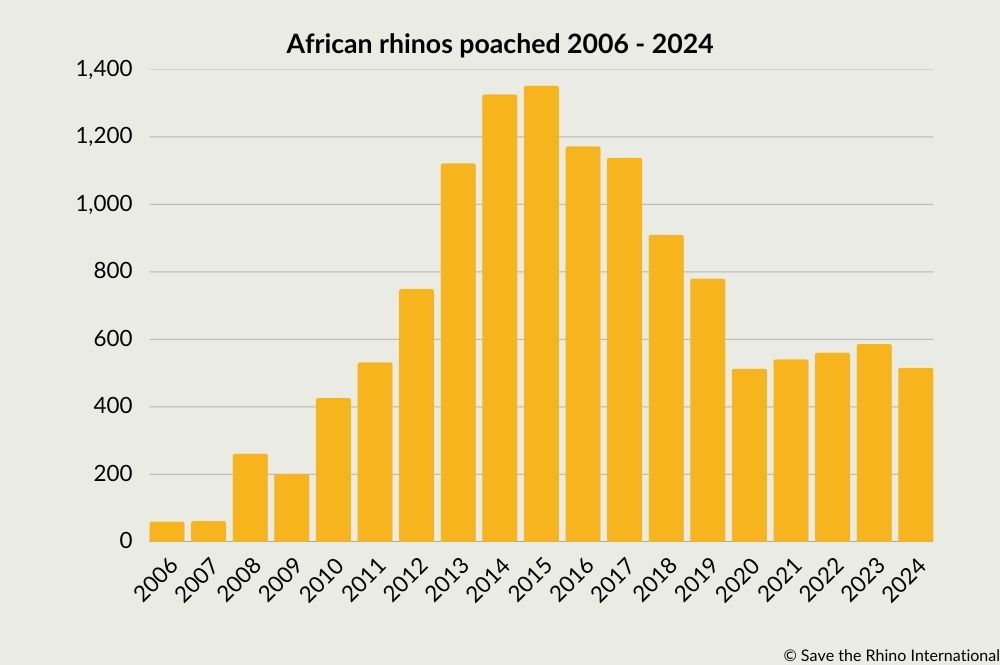
Rhino Poaching Trends in East Africa: What Has Changed in Ten Years
Rhino poaching trends in East Africa have changed considerably over the past ten years. Kenya has expanded its rhino population through intensive protection, Tanzania has reported a gradual recovery in black rhino numbers, and Uganda has begun returning rhinos to protected areas where they disappeared decades ago.
Despite these achievements, rhino poaching remains a serious conservation concern. Illegal demand for rhino horn continues to threaten populations, particularly where animals occupy small habitats or depend on intensive protection.
Rhinos reproduce slowly, making population recovery difficult after significant losses. Protecting breeding animals and maintaining suitable habitats are therefore essential.
Between 2015 and 2025, conservation programmes increasingly adopted improved surveillance, stronger security, wildlife monitoring and cooperation between government authorities and conservation organisations.
This article examines rhino poaching trends in East Africa, the progress made in Kenya, Tanzania and Uganda, and the challenges facing rhino conservation.
Understanding Rhino Poaching in East Africa
Rhino poaching involves illegally killing rhinoceroses, usually to obtain their horns.
Rhino horn is made primarily of keratin, the same structural protein found in human hair and fingernails.
Despite having no proven medicinal benefits, rhino horn continues to attract demand in illegal markets.
Criminal networks may transport horns through several countries before reaching buyers.
This makes rhino protection an international conservation challenge.
East Africa has experienced severe rhino losses in the past, particularly during periods of widespread poaching and weak wildlife protection.
However, conservation conditions differ considerably between countries.
Kenya maintains significant black and white rhino populations, Tanzania protects a smaller black rhino population, and Uganda is rebuilding its rhino population through reintroduction programmes.
Rhino Poaching Trends Between 2015 and 2025
The last decade has brought important changes in rhino conservation.
Several countries have strengthened security, improved wildlife monitoring and expanded protected habitats.
However, comparing poaching across countries requires caution because reporting systems and population sizes differ.
A country with a small rhino population may record fewer poaching incidents while still facing substantial conservation risks.
Major Changes Over Ten Years
| Conservation Area | Around 2015 | By 2025 |
|---|---|---|
| Kenya | Intensive rhino protection and population recovery | Larger population and expanded monitoring |
| Tanzania | Small, recovering black rhino population | Continued recovery and stronger monitoring |
| Uganda | Rhino recovery centred on Ziwa Sanctuary | Growing population and preparations for wider reintroduction |
| Wildlife security | Ranger patrols and protected sanctuaries | Greater use of tracking and surveillance technology |
| Habitat management | Concentration in selected protected areas | Increasing attention to habitat expansion |
| Conservation cooperation | Government and conservation partnerships | Wider collaboration and community involvement |
These developments indicate progress, although they do not mean poaching has disappeared.
Rhino Conservation and Poaching in Kenya
Kenya has recorded significant rhino conservation achievements.
The country protects both black rhinos and southern white rhinos in national parks, sanctuaries and conservancies.
Important rhino habitats include Nairobi National Park, Lake Nakuru National Park, Ol Pejeta Conservancy, Lewa Wildlife Conservancy and protected areas within Tsavo.
Kenya’s Growing Rhino Population
Kenya’s rhino population has increased through breeding programmes, translocations and intensive protection.
Official conservation reporting recorded approximately 2,102 rhinos in 2024, with further growth reported in 2025.
The recovery reflects sustained investment in wildlife security and population management.
However, rhinos remain vulnerable to poaching and habitat pressures.
Many populations occupy fenced or closely monitored areas where protection requires substantial resources.
Stronger Anti-Poaching Measures
Kenya Wildlife Service and conservation partners have introduced several approaches to protecting rhinos.
These include:
Ranger patrols.
Wildlife monitoring.
Veterinary intervention.
Rhino identification and tracking.
Intelligence-led enforcement.
Cooperation with private conservancies.
Some conservation areas also use tracking equipment to improve monitoring.
These measures help wildlife managers identify individual animals, investigate unusual movements and respond to potential threats.
Rhino Conservation in Private Conservancies
Private and community-linked conservancies contribute significantly to Kenya’s rhino conservation efforts.
Ol Pejeta and Lewa are examples of landscapes where rhino protection forms part of wider wildlife management.
Tourism income can support conservation operations, although the proportion allocated to rhino protection varies.
Rhino Poaching and Recovery in Tanzania
Tanzania protects eastern black rhinos in selected conservation areas.
Historically, the country supported much larger rhino populations.
However, intensive poaching during earlier decades caused severe declines.
Modern conservation efforts have focused on rebuilding populations and maintaining secure habitats.
Black Rhino Population Recovery
Tanzania’s black rhino population has shown signs of recovery.
Recent national wildlife reporting has placed the population at approximately 300 animals, although published estimates differ slightly according to the census and reporting method.
This represents improvement compared with the much smaller population recorded during earlier conservation periods.
However, the population remains limited.
Every breeding animal is important to continued recovery.
Important Rhino Conservation Areas
Tanzania’s rhino conservation efforts involve several protected landscapes.
These include:
Ngorongoro Conservation Area.
Serengeti National Park.
Mkomazi National Park.
Conservation programmes use monitoring, habitat management and security measures to protect remaining populations.
Mkomazi has played an important role in black rhino conservation through its protected breeding and management programmes.
Uganda’s Rhino Recovery Over the Last Decade
Uganda presents a different conservation situation.
Rhinos disappeared from the country’s wild populations during the twentieth century following poaching and periods of insecurity.
The last rhinos in Kidepo disappeared during the early 1980s.
For many years, visitors could not encounter free-ranging rhinos in Uganda’s national parks.
The Role of Ziwa Rhino Sanctuary
Uganda’s modern rhino recovery programme began through the establishment of a breeding population at Ziwa Rhino Sanctuary.
The programme started with imported southern white rhinos in 2005 and 2006.
Over time, successful breeding increased the population.
Uganda Wildlife Authority reported that Ziwa’s rhino population had reached 49 animals by 2025.
The sanctuary became an important foundation for restoring rhinos to suitable protected habitats.
Returning Rhinos to Protected Areas
In 2026, Uganda began implementing major rhino reintroduction initiatives involving protected areas such as Ajai Wildlife Reserve and Kidepo Valley National Park.
These developments represent significant progress compared with the situation ten years earlier.
However, reintroduction requires careful planning.
Rhinos need suitable habitat, security, veterinary monitoring and long-term population management.
The survival and breeding success of relocated animals will determine how successful these programmes become.
Comparing Rhino Conservation in Kenya, Tanzania and Uganda
The three countries have followed different conservation approaches.
| Country | Main Rhino Situation | Conservation Priority |
|---|---|---|
| Kenya | Established black and white rhino populations | Population growth, security and habitat expansion |
| Tanzania | Smaller recovering black rhino population | Protection and breeding population management |
| Uganda | Reintroduced southern white rhino population | Establishing secure, sustainable populations |
Kenya currently has the largest established rhino population among these three countries.
Tanzania continues rebuilding its black rhino numbers.
Uganda is concentrating on restoring rhinos to landscapes where they previously lived.
How Technology Has Changed Rhino Protection
Technology has become increasingly important in wildlife conservation.
Rhino monitoring once depended heavily on ground observations and traditional patrol systems.
Today, conservation teams may use additional tools to improve their work.
GPS Tracking
Tracking equipment can help wildlife managers monitor rhino movements.
This information assists with habitat management and detecting unusual movement patterns.
However, tracking devices must be fitted and maintained by qualified professionals.
Drones and Surveillance Equipment
Some conservation programmes use aerial surveillance to monitor difficult terrain.
Drones and other equipment may help identify suspicious activity or improve wildlife monitoring.
Their effectiveness depends on suitable operating conditions, trained personnel and adequate funding.
Wildlife Identification
Rhino identification techniques, including ear notching, allow conservation teams to recognise individual animals.
This supports population monitoring, breeding records and veterinary management.
Why Rhino Poaching Remains a Threat
Despite conservation progress, several challenges remain.
Illegal Rhino Horn Demand
Demand for rhino horn creates financial incentives for organised wildlife crime.
Reducing this demand requires international cooperation and enforcement.
Small Populations
Small rhino populations can be vulnerable to disease, breeding difficulties and unexpected losses.
Protecting genetic diversity becomes increasingly important.
Habitat Pressure
Agricultural expansion, settlements and infrastructure development can reduce suitable wildlife habitats.
Conservation programmes must identify areas capable of supporting growing populations.
High Protection Costs
Rhinos require intensive security in many conservation areas.
Ranger salaries, equipment, veterinary services and monitoring programmes create continuing expenses.
Long-term funding is essential.
How Safari Tourism Supports Rhino Conservation
Tourism can generate revenue for protected-area management and conservation programmes.
Visitors pay entrance fees, guiding charges and accommodation costs when exploring rhino destinations.
Some conservation organisations also receive donations or support from tourism partners.
However, not every safari payment goes directly towards rhino protection.
You can ask your operator which conservation programmes receive financial support.
Choosing responsible tourism businesses can help sustain wildlife protection and local employment.
Where Can Travellers See Rhinos in East Africa?
Rhino viewing opportunities vary between countries and protected areas.
| Destination | Country | Rhino Viewing |
|---|---|---|
| Ol Pejeta Conservancy | Kenya | Established rhino conservation destination |
| Lewa Wildlife Conservancy | Kenya | Black and white rhino conservation |
| Lake Nakuru National Park | Kenya | Rhino viewing opportunities |
| Nairobi National Park | Kenya | Black and white rhino habitat |
| Ngorongoro Conservation Area | Tanzania | Possible black rhino sightings |
| Ziwa Rhino Sanctuary | Uganda | Managed rhino viewing experiences |
Rhino sightings are never guaranteed.
Some protected rhino populations are not available for ordinary tourist viewing.
Always confirm current access arrangements before booking.
What Travellers Should Know About Rhino Protection
Responsible wildlife viewing helps protect rhinos.
Follow your guide’s instructions and maintain appropriate distances.
Avoid making loud noises or encouraging drivers to approach animals too closely.
Never purchase rhino horn or products advertised as containing rhino horn.
You can also support legitimate conservation organisations that provide clear information about their activities.
If you visit a rhino sanctuary, respect all security restrictions and photography instructions.
What the Next Ten Years May Bring
The future of rhino conservation in East Africa will depend on maintaining successful protection programmes.
Kenya faces the challenge of providing sufficient habitat for growing populations.
Tanzania must continue strengthening its smaller black rhino populations.
Uganda will need sustained investment to establish viable populations within reintroduction areas.
Climate change, land-use pressure and illegal wildlife trade may complicate these efforts.
Nevertheless, the progress achieved during the past decade demonstrates that recovery is possible when conservation programmes receive consistent support.
Rhino poaching trends in East Africa show both conservation progress and continuing risks.
Kenya has expanded its rhino population through intensive protection, Tanzania has improved its black rhino recovery efforts, and Uganda has moved towards restoring rhinos within protected areas.
These achievements represent meaningful changes compared with conditions ten years ago.
However, rhinos remain threatened by illegal horn demand, habitat pressure and the high costs of wildlife protection.
Continued monitoring, stronger enforcement and responsible tourism will remain important for securing their future.




No comment