Chasing Shoebills Through the Papyrus of Lake Victoria
You hear the shoebill before you see it. The sound is low and rough like something coming from a wall of papyrus that is taller than your canoe. Your guide stops paddling and points. Nothing is moving. Then thirty meters ahead, a grey shape comes out of the reeds. It looks like it has been standing there forever. This is the moment that everyone comes for. People fly thousands of kilometers just to sit in a boat before sunrise to see the shoebill. Chasing shoebills through the papyrus of Lake Victoria is not something you can do casually. You need to be patient, get up early, and sit still while the shoebill decides if it wants to look at you.
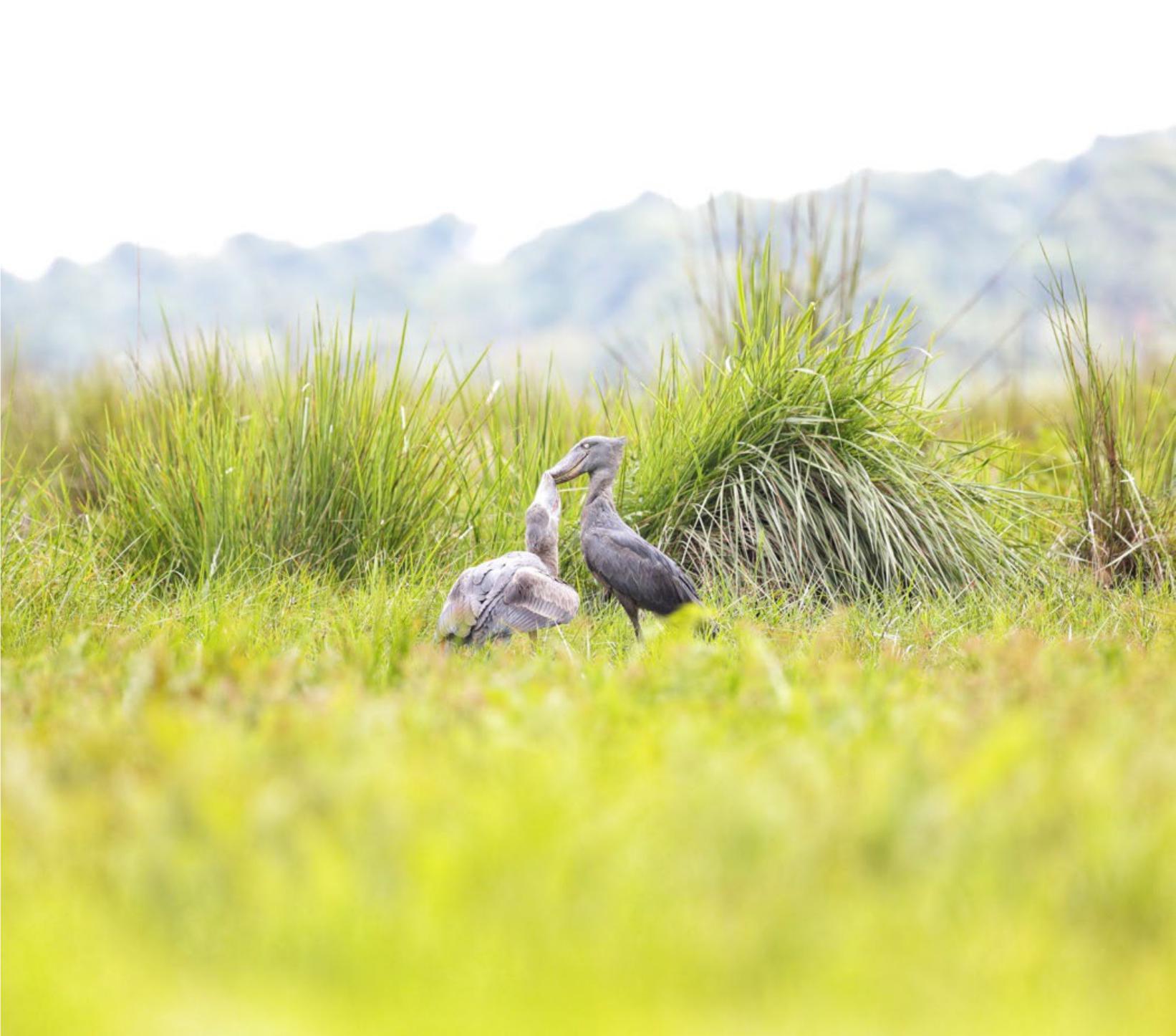
The shoebill stork, Balaeniceps rex, looks like it comes from a time when dinosaurs were alive. It is up to 1.5 meters tall. Weighs between 4 and 7 kilograms. Its bill is very big and strange, so big that it can swallow a whole fish. The bill is 24 centimeters long and 20 centimeters wide. The shoebill’s eyes are close together, which gives it an almost human stare. This stare can be unsettling when you see it for the first time. People who like birds come from Japan, Germany, the United States, and Australia to see the shoebill. Uganda’s wetlands around Lake Victoria are one of the places to see the shoebill in the wild.
The Bird That Makes Chasing Shoebills Through the Papyrus of Lake Victoria Worth Every Early Morning
There are no shoebills left. The total number of shoebills is between 3,300 and 5,300. This is why the shoebill is considered vulnerable. The shoebills’ home is being. This has reduced the number of shoebills. Uganda has one of the groups of shoebills with about a dozen shoebills living in Mabamba Bay Wetland. Seeing a shoebill depends on many things, like the water level, the number of fish, and luck.
What makes the shoebill so interesting is not its size. It is the way it hunts. Unlike birds, the shoebill stands still for a long time waiting for a lungfish or catfish to come near. When it sees its prey, it strikes fast. Your guide will tell you this before you start so you do not get bored when the shoebill is not moving. The shoebill’s stillness is what makes it special. This is why photographers who are very patient can take pictures of the shoebill.
Mabamba Bay: Where the Real Search Begins
Most people start their search for the shoebill in Mabamba Bay Wetland. This is a place with 2,424 hectares of protected land on the northern shore of Lake Victoria. It is 50 kilometers from Kampala, and it takes about 90 minutes to get there by road. Many people visit Mabamba Bay Wetland on the day they fly out, but this is not a good idea because you will not have enough time to see everything.
When you get to Mabamba Bay Wetland, you will see a place where local fishermen wait with their boats. They will take you on a guided tour of the wetland. You will sit in a dugout canoe or a small motorized boat with a guide who knows the area well. The tour will cost you between 30 and 60 US dollars per person, and this includes the cost of entering the park and the boat ride. It is better to pay in shillings because they do not always have machines that can take cards.
The papyrus in Mabamba Bay Wetland is very special. It grows up to 4.5 meters tall. Forms narrow paths that the boats follow. The sun shines through the papyrus in beams. You will see egrets and jacanas moving between the stems. Malachite kingfishers, which are very small and blue, sit on the tips of the papyrus. Watch the boats. It is easy to get distracted by all the things you see. Your guide will remind you to look for the shoebill in the open water. Chasing shoebills through the papyrus of Lake Victoria is an experience you will never forget. The shoebill is a special bird and seeing it in the wild is a dream come true for many people.
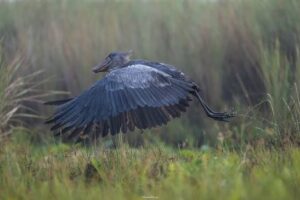
Chasing Shoebills Through the Papyrus of Lake Victoria in a Dugout Canoe
A typical day starts around 6 am. This is before the heat sets in and before the wind picks up enough to sway the reeds and mask movement. Your guide will paddle quietly. Sometimes they will cut the motor entirely to drift the stretch toward a known Shoebill feeding spot. Silence matters here. A dropped water bottle or a loud laugh can send a Shoebill back into cover for the rest of the day.
The trip usually runs two to three hours. Some operators offer sessions if the first pass comes up empty. Success rates are around 80 to 90 percent during the seasons. This is December through February and June through August. During this time, water levels change. Fish concentrate in smaller pools. This makes it easier for both the birds and the guides to predict where a Shoebill might be standing. During these months, the Shoebill has more space to spread out. Sightings become more of a gamble.
Bring binoculars if you have them. Many guides carry a pair. A zoom lens helps if you’re serious about photography. This is because getting than 15 or 20 meters risks spooking the Shoebill. Wear something that doesn’t rustle. Skip the perfume. Pack a hat because there’s little shade once you’re out among the reeds.
Beyond Mabamba: Other Places to Try Your Luck
Mabamba gets most of the attention. It isn’t the only wetland around Lake Victoria worth exploring. The smaller papyrus swamps near Entebbe host occasional Shoebill sightings. Murchison Falls National Park and the Semliki Wetland Reserve give you a shot at the species outside the Lake Victoria basin. Ssese Islands, scattered across Lake Victoria, occasionally turn up reports from fishermen. However, tourism infrastructure there is thinner. So you’ll need flexibility and a guide willing to improvise.
If Mabamba doesn’t deliver on your attempt, ask about Lutembe Bay. This is a wetland closer to Kampala. It sometimes gets. Has produced solid Shoebill sightings in recent years. Some visitors book two mornings at different sites. This is just to raise their odds. Honestly, that’s not overkill. A Shoebill is a bird. It deserves more than one attempt if your schedule allows it.
Toro-Semliki Wildlife Reserve, near the border with the Democratic Republic of Congo, sits further from the tourist circuit. It rewards travelers who make the trip. Guides there report Shoebill sightings tied closely to the season. This is when the Semliki River narrows, and Shoebills concentrate around the remaining pools. It’s a drive from Kampala, closer to eight hours. So most visitors combine it with chimpanzee tracking in Kibale Forest or a broader western Uganda itinerary rather than treating it as a standalone trip.
Queen Elizabeth National Park also turns up Shoebill reports around the Kazinga Channel. However, sightings there are less predictable than at Mabamba. Rangers sometimes know of a pair active for a season or two before the Shoebills relocate. So it pays to ask staff rather than relying on outdated trip reports from a year or two back. Wetland conditions shift quickly. A spot that produced Shoebill sightings one season can go quiet the next.
What the Local Communities Bring to the Experience
The guides working these waters aren’t hired staff from a tour company. Most grew up fishing these channels. Many switched partly or fully into eco-tourism once they realized a live Shoebill brought in more steady income than a dead one ever could. Community-run conservation groups around Mabamba have set up patrols to protect sites. They discourage egg collection, which used to be a threat when local trade in birds paid well.
Booking through a community-based operator rather than a large international agency puts more of your money directly into these efforts. It’s a choice, but it adds up. A single family running a guiding operation might support four or five households through boat fees, guiding income, and the sale of snacks or crafts to visitors waiting at the landing site. Ask your hotel or guesthouse in Entebbe or Kampala for community guide recommendations. Do not default to the agency that pops up in a search.
Some of the guides at Mabamba remember a time when a Shoebill sighting meant almost nothing financially. Fishermen saw the Shoebill as competition for lungfish. There was incentive to protect it. That changed once birding tourism picked up in the 2000s. Word spread among travelers that Uganda offered some of the most reliable Shoebill viewing anywhere on the continent. Today, a confirmed Shoebill sighting can bring in more from one morning’s boat fee than a full day of fishing. This has quietly turned hunters into some of the Shoebills’ most dedicated protectors. That shift didn’t happen through a policy or campaign. It happened one boat trip, one tip, one repeat visitor at a time.
Packing and Planning Tips That Actually Matter
Start early. Not 7 am early. 5:30 a.m. early if you’re staying in Entebbe. The drive to Mabamba and the boat setup eat into your viewing window otherwise. Dress in greens, browns or greys. Bright colors and white stand out against the reeds. They make both you and the Shoebills more nervous.
Mosquito repellent is non-negotiable in daylight hours. The wetland breeds them in numbers. A waterproof bag or dry sack protects your phone and camera from splashes. This is particularly important if you’re in a dugout rather than a covered boat. Pack. A light snack, because most trips don’t include a break. Three hours on the water without breakfast tests anyone’s patience.