
Mirrorless vs DSLR for Safari Photography: Which Do You Need?
Choosing the right camera for an African safari can make a significant difference to the photographs you bring home. From elephants crossing dusty plains to lions resting in the grass, mountain gorillas moving through dense forests, and colourful birds perched in distant trees, wildlife photography demands equipment that can respond quickly and perform in changing conditions.
Two camera systems dominate the discussion: mirrorless cameras and digital single-lens reflex cameras, commonly known as DSLRs. Both can produce excellent safari photographs, but they differ in autofocus technology, viewfinders, size, battery life, lens options, and how they handle fast-moving wildlife.
Mirrorless cameras have become increasingly popular because of their advanced subject tracking, electronic viewfinders, and compact designs. DSLRs remain capable wildlife photography tools, particularly for photographers who already own compatible lenses and accessories. Neither system automatically guarantees better photographs. Your results will depend on the camera, lens, shooting technique, light, and ability to anticipate animal behaviour.
For most travellers buying a new camera specifically for safari photography, a modern mirrorless system is a strong choice. However, a good DSLR with a suitable telephoto lens can still produce outstanding results. The most important decision is choosing a camera and lens combination that matches your budget, photography experience, and planned safari activities.
Understanding the Difference Between Mirrorless and DSLR Cameras
A DSLR uses a mirror mechanism to reflect light from the lens into an optical viewfinder. When you look through the viewfinder, you see the scene through the lens without an electronic display. When you take a photograph, the mirror moves out of the way so light can reach the image sensor.
A mirrorless camera does not use this internal mirror mechanism. Light passes directly through the lens to the image sensor, and the camera displays the scene through an electronic viewfinder or on the rear screen.
This difference affects how the cameras operate. Mirrorless systems can display exposure previews, focus information, and other shooting data directly in the viewfinder. Many also use sophisticated subject recognition to detect animals, birds, and eyes, helping photographers maintain focus as wildlife moves.
DSLRs offer an optical viewing experience that some photographers prefer. They can provide excellent autofocus through the optical viewfinder, particularly in models designed for sports and wildlife photography. Many professional DSLRs also have robust bodies, extensive lens support, and long battery life.
Both systems can capture high-resolution images, shoot in RAW format, and produce professional-quality photographs. The distinction lies mainly in how they handle the photographic process rather than whether one can produce good images and the other cannot.
Autofocus: Which Camera Tracks Wildlife Better?
Autofocus is one of the most important features for safari photography. Wildlife rarely waits for the photographer to achieve perfect focus. An animal may suddenly run, turn its head, lift its wings, or disappear behind vegetation.
Modern mirrorless cameras often have an advantage because many models include advanced subject-detection autofocus. Depending on the camera, the system may recognise birds, mammals, eyes, and other subjects, then attempt to maintain focus as they move through the frame.
This can be particularly useful when photographing elephants walking across the savannah, lions interacting with one another, or birds taking flight. Rather than repeatedly selecting a focus point, the photographer can let the camera track the recognised subject while concentrating on composition and timing.
However, subject detection is not infallible. Tall grass, branches, low contrast, poor lighting, and multiple animals in the same frame can confuse the system. Photographers still need to choose appropriate autofocus settings and understand when to override automatic tracking.
DSLRs can also perform extremely well. Advanced models designed for action photography have sophisticated autofocus systems that track moving subjects through the optical viewfinder. A skilled photographer using a capable DSLR can capture running wildlife and birds in flight with excellent consistency.
Entry-level cameras from either category may struggle more with difficult subjects than higher-end models. A recent mirrorless camera is not automatically better than every DSLR, and a professional DSLR may outperform an inexpensive mirrorless body in certain situations.
When comparing cameras, examine their actual autofocus performance rather than relying only on the product category. For travellers who frequently photograph unpredictable wildlife, a modern mirrorless model with reliable animal detection is often the more convenient option.
Continuous Shooting and Capturing the Perfect Moment
Burst shooting allows a camera to capture multiple photographs while the shutter button is held down. This feature is useful when an animal is running, a bird is landing, or two predators interact.
Many mirrorless cameras offer high continuous shooting speeds, although performance varies considerably by model. Some cameras can record rapid bursts electronically, while others use mechanical shutters or a combination of both. The highest advertised speed may only be available under particular conditions, such as with specific autofocus settings or reduced image quality.
DSLRs also offer continuous shooting, and several models were built specifically for action photography. Their performance depends on the camera’s shutter mechanism, autofocus system, buffer capacity, and memory card.
The buffer is important because it determines how many photographs the camera can capture before it slows down while writing files to the memory card. A camera with a high burst rate but a small buffer may stop recording at a critical moment.
Electronic shutters can introduce rolling-shutter distortion when subjects move quickly across the frame, depending on how fast the sensor reads the image. They can also produce banding under some artificial lighting conditions. Mechanical shutters may avoid some of these problems, although they can be noisier.
For safari photography, a moderate burst rate with dependable autofocus and a good buffer is often more useful than the highest possible frames-per-second figure. You need enough images to capture the decisive moment without filling your memory cards with hundreds of nearly identical photographs.
Image Quality: Does Mirrorless Produce Better Photographs?
Mirrorless cameras do not inherently produce better image quality than DSLRs. Both systems can use APS-C, Micro Four Thirds, or full-frame sensors, depending on the camera model. Sensor size, resolution, dynamic range, high-ISO performance, and lens quality all influence the final image.
A full-frame camera generally has a larger sensor than an APS-C camera, which can provide advantages in low-light performance and control over depth of field when other factors are comparable. However, crop-sensor cameras can be very effective for wildlife photography, particularly when you want a narrower field of view without carrying extremely long lenses.
Resolution determines how much detail the camera can record, but more megapixels do not automatically mean better photographs. A high-resolution sensor can provide flexibility when cropping distant animals, provided the lens, focus, lighting, and shutter speed are good enough to preserve detail.
Dynamic range is valuable when photographing wildlife against bright skies or in forests with strong differences between light and shadow. A camera with good dynamic range can retain more detail in highlights and shadows, especially when shooting RAW files and editing carefully.
High-ISO performance matters during early-morning and late-afternoon game drives, when wildlife is often active but light levels are low. A camera that produces clean images at higher ISO settings can allow faster shutter speeds, reducing motion blur.
When comparing two cameras, consider the complete system rather than the mirror mechanism. A DSLR with a high-quality sensor and sharp lens can produce better photographs than a mirrorless camera paired with an unsuitable or low-quality lens.
Electronic Viewfinder vs Optical Viewfinder
One of the biggest practical differences between mirrorless and DSLR cameras is the viewfinder.
A DSLR’s optical viewfinder provides a direct view through the lens. Many photographers appreciate its natural appearance and the absence of an electronic display. It does not require a separate electronic viewfinder display to show the scene, although the camera’s other functions still consume battery power.
A mirrorless camera’s electronic viewfinder displays a digital image from the sensor. This allows it to preview exposure, white balance, and some image-processing effects before the photograph is taken. It can also display a histogram, focus peaking, and other information, depending on the camera.
The exposure preview is particularly helpful when light changes quickly. If an elephant moves from a shaded area into sunlight, the photographer can see how exposure adjustments affect the image before pressing the shutter.
Electronic viewfinders can also make manual focusing easier by magnifying the image or highlighting areas in focus. These features can be useful when photographing stationary wildlife or making careful adjustments with a long telephoto lens.
However, electronic viewfinders have limitations. Some display more noise in very dark conditions, and certain models may show a slight delay or blackout during rapid shooting. Viewfinder quality varies widely, so it is worth testing a camera before purchasing it.
DSLR optical viewfinders remain appealing to photographers who prefer a direct visual experience. Mirrorless systems offer more exposure information and digital assistance, making them particularly convenient for travellers who want to check settings without taking their eye away from the viewfinder.
Camera Size and Weight on Safari
Weight matters on safari because photography equipment may be carried between airports, lodges, vehicles, boats, and walking trails. A camera that feels manageable in a shop can become tiring after several hours of wildlife viewing.
Mirrorless cameras are often smaller and lighter than comparable DSLRs because they do not need a mirror box and optical viewfinder mechanism. This can make them attractive for travellers who want a capable camera without carrying a large kit.
However, the weight difference is not always dramatic. Professional mirrorless bodies can be substantial, and large telephoto lenses may account for much of the total weight. A mirrorless camera with a heavy wildlife lens may be no easier to carry than a DSLR setup with similar reach.
DSLRs often have deep grips and substantial bodies that balance well with large lenses. Some photographers find this comfortable during long sessions with heavy equipment. The best choice depends on your hands, shooting style, and the lenses you plan to use.
Consider the complete kit: camera body, telephoto lens, spare battery, memory cards, protective bag, cleaning equipment, and any accessories. If you are travelling on small aircraft within East Africa, check the operator’s luggage and weight restrictions before departure.
For general safari travellers, a moderately sized camera with a versatile zoom lens can be more practical than a large professional body and several heavy lenses. Carrying equipment comfortably increases the likelihood that you will use it when wildlife appears.
Battery Life: An Important Consideration
Battery life is one area where DSLRs often retain an advantage. Because an optical viewfinder does not rely on an electronic display to show the scene, many DSLRs can take more photographs per battery charge than mirrorless cameras under comparable testing conditions.
Mirrorless cameras must power the sensor and electronic viewfinder or rear screen continuously while composing. Features such as animal detection, image stabilisation, wireless connectivity, and frequent image playback can increase battery consumption.
Actual performance varies by camera model, temperature, shooting style, and settings. Some mirrorless cameras have very good battery life, while certain DSLRs may use more power than expected in live-view mode.
On safari, battery management is particularly important because game drives can begin before sunrise and continue into the evening. You may take hundreds of photographs in a single day, especially when wildlife is active.
Carry at least one spare battery if possible, and consider bringing additional batteries for a multi-day trip. Charge them at the lodge whenever power is available. A dual charger can be useful when several batteries need charging overnight.
Reduce unnecessary image playback, turn off wireless functions when they are not needed, and use power-saving settings where appropriate. Keep spare batteries protected from dust, moisture, and physical damage.
If you choose a mirrorless camera, do not let battery concerns discourage you. With a sensible charging routine and spare batteries, it can be an excellent safari camera.
Lens Selection: The Most Important Part of Your Setup
For wildlife photography, lens choice can matter more than the difference between mirrorless and DSLR technology. A capable camera body cannot compensate for a lens that is too short to photograph distant animals or too slow to focus in difficult conditions.
A telephoto lens is essential for many safari situations. Wildlife may remain far from the vehicle, and approaching too closely is neither safe nor appropriate. A lens with a focal length range such as 100-400mm or 150-600mm can be useful for distant animals and birds, depending on the camera system and sensor size.
A lens around 70-200mm can work well for larger animals that approach the vehicle, environmental portraits, and scenes where you want to include the surrounding landscape. It may be insufficient for small birds or wildlife that remains far away.
Wide-angle lenses have a different purpose. They are useful for landscapes, lodge settings, large herds, and animals photographed in their environment. A wide lens can help tell a broader story rather than filling the entire frame with one animal.
If you want one lens for a general safari, a versatile zoom can reduce the need to change lenses in dusty conditions. Some photographers choose a superzoom, while others prefer a telephoto zoom combined with a standard zoom. Each approach involves trade-offs between reach, image quality, aperture, size, and price.
Mirrorless systems increasingly offer excellent wildlife lenses, but DSLR users may already own compatible telephoto equipment. Adapters can allow some DSLR lenses to work on mirrorless bodies, depending on the camera manufacturer and lens combination. Autofocus speed and feature support may vary, so compatibility should be checked carefully.
Before buying a new camera body, evaluate the lenses available for that system. A good telephoto lens that suits your budget and photography goals is one of the most valuable investments you can make for safari photography.
Photographing Big Cats, Elephants, and Other Large Mammals
Large mammals are often easier to photograph than small birds because they occupy more of the frame and may remain visible for longer. However, they can still move unexpectedly, and the lighting conditions may be challenging.
A mirrorless camera with reliable animal-detection autofocus can help maintain focus on a lion’s eye or an elephant’s head as the animal moves. This can be particularly useful when photographing interactions, walking sequences, or behaviour that unfolds quickly.
A DSLR with dependable continuous autofocus can also produce excellent results. Experienced photographers may prefer selecting a focus point manually or using a tracking mode that suits their technique.
Shutter speed is crucial when photographing movement. A stationary elephant may be photographed at a relatively moderate shutter speed, depending on focal length and stability, while a running predator requires a much faster setting to freeze movement. Image stabilisation helps reduce camera shake, but it does not freeze a moving animal.
Exposure can also be difficult when animals have dark fur or are positioned against bright grass. Review the histogram and highlights when possible, and learn how exposure compensation affects your camera’s automatic metering.
During game drives, support the camera on a beanbag or another stable surface when appropriate. This can reduce fatigue and help you hold a long lens steady. Avoid resting equipment in a way that obstructs the guide or compromises safe vehicle operation.
Regardless of camera type, follow your guide’s instructions and maintain an appropriate distance from wildlife. Good photographs should never come at the expense of animal welfare or personal safety.
Photographing Birds on Safari
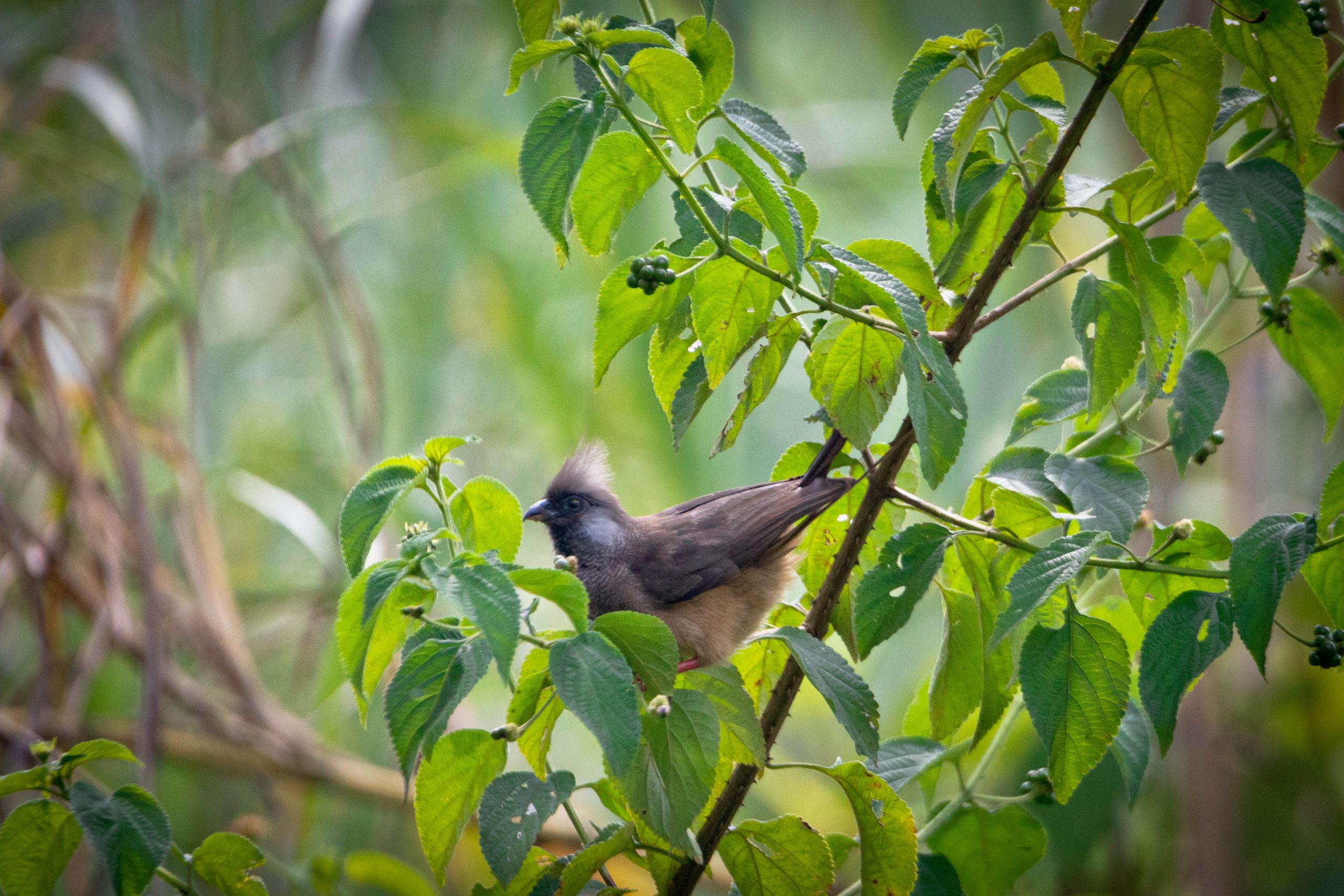
Bird photography places particularly high demands on autofocus, lens reach, and shutter speed. Birds can be small, distant, fast-moving, and difficult to distinguish against branches or complex backgrounds.
Mirrorless cameras with bird-detection autofocus can be especially useful. Depending on the model, the camera may identify a bird’s body or eye and attempt to track it as it moves. This can help when photographing kingfishers, bee-eaters, raptors, and other birds in flight.
However, autofocus recognition is only one part of the process. You still need to locate the bird in the viewfinder, select an appropriate focus area, maintain a suitable shutter speed, and choose an exposure that preserves feather detail.
A long telephoto lens is valuable for distant birds. Some photographers use a 400mm, 500mm, or 600mm lens, while others use a zoom that provides flexibility across different distances. Longer lenses increase reach but also add cost, weight, and handling difficulty.
DSLRs remain capable bird photography tools, especially when paired with a good telephoto lens and a strong autofocus system. A skilled photographer can achieve excellent results with either system.
If birdwatching is a major reason for your safari, prioritise autofocus performance, lens options, and comfortable handling. Do not choose a camera based solely on megapixels or maximum burst speed.
Low-Light Photography in Forests and at Dawn
Some of the most memorable safari photographs happen in low light. Lions may become active before sunrise, elephants can move through shaded woodland, and mountain gorillas are often photographed beneath dense forest canopy.
In these conditions, a camera’s high-ISO performance and the lens’s maximum aperture become important. A lens with a wider maximum aperture allows more light to reach the sensor, making it easier to use faster shutter speeds.
Mirrorless cameras often provide useful exposure previews, making it easier to adjust settings before taking a photograph. Their autofocus performance in low light varies by model, however, and not every mirrorless body focuses equally well in darkness.
DSLRs can also perform well in low light, especially higher-end models designed for demanding conditions. Image quality depends on sensor technology, exposure, lens quality, and the amount of light available rather than on the presence or absence of a mirror alone.
Image stabilisation can help when photographing stationary subjects at slower shutter speeds, but it will not eliminate blur caused by an animal moving. When wildlife is moving, you may need to increase ISO to maintain a suitable shutter speed.
For gorilla trekking, be prepared for uneven lighting beneath the canopy. Dark fur against bright foliage can challenge the camera’s metering system. Shooting in RAW provides more flexibility for recovering shadow detail and adjusting white balance during editing.
Durability, Dust, and Weather Protection
Safari environments can expose cameras to dust, humidity, rain, and temperature changes. Equipment protection should therefore be part of your buying decision.
Many mid-range and professional cameras offer some degree of weather sealing, but the level of protection differs between models. Weather sealing is not the same as complete waterproofing, and it generally works best when the body is paired with a suitably sealed lens.
Dust can be particularly troublesome during dry-season game drives. Vehicles travelling along unpaved roads may raise fine dust that enters bags and settles on equipment. Keep the camera covered when it is not being used and avoid changing lenses in exposed, dusty conditions.
Rain protection is equally important in tropical forests and mountainous regions. A lightweight rain cover or protective bag can help safeguard equipment when the weather changes unexpectedly.
Clean the exterior of the camera carefully and use appropriate tools for lens cleaning. Avoid blowing dust into the camera body when changing lenses, and follow the manufacturer’s guidance for sensor cleaning.
Both mirrorless and DSLR cameras are available with durable construction. Compare the specific model’s protection, grip, controls, and build quality rather than assuming that one camera category is inherently tougher.
Cost: Is Mirrorless Worth the Extra Money?
The cost of a safari photography setup includes more than the camera body. You also need to budget for lenses, memory cards, batteries, a protective bag, and potentially a tripod or monopod.
Mirrorless systems offer options at entry-level, enthusiast, and professional prices. Some modern mirrorless bodies are expensive, particularly those with advanced autofocus and high-speed shooting features. However, affordable models can still produce excellent wildlife photographs when paired with suitable lenses.
DSLRs can offer strong value, particularly on the second-hand market. Travellers may find capable used bodies and established telephoto lenses at prices that are difficult to match with a new mirrorless system. The condition of used equipment, shutter count, battery health, service history, and lens compatibility should be checked before purchase.
If you already own a DSLR and suitable lenses, switching systems may not be necessary. Your existing equipment may be more than adequate for a safari, and investing in a better telephoto lens, additional batteries, or photography training could improve your results more effectively than replacing the camera body.
If you are starting from scratch, compare the total cost of the mirrorless system you want, including lenses. A relatively inexpensive camera body can become costly if compatible telephoto lenses are limited or expensive.
Choose a system you can afford to use properly. A balanced setup with a suitable lens, reliable batteries, and enough memory card capacity is generally more useful than spending most of your budget on a high-end camera body.
Which Camera Should Beginners Choose?
For beginners buying their first serious wildlife camera, a modern mirrorless model is often a sensible option. Its electronic viewfinder, exposure preview, subject recognition, and convenient autofocus features can make the learning process easier.
However, beginners should not feel pressured to buy an expensive professional body. An entry-level or mid-range camera with a good telephoto lens can capture excellent safari photographs.
A DSLR can also be a good starting point, particularly if you find a well-maintained used model at a reasonable price. The optical viewfinder, physical controls, and extensive lens market can be attractive to people who prefer a traditional photography experience.
Whichever system you choose, spend time learning exposure, shutter speed, aperture, ISO, autofocus modes, and composition before travelling. Practising on birds, pets, or moving subjects at home can help you respond more confidently when wildlife appears.
Learn how to switch quickly between single-shot autofocus and continuous autofocus, adjust exposure compensation, and use burst shooting appropriately. These skills can have a greater impact on your results than small differences between camera specifications.
Which Camera Should Experienced Wildlife Photographers Choose?
Experienced photographers should focus on the features that affect their particular style of work. If you photograph birds in flight, advanced subject detection, continuous autofocus, burst performance, and buffer capacity may be priorities.
If you concentrate on landscapes and animal portraits, resolution, dynamic range, lens quality, and handling may matter more. If you work in forests or frequently photograph at dawn, low-light performance and lens aperture deserve particular attention.
Mirrorless systems may offer advantages in autofocus automation, silent shooting options, and electronic viewfinder tools. Silent shooting can be useful when noise is undesirable, but electronic shutter limitations should be understood before relying on it for fast movement.
Professional DSLRs can still provide a dependable experience, especially for photographers who know their equipment well. A familiar camera with proven lenses may be preferable to learning a completely new system just before an important trip.
For photographers considering a transition, test the mirrorless body with the lenses you intend to use. Pay attention to autofocus behaviour, viewfinder responsiveness, battery life, ergonomics, and how the camera balances with a long telephoto lens.
The best system is the one that supports your photographic priorities without creating unnecessary cost or complexity.
How to Prepare Your Camera Before the Safari
Before departure, check that your camera firmware is current and that your batteries, charger, memory cards, and lens accessories are working correctly. Format memory cards in the camera after backing up any important files, and carry enough storage for several days of shooting.
Set up autofocus controls before the trip. Configure continuous autofocus for moving wildlife, learn how to select animal detection if available, and choose a burst rate that suits your needs. Test the settings at home rather than trying to learn every function during a rare wildlife encounter.
Bring a spare battery and keep it charged. Long game drives and frequent image review can use power quickly, particularly on mirrorless cameras. A compact charging solution may be useful when the itinerary includes several nights in remote lodges.
Protect your equipment from dust and rain, and keep a soft cleaning cloth and appropriate lens-cleaning materials accessible. If you use a long lens, practise supporting it comfortably before travelling.
Finally, remember that safari photography is about observing wildlife as much as operating equipment. Listen to your guide, watch animal behaviour, and anticipate what may happen next. A camera that is ready and familiar is more useful than a sophisticated system that takes too long to configure.
Making the Final Choice
For most travellers buying a new camera for safari photography, mirrorless is the stronger starting point because modern models often combine effective subject tracking, electronic exposure previews, and a wide range of wildlife-focused features. These advantages can be especially useful when photographing moving mammals and birds.
DSLRs remain a valid choice for travellers who already own suitable equipment or want an affordable camera system with good lens options. They can produce excellent results across savannahs, wetlands, and forests when the photographer understands how to use them.
The final decision should be based on the complete setup rather than the camera category alone. A suitable telephoto lens, dependable autofocus, comfortable handling, adequate battery capacity, and knowledge of photographic technique will all contribute to better images.
If you are starting from scratch and can comfortably afford a modern mirrorless system, choose one with reliable wildlife autofocus and a lens that provides enough reach for the animals you expect to photograph. If you already own a capable DSLR, there may be no need to upgrade before your safari.
The goal is to travel with equipment you can use confidently, react quickly when wildlife appears, and capture the details and behaviour that make an African safari memorable.

No comment