
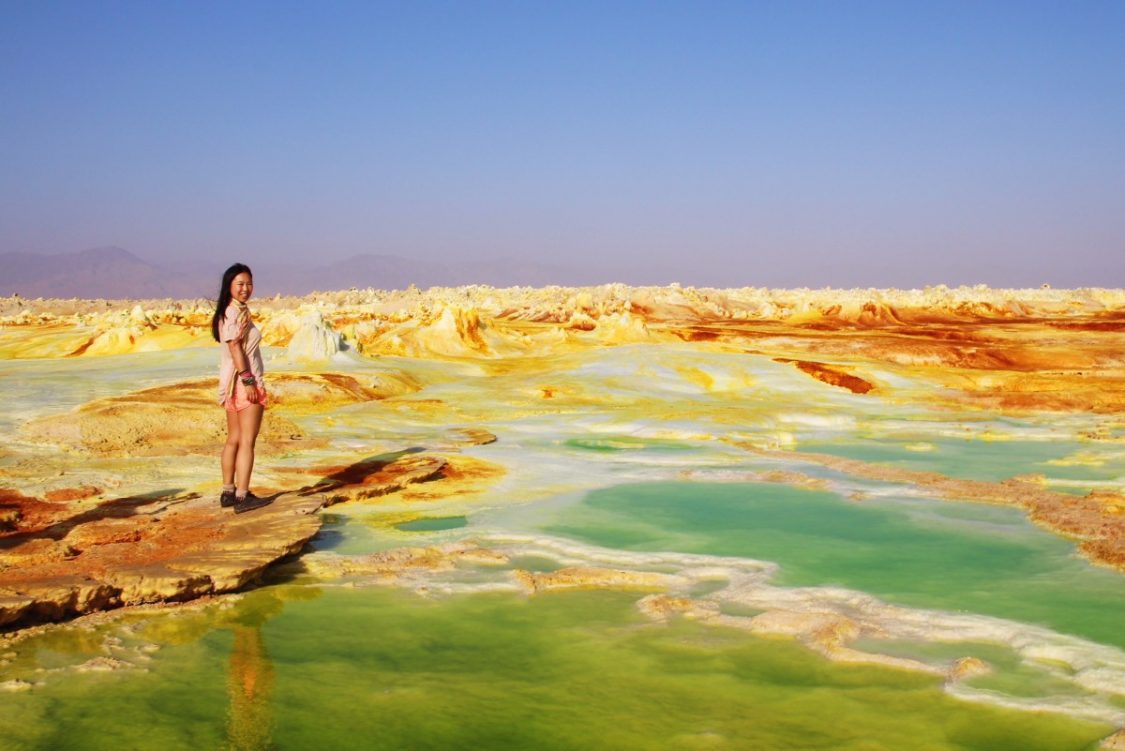
Danakil Depression: What to Check Before Booking a Guided Trip
The Danakil Depression in Ethiopia is one of Africa’s most extraordinary natural destinations, famous for colourful geothermal landscapes, active volcanoes, enormous salt flats and extreme desert temperatures. Located in northeastern Ethiopia, this remarkable region offers a fascinating introduction to the geological forces shaping the East African Rift.
Unlike Ethiopia’s green highlands and historic mountain towns, the Danakil Depression features volcanic plains, sulphur deposits, salt-covered landscapes and remote desert communities.
Visitors have traditionally explored the region through guided expeditions using four-wheel-drive vehicles. Popular attractions include the colourful formations of Dallol, the active Erta Ale volcano and traditional salt-mining areas around Lake Assale.
However, travelling through the Danakil requires careful preparation. Security concerns, extreme temperatures, difficult terrain and limited medical facilities make operator selection and travel planning particularly important.
Important travel advice: As of October 2026, official government advisories warn against travel to parts or all of Ethiopia’s Afar Region because of insecurity. Travellers should postpone leisure expeditions while these warnings remain in place.
Where Is the Danakil Depression Located?
The Danakil Depression lies within the Afar Triangle in northeastern Ethiopia, close to the borders with Eritrea and Djibouti.
The region forms part of the East African Rift, where tectonic plates are gradually separating.
Some areas lie more than 100 metres below sea level.
Quick Facts About the Danakil Depression
| Feature | Description |
|---|---|
| Country | Ethiopia |
| Region | Afar |
| Main attraction | Dallol geothermal area |
| Famous volcano | Erta Ale |
| Major salt area | Lake Assale |
| Landscape | Volcanic desert and salt flats |
| Climate | Extremely hot and dry |
| Traditional tour duration | 3–4 days |
| Transport | Four-wheel-drive vehicles |
| Main challenge | Heat, isolation and security |
Why Is the Danakil Depression Famous?
The Danakil Depression contains some of the planet’s most unusual geological landscapes.
Volcanic activity, mineral-rich fluids and evaporation create colourful formations that appear almost otherworldly.
The region is also famous for its traditional salt trade and the cultural heritage of Afar communities.
Main Attractions
Dallol offers colourful geothermal formations and mineral deposits.
Erta Ale is known for volcanic activity and its history of lava lakes.
Lake Assale contains extensive salt flats where traditional salt extraction has taken place for generations.
Each attraction provides a different perspective on the region’s geology and history.
Dallol: Ethiopia’s Colourful Geothermal Landscape
Dallol is among the most photographed locations in the Danakil Depression.
Its bright yellow, orange, green and white formations are created by complex geological and chemical processes.
Hot mineral-rich fluids rise through the ground, depositing different substances as they cool and evaporate.
Why Is Dallol Dangerous?
Some geothermal pools contain extremely acidic liquids.
Hot surfaces, unstable ground and potentially dangerous gases create serious hazards.
Visitors must never touch geothermal water or mineral formations.
Even experienced guides cannot eliminate every risk associated with active geothermal environments.
Erta Ale: The Smoking Mountain
Erta Ale is one of Ethiopia’s best-known active volcanoes.
Located within the Afar Region, it forms part of an important volcanic system associated with the East African Rift.
Can Visitors Always See Lava?
No. Lava visibility changes according to volcanic activity.
Although Erta Ale has historically supported persistent lava lakes, their appearance and accessibility vary.
Tour operators should never guarantee a lava lake or a close approach to an active crater.
Volcanic conditions can change rapidly and may make established observation areas unsafe.
Lake Assale and the Salt Flats
Lake Assale, also known as Lake Karum, is surrounded by remarkable salt landscapes.
The bright white surfaces create dramatic contrasts against nearby volcanic mountains.
Traditional Salt Mining
Afar communities have harvested salt in this region for generations.
Workers traditionally cut salt into blocks and transported them using camel caravans.
The salt trade remains an important part of the region’s cultural history.
Visitors should respect local workers and ask permission before taking photographs.
What to Check Before Booking a Danakil Tour
Choosing a reliable operator requires more than comparing prices.
A responsible company should explain the security situation, transport arrangements, emergency procedures and physical demands of the journey.
Essential Booking Checklist
| Requirement | What to confirm |
|---|---|
| Security | Current travel warnings |
| Operator | Registration and experience |
| Guides | Local knowledge and qualifications |
| Vehicles | Properly maintained 4WD transport |
| Water | Adequate drinking supplies |
| Medical support | Emergency procedures |
| Communication | Reliable emergency equipment |
| Permits | Required authorisations |
| Insurance | Appropriate evacuation cover |
| Cancellation | Written refund conditions |
Do not book if essential arrangements remain unclear.
Check the Current Security Situation
Security is the most important consideration when planning a Danakil expedition.
The Afar Region has experienced armed conflict, border tensions and restrictions on movement.
Some government travel advisories warn of violence, kidnapping and other serious security threats.
Questions to Ask
Is the intended route affected by official travel warnings?
Are roads open to civilian movement?
Are restrictions changing?
Can emergency assistance reach the area?
A tour operator offering departures does not necessarily mean travel is safe.
Choose an Experienced Tour Operator
Danakil tours require specialised desert experience.
The region’s remoteness means guides must understand navigation, local conditions and emergency response.
Signs of a Responsible Operator
A reliable company should provide a detailed itinerary.
It should explain transport, accommodation and emergency arrangements.
It should identify the local team responsible for the expedition.
The company should also communicate honestly about risks rather than promising complete safety.
Check the Condition of Tour Vehicles
Traditional Danakil expeditions use four-wheel-drive vehicles capable of crossing rough desert roads.
Breakdowns can become serious problems when travelling through remote areas.
Essential Vehicle Equipment
| Equipment | Purpose |
|---|---|
| Spare tyres | Managing punctures |
| Recovery equipment | Difficult terrain |
| Drinking water | Heat protection |
| First-aid supplies | Immediate assistance |
| Navigation equipment | Route management |
| Emergency communications | Contacting support |
| Fuel reserves | Remote travel |
Vehicles should undergo proper maintenance before departure.
Understand the Extreme Temperatures
The Danakil Depression is among the hottest inhabited regions on Earth.
Daytime temperatures can become dangerously high, particularly during the hottest months.
Main Heat-Related Risks
Heat exhaustion may cause dizziness, weakness, heavy sweating and nausea.
Heatstroke can cause confusion, collapse and other severe symptoms.
Heatstroke is a medical emergency requiring immediate cooling and urgent medical assistance.
Travellers should never underestimate the physical demands of the desert.
Medical and Evacuation Arrangements
Medical facilities are extremely limited in remote parts of the Danakil.
A serious illness or injury may require a complicated evacuation.
Questions About Medical Support
Does the operator have a written emergency plan?
How will assistance be contacted?
Where is the nearest functioning medical facility?
Is medical evacuation available?
Will insurance cover the destination and intended activities?
Many travel insurance policies exclude journeys undertaken against official government advice.
How Much Does a Danakil Tour Cost?
Tour prices depend on duration, group size, transport and included services.
Historically, operators offered shared and private excursions lasting three or four days.
Main Tour Expenses
| Expense | Planning consideration |
|---|---|
| Transport | Four-wheel-drive vehicle |
| Driver | Experienced desert driver |
| Local guide | Professional guiding |
| Food | Meals throughout expedition |
| Drinking water | Sufficient daily supplies |
| Accommodation | Basic camping or guesthouses |
| Permits | Local authorisations |
| Emergency arrangements | Appropriate support |
Current prices should not be assumed reliable while normal tourism operations are affected by insecurity.
Avoiding Hidden Tour Charges
A low advertised price may exclude important services.
Some packages charge separately for accommodation, permits or additional transport.
Before Making Payment
Request a complete written quotation.
Confirm the number of travellers sharing each vehicle.
Ask whether meals and water are included.
Understand cancellation penalties.
Avoid large non-refundable deposits while official security warnings remain in force.
Traditional Danakil Tour Itineraries
Before recent travel disruptions, many visitors explored the region through organised multi-day expeditions.
Example Four-Day Itinerary
| Day | Traditional activity |
|---|---|
| Day One | Travel towards the Afar desert |
| Day Two | Explore Dallol and salt landscapes |
| Day Three | Visit volcanic areas |
| Day Four | Return to the departure town |
This example describes a historical tourism pattern, not a currently recommended route.
Best Time to Visit the Danakil Depression
The region experiences high temperatures throughout the year.
Historically, October to March has been considered more suitable for travel because temperatures are generally less extreme.
Seasonal Conditions
| Period | General conditions |
|---|---|
| October–December | Relatively cooler |
| January–March | Hot and dry |
| April–May | Increasing heat |
| June–September | Often extremely hot |
Even during cooler months, visitors may encounter dangerous daytime temperatures.
What to Pack for a Desert Expedition
Packing correctly is essential for travel in extreme environments.
Recommended Equipment
Lightweight, long-sleeved clothing.
Wide-brimmed sun hat.
Sturdy walking shoes.
Sunglasses.
High-protection sunscreen.
Personal medication.
Head torch.
Sufficient drinking water.
First-aid essentials.
Appropriate travel documentation.
Specialist protective equipment may be needed for certain geological activities, depending on official access conditions.
Can You Visit Without a Guide?
Independent exploration is strongly discouraged.
The region contains hazardous geothermal areas, difficult terrain and limited communication networks.
Security restrictions may also prohibit movement through certain locations.
An experienced guide is essential when authorised travel becomes possible, but guiding alone cannot guarantee safety.
Understanding Afar Culture
The Afar people have longstanding cultural and historical connections to the Danakil landscape.
Traditional livelihoods include pastoralism, trading and salt extraction.
Responsible Cultural Experiences
Visitors should respect community customs.
Ask before photographing residents.
Avoid entering private settlements without permission.
Support locally owned businesses when appropriate.
Cultural tourism should provide meaningful benefits to host communities.
Protecting the Danakil Environment
The region’s geothermal formations and mineral landscapes are fragile.
Visitors should never remove minerals, damage formations or leave rubbish.
Vehicle movement should remain on authorised routes.
Respect protected areas and local conservation regulations.
Responsible behaviour helps preserve the landscape’s scientific and cultural importance.
Should You Book a Danakil Tour Now?
As of October 2026, official warnings concerning the Afar Region make postponement the responsible choice for leisure travellers.
Use the time to understand the region’s geography, research reputable operators and assess future expedition requirements.
When security improves, confirm current conditions before making any financial commitment.
Why the Danakil Depression Is Worth Discovering
The Danakil Depression is one of Ethiopia’s most unusual natural environments.
Its colourful geothermal formations, active volcanoes, immense salt flats and traditional Afar culture create an extraordinary combination of geology and human history.
However, the region demands careful planning and a realistic understanding of risk.
When conditions permit safe travel, a professionally organised expedition may offer an exceptional experience for travellers interested in desert landscapes, photography and volcanic geology.
Until then, respecting official travel warnings remains more important than completing a particular itinerary.

No comment