
Queen Elizabeth vs Murchison Falls National Park: How to Choose
Choosing between Queen Elizabeth National Park and Murchison Falls National Park is an important decision when planning a Uganda safari. Both destinations offer excellent opportunities to see wildlife, explore Uganda’s landscapes, enjoy boat cruises, and experience the country’s natural heritage. However, they differ in scenery, animal sightings, activities, travel time, and the overall character of the safari.
Queen Elizabeth National Park lies in western Uganda and is known for its diverse habitats, the Kazinga Channel, crater lakes, and the famous tree-climbing lions of the Ishasha sector. Murchison Falls National Park lies in northwestern Uganda and is known for its powerful waterfall, the Nile River, savannah wildlife, Rothschild’s giraffes, and rewarding boat trips.
Your best choice depends on what you want to experience. If you prefer a safari combining wildlife, birdwatching, crater lakes, and opportunities to see chimpanzees in the surrounding region, Queen Elizabeth offers considerable variety. If you want classic savannah game drives, giraffes, river wildlife, and a boat trip towards one of Uganda’s most spectacular waterfalls, Murchison Falls deserves serious consideration.
Location and Accessibility
Queen Elizabeth National Park is located in western Uganda, between Lake Edward and Lake George, with the Rwenzori Mountains forming part of its wider scenic setting. The park includes savannah plains, wetlands, forest patches, crater lakes, and the Kazinga Channel. Its location makes it suitable for itineraries that include Kibale National Park, Bwindi Impenetrable National Park, and other destinations in western Uganda.
From Kampala, the journey to Queen Elizabeth National Park commonly takes around six to eight hours, depending on the route, traffic, road conditions, and the park sector you intend to visit. The northern part around Kasese and Mweya is often used for wildlife activities, while the southern Ishasha sector requires additional travel.
Murchison Falls National Park lies in northwestern Uganda, north of Lake Kyoga and west of the Nile corridor leading towards the Albertine Rift. It is Uganda’s largest national park and has several access routes, including those through Masindi and the southern approaches to Paraa.
The drive from Kampala to the main tourism areas commonly takes around five to seven hours, although the exact duration depends on your destination within the park and road conditions. Visitors travelling to the northern sector should also consider the time needed to cross the Nile and reach their accommodation.
For travellers starting in Kampala, Murchison Falls can be the more convenient option for a short safari. Queen Elizabeth is often more practical when combined with western Uganda’s primate destinations.
Wildlife Viewing: Which Park Offers More?
Both parks support a wide range of mammals, but their landscapes and wildlife viewing opportunities differ.
Murchison Falls is particularly well known for savannah wildlife. Game drives in areas such as the northern sector can produce sightings of elephants, buffaloes, giraffes, lions, Uganda kobs, hartebeests, waterbucks, and other antelope species. The open grasslands and woodland provide good opportunities to scan the landscape for animals.
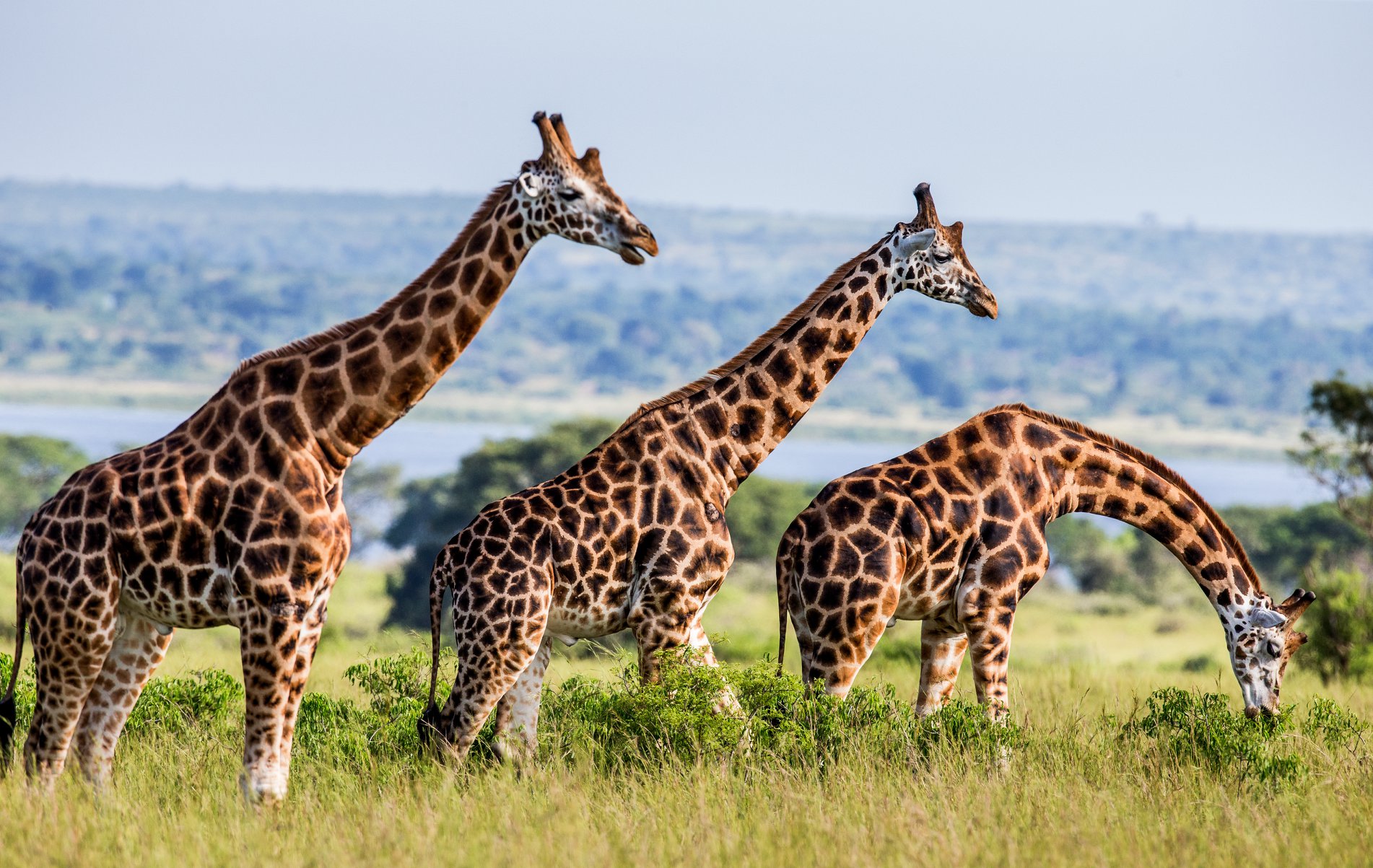
The park is especially attractive to travellers who want to see Rothschild’s giraffes. These giraffes are a distinctive feature of Murchison Falls and are among the animals visitors often hope to photograph during game drives. The Nile also attracts hippos, crocodiles, elephants, and numerous waterbirds.
Queen Elizabeth National Park supports elephants, buffaloes, hippos, Uganda kobs, waterbucks, warthogs, and several other mammals. Lions can be seen in different parts of the park, while leopards are present but often difficult to locate. The Kasenyi Plains are a well-known area for game drives, particularly for visitors hoping to see lions and antelope.
Queen Elizabeth is also famous for the tree-climbing lions associated with the Ishasha sector. These lions are sometimes seen resting in large fig trees, although sightings depend on the animals’ movements and are never guaranteed.
If giraffes and classic savannah wildlife are priorities, Murchison Falls is the more suitable choice because giraffes are a prominent part of its wildlife experience. If you are interested in a broader mix of savannah animals, wetland species, and distinctive habitats, Queen Elizabeth offers a varied experience.
Neither park guarantees sightings of any particular animal. A knowledgeable guide, appropriate timing, and flexibility during game drives can improve your opportunities.
The Boat Cruise Experience
A boat cruise is one of the main attractions at both parks, but each offers a different experience.
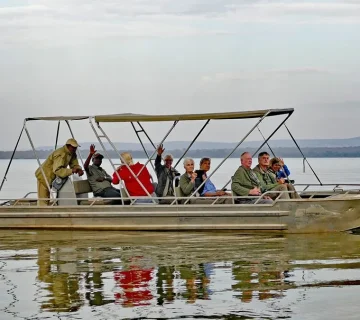
At Queen Elizabeth National Park, the Kazinga Channel connects Lake George and Lake Edward. The boat cruise follows this natural waterway, where visitors can often observe large numbers of hippos, crocodiles, buffaloes, elephants, and waterbirds along the banks.
The channel is especially appealing to wildlife photographers because animals frequently gather near the water. You may see elephants approaching the shoreline, buffaloes grazing nearby, and hippos resting in groups. The surrounding scenery also offers opportunities to photograph birds and distant landscapes.
The experience is generally relaxed, making it a useful addition to a morning or afternoon game drive. Birdwatchers can also benefit from the chance to observe water-associated species from the boat.
At Murchison Falls, the classic upstream boat trip travels along the Victoria Nile towards the base of Murchison Falls. Along the way, visitors can see hippos, crocodiles, elephants, and birds. The journey ends near the point where the Nile forces its way through a narrow gorge before plunging down the rocks.
The waterfall is a major attraction, and the boat trip provides a close view of the surrounding river scenery. Depending on the arrangement, visitors may combine the boat trip with a guided hike to the top of the falls.
Murchison Falls also offers a downstream Nile trip towards the delta near Lake Albert, which is particularly interesting for birdwatchers hoping to find the shoebill.
Choose Queen Elizabeth for a cruise focused on wildlife gathered along a natural channel. Choose Murchison Falls if you want a river journey that leads towards a dramatic waterfall.
Landscapes and Scenery
Queen Elizabeth National Park has a diverse landscape that changes considerably between its different sectors. The park contains open savannah, crater lakes, wetlands, woodland, forest patches, and the Kazinga Channel. The Rwenzori Mountains can provide a striking backdrop when weather conditions allow clear views.
The crater lakes are particularly attractive to visitors interested in landscape photography. Some lie within volcanic craters, while others are surrounded by rolling hills, vegetation, and rural communities. Travellers can also explore viewpoints and scenic routes around the park, depending on their itinerary.
The Ishasha sector offers a different atmosphere, with broad savannah and fig trees associated with the area’s tree-climbing lions. These changing environments make Queen Elizabeth suitable for travellers who enjoy exploring several types of landscapes during one trip.
Murchison Falls National Park offers a combination of open grasslands, woodland, riverine forest, wetlands, and the Nile River. The waterfall is the defining scenic attraction. Water is forced through a narrow rock opening before plunging into the gorge below, creating a powerful display of moving water and spray.
The northern savannah offers broad views and opportunities to photograph wildlife against open landscapes. The Nile provides another visual contrast, with green riverbanks, hippos, crocodiles, and birds gathered near the water.
For travellers who prefer crater lakes, varied vegetation, and mountain scenery, Queen Elizabeth is appealing. For those who want expansive savannah landscapes and the dramatic scenery of the Nile and its waterfall, Murchison Falls is a strong choice.
Birdwatching Opportunities
Queen Elizabeth National Park is an important destination for birdwatchers because of its variety of habitats. The wetlands, lakes, channel, savannah, and forest patches support a wide range of bird species. Visitors may encounter kingfishers, fish eagles, herons, storks, bee-eaters, and numerous other birds.
The Kazinga Channel is particularly rewarding for waterbirds, while the surrounding savannah supports species associated with open grassland. Forested areas offer opportunities to find birds that are less commonly seen in open habitats.
Murchison Falls National Park also offers excellent birdwatching. The Nile corridor attracts waterbirds, while the savannah and woodland support hornbills, rollers, eagles, and other species. The Nile delta near Lake Albert is especially important for visitors interested in the shoebill.
The best location depends on your birding priorities. Queen Elizabeth is an excellent option for exploring a wide range of habitats within one park. Murchison Falls is particularly attractive if you want to combine general birdwatching with a dedicated search for the shoebill around the delta.
Bird sightings depend on season, water levels, habitat conditions, and the amount of time spent in suitable locations. Serious birdwatchers should discuss their target species with their guide before finalising an itinerary.
Chimpanzee Trekking and Other Primate Activities
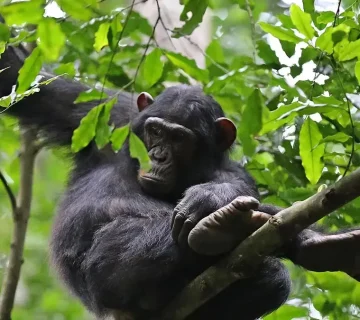
Queen Elizabeth National Park offers chimpanzee trekking in Kyambura Gorge, a forested valley surrounded by open savannah. The experience involves descending into the gorge and walking through its vegetation with trained guides in search of habituated chimpanzees.
Kyambura is known for its dramatic scenery, but chimpanzee sightings can be unpredictable because the community moves through a relatively confined yet challenging forest environment. The trek can also involve steep slopes and uneven trails.
Travellers interested in a higher-priority chimpanzee experience may consider Kibale National Park, which lies farther north in western Uganda. Kibale is widely recognised for its established chimpanzee tracking programme and is often included in itineraries combining primates and savannah wildlife.
Murchison Falls visitors can consider chimpanzee tracking in Budongo Forest, particularly around the Kaniyo Pabidi area. This is a practical addition to a safari focused on the Murchison Falls conservation landscape.
The choice depends on your route. Queen Elizabeth works well with Kyambura and Kibale on a western Uganda itinerary, while Murchison Falls pairs naturally with Budongo Forest. If you are mainly interested in chimpanzees, compare permit availability, current fees, and recent tracking conditions before deciding which forest to visit.
Safari Activities and Experiences
Queen Elizabeth National Park offers several activities that can be combined within a short visit. These include morning and afternoon game drives, a Kazinga Channel boat cruise, chimpanzee trekking in Kyambura Gorge, birdwatching, and visits to selected crater lake viewpoints.
Travellers with more time can explore different sectors of the park. Spending a night around Mweya or the northern sector provides convenient access to the Kazinga Channel and Kasenyi Plains, while staying around Ishasha makes it easier to explore the southern part of the park.
Murchison Falls offers game drives, the upstream boat cruise to the base of the falls, a hike to the top of the waterfall, birdwatching, and the downstream Nile delta excursion. Visitors can also arrange chimpanzee trekking in Budongo Forest, depending on permit availability and the itinerary.
The variety of activities means that both parks can support a two- or three-day safari. However, you should allow enough time to travel between activities rather than trying to fit everything into a single day.
If you prefer a safari built around a waterfall, river trips, and savannah game drives, Murchison Falls is a natural fit. If you prefer combining game drives with crater lakes, a wildlife-rich channel, and nearby primate experiences, Queen Elizabeth is well suited to that style of travel.
Accommodation and Safari Budget
Both destinations offer accommodation at different price levels, including budget camps, mid-range lodges, and luxury properties. Your final cost depends on where you stay, the season, transport arrangements, meal plans, and the activities included.
In Queen Elizabeth National Park, accommodation around Mweya and the northern sector provides access to game drives and the Kazinga Channel. Lodges around Ishasha are more suitable for visitors focusing on the southern sector and its tree-climbing lions.
In Murchison Falls, accommodation options are available around the southern approach, the Paraa area, and the northern sector. Your choice of lodge affects driving time to game drive areas and boat departure points, so confirm its location before booking.
The cost of either safari can increase when you add private transport, premium accommodation, chimpanzee permits, special excursions, and additional nights. Park entrance fees and activity charges should be checked against the tariff applicable to your travel dates.
Ask your tour operator for a detailed quotation that separates accommodation, transport, park fees, boat cruises, permits, meals, and other activities. This makes it easier to compare two itineraries accurately.
A lower-priced package may include fewer activities or accommodation farther from the main wildlife areas. Compare the complete itinerary rather than choosing solely on the advertised price.
Best Time to Visit Queen Elizabeth National Park
Queen Elizabeth National Park can be visited throughout the year. The relatively drier periods, often around June to August and December to February, can provide favourable conditions for game drives and general wildlife viewing.
During wetter months, the vegetation becomes greener and the scenery can be particularly attractive. Rain may affect some roads, especially in more remote areas, so travellers should allow flexibility in their schedules.
Birdwatching can be rewarding throughout the year, with seasonal changes affecting which species are present and where they are found. The best time for a particular experience depends on your interests and the conditions at the time of travel.
Best Time to Visit Murchison Falls National Park
Murchison Falls can also be visited year-round. Drier periods generally provide favourable conditions for game drives, and shorter vegetation can make it easier to spot wildlife in some areas.
The rainy seasons create greener scenery and can provide rewarding birdwatching opportunities, although some tracks may become muddy or more difficult to navigate.
The boat trip towards the falls is a central attraction throughout much of the year, but weather and river conditions can influence the experience. Travellers planning a hike to the top of the falls should bring suitable footwear and prepare for potentially slippery surfaces.
For both parks, advance planning is particularly useful during popular travel periods. Confirm accommodation, activity schedules, and any special permits before departure.
Which Park Is Better for a Short Stay?
If you have only two days available, Murchison Falls can be a practical choice for a short safari from Kampala. The itinerary can include a game drive, a Nile boat trip towards the waterfall, and time to appreciate the scenery around the river.
A two-day Queen Elizabeth safari is also possible, but you should organise your accommodation and activities carefully. A focused itinerary could include a game drive in the Kasenyi Plains and a Kazinga Channel cruise. Adding Kyambura chimpanzee trekking or a visit to Ishasha may require additional time.
With three days, either park offers more flexibility. At Murchison Falls, you can combine game drives, the upstream cruise, and a separate activity such as the Nile delta excursion or chimpanzee tracking in Budongo. At Queen Elizabeth, you can enjoy game drives, the channel cruise, and an additional day for Kyambura or the Ishasha sector.
If you have four days or longer, consider how either destination fits into a broader Uganda itinerary. Queen Elizabeth can combine well with Kibale and Bwindi, while Murchison Falls can be paired with Budongo and other destinations in northern or western Uganda.
Avoid overloading a short safari with too many long drives. Spending enough time in each destination usually produces a more comfortable and rewarding trip.
Can You Visit Both Parks on One Safari?
Yes. Visiting both Queen Elizabeth and Murchison Falls is a good option for travellers who have enough time to explore different parts of Uganda.
The parks are separated by a substantial road journey, so the itinerary should allow for travel time and overnight stops. Many routes can be arranged through western Uganda, with additional destinations selected according to your interests.
A longer itinerary can begin with Murchison Falls, where you can explore the savannah, the Nile, and the waterfall. You can then travel towards Kibale or another western Uganda destination before continuing to Queen Elizabeth for game drives and the Kazinga Channel cruise.
Alternatively, you can start in Queen Elizabeth and travel north towards Kibale and Murchison Falls, depending on your arrival and departure points.
If chimpanzee trekking is important, you can consider Budongo near Murchison Falls or Kibale and Kyambura in the west. If gorilla trekking is also part of your holiday, the itinerary will need additional days and a confirmed gorilla permit.
For most travellers, combining both parks makes sense when the trip allows enough time to enjoy each destination without rushing between them.
How to Make Your Final Decision
Choose Queen Elizabeth National Park if you want a varied western Uganda safari that combines savannah wildlife, the Kazinga Channel, crater lakes, birdwatching, and the possibility of chimpanzee trekking in Kyambura Gorge. It also works well for itineraries that include Kibale and Bwindi.
Choose Murchison Falls National Park if you want to focus on savannah game drives, Rothschild’s giraffes, Nile wildlife, and the waterfall. Its location can also make it convenient for a shorter safari from Kampala, especially when your schedule is limited.
If you are interested in both destinations, plan enough days to account for the journey between them. Two or three days can work well for a focused visit to one park, while a longer itinerary gives you more time to explore different habitats and activities.
The best choice is the one that matches your available time, budget, and wildlife interests. Both parks offer distinctive experiences, and careful planning will help you spend more of your holiday enjoying Uganda rather than travelling between destinations.


No comment