
Lake Katwe Salt Works: How Salt Is Still Harvested by Hand
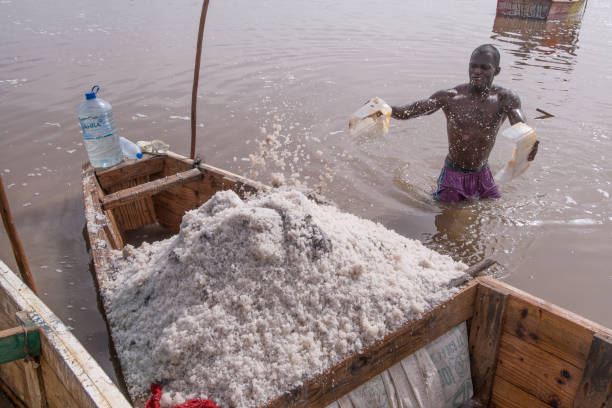
Lake Katwe Salt Works in Uganda is one of the country’s most fascinating cultural and industrial heritage attractions. Located in Kasese District, near Queen Elizabeth National Park, Lake Katwe is famous for its traditional salt harvesting methods, which have supported local communities for centuries. Unlike modern salt factories that rely on industrial machinery, much of the work at Lake Katwe is still performed manually using simple tools, shallow evaporation pans and techniques passed down through generations.
Visitors approaching the lake encounter an unusual landscape of rectangular salt pans separated by narrow earthen walls. Men and women work under the hot sun, collecting salt crystals, lifting mineral deposits and preparing their products for local markets. The activity provides an opportunity to understand an important part of western Uganda’s economic and cultural history.
For travellers exploring Queen Elizabeth National Park, a guided visit to Lake Katwe offers an educational experience beyond traditional wildlife game drives.
Where Is Lake Katwe Located?
Lake Katwe lies within the Katwe–Kabatoro area of Kasese District in western Uganda.
The lake occupies a volcanic crater within the western branch of the East African Rift Valley, close to Queen Elizabeth National Park.
Its surrounding landscape contains crater lakes, volcanic hills, grasslands and settlements whose livelihoods are closely connected to natural resources.
The nearby town of Katwe developed around salt production and trading activities.
Quick Facts About Lake Katwe
| Feature | Description |
|---|---|
| Country | Uganda |
| District | Kasese |
| Nearby destination | Queen Elizabeth National Park |
| Lake type | Saline volcanic crater lake |
| Main economic activity | Traditional salt harvesting |
| Harvesting method | Manual extraction and solar evaporation |
| Main products | Crystallised salt, rock salt and lower-grade mineral deposits |
| Best viewing period | Relatively dry months |
| Suggested visit | 1–2 hours |
1. Why Is Lake Katwe So Salty?
Lake Katwe is naturally saline because of its geological setting and limited drainage.
Minerals enter the lake through surrounding rocks, sediments, groundwater and surface runoff.
Unlike rivers that continuously carry dissolved minerals towards the sea, Lake Katwe has no significant surface outlet.
Water leaves mainly through evaporation.
As water evaporates under the sun, dissolved minerals remain behind, increasing their concentration.
Over time, the highly concentrated water allows different salts to crystallise.
Why the Dry Season Matters
During relatively dry weather, strong sunshine encourages evaporation.
As water levels decline, the concentration of dissolved minerals increases.
Salt crystals can form in specially prepared shallow pans, allowing workers to collect them.
Heavy rainfall may dilute the brine, delaying crystallisation and reducing production.
This makes weather conditions particularly important to the people whose incomes depend on harvesting salt.
2. The History of Salt Harvesting at Lake Katwe
Salt production at Lake Katwe dates back several centuries.
Before industrial salt processing became common, natural salt deposits were valuable trading commodities in East Africa.
Communities used salt for food preparation, preservation and livestock-related purposes.
Traders transported salt from Katwe to neighbouring areas, where it could be exchanged for food and other goods.
The industry helped establish Katwe as an important trading settlement.
Today, salt extraction remains closely associated with the town’s identity.
Although markets and production conditions have changed, traditional harvesting continues to provide income for local households.
3. How Salt Pans Are Prepared by Hand
One of the most distinctive sights at Lake Katwe is the network of small rectangular evaporation pans.
These pans are commonly managed by individuals or families.
Workers prepare them using soil, mud, wooden supports and locally available materials.
Preparing a Salt Pan
The process generally begins by clearing and repairing the selected area.
Workers strengthen the surrounding walls to prevent unwanted water movement between neighbouring pans.
Highly saline water is then channelled or transferred into the shallow enclosure.
The pan is left exposed to sunshine.
As evaporation continues, the mineral concentration increases until suitable salts begin forming.
Workers monitor the pan and adjust their harvesting activities according to weather and crystallisation conditions.
4. How Salt Crystals Are Collected
Once sufficient crystallisation has occurred, workers begin collecting the salt.
This involves scraping, gathering and lifting crystals from the pan.
Simple hand tools help loosen deposits and move them towards collection points.
The harvested material may then be washed, drained or dried, depending on its intended use and quality.
Why Manual Skills Matter
Successful harvesting requires practical knowledge.
Workers must recognise when a pan is ready, how to collect material without unnecessary contamination and how to distinguish different grades.
Experience is particularly important because the mineral composition and crystallisation conditions vary.
The methods may appear simple, but they require patience and an understanding of the lake’s behaviour.
5. How Rock Salt Is Extracted
Not all salt at Lake Katwe is collected from shallow evaporation pans.
Some mineral deposits form larger, harder masses within the lake.
Workers may use hand tools to loosen and lift these deposits.
The work can involve prolonged exposure to highly saline water.
Large pieces are transported towards the shore for sorting and sale.
Why Rock Salt Extraction Is Difficult
Rock salt extraction is physically demanding.
Workers must handle heavy deposits while operating on wet, uneven surfaces.
The concentrated brine can irritate exposed skin, particularly when workers have cuts or wounds.
Suitable protective equipment and safe working practices are therefore important.
6. Different Salt Products From Lake Katwe
The lake produces several grades of salt and mineral-rich material.
These are sorted according to their characteristics and intended markets.
| Salt product | Common use |
|---|---|
| Crystallised salt | Food-related applications after suitable processing and quality checks |
| Rock salt | Livestock-related and other uses depending on composition |
| Lower-grade mineral deposits | Animal salt licks and selected industrial applications |
Not every material collected from the lake is appropriate for human consumption.
Salt intended for food must meet relevant safety, purity and iodisation requirements.
Visitors should therefore avoid assuming that all raw salt sold near the lake is equivalent to commercially processed table salt.
7. The Role of Women in Salt Harvesting
Women have long played an important role in Lake Katwe’s salt industry.
Many work in shallow evaporation pans, collecting crystals and preparing harvested material.
Their earnings can contribute to household expenses, children’s education and everyday necessities.
However, working arrangements vary between families and individual producers.
Women may participate in production, trading and other activities connected to the industry.
Challenges Facing Female Workers
Salt harvesting involves long hours in strong sunshine.
Workers may experience skin irritation, dehydration and physical exhaustion.
Limited access to protective equipment can make these conditions more difficult.
Improving occupational safety and economic opportunities remains important for the wellbeing of mining households.
8. How Local Families Depend on Salt Production
Salt harvesting provides direct and indirect employment within Katwe.
Some residents manage pans, while others work as harvesters, traders, transporters or small business owners.
Local shops and markets also benefit from economic activity associated with the industry.
However, earnings depend on production conditions, operating expenses and market prices.
When heavy rainfall delays harvesting, household incomes may be affected.
Competition from commercially processed salt can also influence demand for traditionally produced products.
9. Why Industrial Machinery Has Not Replaced Hand Harvesting
Visitors often wonder why salt production at Lake Katwe remains largely manual.
Several factors help explain this.
Traditional salt extraction operates through numerous small pans managed by different individuals.
Industrial development would require substantial investment, suitable equipment and reliable production arrangements.
The lake’s concentrated mineral water can also create corrosion and maintenance challenges.
Previous attempts to introduce mechanised processing have encountered technical and economic difficulties.
However, it would be inaccurate to claim that modern technology cannot process Lake Katwe’s salt.
The continuing use of manual techniques reflects a combination of investment limitations, production economics, local organisation and working conditions.
10. Health and Safety Challenges for Salt Workers
Salt extraction can expose workers to difficult occupational conditions.
Highly concentrated brine may irritate the skin, especially with repeated or prolonged contact.
Workers also face heat exposure, dehydration and physical strain.
Sharp crystals and uneven surfaces can increase injury risks.
Why Protective Equipment Matters
Suitable boots, gloves and other protective clothing can help reduce some workplace hazards.
However, equipment must be appropriate for the conditions and properly maintained.
Access to clean water, sanitation and healthcare is also important.
Claims that contact with Lake Katwe’s water automatically causes infertility should not be treated as established medical facts without reliable scientific evidence.
Workers deserve accurate health information and practical occupational protection.
11. Visiting Lake Katwe Salt Works
A guided visit allows travellers to observe the salt pans while learning about traditional production methods.
Local guides explain how the pans are prepared, how crystals form and how workers classify the harvested material.
Visitors may also learn about the history of Katwe town and the economic importance of salt trading.
What to Expect During a Tour
A typical visit may include walking along designated paths between the pans.
Visitors can observe workers collecting salt and preparing materials for sale.
Guides may explain the different salt grades and describe how weather affects production.
Tour arrangements depend on local operating conditions and the availability of guides.
It is advisable to arrange the visit through an established local guide or responsible safari operator.
12. Best Time to Visit Lake Katwe
Lake Katwe can be visited throughout the year.
However, the relatively dry months often provide better opportunities to observe active evaporation and harvesting.
January to February and June to August are commonly convenient periods, although rainfall varies.
The best time of day is generally early morning or late afternoon.
These hours may provide more comfortable temperatures for walking around the exposed salt pans.
What to Bring
Visitors should carry drinking water, sunscreen, a hat and comfortable walking shoes.
The ground can be uneven or slippery.
Avoid stepping into active pans or touching the concentrated brine.
A camera is useful for documenting the unusual landscape, but permission should be requested before photographing workers.
13. Combining Lake Katwe With Queen Elizabeth National Park
Lake Katwe is conveniently located near Queen Elizabeth National Park, making it suitable for inclusion in a wider wildlife itinerary.
The park is famous for elephants, buffaloes, lions, hippos and numerous bird species.
Visitors can combine a cultural salt works tour with game drives or other activities, depending on their accommodation location and available time.
Suggested One-Day Experience
Begin with a morning wildlife game drive in Queen Elizabeth National Park.
Later, travel towards Katwe town for a guided salt works visit.
Learn about the traditional harvesting process and the people who depend on it.
If time permits, explore nearby crater lake viewpoints before returning to your accommodation.
14. Why Responsible Tourism Matters at Katwe
Lake Katwe is a working production area rather than a purpose-built tourist attraction.
Visitors should respect the people carrying out their daily activities.
Do not enter salt pans without permission.
Avoid interfering with harvesting or handling equipment.
Ask before photographing individual workers.
Using local guides and purchasing suitable local products can provide additional economic benefits.
Respectful tourism helps preserve the dignity of workers while supporting community livelihoods.
15. Conservation and the Future of Lake Katwe
Lake Katwe’s future depends on balancing economic activity, environmental protection and community wellbeing.
The surrounding landscape forms part of an important ecological region associated with Queen Elizabeth National Park.
Poor waste management, habitat disturbance and unsustainable resource use can affect environmental quality.
Improved production methods, worker protection and responsible tourism could help strengthen the salt industry’s long-term prospects.
Community participation is essential because local residents have depended on the lake for generations.
Why Lake Katwe Salt Works Is Worth Visiting
Lake Katwe offers an unusual cultural experience within Uganda’s western safari circuit.
Its network of handmade evaporation pans demonstrates how local communities continue producing salt using traditional knowledge and physical labour.
The visit also reveals the economic importance of natural resources and the challenges faced by people working in demanding environments.
For travellers exploring Queen Elizabeth National Park, Lake Katwe provides an opportunity to experience more than wildlife.
It introduces visitors to a longstanding Ugandan industry and the communities working to maintain it.






No comment