
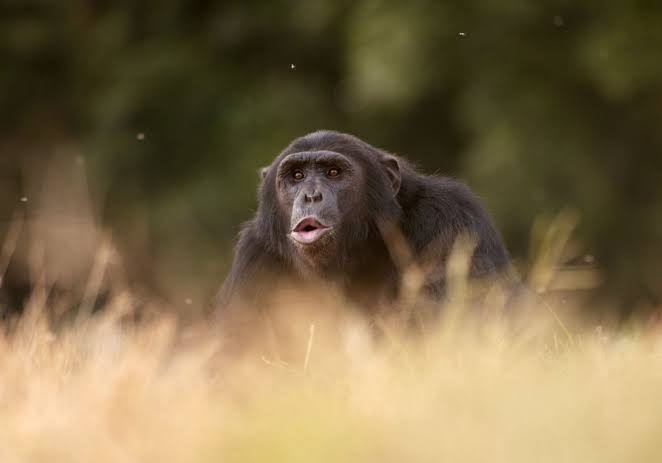
Pant-Hoots and Screams: Reading Chimpanzee Calls
Walking through Uganda’s Kibale Forest early in the morning is an experience filled with natural sounds. Birds call from the trees, leaves move in the breeze, and somewhere in the distance, a chimpanzee produces a loud series of rising calls. Within moments, another chimpanzee responds. Your guide stops, listens carefully and explains that the sounds may help reveal where the chimpanzees are moving.
Understanding chimpanzee pant-hoots and screams adds another interesting dimension to a Uganda primate safari. Chimpanzees use different vocalisations to communicate, maintain social relationships, respond to threats and coordinate activities.
However, their calls are not always easy to interpret. A loud scream does not automatically mean danger, and a pant-hoot can communicate several kinds of social information.
Learning to recognise these sounds helps you appreciate the intelligence and complex social lives of wild chimpanzees.
Why Do Chimpanzees Make Different Calls?
Chimpanzees live in social communities containing males, females and their offspring. Community members frequently separate into smaller groups while searching for food or travelling through the forest.
Because individuals cannot always see one another, vocal communication becomes important.
Chimpanzees use calls to communicate across distances, respond to social interactions and signal information about their surroundings.
Researchers have identified several vocalisation types, including pant-hoots, screams, grunts, barks and quieter contact calls.
The meaning of a call depends on its sound, the caller’s identity and what is happening nearby.
1. Pant-Hoots: The Famous Chimpanzee Long-Distance Call
Pant-hoots are among the most recognisable chimpanzee vocalisations.
They often begin with softer sounds before developing into louder, more energetic calls.
These vocal sequences can travel through forest habitats, helping chimpanzees communicate with individuals that may be out of sight.
Pant-hoots are particularly associated with travelling, feeding and social interactions.
The Four Stages of a Pant-Hoot
Researchers commonly divide pant-hoots into four phases.
| Phase | Sound Characteristics |
|---|---|
| Introduction | Soft, low-pitched calls |
| Build-up | Increasingly rapid vocalisations |
| Climax | Loud, high-pitched calls |
| Let-down | Calls gradually decrease in intensity |
Not every pant-hoot contains all four phases.
Research involving chimpanzees in Uganda’s Budongo Forest has shown that different parts of these calls can carry information associated with individual identity, age, social status and behavioural context.
This makes pant-hoots particularly interesting to primate researchers.
2. Screams: Understanding Excitement and Conflict
Chimpanzee screams can sound alarming, especially when heard unexpectedly in a dense forest.
However, screams occur in different social situations.
A chimpanzee may scream during aggression, fear, distress or intense social interactions.
For example, when two individuals become involved in a confrontation, one may produce loud screams while other chimpanzees approach or react.
The intensity of the sound alone does not reveal exactly what happened.
Experienced researchers examine body movements, facial expressions and surrounding behaviour to understand the situation.
During chimpanzee tracking, your ranger may recognise signs of conflict and instruct visitors to maintain an appropriate distance.
3. Pant-Grunts: Recognising Social Relationships
Pant-grunts are distinctive vocalisations associated with chimpanzee social relationships.
They are often produced by lower-ranking individuals towards more dominant community members.
These calls can occur during greetings and interactions between chimpanzees.
For example, a younger or lower-ranking male may approach a dominant male while producing pant-grunts.
Researchers use these interactions to study social rank and relationships within chimpanzee communities.
However, hierarchy is complex, and individual relationships can change over time.
A pant-grunt should therefore be interpreted within its particular social context.
4. Food Calls: Communicating Around Feeding Areas
Chimpanzees consume fruits, leaves, seeds, insects and occasionally meat.
When feeding, they may produce vocalisations associated with food discovery or anticipation.
These include particular grunts and barks.
The structure and frequency of food calls can vary according to feeding conditions and social circumstances.
For example, chimpanzees may vocalise while feeding in a fruiting tree.
Nearby individuals may respond or move towards the feeding area.
Researchers investigate whether such calls provide information about food and the caller’s circumstances.
However, it is misleading to assume every food-related call simply means that food is available.
5. Alarm Calls: Responding to Possible Danger
Chimpanzees may produce alarm calls when they encounter potentially threatening situations.
Possible triggers include snakes, unfamiliar disturbances or aggressive interactions.
Some alarm calls are loud and sharp, while others are relatively quiet.
A chimpanzee may also combine calling with body movements and focused attention towards a particular location.
During a forest walk, your guide may stop after hearing unusual chimpanzee calls.
Rather than assuming the animals are in danger, the guide considers the sound and surrounding activity.
Visitors should remain quiet and follow ranger instructions.
6. Soft Hoos: Quiet Communication in the Forest
Not every chimpanzee call is loud.
Chimpanzees also produce softer vocalisations that can be difficult for inexperienced visitors to notice.
Quiet hoo calls occur in different contexts, including communication involving potential danger and coordination with other individuals.
Researchers have identified variations in these calls according to circumstances.
Some may communicate information without attracting unnecessary attention.
Listening for quieter sounds can be particularly interesting during a guided chimpanzee experience.
However, identifying their exact function requires detailed behavioural observations.
7. Drumming: Communication Without Vocal Calls
Chimpanzees sometimes strike large tree roots or buttresses with their hands or feet.
This produces deep sounds that can travel through the forest.
Drumming may accompany pant-hoots and other displays.
Researchers study these patterns to understand individual differences and social communication.
In Uganda’s Budongo Forest, studies have examined how drumming accompanies chimpanzee vocal displays.
If your guide hears repeated drumming, they may investigate whether chimpanzees are active nearby.
However, sound direction can be difficult to judge in dense forests.
Quick Guide to Common Chimpanzee Sounds
| Chimpanzee Sound | Common Association |
|---|---|
| Pant-hoot | Long-distance communication |
| Scream | Distress, conflict or intense social interaction |
| Pant-grunt | Social greeting and rank-related interactions |
| Food grunt or bark | Feeding-related situations |
| Alarm call | Potential danger or disturbance |
| Soft hoo | Quiet communication in several contexts |
| Tree drumming | Displays and social signalling |
These descriptions are general. Researchers interpret chimpanzee communication by combining sounds with behaviour and context.
Can Chimpanzees Recognise Each Other’s Voices?
Chimpanzees can distinguish individuals through vocal information.
Research on pant-hoots has found acoustic differences between callers.
A study involving Budongo chimpanzees demonstrated that pant-hoots contain information associated with individual identity.
This helps explain how vocal communication can support social relationships when chimpanzees are separated by forest vegetation.
Scientists continue investigating how chimpanzees recognise and respond to particular callers.
These studies provide valuable information about the development of communication among primates.
Where Can You Hear Chimpanzee Calls in Uganda?
Uganda offers several destinations where travellers may hear chimpanzee vocalisations during authorised forest activities.
| Destination | Chimpanzee Experience |
|---|---|
| Kibale National Park | Chimpanzee tracking and habituation |
| Budongo Forest | Guided chimpanzee tracking in designated areas |
| Kyambura Gorge | Guided chimpanzee tracking |
| Kalinzu Forest | Chimpanzee tracking |
| Ngamba Island Sanctuary | Observation of rescued chimpanzees |
The experience differs between locations.
In Kibale, visitors search for wild chimpanzees in forest habitats, while Ngamba Island provides protected viewing of rescued sanctuary residents.
How Guides Use Chimpanzee Calls During Tracking
Experienced guides listen carefully while searching for chimpanzees.
Loud pant-hoots may provide clues about the general direction of chimpanzee activity.
Guides combine these sounds with footprints, feeding signs, recent observations and knowledge of the forest.
However, calls alone cannot reliably establish an animal’s exact location.
Chimpanzees may move quickly, and forest conditions can affect how sounds travel.
Patience and careful observation remain essential.
Can Visitors Imitate Chimpanzee Calls?
Although copying chimpanzee sounds may seem entertaining, visitors should avoid doing so.
Imitating calls could interfere with communication or disturb the animals.
Loud noises may also affect the experience of other visitors.
During chimpanzee tracking, remain quiet and let the ranger manage interactions.
Avoid playing recorded chimpanzee calls through speakers.
Responsible wildlife observation means allowing the animals to behave naturally.
What Is the Best Time to Hear Chimpanzee Calls?
Chimpanzees may vocalise at different times throughout the day.
Morning activity can provide opportunities to hear calls as individuals begin travelling or feeding.
However, vocal activity depends on social interactions, food availability and other circumstances.
Some chimpanzees remain relatively quiet during particular observation periods.
An early forest visit may improve your opportunities to observe activity, but no guide can guarantee specific vocalisations.
How Chimpanzee Calls Support Conservation Research
Studying chimpanzee communication helps researchers understand social relationships, behavioural development and differences between communities.
Scientists use direct observation and audio recordings to investigate vocal patterns.
Some studies examine how calls vary with individual identity, age or social position.
Long-term research in Budongo and Kibale has contributed significantly to knowledge of chimpanzee behaviour.
This information supports broader efforts to understand and protect endangered chimpanzee populations.
Listening to Chimpanzees in the Wild
Chimpanzee pant-hoots and screams provide fascinating opportunities to understand life inside Uganda’s forests.
From powerful long-distance calls to quiet grunts and soft hoos, chimpanzees communicate in different ways depending on their social circumstances.
During your next chimpanzee tracking experience, spend time listening as well as watching.
Your guide can help explain the calls while observing the animals’ behaviour.
Understanding chimpanzee sounds makes a forest encounter more meaningful and encourages greater appreciation for these intelligent primates.







No comment