
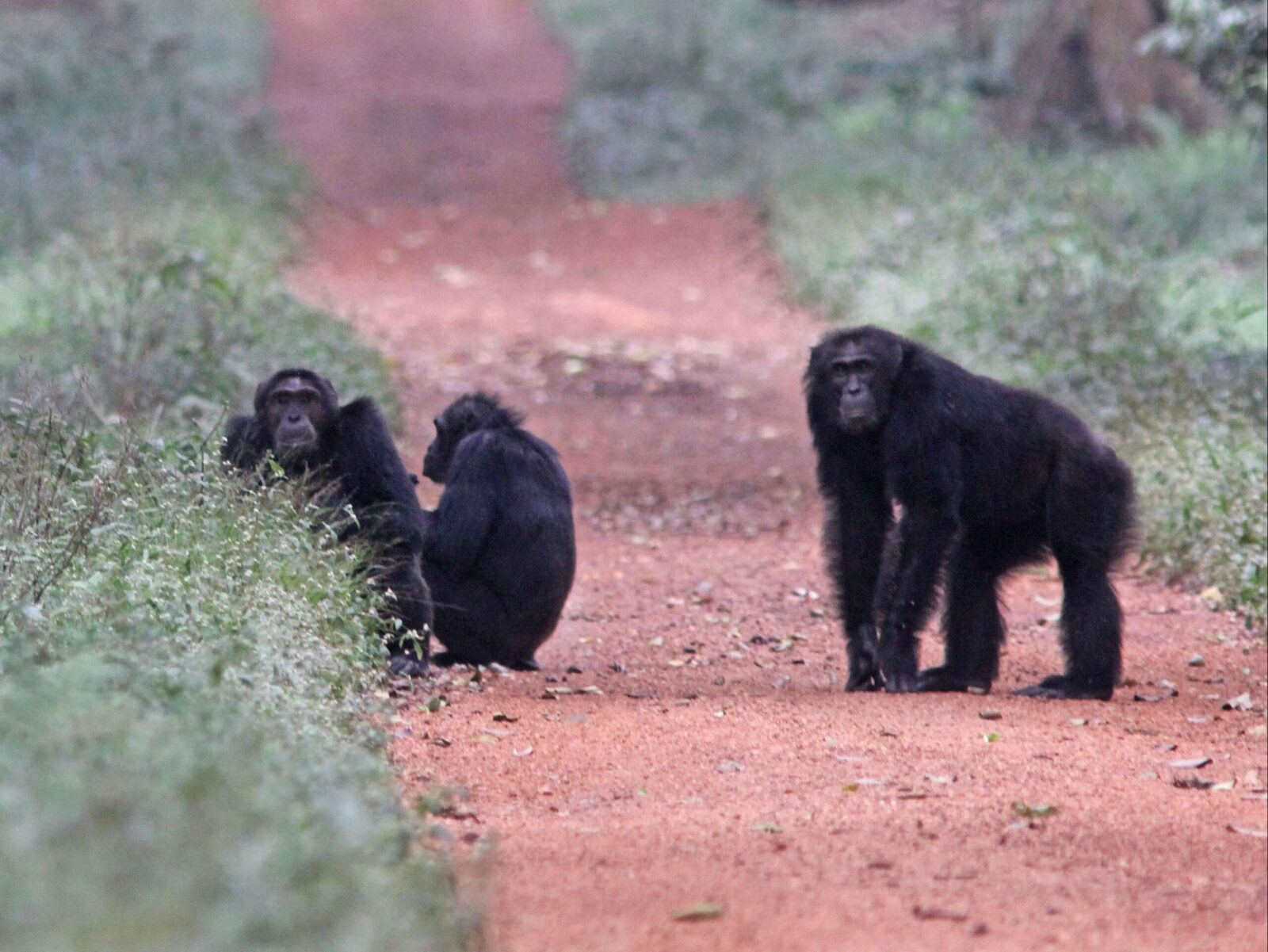
Budongo’s Sonso Chimpanzees Compared With Kibale’s Communities
Uganda is one of Africa’s most rewarding destinations for observing wild chimpanzees. While Kibale National Park attracts travellers interested in chimpanzee tracking, Budongo Forest is internationally recognised for its long-term primate research. Both forests support eastern chimpanzees, yet their communities show interesting differences in social relationships, feeding habits and behaviour.
Budongo’s Sonso chimpanzees compared with Kibale’s communities provide a fascinating example of how animals belonging to the same subspecies can develop different behaviours. Researchers have spent decades studying these chimpanzees, revealing important information about cooperation, communication, tool use and survival.
Understanding these differences can make your Uganda primate safari more educational, particularly when exploring the forests of western Uganda.
1. Where Do Budongo and Kibale Chimpanzees Live?
Budongo Forest is located in western Uganda, near Masindi and Murchison Falls National Park. It contains extensive tropical forest supporting chimpanzees, monkeys, birds and other wildlife.
The Sonso chimpanzee community occupies part of Budongo Forest near the Sonso River. Researchers began habituating this community in 1990, and it has become one of Africa’s important long-term chimpanzee research populations.
Kibale National Park lies farther south, near Fort Portal.
Its forest supports several chimpanzee communities, including Kanyawara and Ngogo, both internationally recognised research sites.
Although these forests share certain ecological characteristics, their vegetation, food availability and histories of human disturbance differ.
These differences help researchers investigate why chimpanzee behaviour varies between communities.
2. Sonso, Kanyawara and Ngogo: Understanding the Communities
Chimpanzees live in communities containing adult males, adult females and their offspring.
However, individuals do not travel together continuously. They regularly separate into smaller temporary groups, sometimes called parties.
Community size varies considerably between locations.
| Research Community | Forest | Research Background |
|---|---|---|
| Sonso | Budongo | Continuously studied since 1990 |
| Kanyawara | Kibale | Long-term chimpanzee research since 1987 |
| Ngogo | Kibale | Known for unusually large chimpanzee communities |
| Waibira | Budongo | Systematic research began in 2011 |
Historical research recorded approximately 68 to 75 chimpanzees in Sonso during different study periods.
Kanyawara has generally been smaller, while Ngogo historically supported one of the largest chimpanzee communities documented.
These figures describe particular research periods rather than current population totals.
3. Differences in Chimpanzee Social Behaviour
Chimpanzee communities have complex social relationships.
Adult males may form alliances, compete for dominance and cooperate during territorial activities.
Females develop important relationships with offspring and other community members.
In Budongo’s Sonso community, researchers have investigated cooperation, social bonds, communication and responses to injured individuals.
In Kibale’s Ngogo community, researchers have documented particularly complex male relationships and territorial behaviour.
Ngogo’s unusually large historical community size provided opportunities to investigate interactions involving many adult males.
However, it would be misleading to describe all Kibale chimpanzees as more aggressive or more cooperative than Sonso chimpanzees.
Behaviour varies between individuals, communities and periods.
4. Tool Use: One of the Most Interesting Differences
Chimpanzees can use natural objects as tools.
They may use leaves to collect water or sticks to obtain food from difficult locations.
However, tool-use traditions differ between communities.
Research comparing Sonso and Kibale’s Kanyawara chimpanzees documented differences in how the animals used available materials.
Both communities have been observed using leaves to collect liquids.
However, Kanyawara chimpanzees have also used sticks to extract liquids in ways not traditionally observed among Sonso chimpanzees.
These differences have helped scientists investigate learning, environmental influences and behavioural traditions.
They demonstrate that chimpanzees do not necessarily develop identical solutions to similar problems.
5. Feeding Habits in Budongo and Kibale
Chimpanzees are omnivores, but fruit forms a substantial part of their diet.
They also eat leaves, seeds, insects and occasionally meat.
Food availability differs between Budongo and Kibale because of variations in tree species, forest structure and seasonal fruit production.
Research has investigated how Sonso chimpanzees use forest foods, including leaves and tree bark.
In Kibale, comparisons between Ngogo and Kanyawara have revealed differences in diet composition and feeding opportunities.
For example, Ngogo’s historically abundant food resources have been associated with its unusually high chimpanzee density.
These findings show how local ecology can influence community size and feeding behaviour.
6. Hunting Behaviour and Meat Consumption
Chimpanzees sometimes hunt smaller mammals, including monkeys.
However, hunting frequency and preferred prey vary between communities.
Researchers studying Sonso and neighbouring Waibira chimpanzees in Budongo have identified differences in hunting behaviour.
In Kibale, Ngogo chimpanzees have been studied extensively for their hunting and meat-sharing behaviour.
Researchers have examined how social relationships influence participation in hunting and access to meat.
It is important to remember that chimpanzees spend much of their feeding time eating plant foods.
Hunting is only one part of their wider behavioural ecology.
7. What Sonso Chimpanzees Teach Scientists About Injuries
One important area of Budongo research involves injuries caused by wire snares.
Snares intended for other wildlife can seriously injure chimpanzees that encounter them.
Researchers have documented Sonso chimpanzees surviving with damaged or missing limbs.
These observations provide information about how injured individuals continue feeding, climbing and interacting with other chimpanzees.
Recent Budongo studies have also investigated wound care and other health-related behaviours.
Such findings contribute to understanding chimpanzee adaptability and the threats they face.
They also demonstrate the importance of removing illegal snares and protecting forest habitats.
8. What Makes Kibale’s Chimpanzee Communities Special?
Kibale’s research communities provide valuable opportunities to examine differences between chimpanzees living within the same forest.
Kanyawara has supported long-term investigations into feeding, reproduction, social relationships and chimpanzee health.
Ngogo is particularly recognised for its unusually large historical community and research on cooperation, hunting and territorial behaviour.
Studying these populations allows researchers to examine how ecological conditions influence chimpanzee societies.
Differences between communities can be substantial even when they occupy the same national park.
This makes Kibale an important destination for primate science.
9. Can Tourists Visit the Sonso Chimpanzees?
An important distinction concerns tourism access.
The Sonso chimpanzee community is primarily maintained for scientific research.
According to the Budongo Conservation Field Station, Sonso and Waibira are research communities and are not open to ordinary tourist visits.
Visitors interested in chimpanzee tracking in Budongo are instead directed towards the Kaniyo-Pabidi community, subject to current operator arrangements and permissions.
This distinction matters when booking a safari.
A tour advertised as Budongo chimpanzee tracking should not automatically be interpreted as access to Sonso.
Always confirm which community and forest sector your operator intends to visit.
10. Chimpanzee Tracking in Kibale National Park
Kibale is one of Uganda’s established destinations for tourist chimpanzee tracking.
Visitors join authorised ranger-guided activities to search for habituated chimpanzees.
Ordinary tracking generally allows up to one hour of observation after locating the animals.
Kibale also offers a chimpanzee habituation experience with extended observation time under specific rules.
However, the famous Kanyawara and Ngogo research communities should not automatically be confused with the groups used for ordinary tourist tracking.
Research access and tourism access operate under different arrangements.
11. Budongo vs Kibale: Which Should You Visit?
Both forests offer worthwhile experiences, but your choice should reflect your travel interests.
| Feature | Budongo Forest | Kibale National Park |
|---|---|---|
| Main attraction | Forest chimpanzees and research heritage | Established chimpanzee tourism |
| Famous research communities | Sonso and Waibira | Kanyawara and Ngogo |
| Tourist chimpanzee experience | Kaniyo-Pabidi area | Authorised tracking groups |
| Nearby safari destination | Murchison Falls National Park | Queen Elizabeth National Park |
| Additional interests | Birdwatching and forest ecology | Primates, forest walks and birdwatching |
Kibale may suit travellers seeking a dedicated primate safari, especially when combining chimpanzee tracking with other western Uganda destinations.
Budongo is attractive for visitors exploring Murchison Falls National Park who also want a forest experience.
Neither destination guarantees sightings, and all activities depend on authorised access and wildlife movements.
12. Conservation Challenges Facing Both Forests
Chimpanzees face threats from habitat degradation, disease transmission and human activities.
Wire snares can cause permanent injuries, while forest fragmentation may affect feeding areas and movement routes.
Human respiratory illnesses also present serious risks to chimpanzees because of their close biological relationship with people.
Conservation organisations and wildlife authorities work to protect habitats, conduct research and support responsible visitor activities.
Travellers can contribute by following ranger instructions, maintaining required distances and avoiding visits when suffering from contagious illnesses.
Responsible tourism supports conservation without unnecessarily disturbing the animals.
Two Forests, Different Chimpanzee Stories
Budongo’s Sonso chimpanzees compared with Kibale’s communities reveal important differences in feeding ecology, social organisation, tool use and research history.
Sonso has contributed decades of knowledge about chimpanzee behaviour, while Kanyawara and Ngogo have helped researchers understand variation within Kibale’s chimpanzee population.
For visitors, the distinction between research communities and tourist-accessible chimpanzee groups is especially important.
Whether you explore Budongo or Kibale, an authorised chimpanzee experience offers an opportunity to appreciate Uganda’s remarkable primates.
The more scientists learn about different chimpanzee communities, the better we can understand their behaviour and protect their forest habitats.


No comment