

Nairobi National Park is the safari nobody quite believes until they see it for themselves: lions, rhino, and grazing zebra with the glass towers of a capital city skyline rising directly behind them. This guide covers what makes a safari inside a capital city actually work, the park’s rhino sanctuary, its unusual migration pattern, and how to combine it with Nairobi’s other wildlife attractions on a single day trip.
Key Highlights
- Sits just 7 kilometers from downtown Nairobi, yet delivers a genuine Big Five-adjacent safari experience
- Kenya’s first national park, opened in 1946, and the only protected part of the wider Athi-Kapiti ecosystem
- Home to Kifaru Ark, one of Kenya’s most successful rhino sanctuaries, where a black rhino sighting is close to guaranteed
- The park’s southern boundary is unfenced, letting wildlife migrate seasonally onto the Kitengela plains, an increasingly threatened corridor
- Easily combined with the Sheldrick Wildlife Trust and Giraffe Centre for a full day of Nairobi wildlife experiences
A Safari Inside a Capital City
Kenya’s First National Park
Nairobi National Park opened in 1946, making it Kenya’s first national park, decades before the Masai Mara or Amboseli were gazetted, and it remains the only protected part of the wider Athi-Kapiti ecosystem that once stretched much further across the surrounding plains. At 117.21 square kilometers, it’s modest by Kenyan standards, small enough to cover thoroughly in a single morning or afternoon game drive, which is exactly what makes it such a practical option for travelers with limited time.
The Skyline Photo Everyone Wants
The park’s defining image, giraffe or lion framed against Nairobi’s glass-and-steel skyline, has become genuinely iconic, and it isn’t a trick of the camera angle: the park’s boundary really does sit that close to the city center, roughly 7 kilometers away. Very few capital cities on earth offer anything close to this, a functioning, wild ecosystem with lions and rhino sharing a skyline with corporate headquarters and apartment towers, and it’s worth building time into any Nairobi stopover specifically to see it in person rather than just scrolling past the photo online.
Getting the Shot Yourself
Guides who work the park regularly know exactly which viewpoints line up wildlife against the skyline most cleanly, generally in the park’s northern reaches where the boundary sits closest to the city’s high-rises. Morning light works best, both for the wildlife activity and for keeping the skyline from washing out in haze, so an early start pays off twice over if that photograph is a priority for your visit.
Kifaru Ark and the Park’s Wildlife
One of Kenya’s Best Rhino Sanctuaries
Nairobi National Park’s rhino sanctuary, known as Kifaru Ark, ranks among Kenya’s most successful rhino protection programs and is genuinely one of the few parks anywhere in the country where visitors can feel confident about seeing a black rhino in its natural habitat rather than hoping for a lucky sighting. That reliability alone makes the park worth a visit even for travelers who have already done a longer safari elsewhere and specifically want a strong rhino encounter.
Lions, Leopards, and Around 500 Bird Species
Beyond the rhino, the park supports lions, leopards, elephants passing through seasonally, zebra, and wildebeest, alongside an impressively long bird list, roughly 500 species recorded, that reflects the park’s mix of grassland, riverine forest, and rocky gorge habitats packed into a small footprint. For a park this size and this close to a major city, the wildlife diversity is genuinely disproportionate to its acreage.
A Rocky Gorge and Riverine Habitat
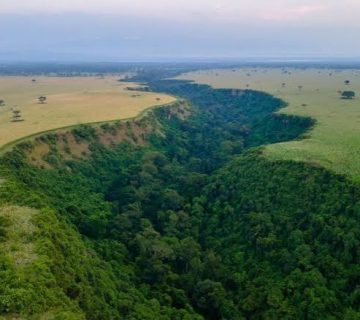
The Athi River and its associated gorge cut through part of the park, adding a rockier, more dramatic landscape feature than the open grassland most visitors expect, and the riverine forest along its banks shelters species that don’t turn up on the drier plains. That habitat variety packed into a small area is a big part of why guides can genuinely cover a representative slice of Kenyan wildlife habitat in a single short game drive here.
The Kitengela Migration Corridor
An Unfenced Southern Boundary
Unlike most of Kenya’s other parks, Nairobi National Park’s southern boundary is deliberately left unfenced, allowing herbivores to migrate seasonally out onto the Kitengela plains during the wet season before returning to the park as conditions dry out. That open corridor is what keeps the park’s ecosystem genuinely functional rather than an isolated wildlife island surrounded by city on every side.
A Corridor Under Real Pressure
Nairobi’s rapid growth, expanding housing, roads, and infrastructure development around Kitengela, has steadily squeezed that migration corridor, and conservationists increasingly flag it as one of the more urgent wildlife corridor challenges in Kenya. Visiting the park and supporting the conservancies working to keep the Kitengela route open is a genuine, practical way travelers can contribute to a specific, well-documented conservation problem rather than a vague cause.
Combining It With Nairobi’s Other Wildlife Stops
Sheldrick Wildlife Trust and the Giraffe Centre
The David Sheldrick Wildlife Trust, a renowned elephant orphan rescue and rehabilitation center in the Karen suburb roughly 20 kilometers from the city center, opens to visitors for a strict one-hour public viewing window each day, and the Giraffe Centre sits just a short drive away for close-up encounters with endangered Rothschild’s giraffe. Both pair naturally with a Nairobi National Park visit on the same day, given how close together all three sit relative to the city.
The Nairobi Safari Walk
Right next to the park itself, the Nairobi Safari Walk offers a raised wooden boardwalk through simulated wetland, savannah, and forest habitats, a good option for travelers short on time or for families wanting a gentler wildlife experience alongside the main game drive.
Planning Your Visit
Entry Fees
Standard entry runs 80 US dollars per day for non-resident adults and 40 US dollars for African citizens, with East African and Kenyan resident rates charged in shillings. A combined Nairobi Package covering the national park, the Animal Orphanage, and the Safari Walk costs around 105 US dollars for non-residents, a worthwhile option if you plan to see more than just the park itself in one visit.
Best Time for a Visit
Early morning game drives, before the day’s heat sets in and before other visitors arrive in numbers, generally offer the best wildlife activity and the clearest light for that classic skyline photograph. The park works as a half-day or full-day addition to a longer Kenya itinerary, or as a standalone activity for travelers with just a few hours before or after an international flight through Jomo Kenyatta International Airport.
Where to Stay
Most visitors base themselves in Nairobi itself rather than at a dedicated park lodge, given how close the park sits to the city’s hotels, and treat the visit as a half or full-day excursion from a standard city stay. A small number of properties do sit right on the park boundary for travelers who want to wake up genuinely inside the ecosystem rather than commuting in from downtown.
Frequently Asked Questions
Can I visit Nairobi National Park on a layover?
Yes, its proximity to the airport and city center makes it genuinely feasible for a half-day visit during a longer layover, though confirm timing carefully with your operator given Nairobi’s traffic.
Is a rhino sighting really likely here?
Yes, more so than at many larger Kenyan parks. The Kifaru Ark sanctuary’s protected population makes Nairobi National Park one of the more reliable rhino-viewing destinations in the country.
Is it strange seeing wildlife next to a city skyline?
Most visitors find it genuinely striking rather than strange, a rare, tangible reminder of how close wild Africa still sits to one of the continent’s major cities, and a genuinely different feeling from anything a more remote park can offer.
How long does a Nairobi National Park visit take?
A half-day game drive covers the park well given its compact size, though a full day allows time to add the Sheldrick Wildlife Trust and Giraffe Centre on the same trip.
Will I definitely see lions?
No sighting in the wild is ever guaranteed, but the park’s resident lion population makes sightings reasonably common, especially on an early morning drive when lions are more active before the day heats up.
Recommended Safaris
Nairobi National Park works well as a first or last stop on a wider Kenya itinerary. See our Tsavo East vs Tsavo West guide for where to head next after Nairobi, and our Meru National Park guide for another underrated Kenya destination worth adding to your route. Travelers planning a longer regional trip should also look at the 15-Day Ultimate East Africa Group Safari. When you are ready to add Nairobi National Park to your itinerary, get in touch with our team and we will help you plan the timing around your flights.

No comment