

Why Do Buffalo Herds Form Defensive Circles?
Cape buffalo herds genuinely form tight defensive circles when threatened, positioning vulnerable calves and weaker individuals at the centre while mature adults face outward with lowered horns, a coordinated standing formation genuinely distinct from the herd’s separate, more famous habit of actively mobbing a predator already attacking a specific member of the group.
Why the Defensive Circle Genuinely Differs From Buffalo’s Active Rescue Behaviour
Our guide on how buffalo herds defend a wounded member covers the herd’s reactive counterattack once a predator has already made contact, whereas the defensive circle genuinely represents a preventive, standing formation buffalo adopt when sensing a nearby threat before any actual attack begins, a genuinely different behavioural trigger and underlying evolutionary purpose entirely, even though both responses ultimately serve the same broader goal of herd survival.
How the Circle Formation Genuinely Protects the Herd’s Most Vulnerable Members
When a herd genuinely detects a potential predator nearby, adult buffalo, particularly the larger, more heavily horned males, position themselves around the herd’s perimeter facing outward, while calves and pregnant or weaker females genuinely move toward the protected centre, a formation that puts the herd’s most dangerous weaponry, mature horns, directly between any approaching threat and its most vulnerable targets.
This repositioning genuinely happens remarkably quickly once triggered, often within a minute or two of the initial alarm signal, and guides who have witnessed the transition describe it as a visibly deliberate reorganisation rather than simple herd milling, with individual buffalo clearly moving toward specific positions relative to the perceived threat’s direction.

Why Buffalo Horns Genuinely Make This Formation a Credible Deterrent
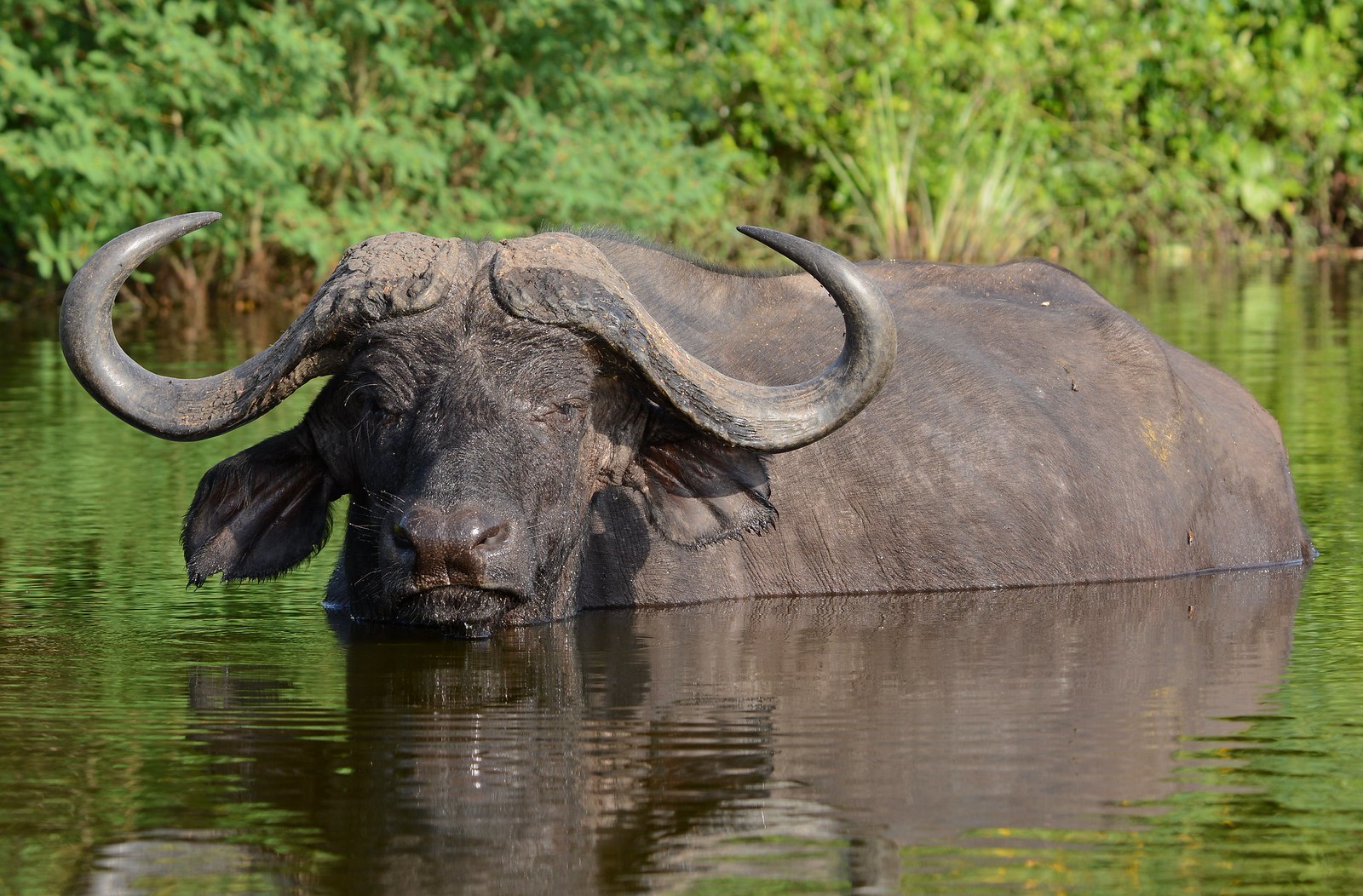
A mature Cape buffalo’s horns, fused across the skull into a dense, bony shield called a boss, genuinely make a frontal assault a serious risk even for lions, meaning a tight ring of adult buffalo facing outward presents predators with a wall of genuinely formidable natural weaponry from every angle, a considerable deterrent most predators prefer to avoid testing directly.
Male buffalo horns typically genuinely span more than a metre across, and the boss itself can measure several centimetres thick, meaning even a determined lion attack against a fully formed defensive perimeter risks genuinely serious injury, a calculation predators genuinely factor into their decision about whether to press an attack or withdraw.
How Herd Size Genuinely Affects the Circle’s Effectiveness
Larger herds genuinely form more effective defensive circles than smaller groups, simply because more adults create a denser, more continuous defensive perimeter, meaning predators genuinely target smaller buffalo groups or lone bulls considerably more often than large, well-organised herds capable of forming a genuinely solid, continuous protective ring. This size-dependent safety genuinely parallels how buffalo herds choose their direction of movement, since larger groups also tend to make more confident, decisive collective movements.
This size-dependent effectiveness is part of why old bulls that have left the main herd, often called “dagga boys,” genuinely face considerably higher predation risk than herd members, since they lack the numbers needed to form any meaningful defensive formation at all, leaving them considerably more exposed than herd members throughout their remaining years.
Why Researchers Genuinely Consider This Formation Evidence of Buffalo Social Intelligence
The defensive circle genuinely requires coordinated, purposeful movement across the entire herd simultaneously, adults moving outward while more vulnerable members move inward, a level of coordinated group response researchers genuinely cite as evidence of buffalo’s underappreciated social intelligence, comparable to defensive behaviours documented in considerably more widely studied species. This same underappreciated intelligence genuinely extends to how herds react once wallowing behaviour and other routine activities are interrupted by a detected threat.
How Wind and Visibility Genuinely Influence When Buffalo Form Defensive Circles
Because buffalo genuinely rely heavily on scent and sound to detect approaching predators, defensive circles genuinely form more readily in conditions of poor visibility, thick bush, tall grass, or fading evening light, when a threat could be considerably closer before being spotted visually, compared to open, clear terrain where buffalo have more advance warning and correspondingly more time to react.
Wind direction genuinely plays an outsized role in this calculation, since buffalo’s sense of smell genuinely detects predator scent carried on the breeze considerably earlier than sight or sound alone would allow, meaning a herd downwind of an approaching predator often forms its defensive circle well before that threat ever comes into visual range at all.
Why Calves Genuinely Learn to Respond to the Formation From a Very Young Age
Buffalo calves genuinely learn to move toward the herd’s centre in response to specific alarm signals from a very early age, well before they’re physically capable of contributing to the outward-facing perimeter themselves, meaning this defensive behaviour genuinely represents learned social response as much as instinct.
Young calves genuinely spend their first several months staying close to their mother within this protected central zone, gradually gaining more independence as they grow, and this extended period of protected proximity genuinely gives calves considerable time to observe and internalise the herd’s collective response patterns before ever needing to rely on them independently.
Where to Observe Buffalo Herd Behaviour in East Africa
Uganda’s Queen Elizabeth National Park and Tanzania’s Ngorongoro Crater both genuinely hold substantial resident buffalo herds, and the crater’s dense predator population in particular makes defensive herd behaviour considerably more frequently observed there than in areas with lower lion density.
The crater’s genuinely contained, bowl-shaped geography also means buffalo herds there cannot range as widely as their savannah counterparts elsewhere, concentrating both predator and prey populations into a considerably smaller area and making sustained behavioural observation across multiple encounters genuinely more achievable within a single day’s game drive.
Best Time of Year for Buffalo Viewing
Buffalo genuinely remain visible year-round given their large herd sizes and fairly limited migratory movement, though dry season months genuinely concentrate herds more predictably around remaining water sources. See our regional best-time guide for how these seasonal patterns affect wider trip planning.
Photographing Buffalo Herds in Defensive Formation
Capturing a genuine defensive circle forming in response to a nearby predator genuinely rewards patient photographers who recognise the early warning signs, a herd’s sudden alertness, heads raised toward a specific direction, before the formation itself becomes visible. See our camera gear guide for lens recommendations suited to this kind of anticipatory wildlife photography.
Why Guides Value Explaining Buffalo Social Structure to Visitors
Given how easily buffalo can appear to visitors as a simple, undifferentiated herd of cattle-like animals, experienced guides genuinely value explaining the sophistication behind formations like the defensive circle, turning what might otherwise read as a purely visual encounter into a genuinely deeper appreciation for the species’ social complexity. This same appreciation genuinely extends to explaining how oxpeckers interact with buffalo herds, another frequently overlooked relationship visible during the same sighting.
What to Pack for Buffalo-Focused Game Drives
Beyond standard safari essentials, binoculars genuinely reward patient buffalo-watching, letting visitors observe subtle herd positioning changes and early alertness signals from a respectful distance before a full defensive response becomes visually obvious.
A notebook for tracking behavioural observations genuinely helps visitors notice the early warning signs that precede a defensive circle forming, since the initial shift in herd alertness, raised heads, stilled grazing, a shared focus on one direction, often happens several minutes before the visible repositioning itself begins.
Combining Buffalo Observation With a Wider Big Five Circuit
Buffalo-focused game drives pair naturally with a wider Big Five safari circuit, and parks with genuinely high buffalo densities often also reward strong predator sightings, given how directly these two populations interact within the same shared ecosystem, including the elephant herds that our guide on elephant long-distance communication covers in more detail.
Visitors who spend several consecutive days in a single park often genuinely begin recognising specific buffalo herds and their typical behaviour patterns, a rewarding depth of familiarity considerably harder to build during a single brief game drive.
Frequently Asked Questions
Why do buffalo herds form defensive circles?
They genuinely position adults facing outward and vulnerable members at the centre when sensing a nearby threat, before any attack begins.
Is the defensive circle the same as buffalo mobbing a predator?
No – the circle is a preventive standing formation, while mobbing is a reactive response after an attack has already started.
Do larger buffalo herds defend themselves better?
Yes – larger herds genuinely form denser, more effective defensive perimeters than smaller groups or lone bulls.
Why are buffalo horns effective in this formation?
Their fused, bony boss genuinely makes a frontal assault risky even for lions, deterring predators from testing the perimeter.
Do buffalo calves know to move to the centre instinctively?
It’s genuinely a learned response – calves learn to respond to alarm signals from a very young age.
Ready to Plan Your Tanzania Safari?
Whether observing buffalo herd behaviour, photographing the Big Five, or planning a wider wildlife circuit is your priority, our team can build a trip matched to your interests. Get in touch with our team below today and let’s start planning your complete Tanzania safari itinerary together.


No comment