
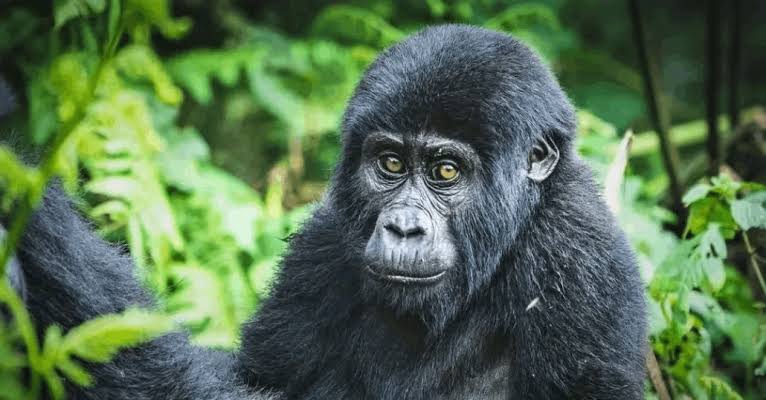
Where Are Mountain Gorillas Found in Africa Today?
There was a point, not too long ago, when mountain gorillas seemed headed for extinction. Poaching, war, and habitat loss had pushed their numbers down to a few hundred individuals. Today the story looks different. Their population has climbed past 1,000, and that recovery is one of the few genuine conservation success stories on the continent. So if you’re planning a trip, researching wildlife, or just curious about where these animals actually live now, here’s the real answer, grounded in geography and current conservation data.
Mountain gorillas exist in only two isolated regions of Africa, and both sit within the Albertine Rift, a chain of mountains and volcanoes that runs along the western edge of the continent’s Great Rift Valley.
This is a narrow, high-altitude strip of forest, and it’s the only place on earth where wild mountain gorillas survive. Unlike lowland gorillas, which range across several countries and lower-elevation forests, mountain gorillas need cool, dense, high-altitude vegetation, and that narrows their world considerably.
Where Are Mountain Gorillas Found in Africa Today: The Two Core Habitats
The first habitat is the Virunga Massif, a range of eight volcanoes shared by three countries: Rwanda, Uganda, and the Democratic Republic of Congo. Within this range, gorillas live across Volcanoes National Park in Rwanda, Mgahinga Gorilla National Park in Uganda, and Virunga National Park in Congo.
These three parks border each other, and gorilla families move across the invisible lines between countries without any regard for borders or passports. Rangers in each country track and protect the same families as they shift territory, which means conservation here depends heavily on cooperation between governments that don’t always get along on other issues.
The second habitat is Bwindi Impenetrable National Park in southwestern Uganda. Bwindi sits apart from the Virunga volcanoes, roughly 25 kilometers away, and it holds nearly half of the world’s mountain gorilla population on its own.
The park earns its name honestly. Its terrain is a tangle of steep ridges, thick undergrowth, and dense canopy that makes trekking physically demanding even for experienced hikers. Gorillas thrive here precisely because the forest is so difficult for humans to exploit or clear.
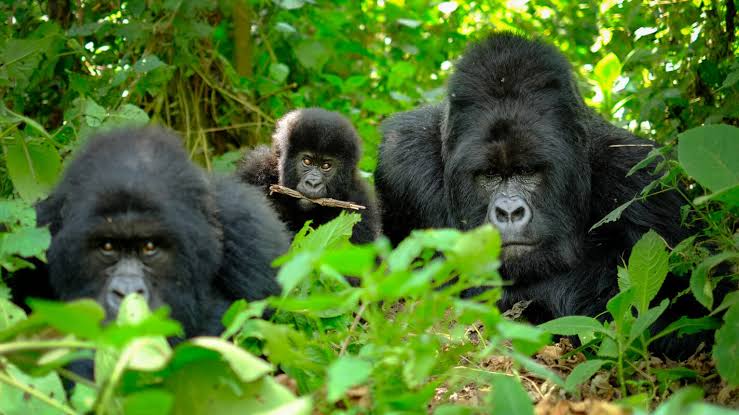
Why These Two Locations and Nowhere Else
Mountain gorillas are picky about altitude. They live between 2,200 and 4,300 meters above sea level, where temperatures stay cool year-round and specific plants like wild celery, bamboo, and certain vines grow in abundance. An adult gorilla eats around 18 kilograms of vegetation a day, so the forest has to supply that volume consistently across seasons. Lower-altitude forests in Africa simply don’t grow the right mix of plants at the density gorillas require.
Attempts to establish mountain gorilla populations elsewhere have never worked, and captive breeding has never succeeded either. Every mountain gorilla alive today was born in the wild, in one of these two regions. That single fact tells you how fragile their existence still is. There’s no backup population sitting in a zoo somewhere that could replenish the wild if something went wrong. Protecting Bwindi and the Virunga Massif isn’t one conservation option among several. It’s the only option.
Rwanda’s Role in Protecting the Species
Rwanda has built its entire tourism identity around Volcanoes National Park, and the results speak for themselves. Gorilla trekking permits cost 1,500 US dollars per person, and that revenue funds anti-poaching patrols, veterinary care, and community development projects in villages bordering the park.
Local employment tied to gorilla tourism has reduced the economic pressure that once pushed people toward poaching or land encroachment. Karisoke Research Center, founded by Dian Fossey in 1967, still operates in the region and continues to monitor individual gorilla families, some of which have been tracked for multiple generations.
Uganda’s Two Parks and Their Different Challenges
Uganda holds the unusual position of having gorillas in two separate parks. Bwindi’s population is larger and more genetically diverse, which matters for long-term species health. Mgahinga, by contrast, hosts a much smaller number of gorillas, and the same families often wander into Rwanda or Congo depending on food availability and mating patterns.
Uganda has kept permit prices lower than Rwanda, around 800 US dollars, which has made trekking more accessible while still generating meaningful conservation funding.
Congo’s Ongoing Struggle
Virunga National Park in the Democratic Republic of Congo has the hardest road of the three. Decades of armed conflict, militia activity, and political instability have made conservation work dangerous. More than 200 rangers have died protecting this park since it was established, a number that reflects just how contested this land has been. Despite that, Virunga still shelters a portion of the mountain gorilla population, and rangers continue daily patrols under conditions that would be unthinkable in Rwanda or Uganda. The park’s resilience says a lot about the people who choose to keep working there.
What Recovery Actually Looks Like
The population recovery didn’t happen by accident. It came from sustained, coordinated effort across three governments, dozens of conservation organizations, and thousands of rangers, trackers, and researchers who spent careers in these forests. Regular health checks catch illness early, since gorillas can catch human respiratory infections and other diseases. Anti-poaching units patrol daily. Community programs give local residents a direct financial stake in keeping gorillas alive, which turns former poachers into some of the most effective conservationists on the ground today.
If you’re asking where are mountain gorillas found in Africa today because you’re planning a visit, both regions offer trekking permits, though availability books out months in advance during peak season. Physical fitness matters more than most people expect.
Treks can last anywhere from 30 minutes to 8 hours depending on where the gorilla family has moved that day, and the terrain in both regions is steep and unpredictable. Guides and trackers know the general area where each family sleeps and feeds, but gorillas move constantly, so no trek is guaranteed to be short.
What makes this story worth telling isn’t just the numbers, though the numbers are genuinely encouraging. It’s the fact that an animal on the edge of disappearing got a second chance because people decided it was worth the cost, the risk, and the sustained effort. Rangers who patrol Virunga know the danger firsthand. Communities around Bwindi and Volcanoes National Park chose long-term stewardship over short-term land use. Researchers have spent decades in freezing, muddy forests tracking individual gorillas by name.
Two small patches of forest, spread across three countries, now hold the entire future of a species. That’s a narrow margin, but it’s also proof that focused, well-funded, cooperative conservation can pull a species back from the brink.
Mountain gorillas didn’t recover because of luck. They recovered because enough people refused to let them disappear, and that effort continues every single day in the forests of Rwanda, Uganda, and the Democratic Republic of Congo.

No comment