Why Shoebills Rarely Fly
Why Shoebills Rarely Fly And What Happens When They Do
The shoebill is a really amazing bird. It stands over four feet tall. Has a huge bill that looks like a shoe. It also has a stare that never seems to move. This bird looks like it is from a time ago, not from today. When people go to Uganda’s wetlands, they think they will see the shoebill flying high in the sky like an eagle or circling like a stork. Usually they see it standing still among the papyrus reeds, not moving for hours.
This makes people wonder why shoebills rarely fly. The reason is how they hunt, their bodies, where they live, and how they save energy. Shoebills can fly. They only do it when they have to. Every time they fly, it is for a reason. It is a really cool thing to see.
Understanding why shoebills fly a little helps us appreciate these amazing birds even more. It also reminds us that being strong is not about moving around but also about knowing when to stay still and when to move.
The Shoebill Is Built for Standing, Not Constant Flight
Shoebills are different from other birds that spend a lot of time flying. They are made for living on the ground and in wetlands that’re not very deep. Their long legs help them walk through the marshes easily. Their big feet spread out their weight so they do not sink into the mud.
Shoebills are also very heavy. They can weigh between 4 and 7 kilograms, which’s a lot heavier than many other birds that are the same height. Even though their wings are big enough to lift them up it takes a lot of energy to take off.
That is why shoebills do not fly unless they have to. Of moving around all the time they wait in places where they know they can find food. This helps them save energy and be ready to catch their prey at the time.
This shows us that you do not always have to be moving to survive. Sometimes it is smarter to stay in one place.
Masters of Energy Conservation
One of the reasons why shoebills rarely fly is because they are very good, at saving energy.
Flying is hard work. Every time a bird flaps its wings it uses up calories that it could use for things like finding food or having babies.
Shoebills have learned to save energy by not moving too much. Of looking all over for food they just stand still and wait. They can stand there for thirty minutes or even several hours waiting for fish, frogs and other animals to come to them.
When they see their prey they move fast. They do not have to chase their food because their food comes to them. This way of hunting is very efficient. It means that shoebills do not have to fly very often.
This helps them save energy. It helps them survive. The less energy they use the chance they have of living a long time.
bitat explains why preserving wetlands is essential for their continued survival.
Wetlands Provide Everything They Need
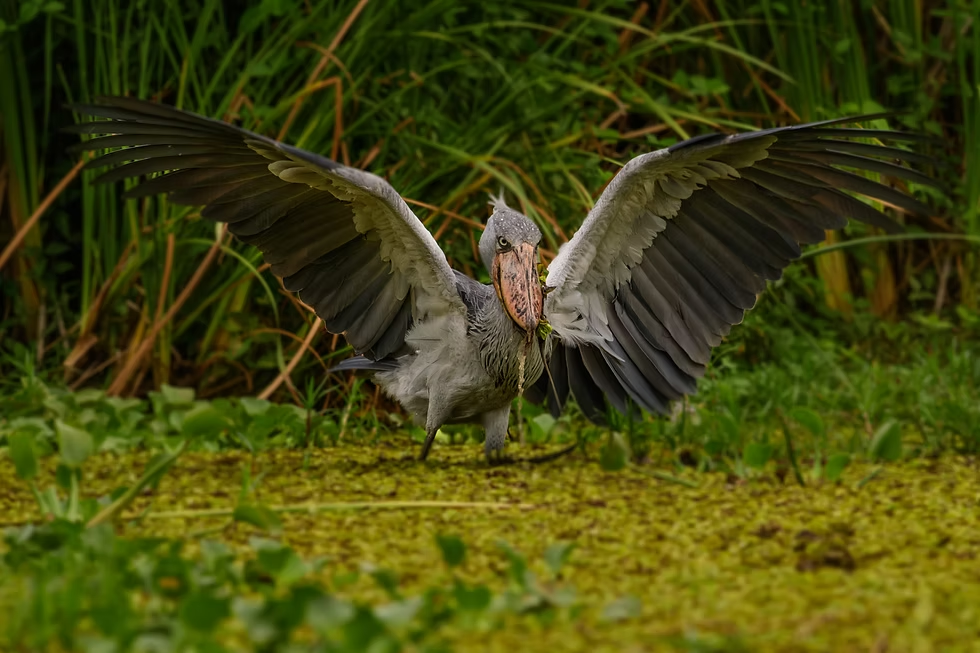
Shoebills do great in freshwater swamps that are full of papyrus, reeds and floating plants. These wetlands give shoebills food, places to nest, shelter and protection from things that want to hurt them.
Since shoebills have everything they need in an area they do not have to travel far every day.
Shoebills are different from birds that migrate. Those birds have to fly thousands of kilometers every year.. Shoebills stay in their homes all year round as long as they have food.
Many shoebills have their territories that they keep safe from other shoebills. These territories have food and space for them so they do not have to move around a lot.
This shows why it is so important to protect wetlands. If we do not shoebills will not have a home.
Their Hunting Style Rewards Patience
They wait for prey to come to them of looking all over for it.
They watch the water closely waiting for something to move under the surface.
They have eyesight, which helps them see fish hiding in the plants.
When shoebills see something they want to eat they attack it quickly with their big bills. It happens fast that the prey does not have time to get away.
If shoebills were flying around all the time they would scare away the fish and other animals in the water. So they stay still which helps them catch food.
This teaches us a lesson from nature: sometimes it is better to be patient and wait for things to happen of always being on the move.
Their Wings Are Surprisingly Powerful
Some people think shoebills cannot fly because they see them standing still a lot.. That is not true. Shoebills have strong wings.
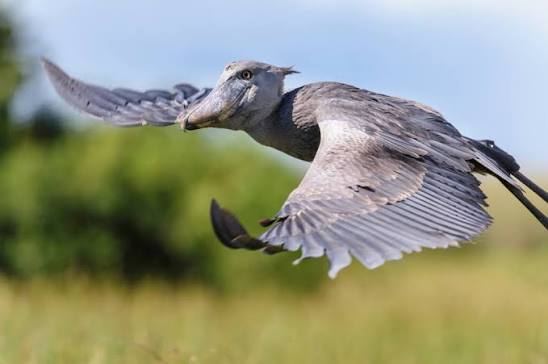
A shoebills wings can be over 2.5 meters wide which is big enough to lift their bodies. Their big wings let them fly slowly and steadily. They look very graceful when they do.
When shoebills fly they stretch their necks out. Put their legs back which helps them balance in the air. They look like herons and storks when they do this.
Shoebills do not fly for a time but when they need to they are very good, at it.
It is great to watch a shoebill take off from the marsh. The bird that was just standing still is now a elegant bird flying over the wetlands.
When Do Shoebills Actually Fly?
There are a reasons why shoebills will leave the ground.
One reason is that they need to find a place to eat. If the water level changes or there are not fish they might move to a different part of the swamp.
Young shoebills fly often when they are trying to find their own territory.
Shoebills will also fly away if they are scared or if there are people, boats or predators bothering them. They like to stay calm. They will fly if they have to.
During breeding season shoebills might fly distances to get to their nests or to find food.
These flights are usually short. They have a purpose. They are not just flying around for no reason.
What Happens During Takeoff?
The takeoff of a shoebill is really something to see. It is very dramatic.
Because shoebills are so big they cannot just jump up into the air. They have to start by running across the marsh. At the time they flap their wings very hard.
As they get moving their big wings start to lift their body off the ground.
Once they are in the air it gets a lot easier for them. They start to flap their wings deeply. Then they glide smoothly over the reeds.
It is amazing to see a shoebill go from a take off to a beautiful flight. This amazes people who like to watch birds and take pictures of them.
This shows us that the first steps are often the hardest.. Once we get going things get easier.
Flight Helps Young Shoebills Become
Young shoebills spend a few months learning how to survive on their own.
After they leave the nest they practice flying a lot. They are getting stronger and better at flying. These first flights help them find places to eat and avoid danger.
Eventually the young birds leave their parents home. Start their own.
This is a hard time for them. They have to find a place to live with enough food. If they do not they might not make it to adulthood.
As they get better at flying they become more confident. This is a step towards being independent.
Rare Flights Create Memorable Wildlife Encounters
For people who like to watch birds and are visiting Uganda seeing a shoebill standing still is already a deal.
But watching a shoebill spread its wings and fly away is even more special.
The birds slow flapping makes no noise as it glides over the marsh. Then it disappears into the reeds.
Photographers often wait for hours to get a picture of this moment.
It is funny that because shoebills do not fly often it makes it more special when they do. If they flew all the time it would not be as exciting.
Sometimes the best things in life happen because they do not happen often.
Human Disturbance Can Force Unnecessary Flights
It is normal for shoebills to fly sometimes.. If they are disturbed too much it can be bad for them.
If boats get close or people are too loud or there are drones or their home is being destroyed or there are too many tourists it can make the shoebills leave their favorite places to hunt.
Every time they fly when they do not need to they use up energy. Do not get to eat.
If people who like to watch birds are responsible they can help minimize the harm.
We should keep a distance be quiet and follow guides who know what they are doing. This way we can watch the shoebills without stressing them out.
We have to be careful and think about how our actions affect the birds.
Wetland Conservation Keeps Shoebills
Shoebills like to stay in one place if their home is healthy.
If the wetlands are drained for farms or polluted or invaded by other plants or affected by climate change it can hurt the shoebills.
As the wetlands get smaller the shoebills might have to fly to find food and a safe place to nest.
If we protect the wetlands it helps other animals too like fish, frogs and other birds.
Every time we save a wetland it helps make sure that future generations can see the shoebills living naturally.
Lessons We Can Learn from Shoebills
The story of why shoebills do not fly often is not just about birds. It teaches us something.
Today we are always told to be busy travel and work all the time.. Shoebills show us that it is not always the best way. They teach us to be patient observe and think before we act.
When they do fly it means something. They fly when they have to not just because they can.
This is something we can learn from. Choosing the time to act often works better than acting without thinking.
Nature shows us that balance is the key to success.
Learning why shoebills do not fly often helps us appreciate these amazing birds. They do not just stand still because they are lazy. They do it because it is a way to survive.
When a shoebill finally spreads its wings it is a moment. It is special because it does not happen often. Every time they fly it shows how smart and adapted they are to their home.
For people who’re lucky enough to see this in Uganda or other parts of Africa it is more, than just seeing a bird. It reminds us to be patient think before we act and respect nature.