The Evening That Changed How I Photographed Zebras
For a long time, I treated zebras the same way many safari travellers do.
I photographed them when they appeared, took a few pictures, admired their stripes, and then moved on in search of lions, leopards, elephants, or whatever animal seemed more exciting at the time.
Then one evening in the African savannah changed my perspective completely.
It happened during the last hour of a game drive. The sun was beginning to sink towards the horizon, temperatures were becoming more comfortable, and the landscape was taking on the rich golden colours that photographers dream about. We spotted a herd of zebras feeding on an open plain and decided to spend a few minutes watching them before returning to camp.
Those few minutes turned into nearly an hour.
As the light changed, the zebras transformed from ordinary safari sightings into some of the most photogenic animals I had ever seen.
Why Golden Hour Is So Special
Photographers often talk about golden hour as though it is a magical period, and in many ways it is.
Golden hour occurs shortly after sunrise and shortly before sunset when the sun sits low in the sky. During this time, sunlight travels through more of the Earth’s atmosphere before reaching the ground. Much of the blue light is scattered away, leaving behind warmer tones that create the golden, orange, and reddish colours associated with sunrise and sunset.
The effect on wildlife photography is dramatic.
During the middle of the day, sunlight falls directly from above. This creates harsh shadows beneath animals, bright highlights on exposed surfaces, and strong contrasts that can make photographs look flat and uninteresting.
Golden hour softens everything.
The light becomes gentler. Shadows become longer and more attractive. Colours become richer. Fur, feathers, and landscapes suddenly reveal details that were hidden earlier in the day.
For zebras, these conditions are almost perfect.
The Unique Challenge of Photographing Zebras
At first glance, zebras might seem easy to photograph.
After all, they are large animals with striking patterns that immediately attract attention.
In reality, zebras present several challenges.
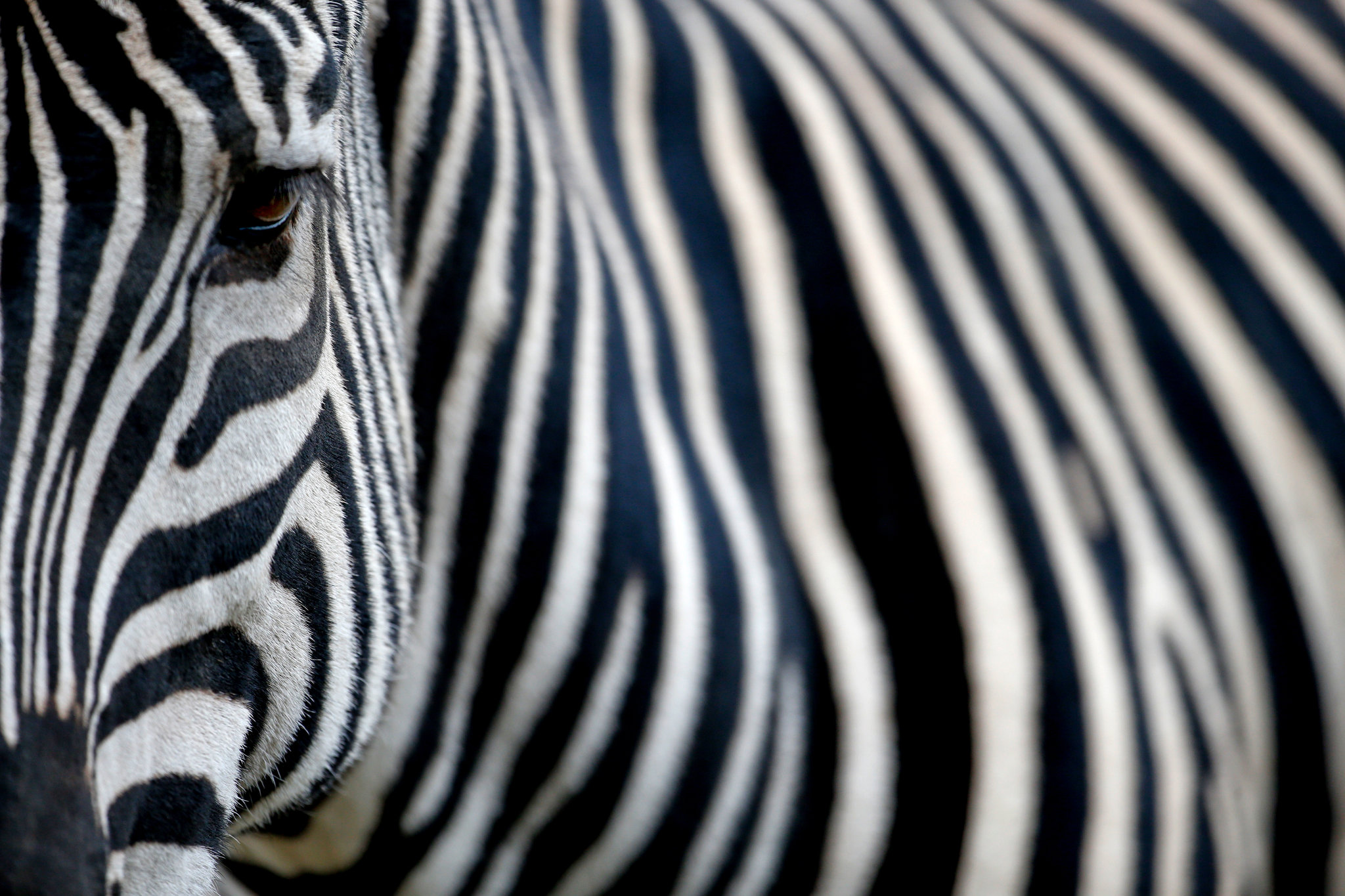
Their black and white stripes create extreme contrast. Cameras often struggle to expose both colours correctly at the same time. If the white areas become too bright, important details disappear. If the black stripes become too dark, texture is lost.
This challenge becomes even more noticeable under harsh midday sunlight.
Golden hour helps solve part of this problem because the softer light reduces extreme contrasts and allows more detail to be captured across the entire animal.
The result is a more balanced and visually appealing image.
Every Zebra Is Different
One of the most fascinating facts about zebras is that no two individuals have identical stripe patterns.
Each zebra carries a unique arrangement of stripes, much like a human fingerprint.
Scientists use these patterns to identify individual animals in research studies. Conservationists often rely on stripe patterns when monitoring populations. Even young foals learn to recognise their mothers partly through these distinctive markings.
As I photographed the herd, I began noticing these differences.
Some zebras had broad stripes along their shoulders. Others had narrow, tightly packed patterns running down their sides. A few had unusual stripe arrangements around their faces and necks.
What initially appeared to be a uniform herd gradually became a collection of unique individuals.
How Light Changes the Stripes
As the sun continued lowering towards the horizon, the zebras seemed to change appearance every few minutes.
The black stripes absorbed much of the warm light, creating rich shadows and depth. The white stripes reflected the golden tones of the evening, taking on subtle shades of cream and gold.
The result was stunning.
Instead of a simple black and white animal, the zebras appeared almost three dimensional.
Their muscles became more visible beneath their coats. The contours of their bodies stood out clearly. Every movement created new patterns of light and shadow.
It felt as though the landscape itself was helping to paint the animals.
The Relationship Between Zebras and Their Environment
One reason zebra photographs become so powerful during golden hour is the relationship between the animals and the surrounding landscape.
African grasslands often take on deep golden colours during the late afternoon. Dry grasses reflect sunlight beautifully, creating a warm backdrop that contrasts perfectly with zebra stripes.
The combination is visually striking.
The black and white patterns stand out against the golden surroundings without appearing disconnected from the environment.
This natural contrast allows photographers to create images that feel balanced and harmonious.
The landscape becomes part of the story rather than simply serving as a background.
Watching Behaviour Instead of Taking Pictures
At some point during the evening, I stopped thinking about photography and simply watched the zebras.
That decision ultimately improved my photographs.
Many people become so focused on pressing the shutter button that they forget to observe the animals themselves.
The herd was full of interesting interactions.
Foals followed closely behind their mothers. Young zebras occasionally chased one another through the grass. Several adults groomed each other by gently nibbling along the neck and shoulders.
These behaviours revealed something important.
Zebras are highly social animals.
They live within stable family groups usually consisting of a dominant stallion, several mares, and their offspring. These bonds can remain strong for years and play an important role in survival.
Photographs that capture these interactions often feel more meaningful than simple portraits.
The Science Behind Zebra Stripes
While photographing the herd, I found myself thinking about one of the most famous questions in wildlife biology.
Why do zebras have stripes?
Researchers have studied this question for decades.
One leading theory suggests that stripes help deter biting insects. Studies indicate that flies such as tsetse flies and horseflies have more difficulty landing on striped surfaces than on solid coloured coats.
Another theory suggests that stripes help regulate body temperature. The alternating dark and light bands may create small air movements across the skin, assisting with cooling.
Some scientists believe stripes also confuse predators, particularly when zebras move together in large groups. A charging lion may find it more difficult to focus on a single target when dozens of striped bodies are running in different directions.
Although researchers continue studying the subject, most agree that stripes provide several advantages rather than serving a single purpose.
The Best Photographs Came Unexpectedly
As the evening progressed, I realised that the strongest images were not the ones I had planned.
One photograph captured a foal standing beside its mother while both looked towards the setting sun.
Another showed a stallion silhouetted against a glowing horizon.
One image focused only on the shoulders of two zebras standing side by side, their stripes creating abstract patterns that almost looked like artwork.
None of these moments lasted more than a few seconds.
That is one of the reasons wildlife photography can be so rewarding.
You never know exactly what will happen next.
Why Zebras Become More Active in the Evening
The herd’s behaviour changed noticeably as temperatures dropped.
During the hottest hours of the day, many animals reduce movement to conserve energy and avoid overheating. As conditions become cooler, activity levels increase.
The zebras began feeding more actively.
Groups shifted across the plains in search of fresh grass. Foals became more energetic. Social interactions increased.
For photographers, this creates additional opportunities because animals are often doing more than simply standing still.
Movement adds life to photographs.
It tells a story about how animals interact with their environment.
East Africa’s Best Locations for Zebra Photography
Some of the finest zebra photography opportunities in Africa can be found in East Africa.
The Serengeti in Tanzania supports enormous zebra populations, particularly during migration periods when hundreds of thousands move across the ecosystem alongside wildebeest.
Kenya’s Maasai Mara offers similar opportunities, especially when migration herds arrive from the Serengeti.
In Uganda, Lake Mburo National Park provides exceptional zebra photography. The rolling hills, scattered acacia trees, and open grasslands create beautiful settings throughout the day, particularly during sunrise and sunset.
Kidepo Valley National Park also offers remarkable opportunities. Its dramatic landscapes and relatively low visitor numbers often allow photographers extended time with wildlife.
Each destination offers different scenery, but the magic of golden hour remains the same.
The Last Few Minutes of Light
As sunset approached, the colours became richer than ever.
The sky turned orange, then deep red. Long shadows stretched across the plains. Dust hanging in the air caught the sunlight and created a soft glow around the herd.
For a brief moment, everything seemed perfect.
The zebras continued grazing as though nothing unusual was happening.
Yet from a photographer’s perspective, the scene was extraordinary.
The combination of wildlife, landscape, and light created the kind of moment that cannot be staged or recreated.
Then, almost as quickly as it began, it ended.
The sun disappeared below the horizon.
The colours faded.
Darkness slowly spread across the savannah.
More Than Just a Photograph
Looking back at those images later, I realised they represented much more than a collection of zebra photographs.
They captured a specific time of day, a particular atmosphere, and a deeper appreciation for an animal that many safari visitors overlook.
Zebras may not be the largest animals on the plains. They may not inspire the same excitement as lions or leopards.
Yet under the right conditions, they become some of the most beautiful subjects in African wildlife photography.
That evening taught me that great safari photography is not always about finding rare animals. Sometimes it is about slowing down, paying attention to the light, and appreciating a familiar species in a completely new way.
As the last glow disappeared from the sky, the herd gradually blended into the darkening grasslands. Their stripes became harder to see, and eventually they vanished into the night.
The photographs remained behind, preserving a short period when the African savannah glowed gold and every stripe seemed to tell its own story.