The Hidden Importance of Water in the African Wilderness
Water is the lifeblood of every African ecosystem. While visitors are often drawn to dramatic landscapes, towering mountains, and vast savannahs, some of the most important wildlife encounters happen around places that appear surprisingly ordinary. A small watering hole may not seem impressive at first glance, yet it can support hundreds of animals and influence the movements of wildlife across an entire region.
Throughout East Africa, watering holes serve as gathering points where different species meet, drink, interact, and sometimes compete. They are places of opportunity, but they are also places of risk. Every animal that approaches the water knows it must remain alert because predators understand exactly where thirsty wildlife will eventually appear.
One afternoon on safari, I witnessed how quickly a quiet watering hole could transform from a peaceful corner of the landscape into the centre of wildlife activity. The change began with the arrival of a herd of zebras.
An Afternoon of Silence
The day was hot, even by savannah standards. Heat shimmered above the grasslands, and the air seemed almost motionless. The watering hole lay in the middle of a broad open plain surrounded by patches of yellow grass and scattered shrubs.
For a long time, very little happened.
A handful of birds moved along the muddy shoreline, occasionally pecking at insects hidden in the damp soil. Small ripples crossed the surface whenever a breeze drifted through the area. Apart from distant bird calls and the occasional chirping of insects, the landscape felt unusually quiet.
Many safari visitors become impatient during moments like these. Wildlife documentaries often show constant action, creating the impression that every minute in the wilderness is filled with dramatic encounters. In reality, nature operates at its own pace. Long periods of stillness are often followed by brief but unforgettable moments of activity.
Our guide remained focused on the horizon, scanning the landscape carefully. After several minutes, he pointed towards a faint cloud of dust in the distance.
The Arrival That Changed Everything
At first, the dust seemed insignificant.
Gradually, however, shapes began emerging from the haze. As they moved closer, the unmistakable black and white stripes became visible.
A herd of zebras was approaching.
The transformation was immediate. The watering hole that had appeared almost abandoned suddenly felt alive with anticipation. The birds became more alert. A few antelopes grazing in the distance stopped feeding and lifted their heads.
The zebras approached steadily and confidently. Several mares led the group while young foals stayed close beside them. A stallion positioned himself slightly apart from the herd, maintaining a clear view of the surrounding landscape.
There was no hesitation in their movements. They knew exactly where they were going.
Why Zebras Need Reliable Water Sources
Zebras are highly adaptable animals, capable of surviving in a variety of habitats ranging from open grasslands to semi arid environments. Despite this adaptability, access to water remains essential.
Unlike some species that can survive extended periods without drinking, zebras generally require regular access to fresh water. During dry seasons, they may travel considerable distances to reach dependable sources. Their daily movements are often influenced by the location of rivers, lakes, and watering holes.
This dependence on water becomes particularly important during migration periods. Across the Serengeti and Maasai Mara ecosystem, zebra movements are closely linked to rainfall patterns and the availability of drinking water. Fresh grass may attract them to new grazing grounds, but water determines whether they can remain there.
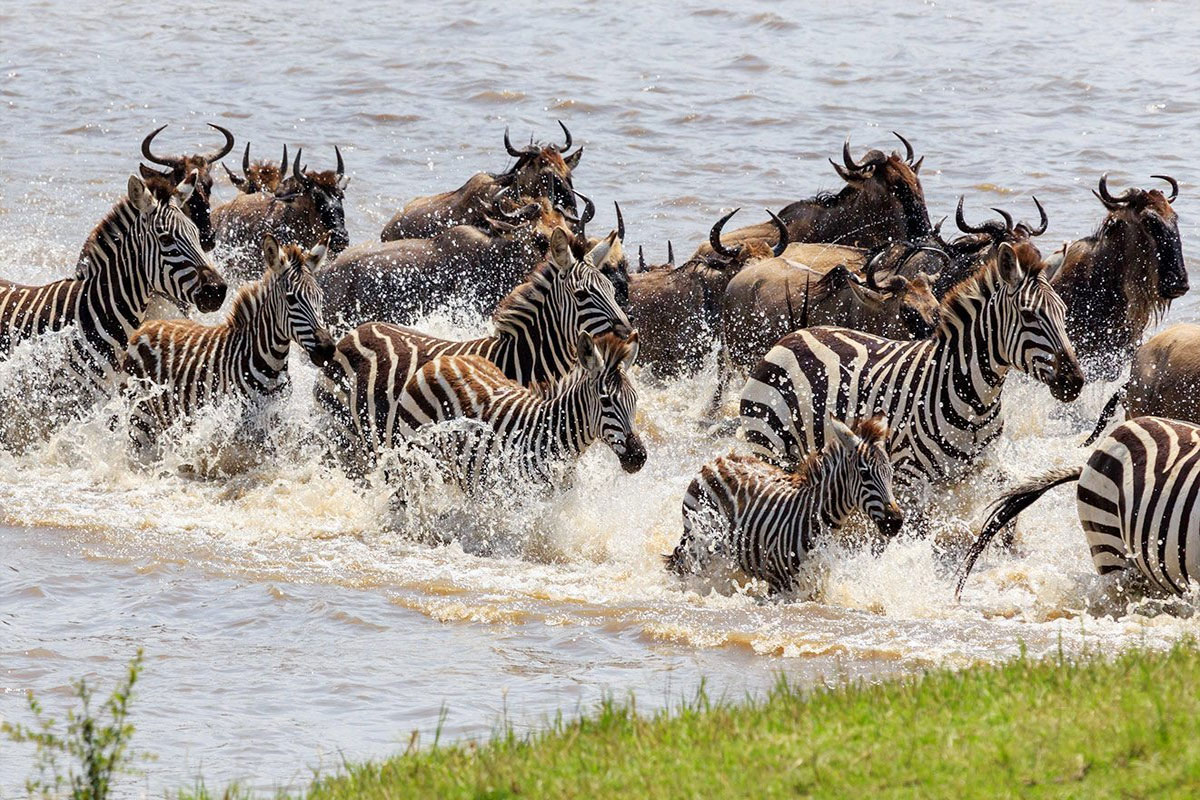
As the herd reached the shoreline, many of the animals immediately lowered their heads and began drinking. The quiet atmosphere vanished, replaced by the sounds of splashing water and shifting hooves.
A Society Built on Cooperation
Watching a zebra herd at close range reveals how organised these animals truly are.
The group did not behave as a random collection of individuals. Every animal appeared aware of its role. While some drank, others remained watchful. Mothers kept close to their foals, and the stallion continued scanning the landscape for signs of danger.
Zebra society revolves around strong family bonds. A typical group consists of one dominant stallion, several mares, and their offspring. Young zebras remain within these family units for extended periods, learning essential survival skills from older animals.
This social structure provides security. More eyes watching the surroundings increase the likelihood of detecting predators before an attack occurs. At the watering hole, that vigilance was easy to observe.
Even while drinking, the zebras never completely relaxed.
The Danger That Lurks Around Water
Water attracts life, but it also attracts death.
Predators understand that prey animals eventually need to drink. Lions often patrol areas surrounding water sources, waiting for opportunities to ambush unsuspecting animals. Leopards use vegetation near water to conceal themselves, while hyenas regularly investigate places where wildlife gathers.
The zebras behaved as though they understood this reality perfectly.
Every few moments, individuals would stop drinking and raise their heads. Their ears rotated constantly, picking up sounds from different directions. Their eyes scanned nearby bushes and tall grass.
This behaviour is the result of countless generations of natural selection. Animals that failed to remain alert around water rarely survived long enough to reproduce.
The herd’s caution was a reminder that every visit to a watering hole carries an element of risk.
When One Species Attracts Another
The arrival of the zebras seemed to signal that the watering hole was safe, at least for the moment.
Before long, other animals began appearing.
Impalas approached cautiously from one side of the plain. Warthogs emerged from a patch of grass and headed directly towards the water. A pair of buffaloes slowly advanced from the distance.
The once quiet watering hole became a gathering place for multiple species.
This phenomenon occurs frequently throughout Africa. Animals observe each other’s behaviour and often use those observations to assess danger. If a large herd appears relaxed, nearby wildlife may feel more confident approaching the same area.
Within an hour, the watering hole had become one of the busiest locations in the surrounding landscape.
Young Zebras Turn the Watering Hole Into a Playground
While the adults focused on drinking and remaining alert, the younger members of the herd seemed more interested in having fun.
Several foals began chasing one another through the dust. They sprinted around their mothers, changed direction suddenly, and occasionally attempted playful kicks before racing away again.
Their energy contrasted sharply with the calm behaviour of the adults.
What looked like simple play was actually an important part of development. Running helps young zebras strengthen their muscles and improve coordination. Quick turns and sudden changes in direction mimic the movements they may one day need when escaping predators.
In the wild, survival begins long before an animal faces its first real threat.
The Ecological Role of Watering Holes
The longer I watched, the more obvious it became that the watering hole supported far more than large mammals.
Birds continued arriving throughout the afternoon. Insects hovered above the water’s surface. Small reptiles appeared along the muddy edges.
Watering holes act as ecological centres that connect multiple species and processes. They provide drinking water, support plant growth, create feeding opportunities, and influence animal movements across vast areas.
In regions where rainfall is seasonal, these water sources become even more important. During dry periods, they can determine where wildlife gathers and how ecosystems function.
A seemingly ordinary pool of water may support life for kilometres in every direction.
Why Zebra Encounters Fascinate Safari Travellers
There is something uniquely captivating about watching zebras.
Their stripes make them instantly recognisable, but their behaviour is equally fascinating. They combine social intelligence, vigilance, adaptability, and strong family bonds in ways that become increasingly apparent the longer you observe them.
At the watering hole, the herd seemed to represent the rhythm of the savannah itself. They arrived seeking water, remained alert to danger, interacted with one another, and eventually moved on.
Yet their brief visit changed the entire atmosphere of the area.
What had been a quiet and almost empty landscape became a vibrant centre of wildlife activity simply because a herd of zebras stopped for a drink.
When the Plains Became Quiet Again
As the afternoon progressed, the zebras gradually finished drinking.
The stallion moved away from the shoreline first, followed by the mares and their foals. One by one, they returned to the open grasslands. Their striped bodies slowly disappeared into the distance, leaving only a trail of dust behind them.
The watering hole eventually settled back into its earlier rhythm.
The birds remained. The breeze continued moving across the water. The sounds of the savannah softened once more.
Yet the place no longer felt empty.
The zebras had revealed its true importance. For a brief period, they had turned an ordinary watering hole into a stage where the interconnected lives of countless animals became visible.
That experience captures something essential about the African wilderness. The most remarkable wildlife moments are not always dramatic hunts or massive migrations. Sometimes they emerge from simple daily routines. A herd of zebras arrives for a drink, other animals follow, and suddenly an entire ecosystem comes into view.
What appears quiet at first is often full of life waiting to reveal itself. All it takes is patience, observation, and the arrival of a thirsty herd of zebras.