Lenses, Light and Luck: Shooting Uganda’s Shoebill
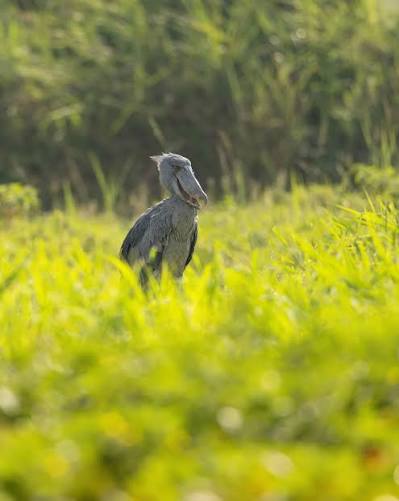
There is nothing like the thrill of looking for a shoebill in Uganda’s wetlands. Every time someone goes out, there is hope, careful planning, and the idea that nature will decide what happens. Unlike animals that live in areas or stay in big groups, the shoebill often stands still among the papyrus reeds, disappearing into the environment with great patience. That uncertainty is what makes taking pictures of this bird so special.
Every good picture has a story that starts long before the camera takes the shot. It starts with waking up, a slow ride in a canoe through calm water, soft morning light, and lots of waiting. Wildlife photographers learn quickly that the best pictures are earned, not taken. Uganda gives some of the best chances in Africa to take pictures of this ancient-looking bird, making it a dream place for birders, photographers, and people who love nature all over the world.
Why Uganda Is the Best Place to Photograph the Shoebill
Uganda has wetlands that are just right for shoebills. Places like Mabamba Swamp, the Nile Delta in Murchison Falls National Park, Semuliki Wildlife Reserve and some smaller wetlands are great for finding this bird.
Each wetland has its own photography experience. Mabamba Swamp is known for canoe trips and expert local guides. The Nile Delta has bird pictures mixed with views and chances to see other animals. Semuliki offers spots where waiting can lead to close and personal moments with the bird.
Because these areas are clean and protected, there are chances to take pictures of natural behavior instead of birds that are disturbed by too many visitors. Watching a catch fish open its big wings or stay still for a long time makes for unforgettable pictures.
Getting Ready for the Trip
Great wildlife photography starts before you even leave home. Even though expensive tools can help, preparation is more important.
Do lots of research on the place. Learn about the weather, when the sun comes up, and how the birds act. Uganda has both dry seasons, and each one changes how easy it is to get to the wetlands and the kind of light you get.
Also know that shoebills do not have fixed habits. One morning you might get good chances, and the next morning you may spend hours without seeing one. Accepting that helps you have the right expectations.
Comfort is also important. Wear light and waterproof clothes, use bug spray to protect yourself from the sun, carry water, and use bags to keep your things safe.
Picking the Right Camera Gear
Wildlife photographers often talk about the camera body, but modern cameras from big companies all work very well. What matters more is knowing your gear.
A telephoto lens between 400mm and 600mm gives you reach and good picture quality. Zoom lenses like 100-400mm or 200-600mm give you options when the bird moves closer or farther away.
A fast autofocus helps a lot when taking pictures of birds flying or hunting. Using autofocus lets the camera follow movement better.
Extra memory cards and charged batteries are important. Long days in the wetlands can mean taking thousands of pictures, especially when using fast shooting modes.
A light monopod can be useful when taking pictures from the ground, but most canoe trips
Lenses, Light and Luck: Shooting Uganda’s Shoebill
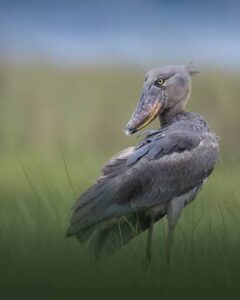
To take a picture of a shoebill, you need a few things. You need equipment, nice light, and a little bit of luck. Even people who take pictures of animals for a living say that luck is important. Sometimes a bird will just stretch its wings. Catch a fish, and you have to be ready.
You can make it more likely that you will get a good picture if you understand light.
The best time to take pictures of shoebills is early in the morning. The light is soft and warm. It makes the colors look nice. It is also a good time because the water is calm and you can get nice reflections in your picture. The afternoon can be good too, but sometimes the weather can change and make the light not so good.
If you take pictures in the middle of the day, the light can be too strong. It can make the shadows too dark. It can be hard to get a good picture. If you are careful with your camera, you can still get a good shot.
You should always think about where the light’s coming from. If the light is coming from the front, you can see all the details of the bird’s feathers. If the light is coming from the side, it can make the bird look more interesting. If the light is coming from behind the bird, it can make a nice silhouette.
Patience Produces Extraordinary Images
If you want to take pictures of animals, you have to be patient.
A lot of people think that they can just go out and take a picture right away because they have seen great pictures online.. It does not work that way. You have to spend time waiting and watching and listening for the birds. It can be quiet and peaceful. You can hear all sorts of sounds, like frogs and birds.
When you finally see a shoebill, you have to be calm. If you make a move, you might scare the bird away. If you are in a canoe, you might tip it over.
If you are patient, you might get a chance to take a great picture. The bird might start to do something like preening its feathers or spreading its wings. Those are the kinds of pictures that people really like.
Reading Shoebill Behavior
If you want to take pictures of shoebills, you should try to understand how they behave.
Shoebills often stand still for a time looking for food in the water. When they are doing that, you can think about how you want to take the picture. You can think about the light and the composition.
Sometimes a shoebill will lean forward. That means it has seen something to eat. Then it will strike fast. If you want to take a picture of that, you have to be ready. You have to have your camera set to take pictures fast, one after another.
You can also learn from people who have been watching shoebills for a time. They can tell you when a bird is likely to do something
Mastering Composition
Just because you take a technically perfect picture, that does not mean it will be a great picture.
You have to think about how you’re composing the picture. You have to leave some space in front of the bird so it looks like it is moving. If the water is calm, you can get a nice reflection.
Do not put the bird in the middle of the picture. That can make it look boring. Instead, put it a bit off to the side. That can make the picture more interesting.
You should also try taking pictures from angles. If you get really close to the bird, you can take a portrait that shows its bill and eyes. If you step back, you can take a picture that shows the bird’s habitat.
Sometimes you can use plants in the foreground to add some depth to the picture. Be careful not to let them get in the way of the bird’s face.
Respect Wildlife at Every Opportunity
When we take pictures of animals, we should never hurt them. Make them feel scared. We should keep a distance from them so they do not get stressed.
Guides who are professionals know how close we can get to the animals without bothering them. We should not ask them to chase birds so we can take pictures. It is better to take pictures of birds when they are acting naturally.
We should be quiet when we are taking pictures of animals. This way we can enjoy the atmosphere and not scare them.
People who take pictures of animals should not leave trash, hurt plants, or bother the animals when they are making their homes.
If we make these choices, we can help keep Uganda’s wetlands safe for people who like birds and take pictures of them.
Learning From Every Photograph
Not every picture we take is going to be great.
Sometimes our pictures might be blurry, too bright or too dark, or the animals might be in positions. Instead of thinking these pictures are bad, we can learn from them.
We should look at our pictures after we take them and see what we did wrong. We can see which camera settings made the pictures sharper and which ones did not work well.
Many people who take pictures of animals say that they took thousands of bad pictures before they took their best ones. The more we look at our pictures, the better we will get.
The Human Stories Behind Every Expedition
Taking pictures of Shoebills is not something we can do by ourselves.
Local guides, people who drive canoes, and community members all help us have a good time. They know a lot about the animals. Where they live, which helps us find them.
Many guides have been working in the wetlands for a long time. They are very good at finding animals and knowing what they are doing.
When we support tourism, we help the community, and we also help keep the wetlands safe.
People who come to visit often leave with more than pictures. They leave with stories about the things they did and the people they met.
Inspiring the Next Generation of Conservation
A picture of an animal can do more than just look good on the internet.
It can teach people about animals they never knew existed. It can make them want to learn more and help protect the animals and their homes.
When we share pictures and tell people about the animals, we can help them care about the wetlands and want to protect them.
The Shoebill is a bird that helps us remember why we need to protect the wetlands.
Photographers are like storytellers who help people learn about the animals and why we need to protect them.
Reflections on the Journey
Every time we go on a trip to take pictures of Shoebills, it is different. Some people get action shots, and some people get nice, quiet pictures. Both are great because they are real and show how amazing the birds are.
To take pictures, we need to be prepared, respect the animals, and be patient. When we do all these things, it makes taking pictures very rewarding.
Whether we are professionals or just starting to learn, Uganda’s wetlands are a place to take pictures and learn about animals. Every day is a chance to take great pictures and have fun.