
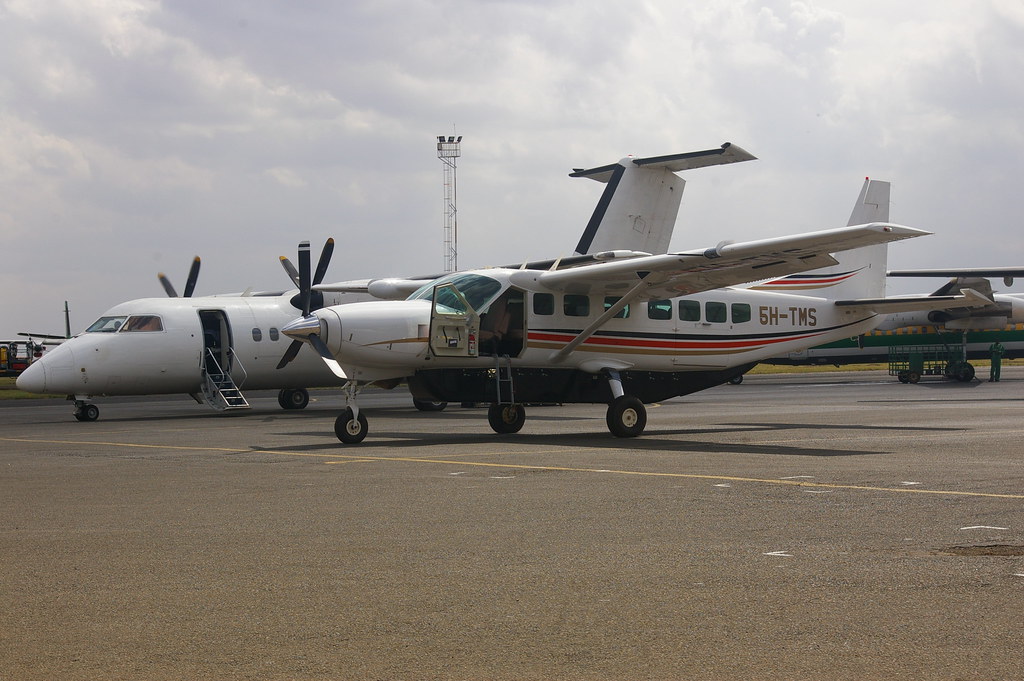
Wilson Airport Nairobi: How to Use It for Bush Flights
Wilson Airport is one of the most important airports for travellers planning a safari in Kenya. Located along Langata Road in Nairobi, it serves scheduled domestic flights, charter services and light aircraft that connect the capital with national parks, private conservancies, coastal destinations and other regional locations.
Unlike Jomo Kenyatta International Airport, which handles most of Nairobi’s international passenger traffic, Wilson Airport is widely used for safari flights to destinations such as the Maasai Mara, Amboseli, Samburu, Laikipia and other wildlife areas. It is particularly useful for travellers who want to reduce long road journeys and spend more time exploring Kenya’s national parks and conservancies.
For many visitors, a flight from Wilson Airport is the beginning of a fly-in safari. Instead of driving for several hours from Nairobi, you board a small aircraft and travel towards a bush airstrip near your safari lodge. Your lodge may arrange a vehicle to meet the aircraft and take you into the reserve or conservancy.
Although the process is generally straightforward, bush flights operate differently from conventional international flights. Check-in deadlines are strict, baggage allowances are often lower, aircraft have limited luggage space, and departure times may be influenced by operational requirements.
Understanding how Wilson Airport works before travelling will help you choose the right flight, prepare your luggage and organise your connection from Nairobi.
Where Is Wilson Airport Located?
Wilson Airport is situated in Nairobi’s Langata area, southwest of the central business district. It is a separate airport from Jomo Kenyatta International Airport, which is located farther southeast of the city.
The airport is convenient for travellers staying in central Nairobi, Karen, Langata and other nearby neighbourhoods. However, road travel times vary considerably according to traffic and the exact location of your accommodation.
A journey from central Nairobi to Wilson Airport may take approximately 15 to 40 minutes under favourable conditions, although congestion can make it longer. If you are travelling from a hotel in a different part of the city, check the route and allow sufficient time for the journey.
Wilson Airport is used by safari airlines, charter operators, flight training organisations and other aviation services. Passengers travelling on scheduled bush flights generally use the terminal or departure lounge designated by their airline.
Do not assume that every airline uses the same entrance or check-in counter. Confirm the precise meeting point on your booking confirmation and follow the airline’s instructions when you arrive.
What Are Bush Flights in Kenya?
Bush flights are aircraft services that connect major towns and airports with remote or semi-remote destinations near wildlife reserves, conservancies and safari lodges.
They are particularly useful in Kenya because many wildlife destinations are spread across large areas, and road journeys can take several hours. A flight from Wilson Airport can reduce travel time and make it easier to combine multiple safari destinations within a limited holiday.
Most safari flights use smaller aircraft designed for regional routes and shorter airstrips. Depending on the route, aircraft may land on paved runways or compacted gravel and dirt airstrips near wildlife areas.
Passengers often travel in light aircraft such as the Cessna Caravan or other suitable regional aircraft. Larger aircraft may operate on busier routes, coastal services or other destinations where passenger demand supports them.
The flight itself is only one part of the journey. After landing, you may be met by a lodge vehicle or safari guide who will drive you to your accommodation. Some airstrips are close to camps, while others require a longer transfer through a reserve or conservancy.
This is why you should confirm the complete journey when booking. The airline ticket normally covers the flight, but the transfer from the airstrip to your lodge may need to be arranged separately unless it is included in your safari package.
Which Airlines Operate Bush Flights From Wilson Airport?
Several airlines operate scheduled services or charter flights from Wilson Airport. The most suitable carrier depends on your destination, travel dates, preferred departure time, baggage requirements and the location of your safari accommodation.
Safarilink Aviation
Safarilink operates a network of domestic and regional flights serving popular safari destinations and coastal locations. Its routes include destinations associated with the Maasai Mara, Amboseli, Samburu and other wildlife areas, as well as regional connections.
The airline is a common choice for visitors planning fly-in safaris because it connects Nairobi with several locations used by safari lodges and tour operators.
When booking, check the exact destination and airstrip shown on your ticket. A reserve or conservancy may have more than one airstrip, and the closest landing point can depend on your accommodation and the available flight schedule.
Safarilink also publishes baggage rules and check-in guidance on its official website. These details are important because the allowance for a safari flight may differ from that for a coastal or regional route.
AirKenya
AirKenya operates scheduled and charter services from Wilson Airport, including flights serving safari destinations in Kenya and selected regional locations.
Its network supports travel to wildlife areas such as the Maasai Mara, Amboseli and destinations in northern Kenya, depending on the published schedule.
AirKenya uses a dedicated terminal at Wilson Airport. Passengers should check the departure information on their booking and follow the airline’s instructions regarding arrival time, baggage weight and documentation.
If your safari includes several camps, ask your tour operator whether the flight schedule and airstrip arrangements fit the itinerary. The most convenient flight is not always the one with the earliest departure, particularly if you must transfer from a different hotel or airport.
Charter Flights
Private charter flights offer more flexibility than scheduled services because the aircraft and itinerary can be arranged around a group’s travel plans, subject to aircraft availability, operating conditions and the relevant aviation requirements.
Charters may be useful for families, small groups, photographers or travellers visiting remote conservancies that are not served by a convenient scheduled flight.
However, charter flights can cost considerably more than scheduled services. The quotation may depend on aircraft type, flight hours, passenger numbers, waiting time and the number of destinations included.
If you are considering a charter, request a clear quotation that explains which services are included. Confirm the aircraft’s passenger and baggage capacity, the planned departure location and the airstrips it can use.
Popular Bush Flight Destinations From Wilson Airport
Wilson Airport provides access to many of Kenya’s best-known safari regions. The right destination depends on the wildlife you want to see, the season, the location of your lodge and the overall route of your trip.
Maasai Mara National Reserve
The Maasai Mara is one of Kenya’s most popular destinations for fly-in safaris. Travellers come for its large populations of lions, elephants, buffaloes, giraffes, zebras and other wildlife, as well as seasonal movements of wildebeest and zebras associated with the Great Migration.
Flights from Wilson Airport serve airstrips associated with the Maasai Mara and surrounding conservancies. Your landing point should be selected according to your accommodation because the reserve and nearby conservancies cover a wide area.
After landing, a lodge vehicle or safari guide will usually meet you and continue by road. Depending on the airstrip, the transfer may form part of your first game drive.
A fly-in trip can be particularly useful for a short safari of two or three nights. It reduces the amount of time spent travelling between Nairobi and the Mara, leaving more time for wildlife viewing.
Amboseli National Park
Amboseli is famous for its large elephant herds and views of Mount Kilimanjaro when weather conditions provide clear visibility.
Flights from Wilson Airport can provide an alternative to the road journey from Nairobi. The most suitable service depends on the current schedule and the airstrip serving your lodge.
Amboseli is a popular choice for travellers who want to combine wildlife viewing with photography. Early mornings and late afternoons can offer attractive light, while the park’s open landscapes make it easier to observe elephants and other animals.
When booking, confirm whether your accommodation is inside or outside the national park and which airstrip your transfer uses. This will help you understand the complete journey after landing.
Samburu National Reserve
Samburu, in northern Kenya, is known for its dry landscapes and wildlife adapted to the region’s conditions. Visitors may see Grevy’s zebra, reticulated giraffe, Beisa oryx, gerenuk and other species associated with northern Kenya.
Flights from Wilson Airport can reduce the long road journey to the Samburu region. Depending on the itinerary, travellers may also visit neighbouring reserves and conservancies.
Because accommodation is spread across the wider region, check which airstrip serves your camp. A flight to the nearest suitable airstrip can make a substantial difference to the time spent travelling by road.
Laikipia and Private Conservancies
Laikipia contains a variety of private conservancies and wildlife areas, each with its own accommodation and conservation activities. Depending on the property and available flight services, travellers may fly from Wilson Airport to an airstrip serving the conservancy.
Activities can include guided game drives, walking safaris, horseback experiences where offered, cultural visits and conservation-focused excursions. The range of experiences varies by property and should be confirmed with the lodge.
For these destinations, the name of the conservancy alone may not be enough to select the correct flight. Ask the accommodation provider which airstrip it recommends and whether it arranges the onward transfer.
Kenya’s Coast
Wilson Airport also serves flights to selected coastal destinations, including routes associated with Diani, Lamu, Malindi and Mombasa, depending on the airline and current schedule.
Coastal flights are useful for travellers combining a wildlife safari with time at the Indian Ocean. You can spend several nights in a national park or conservancy before continuing to a beach hotel.
Remember that coastal routes may have different baggage rules from flights using smaller safari aircraft. Check the allowance for the exact route rather than assuming that every flight from Wilson follows the same restrictions.
How to Book a Bush Flight From Wilson Airport
The booking process begins with your destination and travel dates. Before selecting a flight, establish where your accommodation is located and which airstrip serves it.
If you are travelling independently, compare the available schedules and fares directly with the airline. If you are booking a safari package, your tour operator may coordinate flights, lodge reservations and airstrip transfers as part of the itinerary.
When requesting a booking, provide the names of all passengers exactly as they appear on their travel documents. For regional or international services, make sure the passport details and required travel documents are correct.
Check whether the fare includes checked baggage, taxes and other applicable charges. Ask about the cancellation policy and what happens if the airline changes the schedule or weather conditions affect the flight.
If your itinerary includes more than one park, verify that the connections work together. A flight that arrives late in the day may leave insufficient time for a planned activity, while a short connection between separate tickets may create additional risk.
For a multi-stop safari, it is often helpful to have the entire route reviewed before paying deposits. This can prevent unnecessary backtracking and make sure each camp is served by a suitable airstrip.
When Should You Arrive at Wilson Airport?
Bush flights generally have earlier check-in cut-offs than some travellers expect. Even if the airport is smaller than JKIA, you should not arrive at the last minute.
Safarilink’s published guidance asks passengers to arrive at Wilson Airport about 60 minutes before scheduled safari flights, 90 minutes before coastal and regional services, and two hours before certain cross-border flights. AirKenya also advises passengers to arrive around 60 to 90 minutes before departure, with check-in closing before the scheduled flight time.
These timings can differ by airline and route, so follow the instructions on your ticket or booking confirmation. Check-in cut-offs are not the same as recommended arrival times, and missing the deadline may mean you cannot board.
Allow additional time if you need assistance, are travelling with children, have excess baggage or must resolve a booking issue.
If you are coming from Jomo Kenyatta International Airport, allow considerably more time for the road transfer between airports. Do not plan a tight connection based only on the distance shown on a map.
Transferring From Jomo Kenyatta International Airport to Wilson Airport
One of the most important details for international travellers is that Wilson Airport and Jomo Kenyatta International Airport are separate facilities.
International flights generally arrive at JKIA, while many safari flights depart from Wilson. You cannot simply walk between the airports or remain inside a shared airside transit area.
If your international flight lands at JKIA and your bush flight departs from Wilson, you will normally need to clear immigration, collect your checked luggage, pass through customs and travel by road to Wilson Airport. You must then check in for the safari flight under that airline’s rules.
The airports are roughly 18 kilometres apart by road, but the actual transfer time varies. A journey that takes around 30 minutes in light traffic may take an hour or longer during busy periods.
Safarilink recommends allowing a three-hour connection buffer between JKIA and Wilson Airport. This is a useful planning guide, but the appropriate margin depends on your arrival time, immigration queues, baggage collection, the departure airline’s check-in deadline and the consequences of missing the next flight.
If the international and safari flights are on separate tickets, the second airline may not protect you if your first flight is delayed. Where possible, consider arriving in Nairobi the day before your bush flight, especially if the safari booking is expensive or difficult to change.
A pre-arranged transfer can make the airport change easier. Confirm the pickup location, driver contact details, luggage capacity and estimated travel time before departure.
Baggage Allowances on Bush Flights
Baggage rules are among the most important considerations when using Wilson Airport. Light aircraft have limited storage space, and the weight of passengers and luggage affects how much the aircraft can carry.
Many scheduled safari flights have a total allowance of approximately 15 kilograms per passenger, including hand luggage. Some coastal and regional routes allow around 20 kilograms. These are common examples, not universal limits.
Safarilink publishes a 15-kilogram allowance for many standard safari routes, with 20 kilograms on specified coastal and regional services. AirKenya’s published baggage policy also sets a 15-kilogram limit on its services, including hand baggage, subject to its current rules.
Always check the baggage policy for your specific flight. A limit that applies to one destination or aircraft may not apply to another.
Use Soft-Sided Bags
Soft-sided duffel bags are generally recommended for bush flights because the luggage compartments on smaller aircraft can be narrow and irregularly shaped.
Large rigid suitcases may not fit into the available storage space. Even if a hard-shell case fits within a standard airline’s size limits, it may be unsuitable for a light aircraft.
Choose a flexible bag that can be packed efficiently and does not exceed the airline’s stated dimensions. Avoid bringing unnecessary items, particularly if you are travelling on a multi-stop safari with several flights.
Before departure, weigh your luggage at home and leave a small margin for souvenirs or items added during the trip. Remember that the allowance may include your hand luggage, camera bag or other personal items, depending on the airline’s rules.
What Happens if Your Bag Is Overweight?
Excess baggage is not always guaranteed to travel on the same aircraft. The airline may charge an additional fee, limit the amount carried or decline excess luggage if the aircraft cannot accommodate it safely.
The captain’s assessment of aircraft weight and available space can affect whether additional baggage is accepted. Paying an excess fee does not necessarily guarantee that every bag can be carried.
If you expect to exceed the allowance, contact the airline before travelling. Some carriers offer advance excess-baggage purchases or freight-seat arrangements for travellers with substantial luggage.
Do not wait until you reach the airport to discover that your luggage exceeds the limit. Advance planning is especially important for photographers, families with children and travellers carrying specialist equipment.
Storing Excess Luggage in Nairobi
Travellers who are combining a safari with a city stay or a beach holiday may not need every item on the bush flight. Leaving non-essential luggage in Nairobi can make the journey easier.
Safarilink states that secure baggage storage is available through its Wilson Airport office, subject to its arrangements. Ask the airline about current availability, opening hours, identification requirements and collection procedures.
Your hotel may also be able to store luggage while you travel to a national park. Confirm the arrangements in advance and make sure the storage is suitable for the belongings you intend to leave behind.
Keep passports, money, medication, electronics and other valuables with you. Do not leave important travel documents or items needed during the safari in stored luggage.
What to Pack for a Bush Flight
Packing for a bush flight is different from packing for a conventional long-haul flight because you must work within a limited baggage allowance.
Choose lightweight clothing suitable for the climate and activities planned. Neutral-coloured clothing is often practical for game drives, while a warm layer may be useful for cool early mornings in some regions.
Bring essential medication, travel documents, sunglasses, sunscreen and any items you need during the flight. Keep your camera equipment protected and check the airline’s rules for batteries and other restricted items.
If you are travelling with binoculars or photography equipment, consider the weight of your complete camera bag. A large lens, camera body, spare batteries and accessories can add up quickly.
Ask the airline whether your camera bag counts towards the total baggage allowance and whether any equipment requires advance approval. Do not assume that a separate personal item is automatically exempt from the weight limit.
If your itinerary includes both a bush flight and an international flight, pack with the more restrictive allowance in mind. This can reduce the need to rearrange luggage during your trip.
What Happens at a Bush Airstrip?
A bush airstrip is usually much simpler than a major airport. Facilities vary by destination, but some airstrips consist mainly of a runway, a basic waiting area or shelter, and space for vehicles to collect passengers.
After landing, passengers may disembark under the direction of the flight crew or ground staff. Follow their instructions and remain clear of aircraft and propellers until it is safe to approach.
Your lodge or safari operator will often arrange a vehicle to meet the flight. The driver may hold a sign, identify passengers by name or coordinate with the airline before arrival.
If several camps use the same airstrip, make sure you know which vehicle is collecting you. Confirm the name of the lodge and the transfer arrangements before the trip, especially if your accommodation is in a remote conservancy.
Do not assume that an airstrip has a restaurant, cash machine, reliable mobile signal or a staffed information desk. Bring essential supplies and confirm arrangements with your operator before departure.
Weather and operational conditions can affect bush flights. If a flight is delayed or diverted, follow the airline’s instructions and contact your accommodation or safari operator about the onward transfer.
Understanding Multiple Stops on a Safari Flight
Some bush flights serve several airstrips during a single journey. The aircraft may land at different locations to drop off and collect passengers before continuing to its final destination.
This can make the journey more efficient for the airline and provide access to several camps along the same route. However, it means that the aircraft may not travel directly from Nairobi to your chosen airstrip.
Your scheduled arrival time is therefore an estimate and can be affected by intermediate stops, weather and operational requirements. Allow some flexibility when planning lodge activities or transfers.
If you are booking a flight for a specific reason, such as joining a walking safari or attending a scheduled activity, tell your operator about the timing requirement. They can advise whether the proposed flight is appropriate.
Do not assume that every bush flight is a non-stop service. Check the itinerary and ask whether intermediate stops are planned.
Can You Fly Directly Between Safari Parks?
Depending on the airline’s schedule, it may be possible to travel between safari destinations without returning to Nairobi. This can be particularly useful when combining the Maasai Mara with Amboseli, Samburu or a conservancy in Laikipia.
However, not every pair of destinations has a direct service every day. Some routes require a connection through Wilson Airport or an intermediate airstrip.
Before booking accommodation, establish the flight connections available on your travel dates. A small change to the itinerary may save a substantial amount of road travel or prevent an unnecessary overnight stay.
Your safari operator can help coordinate flights with lodge availability and transfers. If you are organising the trip independently, confirm each flight separately and check the baggage rules for every leg.
Allow enough time between separate bookings. A delayed flight from one conservancy may affect your ability to board a later flight, particularly if you have to check in again at another airport.
Weather, Delays and Flight Changes
Bush flights are affected by weather, aircraft performance, runway conditions and operational requirements. Rain, low visibility or other conditions can lead to schedule changes.
Some remote airstrips have limited facilities and may be unsuitable for operations under certain weather conditions. If the airline changes the flight, your arrival time or transfer arrangements may also change.
Keep your airline’s contact details available and make sure the booking contains a working phone number or email address. If you are staying at a lodge, provide your flight details so the staff can coordinate the pickup.
Avoid scheduling an important international departure shortly after a bush flight unless you have a generous buffer or an appropriate backup plan. If missing the international flight would be costly, consider spending a night in Nairobi before departure.
Travel insurance may help with certain unexpected expenses, depending on the policy. Review the terms carefully to understand what is covered for delays, missed connections, cancellation or additional accommodation.
Travelling With Children or Special Requirements
Families can use bush flights, but the arrangements should be checked in advance. Aircraft have limited cabin and baggage space, and some services have specific requirements for infants, child seats or additional seating.
Provide the airline with the ages of the children and ask about seating, safety equipment and baggage allowances. If you are travelling with a stroller, child seat or other bulky item, confirm whether it can be accommodated.
Travellers who require mobility assistance should explain their needs before booking. Bush airstrips may have uneven surfaces, limited facilities or no conventional passenger terminal, so it is important to establish what assistance is available at both ends of the flight.
If you are carrying medical equipment or specialist supplies, contact the airline about weight, dimensions and any approval requirements. Do not assume that all equipment can be carried without advance notice.
Planning these details ahead of time helps ensure that the aircraft, ground transfers and accommodation are suitable for everyone in the group.
Common Mistakes to Avoid at Wilson Airport
One of the most common mistakes is confusing Wilson Airport with Jomo Kenyatta International Airport. They are separate airports, and travelling between them requires a road transfer. Always check the airport code on your ticket.
Another mistake is arriving too late for check-in. Safari airlines have specific cut-off times, and passengers who miss them may not be accepted for the flight. Follow the instructions provided by your airline rather than relying on the arrival time used for a large international airport.
Overpacking is another frequent problem. A standard airline suitcase may be too large or heavy for a small safari aircraft. Check the baggage allowance and use soft-sided luggage where required.
Travellers also sometimes assume that excess baggage will automatically travel on the same flight. Aircraft weight and available storage space determine whether additional luggage can be carried, so arrange excess baggage in advance.
Finally, do not forget to organise the transfer from the bush airstrip to your lodge. Confirm who will meet you, where the vehicle will be waiting and whether the transfer is included in your accommodation or safari package.
Preparing for a Smooth Departure From Wilson Airport
Before leaving your hotel, confirm your flight time, departure terminal and check-in deadline. Check the weather and road conditions if you are travelling to the airport from another part of Nairobi, and leave enough time for traffic.
Weigh your luggage, use suitable bags and confirm whether your allowance includes hand baggage. Keep your passport or identification, booking details and essential personal items accessible.
If you are connecting from JKIA, verify the airport transfer arrangements and allow a generous buffer. Where possible, avoid booking an international arrival and a separate bush flight so close together that a minor delay could disrupt the entire safari.
For travellers with excess luggage, contact the airline or accommodation provider about storage or advance freight arrangements. For multi-stop safaris, confirm the airstrip and transfer details with each lodge.
Wilson Airport is an effective gateway to Kenya’s wildlife destinations when you understand its procedures. With the right flight, realistic baggage planning and well-coordinated transfers, you can reach remote safari regions more efficiently and spend more of your holiday enjoying Kenya’s landscapes and wildlife.







No comment