
Why Wildebeest Hesitate at the Mara River Before a Crossing
Why wildebeest hesitate at the Mara River is one of the most fascinating questions surrounding the Great Migration in Kenya and Tanzania. Every year, enormous herds of wildebeest gather along the Mara River, sometimes standing for hours before attempting to cross. They approach the riverbank, retreat into the grassland, return to the edge and occasionally abandon the crossing altogether. This behaviour creates extraordinary wildlife viewing opportunities for travellers visiting the Maasai Mara National Reserve and northern Serengeti National Park.
The hesitation is closely associated with the dangers of crossing a river containing Nile crocodiles, strong currents, slippery rocks and steep riverbanks. Wildebeest must balance the risks of entering the water against their need to continue moving towards suitable grazing areas. Although thousands of animals may eventually cross together, the decision to enter the river is not always straightforward.
Understanding this behaviour helps safari visitors appreciate the challenges facing migrating wildebeest and explains why witnessing a Mara River crossing requires patience, good timing and experienced wildlife guides.
What Happens When Wildebeest Reach the Mara River?
The Mara River forms an important natural barrier within the Serengeti–Mara ecosystem, which extends across northern Tanzania and southwestern Kenya.
During the Great Migration, large herds move through this landscape in response to rainfall, grass growth and seasonal changes in available grazing.
When wildebeest reach the river, they do not necessarily enter immediately.
Some herds gather along the banks, walking repeatedly towards the water before moving away again.
Others stand close together, calling and watching the movement of animals around them.
A crossing may begin suddenly when one or several wildebeest enter the river and others follow.
However, groups can also remain near the river for several hours or longer without crossing.
Quick Facts About Mara River Crossings
Feature | Description |
|---|---|
Main animal | Blue Wildebeest (Connochaetes taurinus) |
Location | Maasai Mara, Kenya, and northern Serengeti, Tanzania |
River | Mara River |
Main crossing period | Usually July to October |
Common predators | Nile crocodiles and terrestrial predators |
Main risks | Strong currents, drowning, injuries and difficult riverbanks |
Herd behaviour | Gathering, hesitation, retreating and collective movement |
Crossing duration | Varies from minutes to more than an hour |
Best viewing approach | Patient observation with an experienced guide |
1. Nile Crocodiles Make the River Dangerous
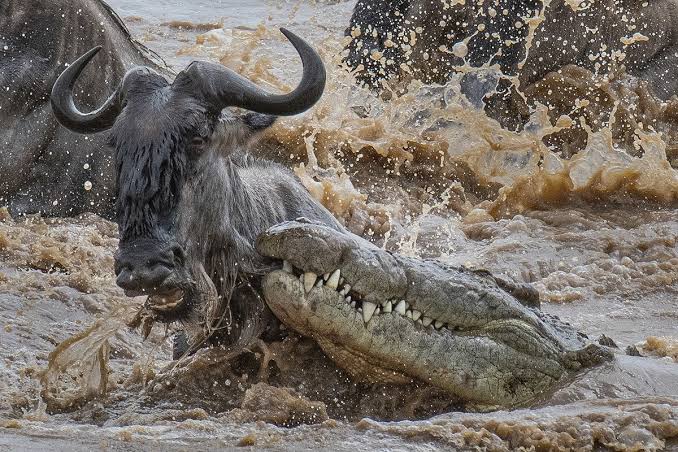
One of the most obvious dangers facing wildebeest at the Mara River is the presence of Nile crocodiles.
These powerful reptiles inhabit suitable sections of the river and may wait near crossing locations.
Large crocodiles can capture wildebeest entering the water, particularly animals struggling against currents or separated from the main herd.
Although crocodiles are a genuine threat, it is important to understand that not every crossing involves a crocodile attack.
Many wildebeest cross successfully without encountering a predator.
Can Wildebeest Detect Crocodiles?
Wildebeest can respond to visible dangers and disturbances in their surroundings.
However, researchers have not established that they can reliably identify every submerged crocodile before crossing.
A crocodile may remain almost completely hidden beneath the water.
The presence of dangerous animals contributes to the risks associated with river crossings, but hesitation should not be attributed entirely to crocodiles.
2. Strong Currents Can Make Crossing Difficult
The Mara River changes considerably according to rainfall and water levels.
During periods of heavy rainfall, river flow may increase and create dangerous currents.
Wildebeest are capable swimmers, but powerful water movement can make crossing difficult, particularly for smaller or exhausted individuals.
Animals may be carried downstream while attempting to reach the opposite bank.
Young calves can face additional challenges because of their smaller bodies and limited strength.
How Water Conditions Affect Crossings
River condition | Possible effect |
|---|---|
Low water levels | May provide easier access at some locations |
High water levels | Increase swimming difficulty |
Strong currents | Can carry animals downstream |
Slippery rocks | Increase the risk of falling |
Deep channels | Require longer swimming distances |
Steep exit banks | Make leaving the river difficult |
These conditions help explain why some locations are used more frequently than others.
However, apparently easier crossing points are not always selected, and scientists do not fully understand every factor influencing individual crossing decisions.
3. Steep Riverbanks Create Another Obstacle
Entering the Mara River is only the beginning of the challenge.
Wildebeest must also reach the opposite bank and climb out safely.
Some river sections contain steep, muddy slopes that become slippery when wet.
Animals may struggle to climb these banks, especially when large numbers attempt to leave the water simultaneously.
In some situations, wildebeest reach the far side but cannot find an easy exit.
They may move along the river searching for a suitable route.
These difficulties can increase exhaustion and the risk of injury.
Why Riverbank Shape Matters
Crossing locations with gentler slopes may provide easier entry and exit.
However, water depth, herd movement and local obstacles also influence conditions.
A location that appears suitable during one season may become more difficult after heavy rainfall or erosion.
Experienced safari guides understand that river conditions can change and that historical crossing locations do not guarantee future activity.
4. Wildebeest Respond to the Movement of Other Herd Members
Wildebeest are highly social animals that frequently travel in large groups.
During migration, individuals respond to the movements of neighbouring animals.
This behaviour becomes particularly noticeable near river crossings.
When animals at the front hesitate, those behind may continue gathering, increasing the size and density of the group.
If one or several animals suddenly enter the water, others may follow rapidly.
The resulting movement can produce the spectacular mass crossings associated with the Great Migration.
Does One Wildebeest Always Lead the Crossing?
There is no evidence that every crossing begins with a designated leader.
Sometimes one animal enters first, followed by others.
In other situations, several individuals begin moving almost simultaneously.
A wildebeest that initially approaches the river may also retreat, causing nearby animals to turn away.
The movement of the herd can therefore change rapidly.
5. Why Wildebeest Sometimes Turn Back
One of the most interesting behaviours visitors may observe is a herd approaching the river and suddenly retreating.
The animals may move towards the water several times before abandoning the crossing.
This can happen even when large numbers have already gathered.
Possible contributing factors include disturbances near the riverbank, difficult entry points, changes in herd movement and perceived danger.
The precise reason for an individual retreat is often impossible to determine through observation alone.
What Happens After a Failed Crossing Attempt?
A herd may remain nearby and attempt to cross later.
Alternatively, the animals may move along the river in search of another crossing point.
Some groups travel considerable distances before returning to the water.
Others may spend another day grazing before making a new attempt.
For safari visitors, this means that a large gathering of wildebeest does not guarantee an immediate crossing.
6. The Need for Fresh Grazing Encourages Migration
The Great Migration is driven mainly by the seasonal availability of grass and water across the Serengeti–Mara ecosystem.
Wildebeest depend heavily on grazing and must continually respond to changing pasture conditions.
As rainfall patterns shift, grass becomes more nutritious or abundant in different locations.
Herds move between these areas throughout the year.
The Mara River sometimes lies between migrating animals and suitable grazing grounds.
Crossing the river can therefore become part of their wider seasonal movement.
Why Wildebeest Cannot Simply Remain in One Place
Large concentrations of grazing animals place considerable pressure on available pasture.
As food supplies decline or become less suitable, the animals may move towards other feeding areas.
Rainfall also affects the nutritional quality and growth of grasses.
This does not mean every wildebeest is forced to cross the river at a particular moment.
Herds may move along the banks, choose alternative locations or cross the river more than once during the migration season.
7. What Finally Triggers a Wildebeest Crossing?
Visitors often wonder what causes a herd that has hesitated for hours to suddenly enter the river.
There is no single established trigger that explains every crossing.
Several factors may contribute, including the movement of individuals near the front, changing herd density, disturbances and the availability of suitable routes into the water.
Once animals begin entering, the movements of neighbouring wildebeest can encourage others to follow.
The crossing may then expand rapidly.
However, an initial movement does not always develop into a large crossing.
Sometimes only a small group enters the water while the remaining animals stay behind.
Why Some Crossings Are More Dangerous Than Others
Mara River crossings vary considerably in scale and difficulty.
Some involve relatively calm water and gently sloping banks.
Others take place at locations where animals must descend steep slopes, swim through powerful currents and struggle to climb out.
The number of animals entering simultaneously can also influence the level of risk.
Crowded conditions may make movement difficult and increase the possibility of collisions, injuries or drowning.
Crocodile attacks add another potential danger.
However, many wildebeest survive the crossings and continue their migration.
When Is the Best Time to See Wildebeest Crossing the Mara River?
The main Mara River crossing period is generally associated with July to October.
August and September are often considered particularly favourable months because large migrating herds may be present around the river.
However, the exact timing changes according to rainfall, vegetation conditions and herd movements.
Crossings can occur on both the Kenyan and Tanzanian sections of the Mara River.
Mara River Crossing Season
Month | General migration pattern |
|---|---|
June | Herds move towards northern Serengeti, with timing varying |
July | Early Mara River crossings may begin |
August | Often a productive crossing period |
September | Frequently favourable for large herd movements |
October | Crossings may continue as migration patterns change |
November | Many herds move southwards, depending on rainfall |
These are typical seasonal patterns rather than guaranteed dates.
Some days produce several crossings, while others pass without any crossing activity.
Where to Watch Wildebeest Crossings in Kenya and Tanzania
The Mara River passes through important wildlife areas in both countries.
In Kenya, visitors can search for crossing activity within the Maasai Mara National Reserve and Mara Triangle.
In Tanzania, northern Serengeti locations around Kogatende and Lamai provide access to sections of the river used by migrating herds.
Maasai Mara National Reserve
The Maasai Mara is one of Africa’s most famous destinations for observing the Great Migration.
During suitable seasonal conditions, large wildebeest herds gather along the river.
Visitors may also encounter zebras, topi, giraffes, elephants and numerous predators.
Experienced guides monitor herd movements and select authorised viewing areas.
Mara Triangle
The Mara Triangle occupies the western section of the Maasai Mara ecosystem.
It contains important wildlife habitats and several river sections associated with migration activity.
Its combination of open grasslands and access to the Mara River makes it a popular destination during the crossing season.
Northern Serengeti National Park
Northern Serengeti offers opportunities to observe migration activity along the Tanzanian sections of the Mara River.
Locations around Kogatende and Lamai are particularly well known.
Travellers can experience the migration on either side of the international border, depending on where the herds are moving.
How Long Should You Wait for a Wildebeest Crossing?
There is no reliable waiting period that guarantees a crossing.
A herd may begin crossing shortly after arriving at the river.
Another group may hesitate for several hours or move away without entering the water.
For travellers whose main interest is the Great Migration, spending at least three or four nights in a suitably located safari camp can improve opportunities to observe different movements.
However, additional days increase opportunities rather than guaranteeing a particular event.
Your guide can assess recent herd activity and help plan suitable game drives.
Why Safari Vehicles Must Keep Their Distance
Wildebeest crossings attract large numbers of safari vehicles during the migration season.
Poorly positioned vehicles can interfere with natural animal movements.
Vehicles parked across approach routes may restrict access to the river or discourage animals from moving towards the water.
Visitors should therefore choose responsible guides who follow reserve regulations.
Responsible Crossing Viewing
Stay on authorised safari tracks and viewing areas.
Never block wildebeest approaching the river.
Avoid excessive noise.
Do not ask drivers to chase moving herds.
Maintain suitable distances from the animals.
Never leave your vehicle in an unsafe location.
Follow the instructions of your safari guide.
Responsible viewing allows animals to move naturally while protecting the experience for other visitors.
Photography Tips for Mara River Crossings
Wildebeest crossings provide extraordinary photography opportunities, but patience is essential.
A camera with a 100–400 mm telephoto zoom lens offers flexibility for photographing both individual animals and wider herd movements.
A shutter speed around 1/1000–1/2000 second can help freeze running and swimming animals when lighting conditions permit.
Wider photographs can capture the scale of the migration, while closer images reveal individual behaviour.
Early morning and late afternoon frequently provide attractive lighting.
Photographers should avoid pressuring guides to approach crossing points too closely.
Watching natural behaviour from a suitable position often produces more meaningful photographs.
Do Wildebeest Cross the Mara River More Than Once?
Yes. Wildebeest may cross the Mara River multiple times during a migration season.
Their movement does not follow a simple, uninterrupted route from Tanzania into Kenya.
Herds respond to changing grazing conditions and may move between feeding areas on different sides of the river.
Some groups cross northwards before later returning south.
Others move between neighbouring grazing areas and cross again.
This explains why river-crossing activity can continue for several months.
What Happens After the Wildebeest Cross?
After reaching the opposite bank, wildebeest generally continue moving towards grazing areas.
Some animals pause to recover from the physical effort of crossing.
Others continue travelling with the herd.
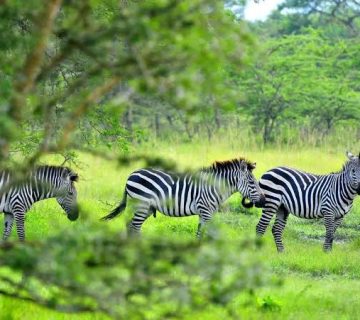
During the wider migration, wildebeest may mix with zebras and other grazing animals.
Predators such as lions and hyenas may hunt animals moving through nearby grasslands.
The migration continues as rainfall and grass conditions change across the ecosystem.
Why Mara River Crossings Are Worth Seeing
The Mara River crossing is one of the most remarkable wildlife events in Africa.
It demonstrates the challenges faced by animals moving through a landscape where food, water, predators and seasonal conditions influence survival.
The hesitation before a crossing is particularly interesting because it reveals how herd movements can change when animals encounter a dangerous obstacle.
For safari visitors, watching wildebeest gather, retreat and eventually enter the river provides a better understanding of the Great Migration than simply observing the crossing itself.
Whether you visit Kenya’s Maasai Mara or Tanzania’s northern Serengeti, patience and responsible wildlife observation are essential.
The most memorable safari experiences often come from watching the animals behave naturally, without attempting to influence when or where they cross.


No comment