
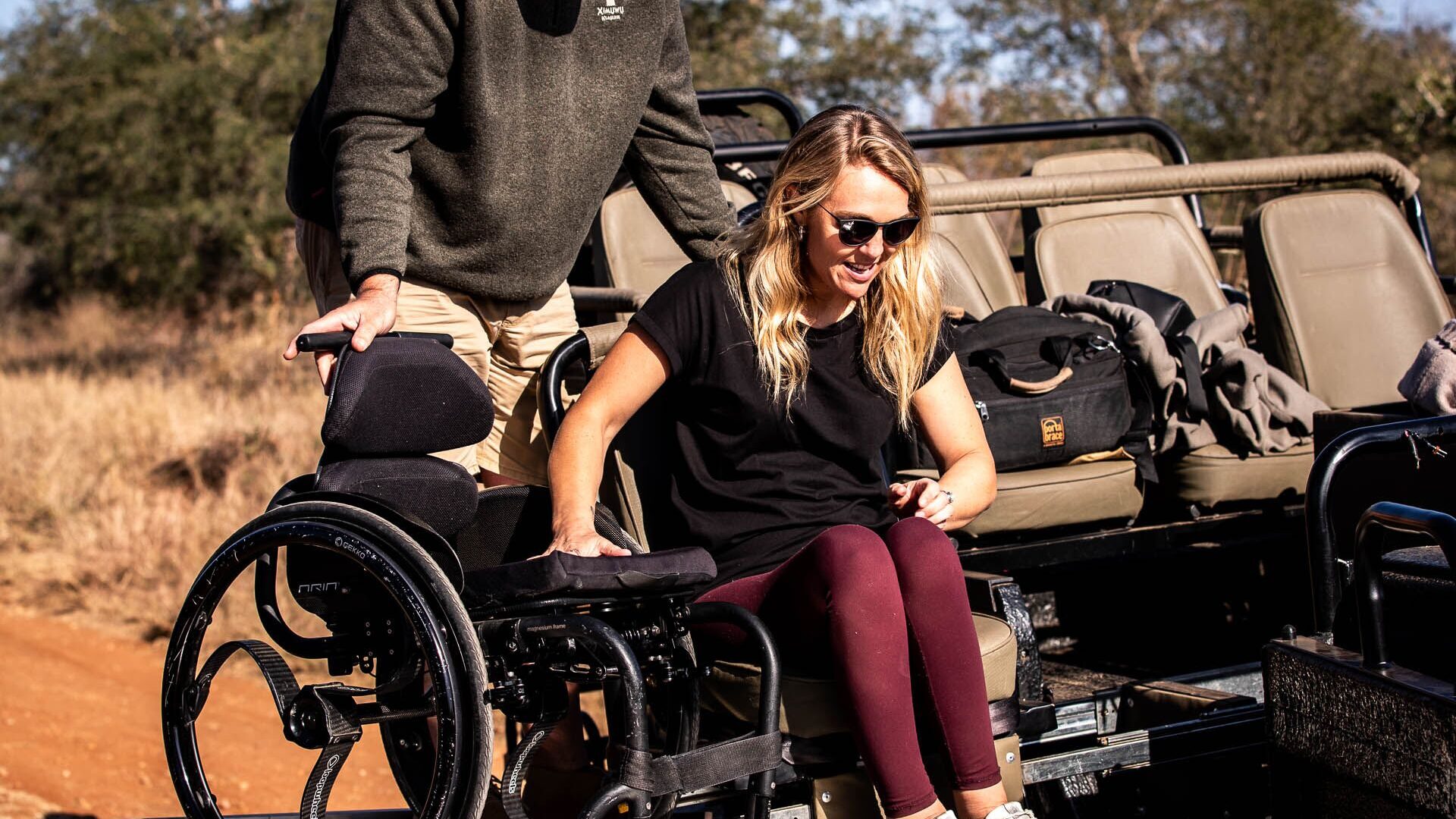
Wheelchair Users on Safari: Accessible Lodges, Vehicles and Park Routes
Planning a safari in Africa should be possible for travellers with different mobility needs. However, wheelchair users on safari require careful arrangements involving suitable vehicles, accessible accommodation, comfortable park routes and reliable assistance. Understanding these requirements before booking can help you enjoy wildlife experiences across East Africa with greater confidence.
Uganda, Kenya, Tanzania and Rwanda offer opportunities to observe elephants, lions, giraffes, buffaloes and other wildlife in their natural habitats. Many game drives take place inside vehicles, making certain safari experiences suitable for wheelchair users when appropriate transport and facilities are available.
Accessibility varies considerably between destinations. Some lodges provide step-free rooms and adapted bathrooms, while others have steep pathways, stairs or unsuitable entrances. Standard safari vehicles may also lack wheelchair lifts and secure restraint systems.
This guide explains how to organise an accessible safari, choose suitable lodges, arrange adapted vehicles and identify national park routes that accommodate different mobility requirements.
Can Wheelchair Users Go on an African Safari?
Yes. Wheelchair users can enjoy African wildlife safaris when operators make suitable arrangements.
Game drives are particularly practical because visitors observe animals from vehicles.
However, individual accessibility requirements differ. Some travellers can transfer independently into a vehicle seat, while others need a hydraulic lift, ramp or specialist assistance.
Discuss your requirements with your safari operator before confirming your booking.
Important Accessibility Considerations
| Requirement | What to confirm |
|---|---|
| Safari vehicle | Wheelchair ramp, lift or suitable transfer arrangements |
| Accommodation | Step-free access and appropriate bathrooms |
| Game drives | Suitable routes and manageable journey durations |
| Airport transfers | Accessible vehicle availability |
| Lodge facilities | Accessible dining and communal areas |
| Medical needs | Suitable storage and access to essential equipment |
| Activities | Wheelchair access and assistance requirements |
| Emergency arrangements | Suitable evacuation and transport procedures |
An accessible safari should be designed around your individual needs rather than general assumptions about wheelchair use.
Best Safari Destinations for Wheelchair Users in East Africa
Some destinations offer more practical opportunities for vehicle-based wildlife viewing than others.
National parks with established road networks can be easier to explore than remote locations requiring demanding walking activities.
Uganda: Queen Elizabeth and Murchison Falls
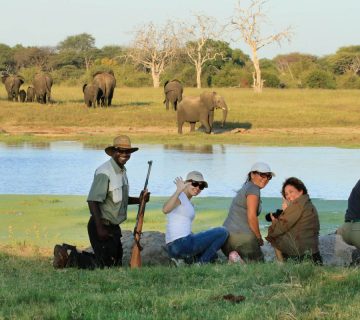
Queen Elizabeth National Park offers game drives through savannah habitats where visitors may observe elephants, buffaloes, antelopes and lions.
The Kasenyi area is a potential option for vehicle-based wildlife viewing, although road surfaces and seasonal conditions must be assessed.
Murchison Falls National Park also offers game drives through open landscapes with opportunities to see giraffes, elephants and other wildlife.
Boat excursions may be possible, but accessibility depends on the vessel, boarding arrangements and available assistance.
Kenya: Maasai Mara and Lake Nakuru
The Maasai Mara offers extensive wildlife viewing through vehicle-based game drives.
Accessible safari experiences can be arranged through specialist operators, although individual camps and vehicles must be checked.
Lake Nakuru National Park is another destination worth considering because wildlife viewing takes place along established driving routes.
Tanzania: Serengeti and Ngorongoro
Serengeti National Park provides opportunities to observe wildlife from safari vehicles.
The Ngorongoro Crater also offers vehicle-based game drives, although access roads can be steep and journeys may involve extended periods of sitting.
Tarangire National Park is another possible choice for travellers interested in elephants and savannah wildlife.
Rwanda: Akagera National Park
Akagera National Park offers traditional game drives through savannah and wetland landscapes.
A private vehicle with appropriate accessibility arrangements can provide greater flexibility.
However, adapted vehicle availability and accessible accommodation should be confirmed before travelling.
Comparing Accessible Safari Destinations
| Country | National park | Accessibility planning consideration |
|---|---|---|
| Uganda | Queen Elizabeth | Established game-drive routes |
| Uganda | Murchison Falls | Vehicle-based wildlife viewing |
| Kenya | Maasai Mara | Specialist accessible safari arrangements |
| Kenya | Lake Nakuru | Established park roads |
| Tanzania | Serengeti | Vehicle-based wildlife experiences |
| Tanzania | Ngorongoro | Longer drives and challenging access roads |
| Rwanda | Akagera | Private game-drive opportunities |
These destinations are potential options, not guarantees of wheelchair accessibility. Individual routes, vehicles and facilities require confirmation.
Choosing Wheelchair-Accessible Safari Vehicles
Transport is one of the most important elements of an accessible safari.
Traditional safari Land Cruisers often have high entrances and narrow doors.
They may be unsuitable for travellers who cannot transfer into standard passenger seats.
Vehicles With Wheelchair Ramps
Some adapted vehicles provide ramps that allow wheelchair users to enter without transferring.
However, the ramp angle, doorway width and vehicle interior must accommodate your wheelchair.
Vehicles With Hydraulic Lifts
Hydraulic lifts can assist travellers who cannot safely use ramps.
They must have sufficient weight capacity for the passenger, wheelchair and any additional equipment.
Wheelchair Restraints and Seat Belts
Travellers remaining seated in their wheelchairs need suitable vehicle restraint systems.
A secure arrangement generally requires approved wheelchair tie-downs and a separate occupant restraint.
| Vehicle feature | Purpose |
|---|---|
| Entry ramp | Provides wheelchair access |
| Hydraulic lift | Assists boarding |
| Wide doorway | Allows sufficient clearance |
| Wheelchair restraints | Secure the wheelchair during travel |
| Occupant seat belt | Protects the passenger |
| Suitable interior space | Supports comfortable positioning |
| Accessible viewing position | Provides wildlife visibility |
Ask your operator for recent photographs, measurements and confirmation that the vehicle meets your requirements.
Never assume staff can safely lift you manually into a standard safari vehicle.
Selecting Wheelchair-Accessible Safari Lodges
Accommodation can determine whether your safari remains comfortable throughout the journey.
A lodge advertising wheelchair accessibility may still have unsuitable bathrooms, narrow entrances or difficult outdoor pathways.
Essential Accessible Room Features
Before booking, confirm:
Step-free access to the room.
Doorways wide enough for your wheelchair.
Sufficient space beside the bed.
Suitable bed height.
Accessible bathroom facilities.
Appropriate toilet grab rails.
Roll-in shower where required.
Stable pathways to dining areas.
Reliable electricity for essential equipment.
Some travellers may also require shower chairs, hoists or additional assistance.
Request measurements rather than relying entirely on descriptions.
Questions to Ask Safari Lodges
| Question | Reason |
|---|---|
| Are there steps between reception and the room? | Identifies access barriers |
| Is the bathroom wheelchair-accessible? | Confirms personal care suitability |
| Can a wheelchair reach the dining area? | Checks communal access |
| Are pathways paved or gravel? | Assesses wheelchair movement |
| Is there space beside the bed? | Supports safe transfers |
| Can equipment batteries be charged? | Supports powered mobility devices |
Ask for photographs of the actual room you will occupy.
Understanding Accessibility on National Park Routes
Many African national park roads consist of gravel, compacted earth or uneven tracks.
Rain can create muddy sections, while dry conditions may produce dust and corrugations.
These factors can affect travel comfort, particularly for wheelchair users who need stable seating.
Choosing Suitable Game-Drive Routes
Ask your guide to prioritise established roads that provide comfortable wildlife viewing.
Avoid unnecessarily rough tracks when alternatives are available.
A private vehicle allows you to request breaks and adjust the length of each drive.
| Route condition | Accessibility consideration |
|---|---|
| Smooth gravel road | Generally more comfortable |
| Compacted earth track | Depends on surface condition |
| Corrugated road | May cause uncomfortable vibration |
| Muddy route | May become difficult after rainfall |
| Steep road | Requires careful vehicle assessment |
| Rocky track | May be unsuitable for some passengers |
Road conditions change seasonally. Your guide should check the intended route before departure.
Planning Comfortable Game Drives
Spending several hours in a vehicle can cause discomfort, particularly for travellers who need regular position changes.
Discuss your preferred sitting duration and rest arrangements before travelling.
Example Accessible Safari Schedule
| Time | Suggested activity |
|---|---|
| 7:00 am | Breakfast |
| 8:00 am | Morning game drive |
| 10:30 am | Return to the lodge |
| 11:00 am | Rest and personal care |
| 1:00 pm | Lunch |
| 2:00 pm | Relaxation |
| 4:00 pm | Optional short game drive |
| 6:00 pm | Return for dinner |
This schedule can be adjusted according to your mobility requirements, energy levels and available activities.
Accessible Safari Activities Beyond Game Drives
Wildlife viewing does not always require travelling along demanding trails.
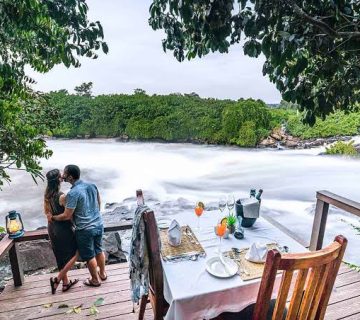
Some lodges provide accessible wildlife observation areas where animals can be viewed from established platforms or communal spaces.
Photography and birdwatching can also be enjoyable activities.
Boat safaris may be possible where accessible boarding facilities and appropriate safety arrangements exist.
However, many standard safari boats are not wheelchair-accessible.
Always verify boarding methods, wheelchair positioning, passenger restraints where applicable and emergency procedures before booking.
Gorilla Trekking for Wheelchair Users
Gorilla trekking presents greater accessibility challenges than traditional game drives.
Uganda’s Bwindi Impenetrable National Park and Rwanda’s Volcanoes National Park contain steep terrain, forest vegetation and uneven walking routes.
Some travellers with limited mobility arrange assisted trekking using specialised carrying chairs and teams of porters.
However, this involves being carried rather than travelling independently in a wheelchair.
Suitability depends on individual mobility requirements, weather, terrain and arrangements approved by the relevant park authorities.
Travellers should discuss medical considerations, transfer procedures, costs and safety arrangements before making reservations.
Packing for a Wheelchair-Accessible Safari
Packing appropriate equipment helps reduce unexpected difficulties.
| Item | Purpose |
|---|---|
| Wheelchair repair kit | Basic equipment maintenance |
| Spare inner tubes or tyres | Managing punctures |
| Portable charger | Charging compatible devices |
| Essential medication | Personal health requirements |
| Pressure-relief cushion | Seating comfort |
| Waterproof wheelchair cover | Protection during rain |
| Sun protection | Protection during outdoor activities |
| Medical documentation | Supporting healthcare arrangements |
| Spare wheelchair components | Replacing important parts |
If you use a powered wheelchair, check battery transport requirements with your airline.
Carry essential medication and important equipment documents in your hand luggage whenever permitted.
Costs of an Accessible Safari
Accessible safari costs vary according to the destination, vehicle requirements, accommodation and assistance services.
Specialist adapted vehicles may cost more than standard safari transport.
Additional expenses can include equipment hire, accessible airport transfers, specialist assistance and private guiding.
Request an itemised quotation covering every accessibility arrangement.
Avoid paying non-refundable deposits until the operator confirms suitable transport and accommodation.
Common Accessibility Mistakes to Avoid
Assuming every luxury lodge is accessible: Expensive accommodation does not guarantee suitable facilities.
Booking without checking vehicle access: Standard safari vehicles may not accommodate wheelchairs.
Ignoring bathroom arrangements: Confirm the exact facilities available.
Planning excessive driving: Allow breaks according to your comfort requirements.
Overlooking seasonal road conditions: Rain can affect accessibility.
Relying on verbal assurances: Request photographs and written confirmation.
Failing to discuss emergencies: Agree on suitable assistance and evacuation arrangements beforehand.
Wheelchair Users on Safari
A safari can be rewarding for wheelchair users when transport, accommodation and activities are carefully arranged.
East African destinations offer excellent opportunities for vehicle-based wildlife viewing, but accessibility differs between individual properties and operators.
Choose a specialist safari provider familiar with your mobility requirements. Confirm adapted vehicle equipment, accessible rooms and suitable park routes before booking.
With proper planning, wheelchair users on safari can enjoy African wildlife while travelling with greater comfort, independence and confidence.

No comment