
What Is Carbon-Offsetting for Safaris and Does It Work?
Carbon-offsetting for safaris has become an important topic among travellers who want to explore Africa while reducing their environmental impact. Wildlife safaris offer opportunities to visit national parks, observe endangered animals and support conservation. However, travelling to these destinations also produces greenhouse gas emissions.
International flights, safari vehicles, domestic flights and accommodation all contribute to a trip’s carbon footprint. Some safari companies offer carbon-offsetting programmes that allow travellers to support environmental projects intended to compensate for these emissions.
But does carbon-offsetting actually work?
The answer depends on the quality of the project, how its results are measured and whether the traveller also takes steps to reduce emissions.
Understanding carbon-offsetting can help you make informed decisions when planning a safari in Uganda, Kenya, Tanzania or Rwanda.
What Is Carbon-Offsetting for Safaris?
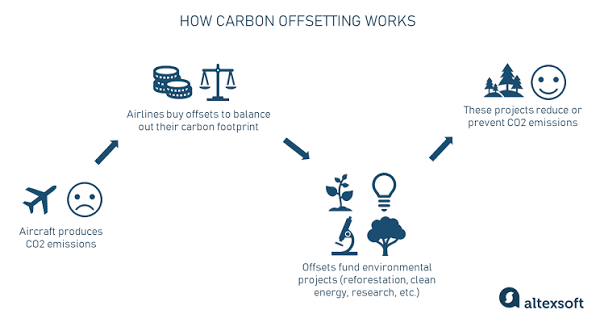
Carbon-offsetting involves funding activities that reduce or remove greenhouse gases to compensate for emissions produced elsewhere.
For example, travelling on an international flight creates carbon dioxide emissions. A traveller may purchase carbon credits associated with a project that reduces emissions or removes carbon dioxide from the atmosphere.
Projects may involve forest restoration, renewable energy, improved cooking technology or other environmental activities.
One carbon credit generally represents one metric tonne of carbon dioxide equivalent, commonly written as CO₂e.
However, purchasing a credit does not physically remove emissions from your flight.
Instead, it funds a separate environmental activity intended to deliver a measurable climate benefit.
The effectiveness depends on whether that benefit is genuine.
1. Where Do Safari Carbon Emissions Come From?
A safari’s environmental footprint depends on transportation, accommodation, activities and travel distance.
Some activities produce considerably more emissions than others.
International Flights
For many international visitors, flights represent a major part of their safari’s carbon footprint.
Long-distance air travel requires substantial fuel consumption.
The total emissions depend on flight distance, aircraft type, seating class and other factors.
Safari Vehicles
Game drives usually involve petrol or diesel vehicles.
Fuel consumption varies according to vehicle type, road conditions, driving distance and passenger numbers.
A private vehicle carrying two travellers may have higher emissions per person than a similar vehicle shared by six passengers.
Domestic Flights
Some safari itineraries include flights between national parks.
These flights can reduce travel time but may increase emissions compared with suitable shared road transport.
However, comparisons should consider actual routes, passenger numbers and vehicle types.
Safari Accommodation
Lodges consume energy through lighting, refrigeration, water heating, laundry and other services.
Properties using diesel generators may have higher operational emissions than those relying substantially on renewable electricity.
2. How Does Safari Carbon-Offsetting Work?
Carbon-offsetting usually follows several steps.
First, the operator estimates the emissions associated with your safari.
Next, it identifies an environmental project offering verified carbon credits.
The operator or traveller purchases and retires enough credits to represent the estimated emissions.
Retirement means the credits are taken out of circulation so they cannot be sold again.
Example of a Safari Offset
Imagine a safari operator estimates that a traveller’s trip produces two tonnes of CO₂e.
The operator may purchase and retire two verified carbon credits, each representing one tonne.
However, the credibility of this arrangement depends on accurate emissions calculations and whether the credits represent real environmental benefits.
Simply paying an offset fee does not guarantee that the trip has become carbon-neutral.
3. Common Carbon-Offset Projects in East Africa
Several types of environmental projects may generate carbon credits.
Project type | Main activity | Potential benefit |
|---|---|---|
Forest restoration | Restoring degraded woodland | Removes carbon as trees grow |
Forest conservation | Preventing eligible forest loss | Avoids emissions associated with deforestation |
Clean cookstoves | Reducing fuel consumption | May reduce emissions and smoke exposure |
Renewable energy | Generating lower-emission electricity | Reduces reliance on fossil fuels |
Biogas projects | Using organic waste for energy | May reduce methane and fuel emissions |
Each project requires reliable monitoring.
A project should demonstrate that its environmental benefits are measurable and would not have occurred in the same way without the intervention.
4. Does Carbon-Offsetting Actually Work?
Carbon-offsetting can produce genuine climate benefits when projects meet strong quality standards.
However, not every carbon credit represents an equally reliable result.
Some projects overestimate their environmental benefits. Others face difficulties maintaining results over time.
For example, a forest protection project may claim that trees would otherwise have been cut down.
If that assumption is exaggerated, the project may issue more credits than the actual emissions avoided.
What Makes a Carbon Credit Reliable?
Look for these characteristics:
Additionality: The project delivers a benefit that would probably not have happened without carbon-credit funding.
Accurate measurement: Emission reductions or removals are calculated using credible methods.
Permanence: Stored carbon remains protected, with safeguards against future losses.
Independent verification: Qualified external auditors assess the project’s claims.
No double counting: The same emissions benefit is not claimed more than once.
These principles help distinguish stronger projects from weaker ones.
5. Carbon Offsetting vs Reducing Safari Emissions
Reducing emissions should come before purchasing offsets.
For example, choosing a shared safari vehicle may reduce your transport emissions per person.
Selecting accommodation that uses renewable energy may also lower your environmental footprint.
These choices reduce emissions directly.
Carbon-offsetting addresses emissions that remain after practical reductions.
Comparing the Two Approaches
Approach | Example | Main result |
|---|---|---|
Emissions reduction | Sharing a safari vehicle | Reduces fuel emissions per traveller |
Emissions reduction | Choosing efficient accommodation | Lowers energy consumption |
Emissions reduction | Avoiding unnecessary flights | Reduces transport emissions |
Carbon-offsetting | Funding verified carbon credits | Supports separate climate activities |
Conservation donation | Supporting wildlife rangers | Helps protect wildlife, without necessarily offsetting carbon |
A conservation donation is valuable, but it should not automatically be described as a carbon offset.
6. Can Tree Planting Offset Your Safari?
Tree planting is one of the most familiar environmental activities associated with tourism.
Trees absorb carbon dioxide as they grow.
However, planting a tree does not immediately compensate for emissions created by a flight or safari vehicle.
Trees require years to grow, and some may die before storing substantial amounts of carbon.
What Makes Tree Planting Effective?
A credible project should consider:
Suitable native tree species.
Long-term maintenance.
Land ownership and community participation.
Survival rates.
Fire and drought risks.
Accurate monitoring of carbon storage.
Projects should also avoid replacing valuable natural grasslands with inappropriate tree plantations.
Supporting community nurseries can deliver environmental and economic benefits, even when the activity does not qualify as a verified offset.
7. How Safari Lodges Can Reduce Their Carbon Footprint
Safari accommodation providers have several opportunities to reduce emissions.
Solar Energy
Solar panels can provide electricity for lighting, refrigeration and other operations.
Battery storage may help reduce generator use during evenings.
Energy-Efficient Equipment
Efficient lighting, refrigeration and water-heating systems can reduce electricity demand.
Responsible Water Use
Water-saving fixtures and well-managed laundry services can reduce resource consumption.
Local Supplies
Purchasing suitable products locally may reduce some transportation requirements while supporting nearby businesses.
However, actual emissions depend on production methods and transport arrangements.
Travellers should ask lodges about measurable environmental practices rather than relying entirely on marketing statements.
8. How Much Does Safari Carbon-Offsetting Cost?
The cost depends on the number of credits purchased and the type and quality of the project.
Carbon-credit prices vary considerably, so a single standard price would be misleading.
A cheaper credit is not necessarily a better choice.
Before paying, ask the operator to explain:
How your trip’s emissions were calculated.
Which project receives the payment.
How many carbon credits are purchased.
Whether those credits are independently verified.
Whether the credits are retired on your behalf.
A trustworthy operator should be able to provide clear answers.
9. Greenwashing in Safari Carbon-Offsetting
Greenwashing occurs when environmental claims create a misleading impression.
A safari company might advertise a completely carbon-neutral trip without explaining its calculations or offset arrangements.
This should encourage further questions.
Warning Signs
Be cautious when an operator:
Claims zero environmental impact without evidence.
Provides no information about supported projects.
Uses tree planting as proof of immediate carbon neutrality.
Cannot explain how emissions are calculated.
Offers no evidence that credits have been retired.
Credible environmental reporting should acknowledge limitations and uncertainties.
10. Practical Ways Tourists Can Reduce Safari Emissions
You can take several steps before and during your journey.
Plan a Longer, Better-Organised Trip
If you are travelling internationally, consider spending more time at your destination rather than taking several separate short holidays.
This can reduce repeated long-distance flights.
Avoid Unnecessary Transfers
Choose an itinerary with sensible travel routes.
Visiting nearby destinations together may reduce additional driving.
Share Transport
Small-group safaris can distribute vehicle emissions among more passengers.
Select Responsible Accommodation
Ask about renewable energy, waste management and water conservation.
Pack Carefully
Avoid carrying unnecessary equipment, although small luggage reductions should not be treated as a major substitute for reducing flights or driving.
Support Credible Environmental Projects
Consider purchasing independently verified credits for emissions you cannot reasonably avoid.
11. Does Carbon-Offsetting Help Wildlife Conservation?
Some carbon projects may also protect wildlife habitats.
Forest conservation, for example, can support biodiversity when projects genuinely prevent habitat destruction.
Community involvement may provide additional benefits through employment or sustainable land management.
However, carbon credits do not automatically guarantee wildlife protection.
A project may deliver measurable climate benefits without directly supporting endangered animals.
If your priority is gorilla, elephant or rhino conservation, consider supporting dedicated wildlife programmes alongside any carbon-offset purchases.
12. Questions to Ask Your Safari Operator
Before booking, ask whether the company measures its environmental footprint.
Useful questions include:
Do you calculate emissions for each itinerary?
Are international flights included?
Which vehicles do you use?
Do your partner lodges use renewable energy?
What carbon projects do you support?
Can you provide credit verification and retirement records?
How do local communities benefit?
Clear answers can help you distinguish serious environmental commitments from unsupported claims.
Carbon-offsetting for safaris can support worthwhile environmental projects, but its effectiveness depends on quality, transparency and accurate measurement.
Well-designed projects may reduce or remove greenhouse gases. However, weak carbon credits can exaggerate their benefits.
The most responsible approach is to reduce avoidable emissions first, then consider verified carbon credits for the remaining footprint.
When planning your African safari, choose efficient transport, responsible accommodation and operators willing to explain their environmental practices.
Carbon-offsetting can contribute to climate action, but it should never replace genuine efforts to reduce emissions.






No comment