
Weather Apps for East Africa: Which Forecasts Are Reliable?
Planning an African safari involves more than choosing national parks and booking accommodation. Weather conditions can influence game drives, gorilla trekking, mountain hiking and boat safaris. A sunny morning may turn into a rainy afternoon, especially in mountainous and tropical regions.
Choosing the best weather apps for East Africa helps you prepare for changing conditions while travelling through Uganda, Kenya, Tanzania and Rwanda. However, not every forecast application performs equally well in every destination.
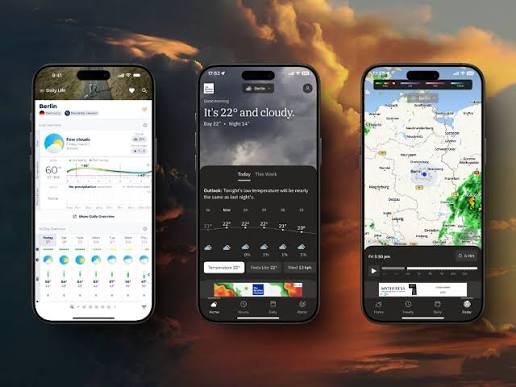
Some apps provide simple daily predictions, while others offer detailed rainfall maps, wind forecasts and comparisons between weather models. Understanding these differences can help you select reliable information without relying entirely on one forecast.
Why Weather Forecasting Can Be Difficult in East Africa
East Africa contains mountains, lakes, tropical forests, wetlands and open savannahs. These environments experience different weather patterns, sometimes within relatively short distances.
For example, Kampala may experience afternoon showers while nearby areas remain dry. In Bwindi Impenetrable National Park, rain can develop quickly because of local atmospheric and mountain conditions.
Lake Victoria also influences rainfall patterns in surrounding regions.
Weather applications rely on mathematical forecasting models and observational data. Although these systems provide useful predictions, they cannot always identify the exact location and timing of small thunderstorms.
This makes comparing forecasts and checking local weather updates particularly useful.
1. Windy.com: Best for Detailed Safari Weather Maps
Windy.com is a practical option for travellers who want more information than a simple daily forecast.
The application displays weather maps showing rainfall, temperature, wind, cloud cover and other atmospheric conditions.
It also allows users to compare predictions from different forecasting models, including ECMWF and GFS.
Why Windy Is Useful on Safari
Imagine planning a boat safari on the Kazinga Channel in Uganda. Windy can help you examine predicted wind and rainfall conditions around your destination.
For travellers climbing Mount Kilimanjaro or hiking in the Rwenzori Mountains, the maps can provide additional information about changing weather patterns.
However, detailed maps do not guarantee accurate predictions at every location.
Best for: Mountain hiking, boat activities, photography and travellers who enjoy detailed weather information.
2. AccuWeather: Best for Simple Daily Forecasts
AccuWeather is widely used for checking temperatures, expected rainfall and general weather conditions.
Its interface is suitable for travellers who want understandable forecasts without studying complex maps.
The application provides hourly and daily predictions, including perceived temperature information.
How AccuWeather Helps Safari Travellers
Before an early morning game drive in the Maasai Mara, you can check the expected temperature and decide whether to carry a jacket.
The application also offers MinuteCast rainfall predictions in supported locations, although local accuracy and data availability vary.
Short-term rainfall predictions can be helpful, but they should never be treated as guarantees.
Best for: Everyday safari planning, packing decisions and quick weather checks.
3. Meteoblue: Best for Comparing Forecast Reliability
Meteoblue provides weather forecasts and tools for understanding uncertainty.
One useful feature is its MultiModel comparison, which displays predictions from several forecasting systems.
When the models disagree considerably, the forecast may be less dependable.
Why Meteoblue Is Worth Considering
Suppose you are preparing for gorilla trekking in Rwanda’s Volcanoes National Park.
One forecast might predict sunshine, while another suggests afternoon rainfall.
Meteoblue can help you recognise this uncertainty instead of assuming that one prediction is definitely correct.
Its predictability information is particularly useful in mountainous regions where weather changes quickly.
Best for: Trekking, mountain destinations and understanding forecast uncertainty.
4. The Weather Channel: Best for General Travel Planning
The Weather Channel application provides daily and hourly forecasts, weather maps and alerts where supported.
It is useful for travellers checking several destinations during a longer safari.
For example, you might compare expected conditions in Nairobi, Arusha and Kigali while preparing for a multi-country journey.
Its straightforward forecast presentation helps you understand expected temperatures and rainfall.
However, coverage and the availability of detailed observations vary between locations.
Best for: Multi-country travel, daily forecasts and general weather planning.
5. Google Weather: Best for Quick Weather Checks
Google provides convenient weather information through its search services and weather features on supported devices.
You can search for forecasts in Kampala, Entebbe, Nairobi, Arusha or Kigali without installing a specialised weather application.
This is useful when you need a quick temperature estimate or short-term forecast.
However, basic weather displays may not provide enough detail for mountain expeditions or activities sensitive to strong winds and thunderstorms.
Best for: Quick temperature checks and general daily planning.
6. National Meteorological Services: Best for Official Weather Warnings
International weather applications are convenient, but official meteorological agencies remain important sources of local information.
East African countries operate national services that publish forecasts, seasonal updates and weather advisories.
These include:
- Uganda: Uganda National Meteorological Authority.
- Kenya: Kenya Meteorological Department.
- Tanzania: Tanzania Meteorological Authority.
- Rwanda: Rwanda Meteorology Agency, commonly called Meteo Rwanda.
These organisations provide information relevant to local weather conditions.
If heavy rainfall, strong winds or flooding may affect your itinerary, check official advisories and follow instructions from local authorities.
For safety-critical decisions, official warnings should take priority over a general forecast app.
Which Weather App Is Most Reliable in East Africa?
There is no verified single winner across every East African destination and weather condition.
Accuracy depends on the location, forecast period, weather variable and underlying model.
The following comparison focuses on practical usefulness rather than claiming an unsupported accuracy ranking.
| Weather Service | Main Strength | Recommended Use |
|---|---|---|
| Windy.com | Weather maps and model comparison | Detailed safari planning |
| AccuWeather | Simple hourly forecasts | Daily activities |
| Meteoblue | Forecast uncertainty and multiple models | Gorilla trekking and hiking |
| The Weather Channel | General forecasts and alerts | Multi-country travel |
| Google Weather | Convenient basic information | Quick checks |
| National weather services | Official forecasts and warnings | Safety decisions |
For most travellers, combining one everyday weather app with official local forecasts is sufficient.
Understanding Rainfall Predictions on Safari
One common mistake is assuming that a 60% chance of rain means it will rain for 60% of the day.
In standard forecast usage, a 60% probability of precipitation generally indicates the estimated likelihood of measurable precipitation at the specified location during the forecast period.
It does not describe how long the rainfall will continue.
A rainy forecast also does not necessarily mean your entire safari will be affected.
Some East African destinations experience short showers followed by clearer conditions.
Check hourly predictions alongside the daily forecast, but remember that thunderstorms can develop unexpectedly.
Weather Apps for Gorilla Trekking in Uganda and Rwanda
Gorilla trekking takes place in mountainous forest environments where rainfall and muddy trails are common.
Bwindi Impenetrable National Park and Volcanoes National Park can experience changing conditions throughout the day.
Meteoblue and Windy are useful for examining expected rainfall and broader weather patterns.
However, even favourable forecasts should not encourage you to leave waterproof clothing behind.
Pack a rain jacket, sturdy hiking boots, suitable trousers and protection for electronic equipment.
Your ranger guides will provide practical advice based on actual conditions.
Weather Apps for Serengeti and Maasai Mara Safaris
Open savannah destinations generally provide excellent opportunities for wildlife viewing, but weather still influences comfort and road conditions.
Early mornings may feel cool, particularly in open safari vehicles.
During rainy periods, some tracks may become muddy or difficult to use.
AccuWeather and The Weather Channel provide convenient daily temperature forecasts, while Windy can help you examine rainfall patterns.
Ask your safari operator about local road conditions rather than relying on weather apps alone.
Weather Forecasts for Mount Kilimanjaro and Rwenzori Hiking
Mountain weather requires additional caution.
Temperatures, wind speed and cloud conditions can change significantly with altitude.
Forecasts for nearby towns may not represent conditions higher on the mountain.
Windy and Meteoblue can help travellers review broader conditions, but specialist mountain forecasts and experienced climbing guides remain essential.
Never use a smartphone forecast as the sole basis for deciding whether a difficult mountain route is safe.
How Far Ahead Should You Trust a Forecast?
Weather forecasts generally become less certain as the forecast period increases.
A practical approach is to use different forecast ranges for different decisions.
| Forecast Period | Best Use |
|---|---|
| Next 24 hours | Clothing and immediate activity planning |
| 2–3 days | Reviewing outdoor activity conditions |
| 4–7 days | Understanding general weather trends |
| 8–14 days | Broad planning with greater uncertainty |
| Beyond 14 days | Seasonal expectations rather than precise daily weather |
Even short-term predictions can be unreliable when isolated thunderstorms or rapidly changing mountain weather are involved.
Practical Tips for Using Weather Apps on Safari
Download your preferred applications before travelling and save the destinations on your itinerary.
Check forecasts each evening and again before early morning activities.
Compare two forecasting sources when rain or strong winds could affect your plans.
Remember that some apps require internet access to update their information.
When travelling through remote areas, save essential weather information before losing mobile coverage.
Most importantly, listen to your safari guide, lodge staff and authorised park officials. They can explain immediate local conditions that may not appear accurately in an app.
Choosing Reliable Weather Forecasts
The best weather apps for East Africa depend on your destination and planned activities.
Windy provides useful detailed maps, AccuWeather offers convenient everyday forecasts, and Meteoblue helps travellers understand uncertainty.
Official national meteorological services remain especially important when serious weather conditions threaten travel safety.
Whether you are trekking through Uganda’s forests, exploring Kenya’s savannahs, hiking in Tanzania or visiting Rwanda, compare forecasts and remain prepared for unexpected changes.
A reliable weather app helps you prepare, but local knowledge and flexible travel plans remain equally important.





No comment