
VPNs for Travellers: Do You Need One in East Africa?
Travelling through East Africa offers exciting experiences, whether you are watching elephants in Uganda, exploring Kenya’s Maasai Mara, visiting Rwanda’s mountain gorillas or enjoying Tanzania’s Serengeti. During your journey, you will probably use your smartphone to communicate with family, confirm accommodation bookings, access online banking or check travel information.
However, connecting to hotel Wi-Fi, airport networks and public internet services can raise questions about online privacy and security. Should you install a virtual private network before travelling?
Understanding VPNs for travellers in East Africa can help you decide whether you need one and how to use it safely. A VPN can provide an additional layer of privacy, but it is not essential for every traveller.
This guide explains how VPNs work, their benefits, limitations and what to consider when visiting Uganda, Kenya, Tanzania and Rwanda.
What Is a VPN and How Does It Work?
A virtual private network, commonly called a VPN, is a service that creates an encrypted connection between your device and a VPN server.
When you connect to a VPN, your internet traffic travels through that server before reaching websites or online services.
This helps prevent people monitoring your local network from reading traffic between your device and the VPN server.
A VPN can also hide your usual public IP address from websites, replacing it with the address of the VPN server.
However, a VPN does not make you completely anonymous. Websites can still identify you through account logins, cookies and information you provide.
Your VPN provider may also have access to information about your internet activity, making provider selection important.
Why Might You Need a VPN During an African Safari?
Most travellers use the internet for ordinary activities such as messaging, checking maps and contacting accommodation providers.
A VPN may be useful in several situations.
Using Hotel and Lodge Wi-Fi
Many safari lodges, hotels and guesthouses offer internet access to visitors.
Although these networks are convenient, you may not know how they are configured or maintained.
A reputable VPN adds encryption between your device and its server.
However, most modern websites already use HTTPS encryption, which protects information exchanged with those websites.
A VPN provides additional network privacy rather than replacing normal internet security practices.
Accessing Work Systems
Some travellers combine holidays with remote work.
If you need to access confidential company documents or internal systems, your employer may require a company-approved VPN.
This is particularly relevant when working from hotels or shared accommodation.
Reducing Exposure on Unfamiliar Networks
Public Wi-Fi networks can sometimes be impersonated by attackers.
A VPN may help protect internet traffic after you connect, but it cannot establish whether a network is genuine.
Always confirm the correct Wi-Fi name with hotel or airport staff.
Do You Need a VPN in Uganda?
Uganda has an expanding telecommunications network, with mobile internet services available in major towns and many other populated areas.
Travellers commonly access the internet through mobile data, hotel Wi-Fi and safari lodge connections.
For ordinary browsing, secure messaging and using trusted websites, a VPN is not always necessary.
However, travellers working remotely or seeking additional privacy on shared networks may find one useful.
Uganda has also experienced periods of internet restrictions, including disruptions surrounding elections.
The Uganda Communications Commission announced the restoration of general internet services in January 2026 while retaining temporary restrictions on certain online platforms at that time.
Visitors should therefore verify current communications regulations before travelling.
Using a VPN does not exempt anyone from local laws or restrictions.
Do You Need a VPN in Kenya?
Kenya has established mobile internet services and Wi-Fi access in many hotels, restaurants and commercial areas.
If you are staying in Nairobi before travelling to the Maasai Mara, you may connect to several different networks during your journey.
A VPN can provide additional privacy when using unfamiliar shared connections.
However, if you mainly use trusted mobile data and secure websites, you may not need a separate VPN subscription.
Travellers handling confidential work information should follow their employer’s security requirements.
Always confirm current local rules before using online services that may be restricted.
Do You Need a VPN in Tanzania?
Tanzania attracts travellers visiting the Serengeti, Ngorongoro Conservation Area, Mount Kilimanjaro and Zanzibar.
Internet access is available through mobile networks and accommodation providers, although connectivity varies by location.
A VPN can be useful when connecting through shared hotel networks or accessing authorised work systems.
However, network restrictions and communications regulations can change.
Do not assume that every VPN service or online activity is permitted under all circumstances.
Check current requirements before travelling, particularly if you intend to use a VPN for accessing restricted services.
Do You Need a VPN in Rwanda?
Rwanda offers mobile internet services in Kigali and other populated areas, with varying connectivity in remote destinations.
Visitors travelling to Volcanoes National Park, Nyungwe or Akagera may use their phones for bookings, communication and navigation.
A VPN may be helpful when using shared accommodation Wi-Fi or accessing approved workplace systems.
However, ordinary travellers using secure applications may find their existing privacy protections sufficient.
As with other destinations, travellers should respect local telecommunications regulations and understand that a VPN does not guarantee anonymity.
Benefits and Limitations of Using a VPN
Before purchasing a VPN, consider what it can and cannot do.
| VPN Benefit | Important Limitation |
|---|---|
| Encrypts traffic to the VPN server | Does not eliminate every security risk |
| Masks your usual public IP address | Does not provide complete anonymity |
| Adds privacy on shared networks | Cannot guarantee a network is trustworthy |
| Supports secure remote work | Employer systems may require specific VPNs |
| Can change apparent connection location | Does not guarantee access to restricted services |
| Works on mobile devices | Still requires an internet connection |
A VPN should form part of your general online security habits rather than serve as your only protection.
How to Choose a VPN for East African Travel
Several factors deserve attention when selecting a VPN.
First, choose a provider with a credible reputation and clear information about its privacy practices.
Second, check whether it supports your smartphone, tablet or laptop.
Third, review the available server locations and expected connection performance.
Other features worth considering include:
- Strong encryption and modern VPN protocols.
- A clear privacy policy.
- Independent security assessments.
- A kill switch that limits traffic exposure if the VPN disconnects.
- Reliable customer support.
- Transparent subscription and cancellation terms.
Avoid downloading unfamiliar VPN applications simply because they advertise unlimited free access.
Some free services may collect user information, display excessive advertising or provide weak security protections.
Are Free VPNs Safe for Travellers?
Free VPNs vary considerably in quality.
Some reputable providers offer limited free packages, while others use business models that may compromise privacy.
Before installing a free VPN, research the company operating it.
Read its privacy policy and check which permissions the application requests.
Avoid services that provide little information about ownership, encryption or data handling.
A free service may also impose data limits, speed restrictions or limited server options.
For occasional browsing, you may not need a VPN at all.
For confidential work or regular use, a trustworthy service is more important than choosing the cheapest option.
How to Install a VPN Before Travelling
Installing a VPN before leaving home can help you avoid difficulties downloading applications on unfamiliar networks.
Follow these steps:
- Select a reputable VPN provider.
- Confirm compatibility with your device.
- Download its official application.
- Create an account if required.
- Choose a suitable subscription.
- Sign in and review the privacy settings.
- Connect to an available VPN server.
- Test your internet connection.
If the application includes a kill switch, learn how it works.
You should also understand how to disconnect the VPN when necessary.
Some banking or travel applications may require additional verification when they detect an unfamiliar connection location.
Does a VPN Work With an East African eSIM?
Yes. A VPN can generally operate over mobile data supplied through an eSIM.
An eSIM provides the mobile network connection, while the VPN protects traffic travelling through that connection.
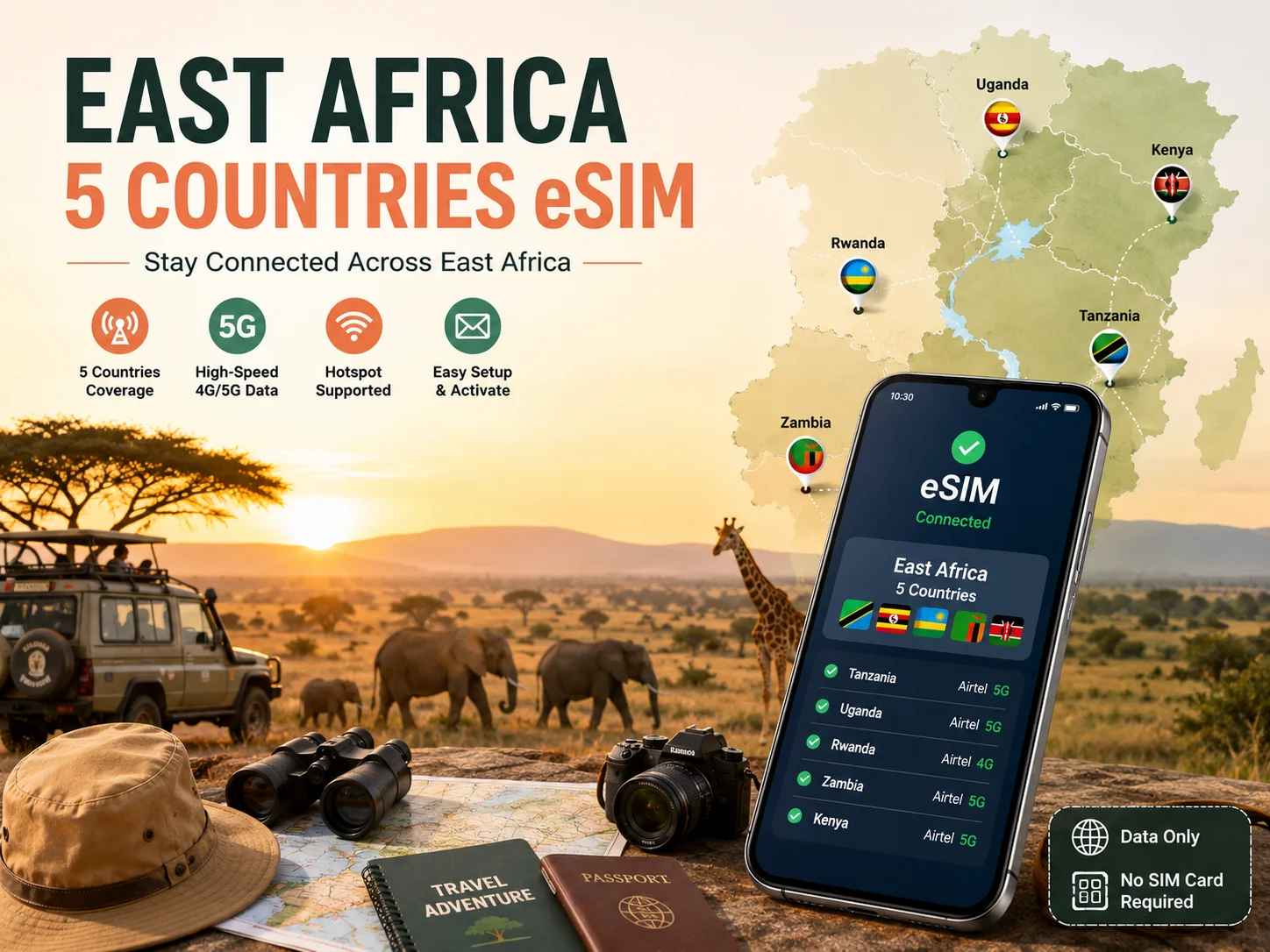
For example, you might purchase a regional eSIM for Uganda, Kenya and Tanzania, then use a VPN when accessing confidential work information.
However, VPN performance depends on the underlying internet connection.
An eSIM does not guarantee that your VPN will connect in every location.
Will a VPN Work Inside National Parks?
A VPN cannot create internet access where no network signal exists.
Remote safari destinations may have limited or unreliable mobile connectivity.
For example, some areas of Bwindi Impenetrable National Park, Kidepo Valley National Park and the Serengeti have weak or unavailable mobile coverage.
Even if your VPN application works perfectly, it cannot connect without internet access.
Download important documents, maps and contact information before entering remote destinations.
Your safari guide should remain your primary source of assistance for navigation and local emergency procedures.
Practical Online Safety Tips for Safari Travellers
Whether you install a VPN or not, basic security measures remain important.
Keep your phone and applications updated before departure.
Use strong passwords and activate multifactor authentication where available.
Avoid entering sensitive information on suspicious websites.
Confirm public Wi-Fi network names before connecting.
Use HTTPS websites, especially when handling personal information.
Avoid sharing passwords, banking details or passport information through insecure channels.
Consider using your mobile data connection rather than unfamiliar public Wi-Fi for sensitive transactions.
Is a VPN Necessary in East Africa?
VPNs for travellers in East Africa can provide additional privacy when using unfamiliar networks and help protect authorised work connections.
However, not every safari traveller needs one.
If you mainly use secure messaging applications, trusted websites and mobile data, your existing security measures may be sufficient.
Travellers working remotely or regularly connecting to shared Wi-Fi may benefit more from a reputable VPN.
Before visiting Uganda, Kenya, Tanzania or Rwanda, review current local regulations and choose digital security tools that match your activities.
A reliable internet connection, sensible security habits and careful preparation are more valuable than installing technology you do not understand or need.




No comment