
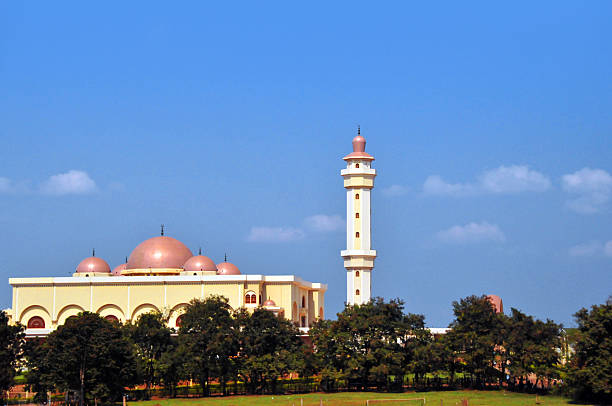
Uganda National Mosque in Kampala
Uganda National Mosque in Kampala: Dress Code, Rules and Minaret Views: What to Expect
one of the country’s most impressive religious and architectural landmarks. Located on Old Kampala Hill, this magnificent mosque attracts visitors interested in Islamic heritage, beautiful architecture, panoramic city views and cultural experiences. Its enormous golden dome, tall minaret and spacious prayer hall make it a remarkable feature of Kampala’s skyline.
Also widely known as the Gaddafi National Mosque, the building serves as an important centre for Uganda’s Muslim community. Visitors of different religious backgrounds can explore selected areas through organised guided tours while respecting the mosque’s religious traditions.
One of the most memorable experiences is climbing the minaret, which provides spectacular views across Kampala’s hills, busy streets and surrounding neighbourhoods. However, visitors must follow specific dress codes, photography restrictions and prayer-time regulations.
For travellers exploring Kampala before or after a Uganda safari, the mosque offers an educational cultural experience.
Where Is Uganda National Mosque Located?
Uganda National Mosque stands on Old Kampala Hill, approximately two kilometres from Kampala’s central business district.
The elevated location provides commanding views across the capital.
Visitors can reach the mosque by private vehicle, taxi or arranged city tour.
The surrounding Old Kampala neighbourhood is historically important because it was associated with some of Kampala’s earliest colonial administrative activities.
Quick Facts About Uganda National Mosque
| Feature | Description |
|---|---|
| Country | Uganda |
| City | Kampala |
| Location | Old Kampala Hill |
| Alternative name | Gaddafi National Mosque |
| Main attraction | Islamic architecture and minaret views |
| Opened | 2007 |
| Religious affiliation | Islam |
| Visitor experience | Guided mosque tour |
| Dress code | Modest clothing required |
| Recommended duration | 1–2 hours |
| Photography | Subject to mosque regulations |
The History of Uganda National Mosque
The mosque’s development began during the 1970s under the government of President Idi Amin.
Construction was interrupted, leaving the project unfinished for many years.
Later, financial support from Libya helped complete the building.
The mosque officially opened in 2007 and became one of Kampala’s most recognisable religious landmarks.
Why Is It Called Gaddafi Mosque?
The building became popularly known as Gaddafi Mosque because of the support provided by former Libyan leader Muammar Gaddafi.
Although Uganda National Mosque is its formal name, many residents and visitors continue using the older name.
The building also houses important offices associated with the Uganda Muslim Supreme Council.
Its significance extends beyond architecture because it serves worshippers and supports Islamic administration in Uganda.
What Makes the Mosque Architecturally Special?
Uganda National Mosque combines Islamic architectural traditions with modern construction techniques.
Its spacious interior features decorative patterns, large chandeliers, columns and carefully designed prayer areas.
The exterior contains prominent domes and a tall minaret visible from different parts of Kampala.
The Main Prayer Hall
The prayer hall is designed to accommodate thousands of worshippers.
Its broad carpeted floor provides space for congregational prayers.
Visitors can observe Islamic decorative elements and learn about the arrangement of the worship area.
However, access may be restricted during prayer sessions or religious gatherings.
The Golden Dome
The mosque’s large dome is among its most distinctive architectural features.
Its design contributes to the building’s impressive appearance.
Visitors can appreciate the dome from the surrounding compound and selected viewpoints.
Dress Code for Women Visiting the Mosque
Women visiting Uganda National Mosque are expected to wear modest clothing.
The dress requirements are stricter than those found at ordinary tourist attractions.
Women should wear loose-fitting clothing covering their arms and legs, together with a headscarf.
What Women Should Wear
Suitable clothing includes:
Long dresses or skirts reaching the ankles.
Loose-fitting tops with long sleeves.
Headscarves covering the hair.
Comfortable footwear that can be removed easily.
Short skirts, sleeveless tops and revealing clothing are not appropriate.
Are Headscarves Provided?
Yes. The mosque normally provides appropriate covering garments for visitors who arrive without suitable clothing.
Women may borrow long wraps and headscarves at reception.
These garments should be returned after the visit.
Visitors should nevertheless arrive dressed modestly to make entry easier.
Dress Code for Men
Men must also follow modest clothing requirements.
Long trousers and shirts covering the shoulders are appropriate.
Sleeveless shirts, very short shorts and revealing clothing should be avoided.
Recommended Clothing
Lightweight long trousers are suitable for Kampala’s warm climate.
A comfortable shirt with sleeves is recommended.
Footwear should be easy to remove before entering the prayer hall.
Visitors should also avoid clothing containing offensive images or messages.
Removing Shoes Before Entering
One of the most important mosque visiting rules concerns footwear.
Visitors must remove their shoes before entering the designated prayer area.
This practice helps maintain cleanliness in the worship space.
What Happens to Your Shoes?
Guides explain where footwear should be left.
Visitors should follow instructions rather than placing shoes in restricted areas.
Wearing clean socks can make the experience more comfortable.
Shoes may be worn again when leaving the prayer hall and continuing to other permitted areas.
Rules Visitors Must Follow
Uganda National Mosque is an active place of worship.
Tourists are welcome, but their behaviour should reflect respect for religious practices.
Important Visitor Rules
| Rule | Why it matters |
|---|---|
| Dress modestly | Respects religious requirements |
| Remove shoes | Maintains cleanliness in prayer areas |
| Speak quietly | Avoids disturbing worshippers |
| Follow guides | Protects restricted religious spaces |
| Ask before photographing | Respects privacy and worship |
| Avoid eating inside | Maintains appropriate behaviour |
| Respect prayer times | Allows uninterrupted worship |
| Supervise children | Protects visitors and facilities |
Visitors should never interrupt people who are praying.
Can Non-Muslims Visit Uganda National Mosque?
Yes. Non-Muslim visitors are generally welcome to participate in guided tours.
The mosque is an important cultural attraction for both Ugandan and international travellers.
Guides explain Islamic traditions, architecture and aspects of Muslim history in Uganda.
Visitors do not need to participate in prayers.
However, everyone must respect the mosque’s rules.
Climbing the Minaret
The minaret climb is one of the main attractions.
A minaret is a tower traditionally associated with a mosque and the call to prayer.
At Uganda National Mosque, visitors can ascend the tower to reach a panoramic viewpoint.
How Many Steps Are There?
Published descriptions report approximately 270–300 steps, although exact counts vary.
The staircase is narrow and winding.
Climbing requires moderate physical effort.
Visitors should take their time and avoid rushing.
There is no commonly advertised public lift for reaching the viewing platform.
Who Should Avoid the Climb?
People with significant mobility difficulties, severe dizziness or problems managing stairs should assess the climb carefully.
Visitors uncomfortable in narrow staircases may prefer remaining on the lower levels.
The mosque itself remains interesting even without climbing the minaret.
What Can You See From the Minaret?
The viewing platform offers a remarkable perspective over Kampala.
From above, visitors can appreciate the city’s hills, commercial districts and expanding neighbourhoods.
Famous Landmarks to Look For
Depending on visibility, visitors may identify Namirembe Hill, Rubaga Hill, Makerere Hill and other prominent locations.
The view also reveals busy roads, markets, residential areas and modern buildings.
Guides can explain the city’s development and identify important landmarks.
The minaret is particularly attractive for travellers interested in landscape photography.
Photography at Uganda National Mosque
Photography is an important part of many visits.
The mosque’s architecture provides attractive opportunities for photographing domes, columns and decorative details.
The minaret offers wider city views.
However, photography arrangements should always be confirmed with your guide.
Photography Etiquette
Avoid photographing worshippers without permission.
Do not use flash where prohibited.
Never enter restricted areas to obtain photographs.
Respect people participating in prayers.
Photography equipment should not interfere with visitors or religious activities.
Best Time to Visit Uganda National Mosque
The mosque welcomes tourists through guided visits, but access depends on religious activities.
Morning visits are often convenient because temperatures are relatively comfortable.
Late afternoon may provide attractive light for city photography.
However, visitors should avoid arriving during major congregational prayers.
Friday Prayer Considerations
Friday is particularly important in Islamic worship.
The main congregational prayer generally takes place around midday or early afternoon.
Tourist access to certain areas may be restricted during this period.
Visitors should confirm the current schedule before planning a Friday visit.
During Ramadan and major Islamic festivals, arrangements may also change.
Entrance Fees and Tour Arrangements
Visitors generally pay an entrance fee for guided tourism activities.
Charges may differ according to residency or nationality.
Published online fees vary, with some recent visitor information quoting approximately UGX 25,000 for foreign tourists.
Because rates can change, travellers should confirm current admission charges at the official reception before paying.
What Does the Tour Include?
A standard guided experience commonly includes an introduction to the mosque’s history, architectural features and religious significance.
Minaret access may also be included, subject to operational arrangements.
Visitors should confirm what their ticket covers.
How Long Does a Visit Take?
Most travellers should allow approximately one to two hours.
The duration depends on the guide’s presentation, photography interests and whether visitors climb the minaret.
A shorter visit may focus on the main prayer hall and architectural features.
Longer visits provide more time to appreciate the panoramic city views.
Combining the Mosque With Kampala Sightseeing
Uganda National Mosque can be included in a wider Kampala cultural tour.
Other attractions include the Uganda Museum, Kabaka’s Palace and Namirembe Cathedral.
Suggested Kampala Cultural Day
Begin with a guided visit to Uganda National Mosque.
Explore the prayer hall and climb the minaret if physically comfortable.
Continue towards another historical attraction.
Enjoy lunch at a suitable Kampala restaurant.
Spend the afternoon exploring additional cultural landmarks.
This itinerary introduces travellers to Uganda’s religious and historical diversity.
Tips for First-Time Visitors
Arrive wearing suitable modest clothing.
Carry drinking water, particularly if planning to climb the minaret.
Wear comfortable shoes that are easy to remove.
Ask your guide before taking photographs.
Avoid scheduling your visit during Friday congregational prayers.
Keep personal belongings secure.
Allow additional travelling time because Kampala traffic can be unpredictable.
Why Uganda National Mosque Is Worth Visiting
Uganda National Mosque offers a memorable combination of architecture, history, religious education and panoramic city scenery.
Its impressive prayer hall and decorative details introduce visitors to Islamic traditions, while the minaret provides one of Kampala’s most rewarding viewpoints.
Respecting the dress code, removing footwear and following guided-tour instructions ensures a comfortable visit.
For travellers exploring Uganda’s capital, the mosque provides an opportunity to understand another important part of the country’s cultural heritage.
Whether visiting before a wildlife safari or during a Kampala city tour, Uganda National Mosque is a worthwhile destination that combines learning, sightseeing and appreciation of religious diversity.






No comment