Spotting the Difference: Plains vs Mountain Zebras
Zebras are among the most recognizable animals in Africa, yet many travelers are surprised to learn there is more than one type. At first glance, all zebras appear to have the same black and white striped coats, but a closer look reveals clear differences. The two species most visitors are likely to hear about are the plains zebra and the mountain zebra. Although they share a common ancestor, they have adapted to different habitats and developed unique physical features and behaviors.
If you are planning a safari in East or Southern Africa, learning how to tell these zebras apart can make your wildlife experience more rewarding. Once you know what to look for, identifying each species becomes much easier.
Meet the Plains Zebra
The plains zebra is the most widespread and common zebra species in Africa. It lives across grasslands, savannas, open woodlands, and even some lightly forested areas. Countries where you can regularly see plains zebras include Uganda, Kenya, Tanzania, Botswana, Namibia, Zambia, Zimbabwe, and South Africa.
Millions of plains zebras migrate, graze, and roam across these landscapes. They are famous for taking part in the Great Migration between the Serengeti and the Maasai Mara, where huge herds move in search of fresh grass after seasonal rains.
Plains zebras are highly social animals. They usually live in family groups consisting of one stallion, several mares, and their foals. These family groups often gather into much larger herds that may include hundreds or even thousands of animals.
Meet the Mountain Zebra
Mountain zebras are much rarer than plains zebras. As their name suggests, they inhabit rocky hills, steep mountain slopes, and rugged plateaus instead of open grasslands. They are excellent climbers and move confidently across uneven terrain where many other grazing animals would struggle.
Mountain zebras are mainly found in Namibia, South Africa, and parts of Angola. There are two recognized subspecies: the Cape mountain zebra and Hartmann’s mountain zebra. Thanks to decades of conservation work, both populations have recovered significantly, although they remain far less numerous than plains zebras.
Unlike plains zebras, mountain zebras usually form smaller groups. Their habitat naturally limits the size of herds because mountain grazing areas cannot support large numbers of animals.
Body Shape and Size
One of the easiest differences to notice is body shape.
Plains zebras have relatively broad, rounded bodies designed for life on open grasslands where they spend much of the day grazing. Adult males typically weigh between 220 and 360 kilograms, while females are slightly lighter.
Mountain zebras have leaner, more muscular bodies. Their strong legs help them climb rocky slopes and escape predators across difficult terrain. Although their weight is similar to that of plains zebras, they often appear slimmer because of their athletic build.
If you observe both species side by side, the mountain zebra generally looks more compact and sturdier.
Stripe Patterns
Every zebra has a unique stripe pattern, much like a human fingerprint. However, each species has distinct characteristics that help with identification.
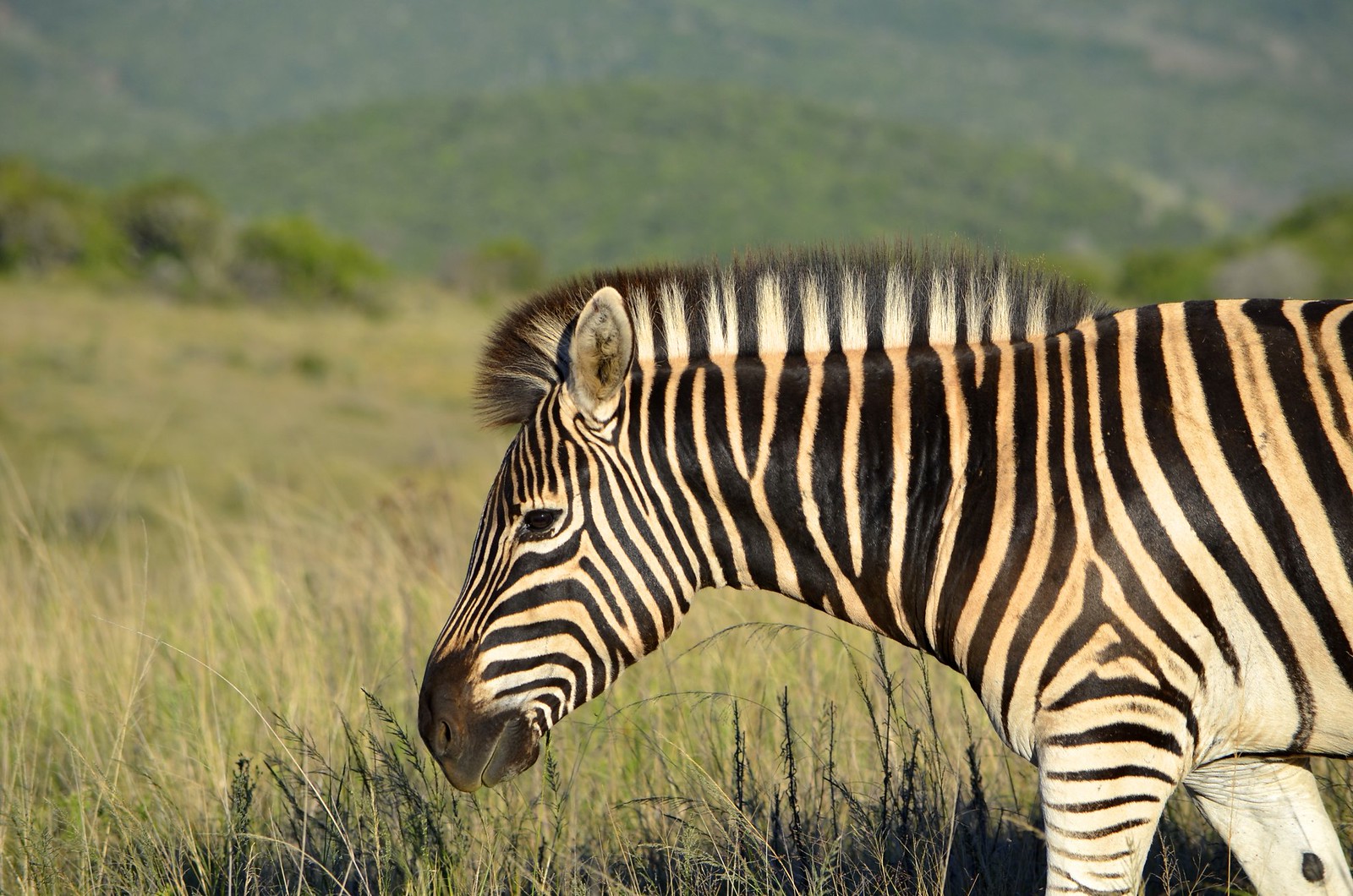
Plains zebras have broader stripes that continue around most of the body. Many subspecies also have faint brown or gray “shadow stripes” between the main black stripes. These shadow stripes are particularly noticeable on the hindquarters and legs.
The stripe patterns can vary depending on the region. For example, zebras in northern Kenya often have narrower stripes than those found farther south.
Mountain zebras have narrower, sharper black stripes with bright white spaces between them. They do not have shadow stripes, making their pattern appear cleaner and more striking.
Their stripes also stop before reaching the belly.
Belly Color
One of the quickest ways to tell the difference is by looking underneath the animal.
Plains zebras usually have striped bellies. The black stripes continue across the underside, although the exact pattern varies among individuals.
Mountain zebras have completely white bellies with no stripes. This single feature is one of the easiest identification clues, especially when the zebra is standing on a slope or walking uphill.
Many experienced safari guides use the belly first when distinguishing between the two species.
The Dewlap
Mountain zebras possess a noticeable fold of loose skin beneath the throat called a dewlap.
This dewlap hangs below the neck and is visible in both males and females. It is completely absent in plains zebras.
Even from a moderate distance, the dewlap often stands out if the animal turns sideways.
Hooves Built for Different Landscapes
Habitat has influenced the evolution of each species’ feet.
Plains zebras have hooves adapted for walking long distances across flat savannas. They may travel many kilometers each day while grazing and searching for water.
Mountain zebras have harder, narrower hooves with excellent grip. These specialized hooves help them climb steep rocky slopes without slipping.
Watching a mountain zebra effortlessly navigate rocky cliffs is an impressive demonstration of this adaptation.
Habitat Preferences
Habitat is one of the strongest clues for identification.
If you are driving across open grasslands filled with wildebeest, antelope, and scattered acacia trees, the zebras you see are almost certainly plains zebras.
If you are exploring rugged mountain ranges, rocky escarpments, or steep hillsides in Namibia or South Africa, you are more likely looking at mountain zebras.
The environment often provides the answer before you even study the animal itself.
Geographic Distribution
Plains zebras occupy one of the largest ranges of any African hoofed mammal. Their distribution stretches across much of eastern and southern Africa.
Mountain zebras occupy a much smaller range concentrated mainly in southwestern Africa. Because their habitat is fragmented, visitors are less likely to encounter them unless visiting parks known for mountain zebra conservation.
This limited range makes mountain zebra sightings especially rewarding.
Feeding Habits
Both species are herbivores that mainly eat grasses, but their diets reflect the environments they inhabit.
Plains zebras feed on abundant savanna grasses. Their digestive systems allow them to process coarse vegetation that many other grazers avoid. They are often among the first animals to graze tall grass, making it easier for species such as wildebeest and gazelles to feed afterward.
Mountain zebras consume mountain grasses, shrubs, herbs, and other hardy vegetation growing among rocky slopes. They often browse more than plains zebras because mountain environments provide fewer lush grasslands.
Water Requirements
Plains zebras usually stay within reasonable distance of permanent water sources. During dry seasons, they may migrate long distances to reach rivers or waterholes.
Mountain zebras are better adapted to drier conditions. They can survive with less frequent access to water because mountain environments often have limited permanent water supplies.
This adaptation allows them to occupy habitats unsuitable for many large grazing animals.
Social Structure
Plains zebras often gather in very large herds. During migration, thousands may travel together, creating one of Africa’s greatest wildlife spectacles.
Mountain zebras generally live in smaller family groups consisting of one stallion, several mares, and young. Bachelor males also form small groups until they establish their own territories.
The smaller herd size reflects the limited grazing available in mountainous landscapes.
Predators
Both zebra species face similar predators, although the threats vary depending on location.
Lions remain the primary predator of plains zebras across many East African ecosystems. Spotted hyenas, African wild dogs, and crocodiles also hunt them under certain conditions.
Mountain zebras are preyed upon mainly by leopards, lions where ranges overlap, and occasionally spotted hyenas. Their rocky habitat offers more opportunities to escape by climbing steep slopes.
Foals remain the most vulnerable members of both species.
Conservation Status
The plains zebra remains relatively widespread, although some regional populations have declined because of habitat loss, fencing, competition with livestock, and illegal hunting.
Mountain zebras experienced severe population declines during the twentieth century. Intensive conservation efforts, protected areas, and careful wildlife management have helped their numbers recover. Continued habitat protection remains important for their long-term survival.
Both species benefit from national parks, private reserves, and community conservation initiatives that protect African wildlife.
Where Safari Travelers Can See Them
If your safari takes you to the Serengeti, Maasai Mara, Queen Elizabeth National Park, Lake Mburo National Park, Amboseli, or the Ngorongoro Conservation Area, you will almost certainly encounter plains zebras.
To see mountain zebras, destinations such as Mountain Zebra National Park, Etosha National Park, Namib-Naukluft National Park, and several reserves in South Africa and Namibia offer some of the best opportunities.
Seeing both species during different African safaris gives you a greater appreciation for how animals adapt to different environments.
Quick Identification Tips
When you spot a zebra, first look at where it is standing. Open grassland usually points to a plains zebra, while rocky mountains suggest a mountain zebra. Next, check the belly. A striped belly indicates a plains zebra, while a white belly indicates a mountain zebra. Look beneath the throat for a dewlap, which only mountain zebras have. Finally, examine the stripe pattern. Broad stripes with faint shadow stripes belong to plains zebras, while narrow, crisp stripes without shadow stripes belong to mountain zebras.
Once you know these features, distinguishing between the two species becomes straightforward. Instead of simply seeing “a zebra,” you begin noticing the details that make each species unique, adding another layer of enjoyment to every African safari.