How to Photograph a Shoebill Without Scaring It Off
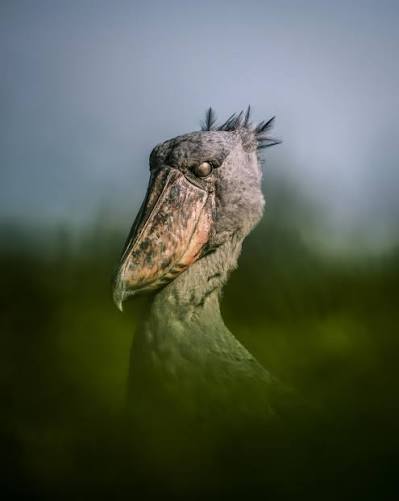
A shoebill is a special bird. It stands still in the papyrus for a long time, and then it looks at you with its eyes in a way that feels like it is looking at you like a person. This is what makes it hard to photograph. If you make one move or take a picture at the wrong time, the shoebill will fly away, and you will not see it again for the rest of the day. If you want to take pictures of a shoebill, you need to be careful and have a plan.
Shoebills live in the swamps of East and Central Africa. One of the places to find them is in Uganda’s Mabamba Swamp near Lake Victoria. The guides there use canoes to go through the channels of papyrus and look for the shoebill standing still near the water. The shoebill hunts for fish by standing still for a long time, and then it strikes with its big beak. This is why it is easily scared away. A bird that stands still to hunt is also very good at noticing when something is moving. It gets scared easily.
There are places where you can find shoebills, like the Bangweulu Wetlands in Zambia and Lutembe Bay.. It is harder to find them in these places. Wherever you go, you need to remember that shoebills do not like people. They get scared easily. Your job as a photographer is to take pictures without scaring the shoebill
Why Shoebills Spook Easily
Shoebills are alone, and they do not like surprises. They are not like birds that live in groups and are used to people and boats. A shoebill has never seen people in its life, and when it does, it remembers. If a boat comes too close too fast, the shoebill thinks that boats are dangerous, and it gets even harder to approach.
When it is time for shoebills to build their nests, they are more scared of people. They build nests out of papyrus and grass, and they hide them deep in the reeds. If a bird is taking care of its babies, it does not want any boats coming near. If your guide tells you that there is a nest nearby, you need to be extra careful and stay away.
This is something you need to understand before you even start taking pictures. Learning how to photograph a shoebill without scaring it is important. You need to remember that taking a picture is not the only thing that matters. Keeping calm is also important for you and for everyone who comes after you.
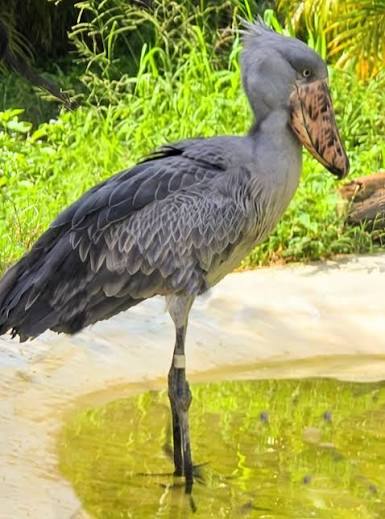
How to Photograph a Shoebill Without Scaring It Off: Getting the Approach Right
The first thing you need to do is keep a distance. The guides in Mabamba Swamp keep their canoes at 15 to 20 meters away from the shoebill. They move slowly. Watch the bird’s body language. If the shoebill looks scared or stiff, you need to stop and wait. If it relaxes again, you can move a little closer.
You also need to move. If you come fast, the shoebill will think you are a threat. Ask your guide to slow down before you get close to the bird. Do not wait until the bird is already scared.
You need to set up your camera before you get close to the shoebill. Set your aperture, shutter speed, and ISO while you are still away. This way you will not make any noise. Move around when you are close to the bird. A good starting point is to use an aperture and a fast shutter speed. You can adjust the ISO to get the light. If you are fumbling with your camera when you are close to the bird, you will scare it away.
Shooting From the Water Without Disrupting the Scene
A telephoto lens in the 400mm to 600mm range gives you the reach to fill the frame without forcing your canoe closer than the bird is comfortable with. If you only have a 200mm or 300mm lens, don’t compensate by pushing the boat in tighter. Instead, accept a subject in the frame and crop later or focus on wider shots that show the bird in its swamp habitat, which often make for stronger images anyway. A shoebill framed against a stretch of papyrus and open water can say more about the place than a tight portrait ever will.
Shutter sound matters more than most photographers expect. Mirrorless cameras with an electronic shutter mode are a real advantage here since the mechanical clack of a DSLR shutter can carry surprisingly far over still water. If you’re shooting with a DSLR, use shots rather than continuous burst mode until the bird is already relaxed and you have a clear sense of its tolerance. Once you know the bird is settled, short bursts of three or four frames are usually fine for catching a head turn or a wing stretch.
A monopod or a beanbag resting on the edge of the canoe will steady your shots more than trying to brace a heavy lens against your shoulder in a boat that shifts with every small wave. Canoes in Mabamba are narrow and low to the water, so even a small adjustment in your seating position can rock the boat enough to catch the bird’s attention. Move slowly. Keep your gear within reach rather than reaching across the canoe for a bag or a second lens.
How to Photograph a Shoebill Without Scaring It in Low Light
Early morning between roughly 6:30 and 8:30 tends to be the best window at Mabamba. The light is soft the water is often glassy calm. Shoebills are typically more active as they start hunting for the day. Low light means shutter speeds, though, which is where a stable canoe and a good brace point become essential. Resting your elbows on your knees or against the side of the boat rather than trying to hand-hold with your arms extended cuts down on camera shake without any extra movement that could alarm the bird.
If the light is too flat or too dark for a handheld shot, raise your ISO before you consider getting physically closer. A noisier image you can clean up in post-processing beats a bird that flew off because you paddled in for more light. Modern sensors handle ISO 3200 or even 6400 enough that a clean edit afterward will look far better than a blurry frame taken at a lower ISO in poor light.
Overcast mornings, which are common on Lake Victoria between March and May, actually work in your favor. Soft even light removes shadows from the bird’s oversized bill and gives you more flexibility with exposure than the harsh midday sun does.
Reading the Bird’s Body Language
Shoebills give clear warning signs before they fly. The head lowers slightly, the neck extends forward, and the eyes fix on whatever it perceives as the threat. Some birds also do a distinctive bill-clattering display, snapping the upper and lower mandible together rapidly, which is a stronger signal that it’s agitated. The moment you see any of these signs, stop moving entirely and lower your voice to a whisper if you’re speaking at all. Many birds settle back down within a few minutes if the disturbance stops immediately.
Patience pays off here in a very literal way. Photographers who wait out a period of alertness, rather than pushing through it, often end up with the bird active and hunting again within 15 or 20 minutes, sometimes producing far better shots than the first approach would have. Some of the most striking shoebill photographs, the ones showing a strike on a lungfish or a wide wingspan mid-stretch, come after long stretches of doing nothing but sitting quietly and watching.
Editing Your Shots Without Losing the Moment
Once you’re back on dry land, resist the urge to over-process your images. A shoebill’s grey and slate-blue plumage already carries strong contrast against green papyrus, so a light touch on exposure, shadows, and clarity usually goes further than heavy sharpening or saturation. If your shot includes water reflections, a small reduction in highlights can bring back detail without flattening the whole frame. Keep your crop generous enough to show some of the swamp around the bird, since that context tells the viewer more about how rare and specific this encounter really was.
Practicing How to Photograph a Shoebill Without Scaring It Off for the Long Term
Every respectful encounter you have makes the next photographer’s job easier. Guides remember which visitors pushed too close and which ones stayed patient, and they carry that experience into how they brief future guests. Booking with an operator who limits the number of canoes near a single bird, and who briefs you on distance and noise before you set off, is one of the most useful things you can do before you ever pick up your camera. Community-run guiding groups around Mabamba also rely on shoebill tourism for income, which gives them a direct incentive to protect the birds’ comfort as much as any conservation rule does.
Getting a strong photograph of a shoebill isn’t really about outsmarting the bird. It’s about matching its patience with your own, keeping your distance until it tells you otherwise, and treating every second of stillness as part of the shot rather than dead time before it. Do that consistently, and you’ll come home with images that show the bird calm, alert, and doing what it actually does in the wild, which is worth far more than a rushed shot of it flying away.