
Lake Baringo and Lake Bogoria: Hot springs, flamingos and boat birding
Lake Baringo and Lake Bogoria are two of Kenya’s most interesting Great Rift Valley destinations. Located in Baringo County, northwest of Nairobi, the neighbouring lakes offer contrasting landscapes, wildlife and birdwatching experiences. Lake Baringo is a freshwater lake known for its boat excursions, hippos, crocodiles and remarkable birdlife. Lake Bogoria is an alkaline lake famous for its flamingos, geothermal hot springs, geysers and dramatic volcanic scenery.
Visiting both lakes provides an opportunity to experience two different ecosystems within one itinerary. At Baringo, visitors can take an early morning boat ride to observe fish eagles, kingfishers, herons and other waterbirds. They can explore islands, learn about local fishing traditions and enjoy views of the surrounding cliffs. At Bogoria, the experience changes to walking beside steaming hot springs, watching flamingos gather along the shoreline and photographing geysers against the rugged Rift Valley landscape.
The two destinations are particularly rewarding for birdwatchers, photographers, nature enthusiasts and travellers looking for alternatives to Kenya’s traditional wildlife safari circuits. They can also be combined with Lake Nakuru, Lake Naivasha, Laikipia and other destinations in central Kenya.
Understanding Lake Baringo and Lake Bogoria
Although the lakes are relatively close to one another, their ecological differences are significant. Lake Baringo is one of the freshwater lakes in the Kenyan Rift Valley. Its water supports fish, aquatic vegetation, hippos, crocodiles and a wide range of birds. Fishing has traditionally been important to communities living around the lake, particularly the Ilchamus people.
Lake Bogoria, by contrast, is a saline and alkaline lake. Its water chemistry supports microscopic organisms, including algae that provide food for lesser flamingos. The lake is also known for geothermal activity, with hot springs, steam vents and geysers occurring along parts of its shoreline.
These differences explain why the two lakes attract different bird populations. Baringo is especially rewarding for observing fish-eating birds, woodland species and waterbirds, while Bogoria is famous for its large flamingo concentrations.
Both lakes form part of the wider Great Rift Valley landscape, where volcanic activity, tectonic movements and changing water levels have shaped the environment over millions of years. The surrounding hills, escarpments and dryland vegetation create an impressive setting for nature exploration.
Lake Baringo: Freshwater birdwatching and boat excursions
Lake Baringo is one of Kenya’s most rewarding destinations for birdwatching. Its combination of open water, rocky islands, shoreline vegetation, cliffs and surrounding dry woodland creates habitats for a wide range of species.
The lake is particularly famous for its African fish eagles, which can often be seen perched in trees overlooking the water. Their distinctive calls are a familiar part of the lake’s atmosphere. Visitors may also encounter kingfishers, herons, egrets, cormorants, hornbills, weavers and other birds.
Boat excursions are the most popular way to explore the lake. They provide access to areas that are difficult to reach from the shore and allow visitors to observe birds in their natural habitats. A knowledgeable local boat guide can help identify species, locate feeding areas and explain the ecological importance of the lake.
The experience is especially rewarding for photographers and birdwatchers because many birds use exposed branches, reeds and shoreline vegetation as feeding or resting places. Early morning and late afternoon trips often provide attractive light and comfortable temperatures.
Lake Baringo also supports hippos and Nile crocodiles. These animals are sometimes visible during boat excursions, particularly around suitable resting and feeding areas. Their presence makes guided boat travel essential. Visitors should never attempt to swim in the lake or approach wildlife independently.
Enjoy a boat safari on Lake Baringo
A boat safari is one of the main reasons to include Lake Baringo in a Kenyan itinerary. Unlike a conventional game drive, this experience takes visitors across freshwater habitats where birds, reptiles and mammals can be observed from the water.
Most excursions are organised through lakeside lodges, camps or local boat operators. The duration can vary depending on the route, wildlife activity and visitor interests. Short trips are suitable for general sightseeing, while longer excursions allow dedicated birdwatchers to explore more areas.
The boat moves along the shoreline, past rocky formations, islands and vegetation where birds gather. African fish eagles are among the most memorable species to observe. Their hunting behaviour can be fascinating, particularly when they dive towards the water to catch fish.
Other possible sightings include pied kingfishers, malachite kingfishers, giant kingfishers, grey herons, goliath herons, little egrets and cormorants. The exact species encountered depend on the season, location and time of day.
Some local operators may offer opportunities to observe fish eagles feeding. These activities should be discussed with the operator beforehand, with preference given to responsible practices that do not create unnecessary dependence on human feeding or disturb natural behaviour.
For the best experience, carry binoculars, a camera with a suitable zoom lens, sunscreen and a hat. The open water offers limited shade, and the tropical sun can be strong even during relatively short excursions.
Birdwatching at Lake Baringo
Lake Baringo is widely recognised as an important birdwatching destination in Kenya. Its habitats support a large number of resident and migratory species, making it attractive to both experienced birders and visitors who simply enjoy observing wildlife.
The African fish eagle is one of the most recognisable birds in the area. Its presence is closely associated with the lake’s freshwater environment, where fish provide an important food source.
Kingfishers are another major attraction. Several species occur around the lake, and patient observers may see them perched above the water before diving to catch fish. Their bright colours and hunting behaviour make them excellent subjects for photography.
The surrounding cliffs and dry woodland support additional species, including hornbills, bee-eaters, rollers, weavers, sunbirds and birds of prey. Some species are easier to identify during guided walks away from the lakeshore.
Migratory birds add further interest during particular months. Their movements depend on seasonal conditions across different parts of Africa and the wider migratory routes connecting Europe and Asia with East Africa.
Birdwatching is not limited to the water. Walking around suitable sections of the shoreline and exploring the surrounding vegetation can reveal species that are less frequently seen during boat excursions. A local bird guide can help visitors identify calls, distinguish similar species and locate less obvious birds.
Visit Ol Kokwe Island
Ol Kokwe Island is one of the most interesting features of Lake Baringo. It is a volcanic island within the lake, known for its rugged landscape, hot springs and cultural significance.
Boat excursions can take visitors to the island, where they can explore selected areas with local guidance. The landscape provides a different perspective of Lake Baringo, with views across the water towards the surrounding hills and escarpments.
Ol Kokwe is associated with the Ilchamus community, whose history and livelihoods are closely connected to the lake. A guided visit can introduce travellers to local traditions, fishing practices and the relationship between the community and its freshwater environment.
The island also has geothermal features, including hot springs and steam vents. These provide an interesting contrast to the better-known hot springs at Lake Bogoria. Visitors should follow local guidance because geothermal areas can contain dangerously hot water and unstable ground.
The boat journey itself is an important part of the experience. Travellers can enjoy the lake scenery, observe birds and watch the changing landscape as they approach the island.
Discover the Ilchamus culture and fishing traditions
The communities around Lake Baringo contribute significantly to the area’s cultural identity. The Ilchamus people, also known as Njemps, have a long-standing relationship with the lake and its resources.
Fishing has traditionally played an important role in local livelihoods. The freshwater environment provides opportunities to catch fish, while the lake’s islands and surrounding land support other activities.
A cultural visit can provide insight into traditional fishing methods, food preparation, local history and the challenges facing communities living beside a changing lake. Visitors may also learn about the relationship between pastoralism, fishing and environmental conditions.
The experience is most meaningful when arranged through local guides or community-based tourism initiatives. Travellers should approach cultural visits respectfully, ask permission before taking photographs and avoid treating everyday community life as a performance.
Some excursions may include traditional food or opportunities to learn about local crafts and customs. Availability depends on the community arrangements and the operator organising the visit.
Observe hippos and crocodiles at Lake Baringo
Lake Baringo is home to Nile crocodiles and hippos, making it an important wildlife habitat beyond its birdlife. These animals may be seen during guided boat excursions, particularly around areas where they rest or feed.
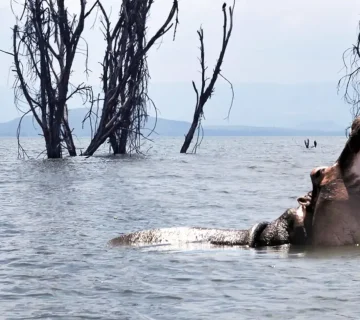
Hippos often remain partly submerged during the day, with only their eyes, ears and nostrils visible above the water. They generally leave the water to graze at night. Crocodiles may be observed along the shoreline or resting in suitable sunny locations.
Although these animals can be fascinating to watch, they are potentially dangerous. Boat operators should maintain safe distances and follow established wildlife-viewing practices. Visitors should never attempt to feed, touch or approach them.
Swimming is not recommended in Lake Baringo because of the presence of crocodiles and hippos. Travellers should also avoid walking close to the water’s edge in areas where wildlife activity is known to occur.
Lake Bogoria: Flamingos and geothermal landscapes
Lake Bogoria offers a very different experience from Lake Baringo. Located within Lake Bogoria National Reserve, it is famous for its alkaline waters, large flamingo concentrations and geothermal activity.
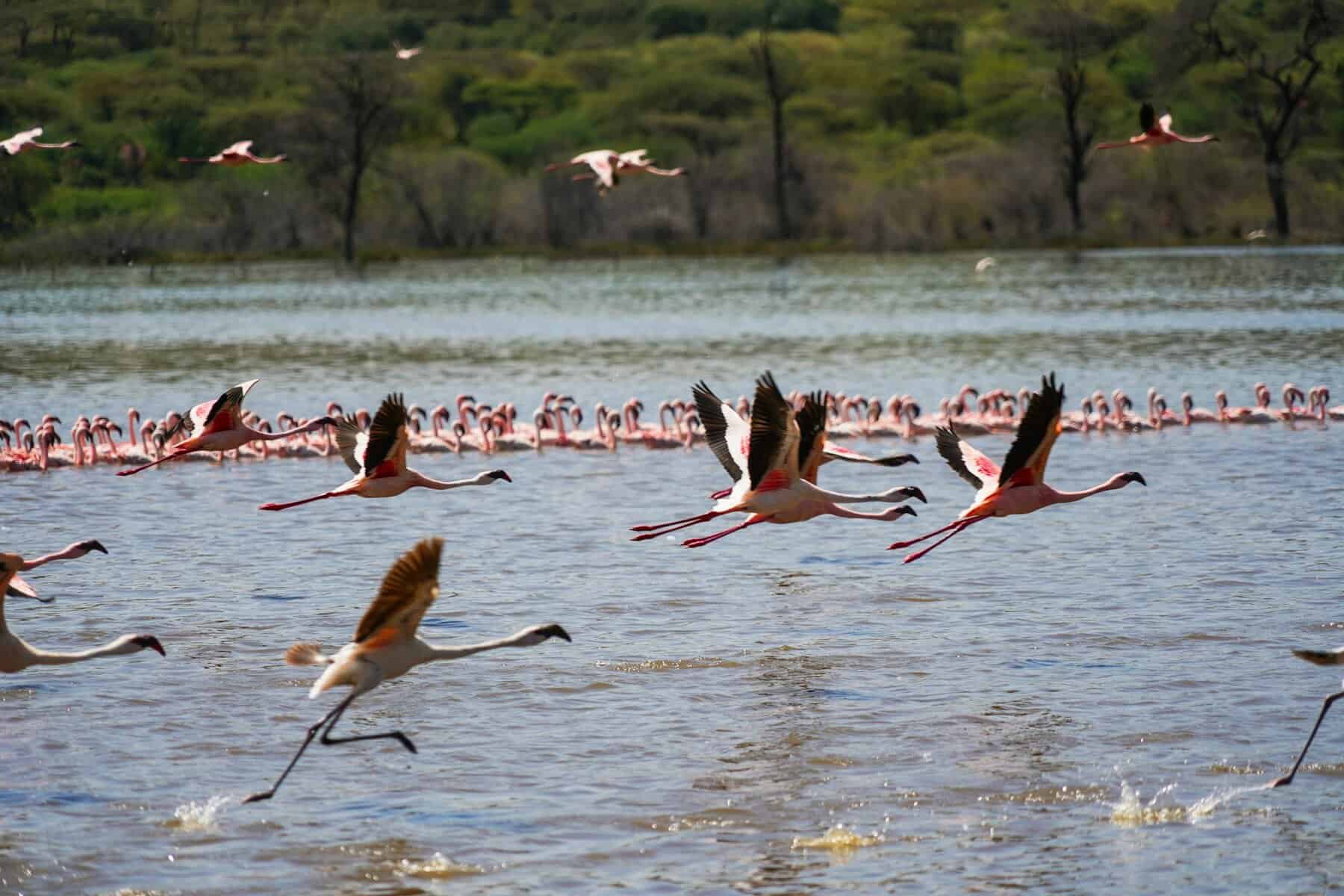
The lake is particularly associated with lesser flamingos, which feed on microscopic algae found in its alkaline environment. When conditions are favourable, large numbers gather along the shoreline, creating the pink appearance for which the lake is known.
The flamingos move around the lake according to food availability, water levels and environmental conditions. Their numbers can change significantly, so visitors should not expect the same concentration throughout the year.
Beyond the birds, the lake’s geothermal features are among its most impressive attractions. Hot springs, steam vents and geysers occur along sections of the shoreline, producing a landscape that reflects the volcanic activity beneath the Rift Valley.
The surrounding environment includes dry woodland, rocky slopes and open grassland. Wildlife such as greater kudu, zebras, warthogs, baboons and other animals can be encountered in suitable areas of the reserve.
Lake Bogoria is especially attractive to photographers because it combines flamingos, dramatic landscapes, geothermal steam and changing light conditions.
See the flamingos at Lake Bogoria
Flamingo watching is one of the main reasons travellers visit Lake Bogoria. The lesser flamingo is particularly well adapted to alkaline lakes, where it feeds on microscopic organisms that thrive in the water.
When large flocks gather, the birds create striking pink patterns across the lake. Their movements can be fascinating, especially when groups take flight together or feed in shallow water.
Flamingo numbers are influenced by changing water levels, food availability, weather and conditions at other Rift Valley lakes. They may move between feeding areas across East Africa, including lakes in Kenya and Tanzania.
For the best viewing opportunities, allow enough time to explore different sections of the shoreline. The birds do not always gather in one location, and their distribution can change between visits.
Early morning and late afternoon are generally favourable for photography because the light is softer and temperatures are more comfortable. Binoculars and a camera with a zoom lens are useful for observing the birds without approaching too closely.
Visitors should remain on designated routes and maintain a respectful distance. Flamingos need undisturbed feeding areas, and sudden movements or loud noises can cause them to take flight.
Explore the hot springs and geysers
Lake Bogoria’s geothermal activity is one of its most unusual attractions. Along parts of the shoreline, hot springs release mineral-rich water heated by underground geological processes. Steam rises from vents in the ground, while some geysers periodically send hot water into the air.
The geothermal features are connected to the volcanic activity that shaped the Great Rift Valley. Heat from underground geological systems warms groundwater, which can emerge through cracks and openings in the Earth’s surface.
Walking around the hot springs provides an opportunity to observe the relationship between geology and the lake’s environment. The contrast between the steaming water, alkaline shoreline and surrounding dryland vegetation makes the area particularly interesting.
Some springs can reach extremely high temperatures, with water hot enough to cause severe burns. Visitors must never enter the pools, touch the water or approach unstable geothermal ground. The hot springs are natural geological features, not ordinary bathing pools.
Local guides can explain the different geothermal formations and point out areas where visitors can safely observe the activity. Always follow reserve instructions and remain within designated viewing areas.
Photograph the geysers and steaming pools
Photography at Lake Bogoria is not limited to flamingos. The geysers and hot springs create unusual subjects, especially when steam rises against the surrounding hills.
The appearance of the geothermal areas changes with the light and weather. Early morning can produce attractive contrasts between cooler air and rising steam, while late afternoon provides softer light for landscape photography.
A wide-angle lens is useful for capturing the scale of the geothermal landscape, while a telephoto lens can help photograph birds and distant wildlife. A camera with weather protection is also helpful because dust and moisture can affect equipment.
Visitors should avoid moving too close to hot water or stepping onto unstable ground to obtain a photograph. No image is worth risking serious injury.
Wildlife viewing around Lake Bogoria
Although flamingos and hot springs dominate the lake’s reputation, the surrounding reserve also supports terrestrial wildlife. Its dry woodland, rocky hills and open areas provide habitats for several mammals and birds.
Greater kudu are among the notable antelopes associated with the area. Their large ears and impressive spiral horns make them particularly interesting to observe. Zebras, warthogs, baboons and other mammals may also be seen during drives around the reserve.
The vegetation and rocky terrain support birds of prey, ground-dwelling species and other dryland birds. Birdwatchers can combine flamingo observation with searches for species living away from the lake.
Game viewing is different from a conventional savannah safari. The landscape is more arid, and wildlife sightings can be spread across a larger area. A patient approach and an experienced guide improve the experience.
Birdwatching beyond the flamingos
Lake Bogoria supports a variety of bird species beyond its famous flamingos. The lake’s alkaline waters attract waterbirds, while the surrounding vegetation supports species associated with dry woodland and rocky habitats.
Visitors may encounter pelicans, herons, egrets, plovers, stilts and other waders along suitable sections of the shoreline. Birds of prey can also be observed around the cliffs and open country.
The most productive areas depend on seasonal water conditions and bird movements. A guide familiar with the reserve can help locate birds and explain their feeding habits.
For serious birdwatchers, combining Bogoria with Baringo provides a much more varied checklist. Baringo offers freshwater birds, fish eagles and kingfishers, while Bogoria provides opportunities to observe flamingos and species associated with saline lake environments.
Lake Baringo vs Lake Bogoria: what is the difference?
The two lakes offer complementary experiences, but their attractions are not interchangeable.
| Feature | Lake Baringo | Lake Bogoria |
|---|---|---|
| Water type | Freshwater | Saline and alkaline |
| Main attraction | Boat birding | Flamingos and hot springs |
| Famous birds | African fish eagle, kingfishers, herons | Lesser flamingos, pelicans and waders |
| Wildlife | Hippos and Nile crocodiles | Greater kudu, zebras, warthogs and baboons |
| Main activities | Boat trips, birdwatching, island visits and cultural experiences | Flamingo viewing, geothermal exploration and wildlife drives |
| Landscape | Open water, rocky islands and surrounding hills | Alkaline shoreline, cliffs, hot springs and dry woodland |
| Best for | Boat-based birding and freshwater wildlife | Flamingos, geology and landscape photography |
Lake Baringo is the better choice for visitors interested in boat excursions, fish eagles, kingfishers, hippos and local fishing traditions. Lake Bogoria is more suitable for those who want to see flamingos, explore geothermal features and photograph dramatic Rift Valley scenery.
Visiting both lakes provides a fuller understanding of the region’s ecological diversity.
Best time to visit Lake Baringo and Lake Bogoria
Both destinations can be visited throughout the year, although weather conditions influence road access, boat excursions, photography and bird movements.
The drier periods, particularly June to October and December to February, are often convenient for travel. Roads around the lakes may be easier to navigate, and outdoor activities can be more comfortable.
Lake Baringo offers birdwatching opportunities throughout the year. Migratory species add interest during particular periods, while resident birds remain present in different habitats. Early morning boat excursions are generally rewarding because birds are active and temperatures are cooler.
Flamingo numbers at Lake Bogoria vary according to food availability, water levels and regional movements. Large concentrations may occur at certain times, but there is no guarantee of seeing the same numbers on every visit. Travellers whose main purpose is flamingo photography should seek recent local information before travelling.
Rainfall can influence both lakes. Heavy rain may affect access roads and alter water levels, while changing conditions can shift bird concentrations. It is sensible to allow flexibility in the itinerary, particularly during wetter months.
How to get to Lake Baringo and Lake Bogoria
The lakes are most commonly visited by road from Nairobi. The journey generally follows the route towards Nakuru before continuing northwest towards Marigat and the Baringo region.
Lake Baringo is accessed through the Marigat area, with accommodation and boat excursion points located around the shoreline. Lake Bogoria lies south of Baringo and is accessed through the reserve’s designated gates.
The journey from Nairobi can take several hours, depending on traffic, road conditions and the final accommodation location. A private vehicle offers the greatest flexibility, particularly for visitors planning to explore both lakes.
A four-wheel-drive vehicle can be useful for certain sections, especially where roads are rough or affected by rainfall. Travellers should check the condition of access roads before departure and confirm whether their accommodation requires a particular type of vehicle.
Public transport is possible, but it may involve travelling through Nakuru or other regional towns and arranging additional local transfers. This can make it difficult to coordinate boat excursions and visits to more remote attractions.
Some lodges and camps can arrange transfers from nearby towns or organise transport between the two lakes. Visitors should confirm these arrangements before arrival rather than assuming that transport will be readily available at every location.
Where to stay around Lake Baringo and Lake Bogoria
Accommodation options include lakeside lodges, camps, resorts and smaller guesthouses. The best choice depends on budget, preferred activities and how much time you intend to spend at each lake.
Around Lake Baringo, staying close to the water makes early morning boat trips more convenient. Some properties can arrange boat excursions, birdwatching guides and visits to local communities. Options in the wider area include Roberts’ Camp, Soi Safari Lodge, Sandai Resort and Island Camp Baringo, subject to current operating arrangements.
Lake Bogoria has accommodation options near the reserve and in the surrounding region. Lake Bogoria Spa Resort is one of the established properties associated with the destination. Staying nearby can make it easier to visit the hot springs and flamingo viewing areas early in the day.
Travellers can also stay in Nakuru or other nearby towns and visit the lakes as part of a wider Rift Valley itinerary. However, staying closer to the attractions provides more time for birdwatching and photography.
Before booking, confirm that the property is operating, check the current road access and ask whether boat trips or guided activities are included in the accommodation rate.
How many days should you spend at the two lakes?
Two days provide a basic introduction to both destinations, but three days allow a more relaxed experience.
A two-day visit can include an early morning boat trip on Lake Baringo, a visit to Ol Kokwe Island and an afternoon or following-day excursion to Lake Bogoria. This arrangement is suitable for travellers with limited time.
Three days are better for birdwatchers and photographers. The additional time allows visitors to explore different parts of Baringo, enjoy more than one boat excursion and spend longer around Bogoria’s hot springs and flamingo viewing areas.
A longer stay is particularly useful for specialist birders who want to identify a wider range of species. It also provides flexibility when weather or water conditions affect outdoor activities.
Suggested three-day Lake Baringo and Lake Bogoria itinerary
Day 1: Arrive at Lake Baringo and enjoy a boat safari
Travel from Nairobi towards Lake Baringo, arriving in time to settle into your accommodation. After lunch, arrange a guided boat excursion to explore the lake’s birdlife, islands and shoreline habitats.
Look out for African fish eagles, kingfishers, herons and other waterbirds. Hippos and crocodiles may also be observed from a safe distance. Spend the evening relaxing at your lodge or camp.
Day 2: Explore Ol Kokwe Island and visit Lake Bogoria
Begin the day with an optional early morning birdwatching activity before arranging a boat trip to Ol Kokwe Island. Learn about the island’s geothermal features and the relationship between the Ilchamus community and Lake Baringo.
Continue towards Lake Bogoria, allowing time for the journey and a visit to the reserve. Explore the hot springs, observe the geysers and search for flamingos along suitable sections of the shoreline.
Stay near Lake Bogoria or return to accommodation in the wider Baringo region, depending on your arrangements.
Day 3: Flamingo photography and return journey
Spend the morning exploring Lake Bogoria, when the light is often favourable for photography and temperatures are more comfortable.
Observe flamingos and other waterbirds from designated viewing areas. Take time to appreciate the geothermal landscape before beginning the return journey to Nairobi or continuing towards another Rift Valley destination.
Practical tips for visiting the lakes
Carry binoculars if birdwatching is one of your main interests. A camera with a zoom lens is useful for photographing flamingos and birds without disturbing them.
Wear comfortable walking shoes, particularly when exploring the hot springs and rocky areas around Lake Bogoria. The ground can be uneven, and some geothermal locations have dangerous hot water close to visitor paths.
Bring sunscreen, a hat, drinking water and insect repellent. The region can be hot and exposed, especially during midday. A light jacket is useful for early morning excursions and cooler evenings.
For Lake Baringo, arrange boat trips through established local operators or your accommodation. Confirm the expected duration, price, safety equipment and departure point before boarding. Follow the boat guide’s instructions and never enter the lake for swimming.
At Lake Bogoria, remain on designated routes and never touch geothermal water. Some hot springs and vents can reach temperatures high enough to cause severe burns. Maintain a safe distance from flamingos and other wildlife, and avoid loud noise or sudden movements.
Carry some Kenyan shillings for smaller purchases and local services, although payment options differ between accommodation providers and operators. Confirm reserve entry arrangements and current charges before travelling.
Combining the lakes with other Rift Valley destinations
Lake Baringo and Lake Bogoria fit naturally into a longer journey through Kenya’s Great Rift Valley. Their location makes it possible to combine them with other lakes, wildlife areas and highland destinations.
Lake Nakuru National Park is a popular addition. It offers a different combination of wildlife, including rhinos, giraffes, buffaloes, zebras and several bird species. Visitors can also explore its viewpoints and woodland habitats.
Lake Naivasha provides freshwater scenery, boat excursions and opportunities to observe hippos and waterbirds. Crescent Island offers guided walking experiences in an environment where visitors can encounter several grazing wildlife species.
Travellers interested in private conservancy experiences can continue towards Laikipia, where destinations such as Ol Pejeta, Lewa and Borana offer game drives and conservation activities.
A wider itinerary can therefore combine freshwater birding at Baringo, flamingos and geothermal features at Bogoria, traditional wildlife viewing at Nakuru and private conservancy safaris in Laikipia.
Why visit Lake Baringo and Lake Bogoria?
Lake Baringo and Lake Bogoria offer a distinctive Kenyan travel experience that combines birdwatching, geology, wildlife and local culture. Their contrasting ecosystems make them particularly rewarding when visited together.
Lake Baringo provides memorable boat excursions, opportunities to observe African fish eagles and kingfishers, and a chance to learn about the Ilchamus community’s connection with the lake. Lake Bogoria introduces visitors to large flamingo concentrations, steaming hot springs and spectacular geothermal formations.
For photographers, birdwatchers and travellers seeking quieter nature destinations, the two lakes provide an excellent alternative to Kenya’s better-known safari parks. A well-planned visit allows enough time to explore both environments, appreciate their ecological differences and experience one of the most distinctive landscapes in the Great Rift Valley.

No comment