
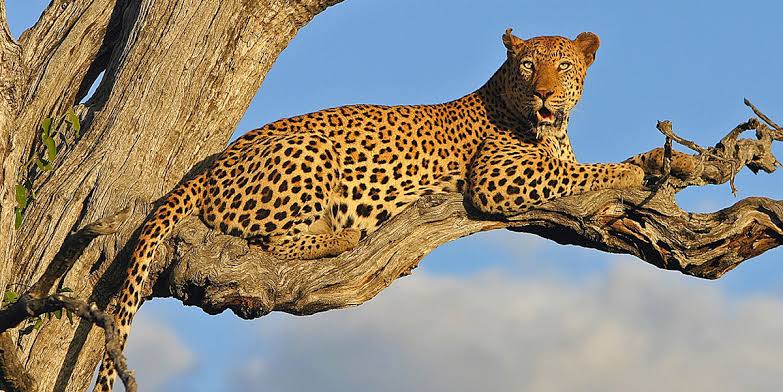
How to Spot a Leopard in a Tree: Eight Tricks Guides Use
Spotting a leopard in the wild is one of the most exciting experiences you can have on an African safari. These beautiful big cats are secretive, patient and remarkably good at hiding. You might spend an entire game drive searching for one, only to discover that a leopard has been resting quietly in a tree just metres away.
Learning how to spot a leopard in a tree can improve your chances of seeing this elusive predator during a safari in Uganda, Kenya or Tanzania. Experienced safari guides know where to look, which sounds to listen for and how to recognise signs of leopard activity.
Although leopard sightings are never guaranteed, understanding their behaviour makes searching more interesting. Here are eight practical tricks safari guides use to find leopards resting or feeding in trees.
1. Look for Large Trees With Strong Horizontal Branches
One of the first things experienced safari guides examine is the shape of nearby trees.
Leopards are powerful climbers and often rest on large branches above the ground. Trees with sturdy horizontal branches provide comfortable resting positions and places where leopards may store prey.
In African savannahs, guides frequently inspect acacia trees, large fig trees and other mature trees with suitable branches.
A leopard may lie stretched along a branch, with its legs or tail hanging below.
While travelling through Queen Elizabeth National Park in Uganda or the Serengeti in Tanzania, your guide may carefully scan trees overlooking open grasslands and wildlife trails.
What you should look for:
- Thick branches extending horizontally from the trunk.
- Dark shapes resting along upper branches.
- A spotted tail hanging beneath foliage.
- Unusual outlines that interrupt the natural shape of a branch.
Do not assume that every large tree contains a leopard. Guides combine these visual clues with their knowledge of local wildlife movements.
2. Watch for a Leopard’s Hanging Tail
A leopard’s tail is one of the easiest features to notice when the animal is partially hidden by leaves.
Leopards have long, muscular tails that help them maintain balance while climbing and moving along branches.
When resting, a leopard may allow its tail to hang below the branch.
Sometimes the rest of its body remains completely concealed by vegetation.
Experienced guides look for curved or hanging shapes that appear different from surrounding branches.
The tail’s markings can help distinguish it from nearby vegetation.
However, branches, vines and shadows can create similar shapes.
Your guide may use binoculars to examine the suspected tail before confirming a sighting.
If you notice something unusual, quietly point it out rather than shouting or asking the driver to approach suddenly.
3. Listen for Alarm Calls From Birds and Monkeys
Your ears can sometimes help locate a leopard before your eyes do.
Many animals produce alarm calls when they detect predators.
Vervet monkeys, baboons and certain bird species may call repeatedly when they notice a leopard nearby.
Safari guides learn to recognise these sounds and understand how different animals respond to danger.
For example, a group of monkeys making repeated alarm calls while staring towards one tree may indicate that something has attracted their attention.
Your guide might stop the vehicle, listen carefully and examine the surrounding branches.
However, alarm calls do not always indicate a leopard. Monkeys and birds also react to snakes, other predators and unfamiliar disturbances.
Guides use the direction, pattern and context of alarm calls to decide where to search.
This makes listening an important part of wildlife tracking.
4. Search Trees Near Fresh Leopard Tracks
Leopards may travel considerable distances while hunting, patrolling their territories or searching for suitable resting places.
Their footprints can help experienced guides understand where they have recently moved.
Leopard tracks usually show four toe impressions and a rounded central pad. Claw marks are generally absent because leopards normally retract their claws while walking.
Finding fresh tracks near a game trail, riverbank or woodland can encourage a guide to inspect nearby trees.
The guide may also look for other signs, including scrapes, scent-marking locations and disturbed vegetation.
Fresh tracks alone cannot confirm that a leopard is still nearby.
Rain, wind and different soil conditions can affect their appearance.
A skilled guide considers the surrounding environment before deciding whether to follow the signs.
5. Look for Prey Hidden Among the Branches
Leopards sometimes carry their kills into trees, particularly where doing so helps protect food from scavengers.
Their powerful jaws and climbing ability allow them to lift prey onto suitable branches.
Impala, young antelopes and other appropriately sized animals may be carried above the ground.
During a game drive, your guide might notice an unusual dark shape hanging from a branch.
Closer examination with binoculars may reveal the remains of an animal.
This can suggest that a leopard has used the tree for feeding.
However, a stored kill does not guarantee that the leopard is currently there.
The animal may be resting somewhere nearby or may have left the area.
Always allow your guide to decide whether it is appropriate to remain at the sighting location.
6. Check Shaded Branches During Hot Afternoons
Leopards are adaptable animals that may rest during warmer parts of the day.
In some habitats, trees provide shaded resting places where leopards can remain relatively concealed.
Experienced safari guides know that checking shaded branches can be worthwhile, especially in areas where leopards regularly use trees.
A leopard resting beneath thick foliage can be difficult to identify because its spotted coat blends into surrounding light and shadows.
Rather than searching quickly, guides scan trees carefully, examining one section at a time.
They may look for the rounded shape of a head, the outline of a body or a small movement among the leaves.
Leopards also rest on the ground, among rocks and inside dense vegetation, so searching trees is only one part of locating them.
7. Use Binoculars to Examine Unusual Shapes
Binoculars are among the most useful tools for spotting leopards during an African safari.
A leopard’s coat provides excellent camouflage, particularly when viewed through branches and patches of sunlight.
From a distance, the animal may resemble a dark patch of bark.
Experienced guides often scan tree canopies slowly rather than concentrating only on open ground.
They examine unusual shapes and then use binoculars to identify details.
When searching, pay attention to:
- Rounded ears appearing above a branch.
- A long tail extending beneath foliage.
- Spotted fur visible between leaves.
- A body stretched along a horizontal branch.
- Small movements that differ from wind-blown vegetation.
If you have binoculars, an 8×42 pair is a practical option for many safari conditions because it offers a useful balance between magnification, brightness and ease of handling.
Avoid moving excessively around the vehicle while trying to obtain a better view.
Your guide can help position the vehicle safely when conditions allow.
8. Visit Areas Known for Regular Leopard Sightings
Location plays an important role when searching for leopards.
Although leopards inhabit a wide range of African environments, some safari destinations offer better opportunities to observe them.
Experienced guides understand which areas provide suitable habitat and where leopards have previously been seen.
Woodlands, riverine vegetation, rocky areas and habitats supporting abundant prey can all be important.
In Uganda, Queen Elizabeth National Park is one destination where visitors may encounter leopards during game drives.
Kenya’s Maasai Mara and Tanzania’s Serengeti are also recognised for their leopard populations.
However, sightings depend on natural animal movements, local conditions and luck.
Choosing a knowledgeable guide and allowing enough time for game drives will usually provide a more rewarding experience than rushing between locations.
Best Places to Look for Leopards in East Africa
Several national parks and reserves offer opportunities to observe leopards in their natural habitats.
| Destination | Country | Where Guides Often Search |
|---|---|---|
| Queen Elizabeth National Park | Uganda | Woodland, savannah and areas near game tracks |
| Murchison Falls National Park | Uganda | Woodland and riverine habitats |
| Lake Mburo National Park | Uganda | Wooded areas and rocky habitats |
| Maasai Mara National Reserve | Kenya | Riverine trees and woodland |
| Serengeti National Park | Tanzania | Large trees, rocky outcrops and river corridors |
| Tarangire National Park | Tanzania | Woodlands and areas with suitable prey |
Not every leopard encountered in these destinations will be resting in a tree. Some may be walking, hunting or concealed on the ground.
When Is the Best Time to Spot a Leopard?
Leopards can be active during the day or night, depending on their habitat, prey and level of disturbance.
Early morning and late afternoon game drives often provide useful opportunities to observe wildlife activity.
However, leopards may also be seen resting in trees during the middle of the day.
Your chances depend on local leopard behaviour and how much time you spend searching suitable habitats.
If leopard photography is a priority, discuss this with your safari operator before travelling.
A private game drive may allow greater flexibility when waiting for wildlife, although no sighting can be guaranteed.
How to Photograph a Leopard in a Tree
Photographing a leopard can be challenging because branches, leaves and shadows may partially hide the animal.
Use your camera’s zoom rather than asking your guide to approach too closely.
Try focusing on the leopard’s eyes when its face is visible.
If the animal is resting, wait patiently for natural movements such as lifting its head, looking around or changing position.
Avoid flash photography and never make noises to provoke a reaction.
Respectful photography allows the animal to continue behaving naturally.
Final Thoughts: Finding Leopards Requires Patience
Learning how to spot a leopard in a tree helps you understand the observation skills professional safari guides develop through experience.
Checking suitable branches, listening for alarm calls, identifying tracks and recognising a hanging tail can improve your chances of noticing these well-camouflaged cats.
However, even experienced guides cannot guarantee leopard sightings.
Whether you are exploring Uganda’s Queen Elizabeth National Park, Kenya’s Maasai Mara or Tanzania’s Serengeti, remain patient and follow your guide’s instructions.
Sometimes the most memorable leopard sighting begins with a small movement in a tree that everyone else has overlooked.




No comment