
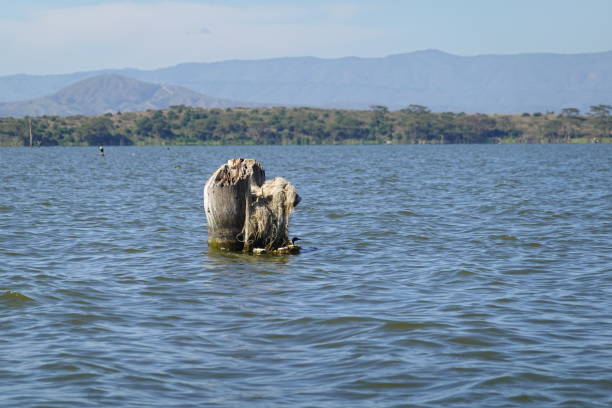
Bilharzia in East African Lakes: Where Swimming Is Unsafe
Bilharzia in East African lakes is an important health concern for travellers planning to swim, kayak or enjoy water activities in Uganda, Kenya, Tanzania, Rwanda and neighbouring African destinations. Although East Africa is famous for its beautiful freshwater lakes, not every attractive swimming location is safe.
Bilharzia, medically known as schistosomiasis, is a parasitic infection transmitted through contact with contaminated freshwater. The parasites can penetrate human skin while a person swims, wades or bathes in affected lakes and rivers.
Popular destinations such as Lake Victoria, Lake Tanganyika and Lake Malawi have documented transmission risks. Other freshwater bodies may also present a risk depending on local conditions.
Fortunately, travellers can greatly reduce exposure by avoiding untreated freshwater in affected regions and choosing safer alternatives.
This guide explains where bilharzia occurs, how infection happens, which activities present risks and when to seek medical testing.
What Is Bilharzia?
Bilharzia is an infection caused by parasitic worms belonging to the genus Schistosoma.
These parasites depend on certain freshwater snails to complete part of their life cycle.
When infected snails release microscopic larvae into freshwater, the larvae can enter human skin during contact with contaminated water.
Quick Facts About Bilharzia
| Feature | Description |
|---|---|
| Medical name | Schistosomiasis |
| Cause | Parasitic worms |
| Transmission | Skin contact with contaminated freshwater |
| Intermediate host | Certain freshwater snails |
| Main exposure | Swimming, bathing and wading |
| Common symptoms | Rash, fever or abdominal discomfort |
| Possible complications | Intestinal, liver and urinary disease |
| Main treatment | Praziquantel |
| Prevention | Avoid potentially contaminated freshwater |
| Vaccine | None currently available |
An infected person does not directly transmit bilharzia to another person through ordinary contact.
How Do People Catch Bilharzia?
Bilharzia transmission requires a particular environmental cycle.
Parasite eggs enter freshwater through urine or faeces from infected people.
The parasites develop inside suitable freshwater snails before microscopic larvae are released into the surrounding water.
These larvae can penetrate exposed human skin.
Activities That May Cause Infection
| Activity | Risk consideration |
|---|---|
| Swimming in freshwater | Possible exposure |
| Wading along lake shores | Possible exposure |
| Bathing in untreated lake water | Possible exposure |
| Walking barefoot through shallow water | Possible exposure |
| Kayaking | Risk if water contacts the skin |
| Fishing while standing in water | Possible exposure |
| Swimming in a properly maintained chlorinated pool | Generally safe |
| Swimming in seawater | No freshwater bilharzia transmission |
The water does not need to appear dirty for transmission to occur.
Which East African Lakes Have Bilharzia Risks?
Several major freshwater lakes in East Africa are associated with schistosomiasis transmission.
However, infection risk is not necessarily uniform across an entire lake.
Local snail populations, sanitation conditions and human infection patterns influence transmission.
East African Lake Safety Comparison
| Lake or freshwater area | Country | Swimming recommendation |
|---|---|---|
| Lake Victoria | Uganda, Kenya, Tanzania | Avoid untreated freshwater swimming |
| Lake Tanganyika | Tanzania, Burundi, DR Congo, Zambia | Avoid untreated freshwater swimming |
| Lake Malawi | Malawi, Mozambique, Tanzania | Avoid untreated freshwater swimming |
| Nile River and connected waters | Uganda and neighbouring countries | Avoid unprotected freshwater contact |
| Lake Bunyonyi | Uganda | Do not assume bilharzia-free; verify local risk |
| Lake Kivu | Rwanda, DR Congo | Seek current local health advice; do not assume safety |
| Smaller ponds and rivers | Across East Africa | Treat uncertain freshwater as potentially risky |
These recommendations reflect precautionary travel-health guidance, not a claim that every shoreline is infected.
Lake Victoria: Uganda, Kenya and Tanzania
Lake Victoria is Africa’s largest lake by surface area and an important tourism destination.
Travellers visit Entebbe, Jinja, Kisumu and Mwanza to enjoy lakeside accommodation, boat excursions and cultural experiences.
However, schistosomiasis transmission has been documented around the Lake Victoria basin.
Why Swimming Can Be Risky
Certain freshwater snails occupy suitable shallow-water habitats.
Where transmission occurs, entering the water can expose swimmers to infectious larvae.
A private beach or clear-looking shoreline is not proof of safety.
Visitors should enjoy boat cruises and lakeside scenery without entering untreated freshwater.
Lake Tanganyika: Tanzania and Neighbouring Countries
Lake Tanganyika is famous for its clear water, impressive depth and remarkable freshwater biodiversity.
Its shores attract visitors interested in fishing, boating and lakeside relaxation.
However, schistosomiasis has been documented in the lake region.
Important Precautions
Do not assume that deep or clear water makes a swimming location safe.
Risk depends on local transmission conditions, and some shallow shoreline areas may be particularly relevant.
Choose accommodation with a properly maintained swimming pool rather than relying on untreated lake swimming.
Lake Malawi: A Beautiful Lake With Health Risks
Lake Malawi is famous for its colourful cichlid fish and beautiful freshwater scenery.
Destinations such as Cape Maclear attract travellers interested in snorkelling, kayaking and beach holidays.
However, Lake Malawi is a well-recognised destination associated with schistosomiasis infections among travellers.
What Visitors Should Know
The presence of bilharzia cannot be judged by water clarity.
Historical claims that particular beaches are completely safe may become outdated.
Transmission conditions can change over time.
Travellers should avoid swimming or snorkelling in untreated freshwater and choose alternative activities.
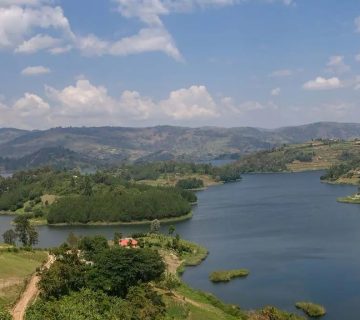
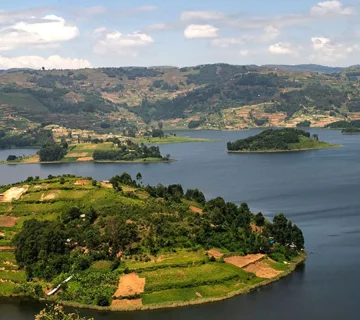
Is Lake Bunyonyi Safe for Swimming?
Lake Bunyonyi in southwestern Uganda is famous for its islands, green hills and peaceful atmosphere.
It is frequently described in tourism advertising as bilharzia-free.
However, such claims should not be treated as permanent medical guarantees.
Responsible Lake Bunyonyi Advice
Ask about recent local disease surveillance and public-health guidance.
Do not rely solely on accommodation advertisements.
If current, reliable evidence is unavailable, choose activities that avoid immersion.
Canoe excursions and lakeside relaxation remain enjoyable alternatives when conducted safely.
What About Lake Kivu in Rwanda?
Lake Kivu is popular for lakeside holidays, boat cruises and scenic relaxation.
Some swimming areas are promoted as relatively safe because of local environmental conditions.
However, travellers should not automatically assume that every freshwater location is free from bilharzia.
Local transmission assessments and current health guidance are more reliable than general tourism claims.
A maintained swimming pool provides a more predictable alternative.
Can You Catch Bilharzia From Kayaking?
Kayaking and canoeing do not necessarily involve full-body immersion.
However, splashes, falling into the water or entering shallow areas can create exposure.
Water Activity Comparison
| Activity | Safer approach |
|---|---|
| Boat cruise | Remain aboard |
| Canoeing | Avoid entering the water |
| Kayaking | Minimise exposure and accidental immersion |
| Paddleboarding | Avoid in potentially affected freshwater |
| Swimming | Choose a properly maintained pool |
| Snorkelling | Avoid untreated freshwater in endemic areas |
Life jackets protect against drowning but do not prevent bilharzia infection.
Does Bilharzia Affect Children?
Children are particularly vulnerable to frequent freshwater exposure.
They may spend longer periods swimming or playing near shallow shorelines.
Repeated untreated infections can contribute to anaemia and other health complications.
Family Safety Advice
Prevent children from entering potentially contaminated water.
Choose accommodation with suitable swimming facilities.
Explain why clear lake water is not necessarily safe.
Seek medical advice after suspected exposure.
Children should not receive preventive medication without appropriate clinical guidance.
What Are the Symptoms of Bilharzia?
Symptoms vary according to the parasite species and stage of infection.
Some infected travellers experience no obvious symptoms.
Possible Bilharzia Symptoms
| Symptom | Possible timing |
|---|---|
| Itchy skin or rash | Soon after exposure |
| Fever | Several weeks later |
| Muscle aches | During early illness |
| Fatigue | Variable |
| Abdominal discomfort | Later infection |
| Diarrhoea | Possible intestinal involvement |
| Blood in urine | Possible urinary involvement |
An early rash is not proof of schistosomiasis, and the absence of symptoms does not exclude infection.
What Happens if Bilharzia Is Not Treated?
Untreated schistosomiasis can cause complications, particularly after prolonged or repeated infection.
Depending on the parasite species, chronic disease may affect the intestines, liver or urinary system.
Possible Long-Term Effects
Intestinal inflammation may cause abdominal discomfort and bleeding.
Urinary schistosomiasis can lead to blood in the urine and bladder damage.
Certain chronic infections increase the risk of serious urinary complications.
Early diagnosis and appropriate treatment help prevent disease progression.
When Should Travellers Get Tested?
Testing is important after possible exposure to contaminated freshwater, even when symptoms are absent.
However, testing immediately after swimming may produce misleading negative results.
For travellers, antibody testing is commonly considered approximately 6–8 weeks after the last exposure.
Testing Methods
| Test | Purpose |
|---|---|
| Blood antibody test | Detects immune response |
| Urine examination | May identify parasite eggs |
| Stool examination | May identify parasite eggs |
| Additional laboratory tests | Selected clinical situations |
Test selection depends on travel history and the suspected infection.
Previously treated infections can complicate interpretation of antibody tests.
How Is Bilharzia Treated?
Praziquantel is the main medication used to treat schistosomiasis.
It is effective against the major species responsible for human infection.
However, treatment timing matters because the medicine works best against mature worms.
Important Treatment Advice
A clinician may recommend treatment after sufficient time has passed following exposure.
Treatment is commonly scheduled at least six to eight weeks after the last possible exposure.
Some patients require follow-up testing or additional treatment.
Do not take medication simply because you swam in a lake without consulting an appropriate healthcare professional.
Can You Prevent Bilharzia With Medication?
There is currently no vaccine against schistosomiasis.
Routine preventive medication before swimming is not a reliable substitute for avoiding exposure.
Effective Prevention Measures
Avoid swimming in potentially affected freshwater.
Use properly maintained swimming pools.
Choose seawater swimming where conditions are safe.
Avoid bathing in untreated lake or river water.
Follow current local public-health recommendations.
Do not rely on quick towel-drying, insect repellent or waterproof creams to prevent infection.
Is Sea Swimming Safer?
Bilharzia parasites responsible for human schistosomiasis are associated with freshwater environments.
They do not transmit through ordinary seawater.
Therefore, coastal destinations such as Zanzibar, Diani Beach and Watamu do not present the same freshwater bilharzia risk when swimming in the ocean.
However, marine swimming has separate safety considerations, including currents, tides and dangerous marine animals.
Frequently Asked Questions
Can You Catch Bilharzia From Drinking Lake Water?
Infection normally occurs when larvae penetrate the skin or exposed mucous membranes, not through swallowing the parasites. Untreated lake water can still carry other dangerous pathogens.
Is Swimming for Five Minutes Safe?
No reliable minimum exposure period guarantees safety. Brief contact with contaminated freshwater can result in infection.
Can You Tell Whether a Lake Has Bilharzia?
No. Infectious larvae are microscopic, and clean-looking water can still present a risk.
Should You See a Doctor After Swimming?
Yes, discuss potential exposure with a travel-health professional, particularly after swimming in a known transmission area. Seek prompt assessment for fever or other concerning symptoms.
Enjoy East African Lakes Safely
East Africa’s lakes provide beautiful landscapes, wildlife experiences and memorable holidays.
However, bilharzia remains an important freshwater health concern.
Lake Victoria, Lake Tanganyika and Lake Malawi have documented transmission risks, while other lakes require careful local assessment.
Visitors should avoid assuming that clear water, attractive beaches or tourism advertisements guarantee safe swimming.
The safest approach is to avoid untreated freshwater swimming in areas where bilharzia occurs and choose properly maintained pools or suitable marine beaches instead.
With sensible precautions, travellers can enjoy East Africa’s lakes while protecting their health.





No comment