
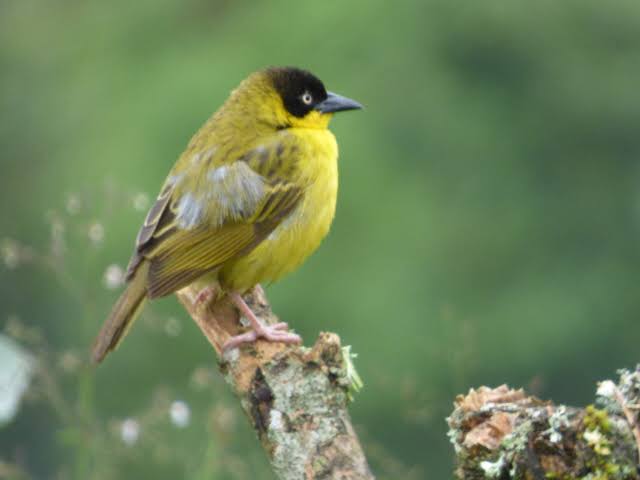
Albertine Rift Endemics: A Cross-Border Birding Checklist
The Albertine Rift is one of Africa’s amazing birding areas, stretching through a chain of mountains, forests, lakes, valleys, and highland places across Uganda, Rwanda, Burundi, and the eastern part of the Democratic Republic of Congo. For anyone who loves birds, this area gives a chance to look for birds that live only in this part of the world. The experience becomes even better when you think about the Albertine Rift as one area that is formed by forests, height, weather, and history.
An Albertine Rift Endemics: A Cross-Border Birding Checklist can help turn a trip around the region into a search for some of Africa’s most valued birds. By counting birds at each place, you can create a personal list of the birds that are unique to the area and almost unique. Each forest has its chances, and every change in height can bring another special bird.
Understanding the Albertine Rift Birding Area
The Albertine Rift is the part of the East African Rift System. Its mountains rise quickly from areas making special places where birds developed over many years. This leads to a lot of birds that live in small areas especially in the highland forests.
Uganda offers some of the ways to get into this amazing area. Bwindi Impenetrable National Park, Mgahinga Gorilla National Park and forests near the Rwenzori Mountains give chances to explore highland bird places. Rwanda has places such as Nyungwe National Park while the forests in eastern Congo and Burundi are also part of the big Albertine Rift area.
The lines between countries might separate places. The birds do not see them. A bird seen in Bwindi might also be found in Nyungwe or a different forest more to the west. This makes birding across borders very interesting because you can see how connected places help the same group of birds live in national parks and places where nature is protected.
Why Endemic Birds Are So Important
An endemic bird lives in a place that’s naturally very small. Some of the Albertine Rift birds live in small areas making every time you see one feel special. These birds are connected to types of forests, heights and environmental conditions.
Some of the birds that make this area well known are the African Green Broadbill, Shelley’s Crimsonwing, Grauer’s Warbler, Handsome Francolin, Rwenzori Turaco, Red-throated Alethe, Kivu Ground-Thrush and several special sunbirds and greenbuls. Some are hard to find while others might show themselves through their sounds before you see them in the trees.
The challenge is part of the fun. You might spend an hour walking through thick plants before seeing a quick look, at a bird moving between branches. A good local guide can help a lot by knowing the sounds, where the birds eat and when they move around during the year.
Building Your Albertine Rift Birding Checklist
When you make your Albertine Rift Endemics checklist you should include more than the names of the birds. You should write down the country where you saw the bird, the forest, how high up it was what kind of habitat it was in the date and what was happening when you saw it. It is also an idea to write down things about what the bird was doing because this can be really nice to remember later especially if you see the same bird again in a different place.
You can start by writing down the birds you want to see the most and then group them by the kind of habitat they live in. For example you can make one group for birds that live in montane forests another group for birds that live in bamboo and another group for birds that live up. This helps you figure out where you are most likely to see the birds you want to see.
You can also organize your list by country. For example you could start in Uganda then go to Rwanda and compare what you saw in Bwindi and Nyungwe. Even if you see the bird in both countries it can be a really different experience because the forests, trails, weather and elevation are all different.
Making a list that includes countries also helps you be patient. If you do not see a bird in one forest it does not mean that your trip was a failure. You might be able to see it in a place under different conditions.
Uganda’s Forest Birding Highlights
Uganda is a place to start your Albertine Rift birding trip because it has parks that are easy to get to and it has a lot of different kinds of habitats. Bwindi is especially good for seeing birds that live in montane forests. The terrain is steep. The vegetation is dense which makes it hard to walk but it is also really rewarding.
If you go birding in Bwindi you might see the Rwenzori Turaco, the Regal Sunbird, the Short-tailed Warbler, the Kivu Ground-Thrush the African Green Broadbill and other birds that live in the forest. Some of these birds are hard to see so you have to listen because even if they are close the dense foliage can hide them.
Mgahinga is another place to go birding in the highlands with bamboo and montane habitats that support birds that live in the Virunga mountain range. The Rwenzori Mountains are also really interesting because as you go higher the vegetation changes and there are kinds of bird communities.
Rwanda’s Nyungwe Forest
nyungwe forest national park is one of the important places to go birding in Rwanda and it is a must-see for anyone making an Albertine Rift Endemics checklist. The forest covers a mountainous area with lots of trails and different kinds of habitats.
Birding in Nyungwe can be really rewarding early in the morning when the birds are most active. The sunbirds fly around the flowering plants the turacos call from the canopy and the mixed-species flocks move through the trees. If you listen carefully you can hear birds that you cannot see.
The canopy walk is also really cool because you can see the birds from a perspective. From up you can watch the birds moving through the layers of vegetation that are hard to see from the forest trails. You have to be patient though because some birds only appear for a time.
Burundi and Eastern Congo
Burundi is another part of the Albertine Rift. It has some good birding spots although it can be hard to get to some of them. The forests in the highlands have some birds that are found in this area. If you are planning a trip you should always check what is going on locally and get some advice.
Eastern Democratic Republic of Congo has some of the important Albertine Rift habitats with areas like Kahuzi-Biega and other forest landscapes that have a huge amount of biodiversity. However it can be hard to travel so you should get some up-to-date information about safety and access before you plan your trip.
These places remind you that taking care of the environment does not stop at the border of a country. The forests, mountains and watersheds are all connected, even if they are, in countries.
A Practical Way to Plan Your Route
The Albertine Rift Endemics: A Cross-Border Birding Checklist is a tool to help you plan your trip. You should use the Albertine Rift Endemics: A Cross-Border Birding Checklist to make a plan. If you try to visit every site in one trip you will be very tired. It is better to choose two or three forest places and spend enough time in each one.
If you have two weeks you can go to Bwindi and Mgahinga in Uganda and Nyungwe in Rwanda. If you have time you can also go to the Rwenzori Mountains or other forest places. You should get up early. Start birding as soon as possible. The birds in the forest are usually most active in the morning. Do not forget to bring walking shoes, a raincoat, binoculars, a book about birds, water and a notebook. The weather in the mountains can change quickly so you need to be prepared.
Making Every Sighting Count
Birding in the Albertine Rift is not just about seeing birds. It is also about watching them and learning about them. The Albertine Rift Endemics: A Cross-Border Birding Checklist is more useful if you write down where and how you saw each bird. You should write down if you heard the bird first or if you saw it eating or if you saw it with birds.
Taking pictures can be helpful. You do not need a perfect picture to make the sighting special. Some of the moments can be very short. Learning the sounds of birds can be very helpful because often you hear a bird before you see it.
You should always respect the forest and the birds. Stay on the paths do not disturb the birds follow the rules and give the birds space. If you are a birder you can help protect the forest and the birds.
A Journey Measured in Birds and Forests
The Albertine Rift Endemics: A Cross-Border Birding Checklist can start as a list but it can become a special memory. Each bird you see represents a place, a special morning, a special path, a special sound and a special moment.
The best part of the trip is seeing how Uganda, Rwanda, Burundi and eastern Congo are all connected. You start to understand that taking care of the environment is bigger than one country. The same mountains and forests that made these birds special are still helping them survive.
For people who love birds the Albertine Rift is a place to find rare and special birds. For people who’re new to birding it is a great place to learn about patience and curiosity.
Keep the Albertine Rift Endemics: A Cross-Border Birding Checklist with you all the time. Also be open to new discoveries. You might see a bird you did not plan to see. It might become your favorite memory. You might hear a call. Follow it to a new path. You might see a flash of color in the forest. It might become a memory that lasts forever.
The Albertine Rift is a place for birders because it rewards people who take their time listen carefully and keep looking. Every path has the possibility of a discovery and every new bird is a new chapter, in a great adventure.
