
Rwenzori Central Circuit vs Kilembe Trail: How to choose
The Rwenzori Mountains offer some of the most challenging and rewarding trekking experiences in East Africa. Located in western Uganda along the border with the Democratic Republic of the Congo, this mountain range is famous for its glaciers, alpine lakes, deep valleys, waterfalls and unusual high-altitude vegetation. Its highest point, Margherita Peak on Mount Stanley, stands at 5,109 metres above sea level.
If you are planning to climb the Rwenzori Mountains, two main routes lead towards Margherita Peak: the Central Circuit and the Kilembe Trail. Both provide access to the high mountain environment, but they follow different valleys, use separate camp networks and offer different trekking experiences.
The Central Circuit is the historic and more established route. It begins at Nyakalengija and passes through the Mubuku and Bujuku valleys, with notable features such as Bigo Bog, Lake Bujuku and Scott-Elliot Pass. The Kilembe Trail approaches from the southern side of the range, beginning near Kilembe and passing through the Nyamwamba Valley, Mutinda area and several high-altitude camps.
Choosing between them depends on your fitness, available time, preferred scenery, accommodation expectations and summit ambitions. The Central Circuit is a strong choice for trekkers interested in the classic Rwenzori experience. Kilembe appeals to hikers who want a different approach, dramatic valleys and a longer expedition with its own mountain camp network.
Understanding the two Rwenzori routes
The Central Circuit and Kilembe Trail are separate trekking systems. They have different starting points, management arrangements, campsites and logistical requirements. You should arrange your expedition through the organisation responsible for your chosen route rather than assuming that guides, permits and accommodation can be transferred between them.
The Central Circuit starts at Nyakalengija, near the northern side of the mountain range. It follows an established route through forest, bamboo vegetation, giant heather zones and high-altitude bogs. The trail eventually reaches the central alpine area around Lake Bujuku and Elena Hut, which serves as the usual staging point for the Margherita summit attempt.
The Kilembe Trail starts near Kilembe town, west of Kasese. It follows the southern approach through the Nyamwamba Valley and climbs through a series of forest and alpine environments. Its route includes Mutinda, Bugata, Hunwick’s and Margherita camps, depending on the itinerary.
Both routes reach the same mountain range and can support an expedition to Margherita Peak. However, the journey to the summit is different. You should not book one route expecting to use the other route’s camps or trailhead without a properly arranged traverse.
Central Circuit: The classic Rwenzori trekking experience
The Central Circuit is the traditional trekking route through the Rwenzori Mountains. It has a long history of mountain exploration and an established sequence of huts and camps that support multi-day expeditions.
The route begins at Nyakalengija, where trekkers register and meet their guides and support team before entering the national park. The lower section passes through montane forest, where the trail can be wet, muddy and shaded by dense vegetation.
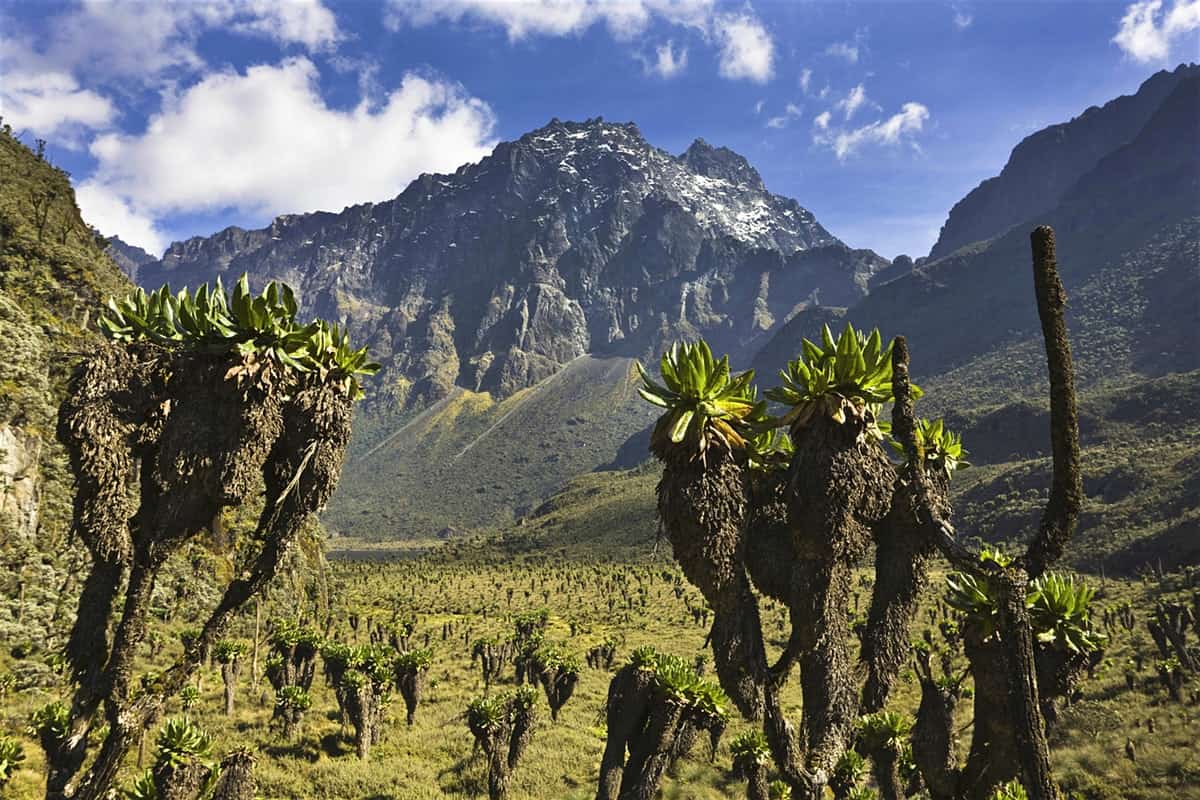
As you gain altitude, the vegetation changes. Bamboo and montane forest give way to giant heather, open moorland and the distinctive high-altitude plants found in the Rwenzori range.
One of the route’s defining features is the Bujuku Valley. This high mountain landscape contains boggy ground, giant lobelias and impressive views of the surrounding peaks. The valley also provides access to Lake Bujuku, one of the best-known alpine lakes in the Rwenzori.
The route generally uses a sequence of mountain huts, including Nyabitaba, John Matte, Bujuku, Elena, Kitandara and Guy Yeoman. The exact camp sequence depends on the direction of travel and whether your itinerary includes a summit attempt.
What makes the Central Circuit special?
The Central Circuit offers a classic introduction to the Rwenzori’s best-known landscapes. Bigo Bog is one of its most distinctive sections, with wetland vegetation, boardwalks in some areas and the unusual appearance of giant lobelias growing across the high-altitude terrain.
Lake Bujuku is another major attraction. Surrounded by steep mountain slopes, the lake sits within a dramatic alpine valley and provides a memorable stop on the approach to the higher camps.
The route also crosses Scott-Elliot Pass, which provides access between different sections of the central mountain area. Weather conditions can affect visibility, but clear periods offer views of the surrounding peaks and valleys.
For photographers, the Central Circuit provides opportunities to capture alpine lakes, mountain vegetation, rocky ridges and mist-covered valleys. The changing conditions can produce very different scenery within a single day.
How long does the Central Circuit take?
A standard Margherita Peak expedition commonly takes around seven to nine days, depending on the operator’s schedule, acclimatisation plan and summit arrangements. Shorter itineraries may be offered, but reducing the number of days can make an already demanding expedition more difficult.
Some Central Circuit programmes focus on completing the circuit without climbing Margherita Peak. These shorter trips can take approximately five to seven days, depending on the itinerary and turnaround point.
If your main objective is the summit, select a programme that includes sufficient time for altitude adjustment, the technical summit approach and possible weather delays.
Who should choose the Central Circuit?
The Central Circuit suits trekkers who want to experience the historic Rwenzori route and visit its famous alpine landscapes. It is particularly attractive to people interested in Bujuku Valley, Lake Bujuku, Bigo Bog and the traditional network of mountain huts.
It can also suit first-time Rwenzori trekkers who want an established route with a familiar camp sequence. However, this does not mean the Central Circuit is easy. The muddy terrain, steep sections, altitude and long walking days demand good physical preparation.
Kilembe Trail: The southern approach through dramatic valleys
The Kilembe Trail approaches the Rwenzori Mountains from the southern side, beginning near Kilembe town outside Kasese. It follows a different route through the mountain’s forested slopes and high-altitude valleys.
The trail is associated with Rwenzori Trekking Services and uses its own network of camps. It offers a different perspective of the mountain compared with the Central Circuit, particularly through the Nyamwamba Valley and the higher southern slopes.
The lower sections pass through forest and areas with streams and waterfalls. As you climb, the vegetation changes towards bamboo, giant heather and open alpine moorland.
The Kilembe route is known for its varied terrain and demanding uphill sections. Some parts involve steep climbs through wet vegetation and uneven ground. The trail also crosses high passes, including Bamwanjara Pass and Oliver’s Pass on relevant itineraries.
The mountain camps provide overnight stops as you progress towards the higher elevations. Common camps include Kalalama, Mutinda, Bugata, Hunwick’s, Margherita and Kiharo, although the exact sequence depends on the programme.
What makes the Kilembe Trail special?
The Kilembe Trail provides a different mountain experience, with dramatic views across the southern valleys and access to landscapes that are not part of the standard Central Circuit approach.
Mutinda Valley is one of the notable areas along the route. Its distinctive vegetation and surrounding mountain slopes create a varied landscape for hikers and photographers.
The route also offers views of the high mountain lakes, including the Kitandara area on itineraries that pass through the relevant camps. The lakes, rocky ridges and surrounding peaks create an impressive alpine setting.
Another attraction is the route’s generally quieter character compared with the more established Central Circuit. Visitor numbers vary by season and operator schedules, but Kilembe can appeal to people who prefer a less familiar approach.
How long does the Kilembe Trail take?
A full Kilembe expedition to Margherita Peak commonly takes around eight to nine days, although operators may offer different schedules. Some itineraries take longer to provide additional acclimatisation time or include other mountain objectives.
The route is longer than the most direct Central Circuit summit itinerary in many standard comparisons. However, the exact number of days depends on the programme, camps and summit arrangements.
You should ask your operator for a day-by-day itinerary before booking. Confirm the walking hours, daily elevation changes, highest overnight camp and the planned summit day.
Who should choose the Kilembe Trail?
Kilembe is suitable for trekkers who want a different approach to the Rwenzori and have enough time for a longer expedition. It is attractive to people who enjoy varied mountain landscapes, high passes and a quieter trekking environment.
It can also suit returning visitors who have already experienced the Central Circuit and want to explore another side of the range.
The route is physically demanding, especially on steep sections and during long days at altitude. Good preparation is essential, even if you have previous experience on other East African mountains.
Central Circuit vs Kilembe: Main differences
The most useful way to compare the routes is to consider their starting points, scenery, camps, duration and overall trekking demands.
Central Circuit
Starting point: Nyakalengija, near Kasese.
Management: Rwenzori Mountaineering Services.
Typical summit duration: Approximately seven to nine days.
Main landscapes: Mubuku Valley, Bujuku Valley, Bigo Bog and Lake Bujuku.
Notable camps: Nyabitaba, John Matte, Bujuku, Elena, Kitandara and Guy Yeoman.
Main attraction: The classic Rwenzori circuit and its established alpine landmarks.
Best suited to: Trekkers who want the traditional route and a well-established camp sequence.
Kilembe Trail
Starting point: Kilembe, near Kasese.
Management: Rwenzori Trekking Services.
Typical summit duration: Approximately eight to nine days, depending on the itinerary.
Main landscapes: Nyamwamba Valley, Mutinda area, high-altitude moorland and southern mountain slopes.
Notable camps: Kalalama, Mutinda, Bugata, Hunwick’s, Margherita and Kiharo.
Main attraction: The southern approach, varied valley scenery and a different sequence of high mountain camps.
Best suited to: Trekkers who want a longer alternative with a different perspective of the Rwenzori.
These are general planning ranges, not guaranteed schedules. Confirm the current route, camp sequence and duration directly with the organisation managing your trek.
Which route is more difficult?
Neither route should be treated as an easy climb. Both involve steep mountain terrain, muddy paths, high-altitude exposure and several consecutive days of walking.
The Central Circuit is often considered the more straightforward option for first-time Rwenzori trekkers because it has a well-established trail and a familiar hut system. However, sections through Bigo Bog and the climb towards Elena Hut can be physically demanding.
Kilembe is often regarded as more strenuous overall because of its longer approach and challenging sections through the southern valleys. The steep terrain and high passes require good endurance and confidence on uneven ground.
The difference is not simply about which route has the steepest climb. Your experience also depends on daily walking distances, altitude gain, weather, trail conditions and how much time your itinerary allows for recovery.
A fit hiker may find the Central Circuit’s boggy sections more frustrating than the steeper climbs on Kilembe. Another person may prefer the Central Circuit’s established huts and find the longer Kilembe approach tiring.
For beginners, the Central Circuit is often the more practical starting point, provided you are physically prepared and choose a suitable itinerary. Kilembe is worth considering if you have previous multi-day hiking experience and want a different challenge.
Which route has better scenery?
Both routes offer excellent scenery, but they are known for different features.
The Central Circuit is particularly attractive for its classic alpine landscapes. Bigo Bog, Lake Bujuku and the surrounding mountain valleys are among the most recognised features of the Rwenzori. The route also provides access to dramatic views around Scott-Elliot Pass and the high mountain peaks.
Kilembe offers a strong combination of forest, waterfalls, steep valleys, high passes and alpine vegetation. Its southern approach gives trekkers a different perspective of the mountain range, and the changing landscapes make the journey rewarding for photographers.
If your priority is seeing the famous Bujuku Valley and Lake Bujuku, choose the Central Circuit. If you prefer the southern valleys, Mutinda area and a less familiar approach, Kilembe is a strong option.
There is no objective winner for scenery. Your preference depends on whether you value the established central landmarks or the varied southern approach.
Which route has better accommodation?
Both routes use mountain accommodation rather than conventional hotels. You should expect basic facilities, cold nights and limited comfort compared with lodges at the foot of the mountain.
The Central Circuit uses an established chain of mountain huts. These provide shelter and sleeping areas at different stages of the trek. Conditions vary between camps, and you should not expect luxury facilities or hotel-style services.
Kilembe also has a network of mountain camps and huts managed through its trekking arrangements. Its facilities are generally newer than the historic Central Circuit hut network, although the standard of accommodation varies between locations.
Do not assume that newer facilities mean luxury accommodation. Both routes operate in a remote high-altitude environment where weather, maintenance and available supplies affect conditions.
Before booking, ask what your package includes. Confirm whether sleeping mats, bedding, meals, drinking water, cooking equipment and porter services are provided. You should also find out whether you need to carry a sleeping bag and what type of accommodation is available at each overnight stop.
Can both routes reach Margherita Peak?
Yes. Both the Central Circuit and Kilembe Trail can be used for an expedition to Margherita Peak, the highest point of the Rwenzori Mountains at 5,109 metres.
However, the final approach is different. Central Circuit trekkers usually stage their summit attempt from Elena Hut, while Kilembe trekkers generally use Margherita Camp.
Reaching Margherita is more demanding than simply walking to a high mountain viewpoint. The summit approach involves glaciated terrain, exposed sections and technical mountaineering equipment. Depending on current glacier conditions and the route used, climbers may need crampons, ice axes, ropes and other specialist equipment.
You should climb with qualified mountain guides who understand the current glacier conditions and technical requirements. Do not attempt the summit independently or assume that ordinary hiking boots are sufficient for the final section.
The weather can also affect summit plans. Poor visibility, strong winds, snow and ice conditions may require changes to the schedule or cancellation of the summit attempt.
A good trekking itinerary should allow enough time for acclimatisation and some flexibility in case conditions prevent a planned summit day.
Which route is better for acclimatisation?
Acclimatisation is essential when climbing the Rwenzori because both routes reach elevations where altitude-related illness can occur.
The Central Circuit and Kilembe Trail use different camp sequences and elevation profiles. Some Kilembe itineraries provide a longer approach and additional time at intermediate elevations. This can help trekkers adjust gradually, depending on the actual schedule.
However, a longer route does not automatically guarantee better acclimatisation. The daily elevation gain, sleeping altitude, rest opportunities and individual response to reduced oxygen availability all matter.
Altitude sickness can affect people who are physically fit. Symptoms may include headache, nausea, dizziness, unusual fatigue and loss of appetite. Report symptoms to your guide immediately.
Severe headache, confusion, difficulty walking straight or breathlessness at rest require urgent medical attention and descent. Never continue climbing simply because you have already paid for the expedition or reached a particular camp.
If you have concerns about altitude or a medical condition, seek advice from a qualified medical professional before booking.
Which route is better for wildlife and birdwatching?
The Rwenzori Mountains support different wildlife communities across their forest, bamboo and alpine habitats. Both routes pass through areas where you may observe forest birds and mountain wildlife.
The lower forest sections are generally more productive for birdwatching. You may encounter turacos, sunbirds, flycatchers, barbets and other forest species. Blue monkeys and black-and-white colobus monkeys may also be seen in suitable forest habitats.
The Central Circuit provides access to the forest around Nyakalengija and the higher vegetation zones along the Mubuku Valley. Kilembe offers opportunities to explore the southern forest and valley habitats.
The higher you climb, the fewer forest birds and mammals you are likely to encounter. The upper moorland is more notable for its unusual vegetation and mountain scenery than for large numbers of wildlife.
If birdwatching is a major priority, consider arranging an additional forest walk at a lower elevation rather than relying entirely on the summit expedition. A slower pace also gives you more opportunities to observe wildlife without delaying the trekking schedule.
Best time to trek the Rwenzori Mountains
The Rwenzori Mountains receive substantial rainfall, and weather conditions can change quickly throughout the year. Even during relatively dry periods, you should expect rain, mist, cold temperatures and wet ground.
The main drier periods are generally June to August and December to February. These months are often preferred for multi-day trekking because trail conditions may be more manageable.
The wetter periods commonly occur around March to May and September to November, although local conditions vary. Heavy rainfall can make trails slippery, increase water levels and reduce visibility.
There is no completely dry season in the Rwenzori. You should carry waterproof clothing, suitable hiking boots and warm layers regardless of your travel dates.
The best time for your expedition also depends on your priorities. If you want a better chance of manageable trail conditions, consider the drier months. If your schedule requires travelling during a wetter period, arrange a flexible itinerary and prepare for muddy paths.
How to prepare for either route
Physical preparation is important because both routes involve several consecutive days of hiking. You should train for endurance, steep climbs, descents and walking with a backpack.
Start with regular walks of 30 to 60 minutes and gradually increase your distance. Include hill walking, stair climbing and longer weekend hikes. Aim to become comfortable walking for four to six hours on uneven terrain before your expedition.
Strength training can improve your ability to handle steep paths. Squats, lunges, step-ups, calf raises and controlled step-downs help prepare your legs for uphill and downhill sections.
Practise walking in your trekking boots before travelling. The Rwenzori trails can be wet and muddy, so comfortable waterproof footwear with good grip is essential. Gaiters can help prevent mud and water from entering your boots.
Your equipment should include waterproof trousers and a jacket, warm clothing, gloves, a hat, a headlamp, a reusable water bottle, personal medication and a suitable sleeping bag. A trekking pole can also help with balance on muddy and uneven ground.
You should confirm the equipment supplied by your operator before purchasing or hiring additional items. Some packages include technical summit equipment, while others require specific arrangements.
How much does it cost to climb the Rwenzori?
The cost depends on your route, number of trekking days, group size, accommodation arrangements and the services included in your package.
A summit expedition generally costs more than a short forest walk because it requires guides, porters, mountain accommodation, meals, park-related charges and additional logistical support.
The Central Circuit and Kilembe Trail may have different package prices because they are managed separately and use different camp networks. Kilembe can cost more in some standard comparisons because of its longer itinerary, but you should compare complete quotations rather than assume one route is always more expensive.
Ask whether the price includes park entrance fees, guide services, porters, accommodation, meals, camping or hut equipment, technical climbing equipment and transport to the trailhead.
Also confirm what is excluded. International flights, accommodation in Kasese, personal equipment, tips, travel insurance and emergency evacuation arrangements may require separate payment.
If you are travelling in a group, ask whether the operator offers a shared expedition rate. Private treks can provide more flexibility, but they may cost more per person.
Avoid choosing a package based on the lowest advertised price alone. Check the number of trekking days, guide arrangements, safety procedures and equipment provided.
Can you combine the Central Circuit and Kilembe Trail?
The two routes have separate management arrangements and camp systems, so you cannot simply move between them as though they were one continuous trail.
Some experienced trekkers may arrange a traverse or a combined itinerary with the appropriate operators and permissions. Such arrangements require advance planning, confirmed access and coordination of guides, porters, accommodation and transport.
You should never assume that a standard Central Circuit booking includes access to Kilembe camps, or that a Kilembe package allows you to exit through the Central Circuit trailhead.
If you want to experience both sides of the mountain, discuss the possibility with the responsible trekking organisations before booking. A combined expedition may require additional days and a different logistical plan.
Combining the Rwenzori with other western Uganda destinations
A Rwenzori expedition can form part of a longer trip through western Uganda. Kasese is a useful base for accessing the mountain, and the surrounding region has several attractions worth visiting before or after your trek.
Queen Elizabeth National Park is one of the most popular additions. Visitors can enjoy game drives in the Kasenyi Plains, boat trips along the Kazinga Channel and opportunities to see elephants, buffaloes, hippos, lions and numerous bird species.
You can also visit the scenic crater lakes around Kasese and Fort Portal. These landscapes provide a relaxing contrast to several days of demanding mountain trekking.
For visitors with additional time, Kibale National Park offers chimpanzee trekking and forest walks. The combination of the Rwenzori Mountains, Queen Elizabeth National Park and Kibale can create a varied western Uganda itinerary.
Allow enough recovery time after your mountain expedition before arranging another physically demanding activity. Your legs may need a day or two to recover after several days of climbing and descending.
Final recommendation: Central Circuit vs Kilembe Trail
The Central Circuit and Kilembe Trail both offer access to the remarkable high-altitude landscapes of the Rwenzori Mountains. Your decision should depend on the type of trekking experience you want.
Choose the Central Circuit if you want the historic route, established mountain huts and famous landmarks such as Bigo Bog and Lake Bujuku. It is a practical choice for first-time Rwenzori trekkers who want a well-established approach to Margherita Peak.
Choose the Kilembe Trail if you want to explore the southern side of the mountain, experience the Nyamwamba Valley and follow a different sequence of high-altitude camps. It is particularly attractive to experienced hikers and returning visitors who want a different Rwenzori expedition.
For most first-time visitors whose priority is the classic Rwenzori experience, the Central Circuit is a strong starting point. If you have more time and prefer the southern approach, Kilembe offers an equally rewarding mountain adventure with its own distinctive scenery.
Whichever route you choose, give yourself enough time to prepare, select a suitable summit itinerary and travel with an experienced mountain team. The Rwenzori demands patience, fitness and careful planning, but its forests, alpine lakes, glaciers and extraordinary mountain landscapes make the expedition a memorable experience.

No comment