
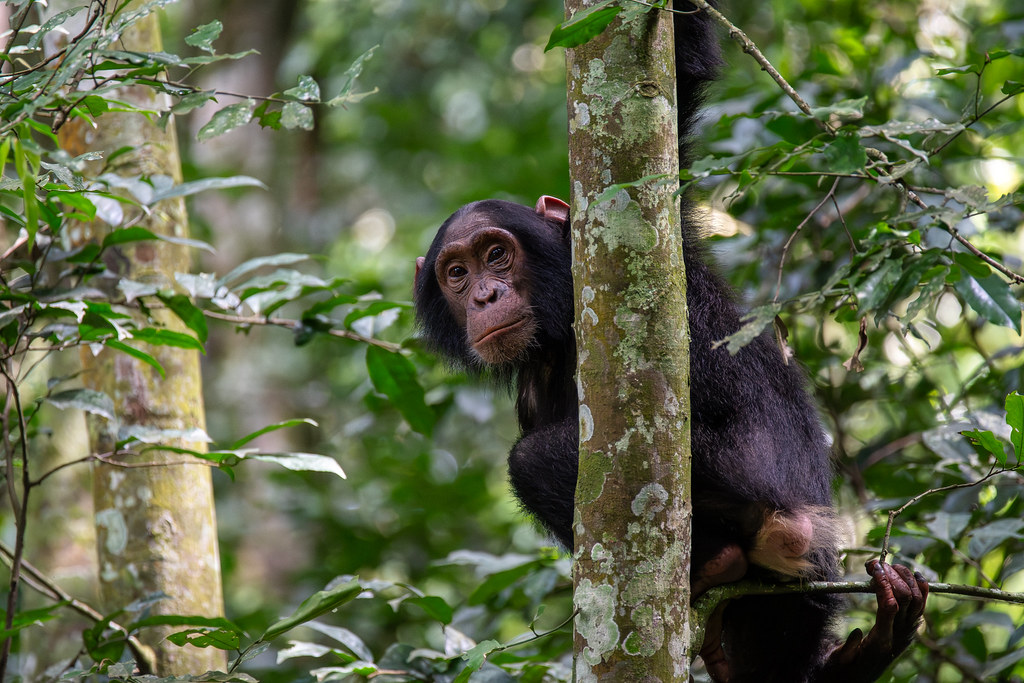
Kibale vs Budongo vs Kyambura for Chimpanzee Trekking
Chimpanzee trekking is one of the most rewarding wildlife experiences in Uganda, allowing visitors to enter tropical forests with experienced guides and observe wild chimpanzees in their natural habitat. Uganda has several destinations for this activity, but Kibale National Park, Budongo Forest, and Kyambura Gorge are among the most commonly considered options. Each offers a different experience in terms of chimpanzee sightings, forest scenery, trekking difficulty, permit costs, and accessibility.
Choosing between Kibale, Budongo, and Kyambura depends on what you want from your trip. Kibale is widely regarded as the leading destination for travellers whose main priority is seeing chimpanzees. Budongo is a practical choice for visitors exploring Murchison Falls National Park, while Kyambura offers a distinctive trekking experience through a forested gorge within Queen Elizabeth National Park.
For travellers with limited time, the location of each forest can be just as important as the wildlife experience. Driving across Uganda to reach a particular chimpanzee community may add unnecessary travel hours if another suitable destination is already on your itinerary. Understanding the differences will help you choose the best place for your schedule, budget, and interests.
Kibale National Park: Best for Chimpanzee Trekking
Kibale National Park is one of Uganda’s most important primate destinations. Located near Fort Portal in western Uganda, the park protects a large area of tropical forest that supports chimpanzees, monkeys, forest birds, and other wildlife. Its high primate diversity and established chimpanzee tracking programme make it a leading choice for visitors who want to experience chimpanzees in the wild.
Kibale is particularly attractive because several habituated chimpanzee communities live within the forest. Habituation involves gradually helping wild chimpanzees become accustomed to the presence of researchers and authorised visitors without removing them from their natural environment. This allows visitors to observe their daily activities under the guidance of trained trackers and rangers.
A standard chimpanzee trek begins with a briefing before visitors enter the forest. Rangers use information about recent chimpanzee movements, vocalisations, feeding locations, and nesting areas to guide the search. The walk may take a relatively short time or continue for several hours, depending on where the chimpanzees are located.
Once the group finds the chimpanzees, visitors are generally allowed up to one hour with the community under the applicable tracking rules. During this time, you may see individuals feeding, grooming, communicating, climbing trees, or moving through the forest. Chimpanzees are active animals, so the encounter can involve following them along forest trails rather than remaining in one place.
Kibale also offers opportunities to see other primates, including red colobus monkeys, black-and-white colobus monkeys, and grey-cheeked mangabeys. The nearby Bigodi Wetland Sanctuary provides another option for guided nature walks and birdwatching.
The main disadvantage of Kibale is the cost compared with some alternative chimpanzee trekking destinations. It is also a popular attraction, so advance permit arrangements are important, particularly during busy travel periods.
For first-time visitors who consider chimpanzees a major reason for travelling to Uganda, Kibale is generally the strongest choice because of its established tracking programme and high likelihood of sightings.
Budongo Forest: Best for a Murchison Falls Safari
Budongo Forest is located in northwestern Uganda within the wider Murchison Falls conservation landscape. It is known for its extensive tropical forest, large mahogany trees, rich birdlife, and chimpanzee tracking opportunities. The Kaniyo Pabidi area is a principal location for visitors participating in chimpanzee tracking.
The forest provides a different experience from Kibale. Its tall trees and established forest trails create opportunities to observe chimpanzees in a mature woodland environment. Visitors may also encounter other primates and a variety of forest birds during their walk.
Budongo is especially useful for travellers who are already planning to visit Murchison Falls National Park. Instead of travelling south to Kibale solely for chimpanzees, you can include Budongo within a northern Uganda itinerary. This can reduce unnecessary driving and allow more time for wildlife viewing.
A typical Murchison Falls itinerary may include game drives in search of elephants, giraffes, buffaloes, lions, and antelope. Visitors can also take a boat trip along the Nile to observe hippos, crocodiles, waterbirds, and wildlife along the riverbanks. A chimpanzee trek in Budongo adds a forest experience to this combination.
The tracking experience follows the same basic principle as Kibale. Visitors receive a briefing, enter the forest with guides, and search for a habituated chimpanzee community. The length of the walk depends on the animals’ movements and the conditions on the day.
Budongo can be a good alternative for travellers seeking a quieter forest experience, although visitor numbers and sightings vary. It is important to understand that fewer visitors do not automatically mean better chimpanzee encounters, and sightings cannot be guaranteed.
The main advantage of Budongo is its location. If your safari focuses on Murchison Falls, tracking chimpanzees here is often more practical than making a separate journey to Kibale. If chimpanzees are your primary objective and you have flexibility in your itinerary, compare the available tracking programmes and recent sighting information before deciding.
Kyambura Gorge: Best for Scenery and Adventure
Kyambura Gorge lies within Queen Elizabeth National Park in western Uganda. Unlike the extensive forest landscapes of Kibale and Budongo, Kyambura is a deep gorge cutting through open savannah. A river runs through its forested interior, creating a habitat that supports chimpanzees, monkeys, birds, and other wildlife.
The gorge is often called the Valley of Apes. Its distinctive setting makes it one of Uganda’s most unusual places for chimpanzee trekking. Visitors descend from the surrounding landscape into a sheltered forest where the atmosphere changes from open grassland to dense vegetation and shaded trails.
The trek can be physically demanding because visitors may need to negotiate steep slopes, uneven ground, muddy paths, and changes in elevation. The difficulty depends on weather conditions and the route used during the excursion. Travellers with mobility concerns should discuss the terrain with their operator before booking.
Kyambura is home to a relatively small, habituated chimpanzee community. Chimpanzees may move through different parts of the gorge, and locating them can be less predictable than at Kibale. Some visitors enjoy excellent sightings, while others may spend considerable time searching without finding the animals.
Even when chimpanzees remain out of sight, the gorge provides opportunities to appreciate its vegetation, riverine habitat, and birdlife. The landscape itself makes the excursion distinctive.
Kyambura is most suitable for visitors who are already exploring Queen Elizabeth National Park. You can combine chimpanzee trekking with game drives on the Kasenyi Plains, a boat cruise along the Kazinga Channel, and wildlife viewing in the Ishasha sector.
If your main goal is to see chimpanzees with the highest practical chance of success, Kibale is generally preferable. If you want to add a forest adventure to a broader wildlife safari, Kyambura can be an excellent option.
Comparing Chimpanzee Sightings
The likelihood of seeing chimpanzees is an important factor when choosing between the three destinations. Although all offer opportunities to track habituated chimpanzees, the size and distribution of their communities, habitat conditions, and tracking arrangements can affect the experience.
Kibale generally has the strongest reputation for reliable chimpanzee sightings. Its established tracking programme and multiple habituated communities make it particularly attractive to visitors who have only one opportunity to see chimpanzees during their holiday.
Budongo also offers rewarding tracking opportunities. Its suitability often depends on your itinerary and the availability of the relevant tracking programme. Travellers should check recent conditions and confirm their arrangements before travelling.
Kyambura presents a less predictable experience because its chimpanzees can range widely within the gorge. The steep terrain and vegetation may also affect how easily guides can locate and follow the community.
No destination guarantees a sighting. Chimpanzees move freely, forage across large areas, and spend time high in the forest canopy. Even when guides locate them, dense vegetation can make photography and prolonged observation difficult.
If you are organising a once-in-a-lifetime primate holiday, Kibale is generally the safest choice. If you are already visiting Murchison Falls or Queen Elizabeth National Park, Budongo and Kyambura may offer a better balance between wildlife experiences and travel time.
Trekking Difficulty and Physical Fitness
Chimpanzee trekking requires walking through natural forest terrain. The difficulty varies according to the destination, weather, and location of the chimpanzees.
Kibale usually involves walking along forest trails that may be muddy, slippery, or uneven. The forest floor can be challenging during rainy periods, and visitors should be prepared for a walk lasting several hours.
Budongo’s trekking routes pass through mature forest, where roots, leaf litter, and uneven surfaces can affect walking conditions. The experience still requires a reasonable level of fitness, even when the terrain appears relatively gentle.
Kyambura may be more demanding because of the gorge’s steep descent and ascent. Visitors should be comfortable walking downhill and uphill on uneven ground, sometimes in wet conditions.
You do not need to be an athlete to participate in most chimpanzee treks, but you should be able to walk for an extended period at a moderate pace. Wear sturdy hiking shoes with good grip, carry drinking water, and bring a lightweight rain jacket. Long trousers and long-sleeved clothing can help protect your skin from vegetation and insects.
If you have a knee injury, balance difficulties, or limited mobility, discuss the expected route and terrain with your tour operator in advance. Kyambura deserves particular consideration because of its steep gorge access.
Chimpanzee Trekking Permit Costs
Permit costs can influence your choice, especially if you are planning a longer safari with several activities. Prices depend on the destination, visitor category, type of experience, and applicable tariff period.
As a guide to the published 2026 rates for foreign non-residents, standard chimpanzee tracking at Kibale has been listed at US$250 per person, while Kyambura tracking has been listed at US$100 per person, excluding the applicable Queen Elizabeth National Park entrance fee. Budongo’s published or quoted tracking prices vary by programme and operator, so obtain a current, itemised quotation before comparing it directly with the other destinations.
Kibale also offers a Chimpanzee Habituation Experience, which allows visitors to spend a longer period accompanying researchers and observing a chimpanzee community that is still becoming accustomed to human presence. This is a separate activity from standard tracking and has a different permit price.
Tariffs are subject to change. Uganda Wildlife Authority has announced changes to certain chimpanzee permit rates from 1 January 2027, so anyone travelling in 2027 should confirm the applicable fee before making a payment. Low-season offers may also be available for selected dates and activities.
When comparing quotations, check whether the permit includes the relevant park entrance fee, guide services, transport, meals, and accommodation. These expenses can make a considerable difference to the total cost of your safari.
Which Destination Is Best for a Short Stay?
For a one-day chimpanzee experience, Kibale is generally the preferred option if you can reach the area comfortably and chimpanzees are your main priority. Its established tracking programme and strong sighting reputation make it a sensible choice for travellers who want to focus their time on primates.
Budongo is particularly practical for visitors spending several days around Murchison Falls. It allows you to combine chimpanzee tracking with game drives and a Nile boat cruise without travelling south to Kibale.
Kyambura works best when your itinerary already includes Queen Elizabeth National Park. You can add a chimpanzee trek to your wildlife activities without making a separate journey to another region.
Your starting point matters. Travelling from Kampala to Kibale, Budongo, or Queen Elizabeth involves different routes and journey times. Road conditions, accommodation location, and planned activities can affect how much time you spend on the actual trek.
Avoid planning a demanding forest walk immediately after a long drive if your schedule allows an overnight stop. Arriving the previous day gives you time to rest, attend the briefing at the correct time, and enjoy the activity without unnecessary pressure.
Best Time for Chimpanzee Trekking in Uganda
Chimpanzee trekking is available throughout the year at these destinations, although weather conditions influence the walking experience.
The relatively drier periods, often from June to August and December to February, can provide more manageable trail conditions. These months are popular for wildlife travel, so it is sensible to book permits and accommodation in advance.
The wetter months, particularly around March to May and October to November, can bring muddy trails and heavier rainfall. Walking may become more challenging, but the forests are lush, and the scenery can be particularly attractive.
Chimpanzee sightings are possible in every season. Rain does not automatically mean that tracking will fail, and dry weather does not guarantee an easy trek. Chimpanzee movements remain unpredictable regardless of the month.
Choose dates that work with your overall itinerary, and prepare for changing conditions. Waterproof footwear, a rain jacket, and a small daypack are useful throughout the year.
Can You Combine Two Chimpanzee Destinations?
Yes, although most visitors only need one chimpanzee trekking destination during a short Uganda safari.
Combining Kibale with Kyambura can suit travellers who want to explore western Uganda in greater depth. You could track chimpanzees in Kibale, continue to Queen Elizabeth National Park for game drives and a Kazinga Channel boat cruise, and then attempt a second trek in Kyambura.
Budongo and Kibale can also be combined on a longer journey that includes Murchison Falls and the western region. However, you should consider whether the additional tracking permit and travel time offer enough value for your interests.
Visiting two forests does not guarantee two sightings. If you choose to do so, consider the differences in habitat and itinerary rather than assuming that a second trek will necessarily produce a better encounter.
For visitors combining chimpanzees with mountain gorillas in Bwindi Impenetrable National Park, Kibale is often a convenient choice on a western Uganda route, depending on the order of destinations. A well-planned itinerary can include both primate experiences alongside scenic drives, cultural visits, and wildlife activities.
Which Chimpanzee Destination Should You Choose?
Kibale, Budongo, and Kyambura each have clear advantages.
Kibale National Park is the best overall choice for travellers whose main priority is chimpanzee trekking. Its established tracking programme, multiple habituated communities, and strong reputation for sightings make it particularly suitable for first-time visitors and dedicated primate enthusiasts.
Budongo Forest is the practical choice for travellers visiting Murchison Falls National Park. It offers a forest trekking experience that fits naturally into a northern Uganda safari, reducing the need for unnecessary detours.
Kyambura Gorge is best for visitors exploring Queen Elizabeth National Park who want a distinctive forest adventure. Its dramatic landscape, steep trails, and riverine habitat make the trek different from those offered by Kibale and Budongo, although chimpanzee sightings are less predictable.
Before booking, consider your budget, fitness, starting point, available days, and the importance of seeing chimpanzees to your overall trip. Confirm permit prices and availability for your dates, and use an itinerary that gives you enough time to reach the forest and enjoy the trek.
For most visitors, Kibale offers the strongest all-round chimpanzee trekking experience. Budongo is the sensible choice for a Murchison Falls itinerary, while Kyambura is an attractive addition to a Queen Elizabeth National Park safari.



No comment