
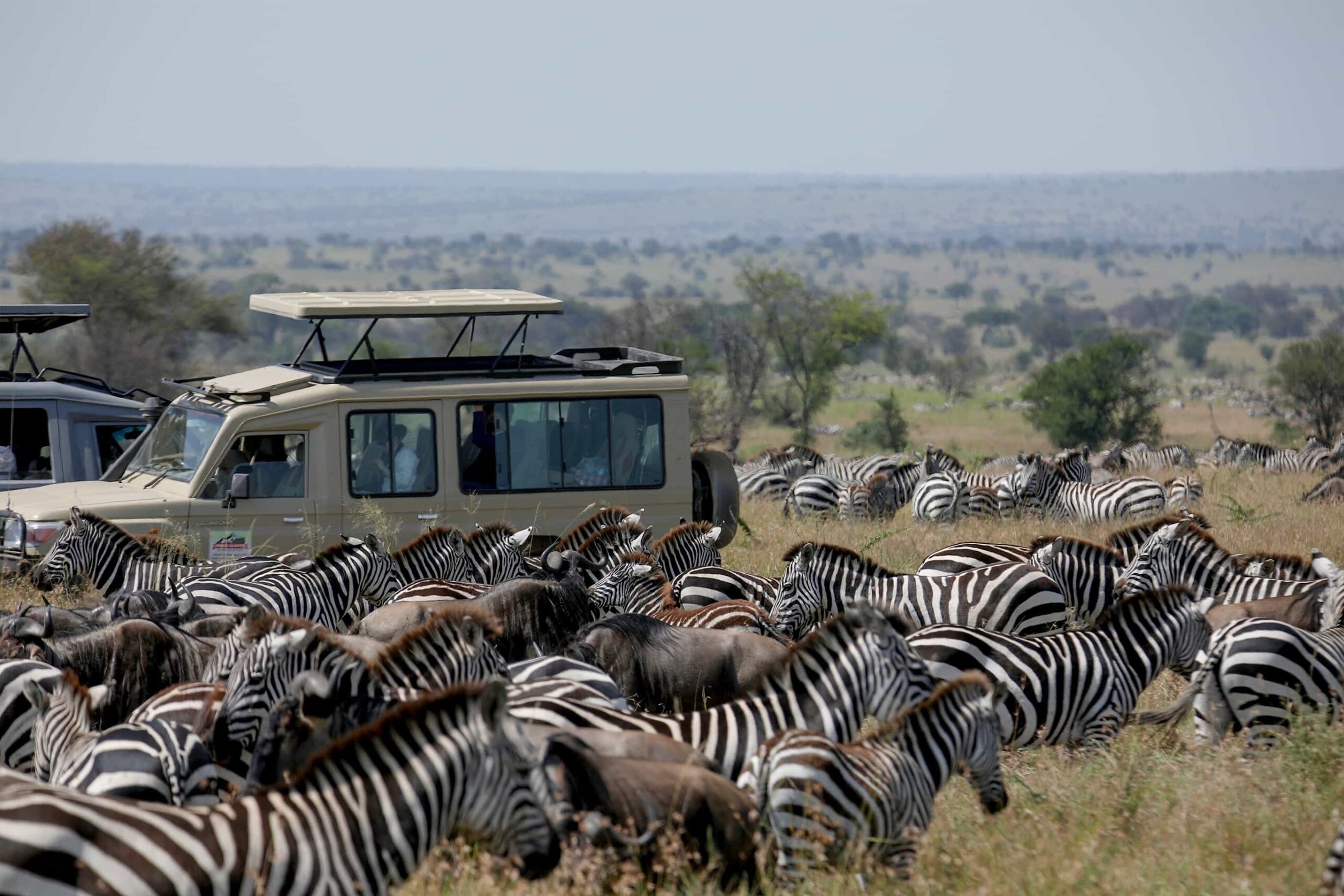
Small Group Safari vs Private Safari vs Big Bus Tour
Choosing the right safari style can make a significant difference to your experience in East Africa. The type of tour you select affects how much you spend, how you travel between destinations, how much time you have for wildlife viewing, and how much control you have over your daily schedule. Some travellers prefer the company of a small group, others want a private vehicle and a personalised itinerary, while some choose large coach tours to explore several destinations at a lower cost.
Small group safaris, private safaris, and big bus tours can all introduce visitors to East Africa’s wildlife, landscapes, cities, and cultural attractions. However, they are designed for different travel needs. A small group safari usually combines shared transport with a limited number of participants. A private safari provides a dedicated vehicle and guide for an individual, couple, family, or private party. A big bus tour generally uses a large coach to transport a bigger group along a scheduled route, often connecting cities, major attractions, and selected wildlife destinations.
These categories can overlap. Some operators describe a tour with a dozen passengers as a small group, while others use different limits. A private safari may use a large vehicle for a family or group of friends, and some coach tours include local guides or smaller vehicles for activities in specific destinations. Therefore, travellers should check the actual group size, vehicle type, itinerary, and included services rather than relying on the tour label alone.
East Africa offers several situations in which the differences become important. A journey through Kenya’s Maasai Mara, Tanzania’s Serengeti, Uganda’s gorilla trekking destinations, or Rwanda’s national parks may involve long road transfers, early morning departures, park entry arrangements, and accommodation in remote locations. The best tour style depends on the destinations you want to visit and the level of flexibility, comfort, and personal attention you expect.
What Is a Small Group Safari?
A small group safari brings a limited number of travellers together in one vehicle or on a shared itinerary. The exact number varies by operator, destination, and vehicle. Some tours may accommodate around four to six guests, while others may carry eight or more. Always confirm the maximum number of passengers and whether the guide or driver is counted separately.
The main attraction is the balance between cost and personal attention. Travellers share the cost of transport, guiding, and some logistical arrangements, making the experience more affordable than hiring a private vehicle in many circumstances. At the same time, a smaller group can be easier to manage than a large coach party, particularly during wildlife viewing and activities that require close coordination.
Small group safaris can be a good choice for solo travellers, couples, and people who enjoy meeting others. Sharing a vehicle creates opportunities to discuss wildlife sightings, exchange travel experiences, and enjoy meals or activities with fellow visitors. For someone travelling alone, joining a group can also reduce the expense of arranging transport independently.
The experience depends on the people in the group and the operator’s organisation. Travellers may have different interests, photography preferences, energy levels, and expectations about how long to spend at a sighting. A guide must balance these preferences while keeping the itinerary on schedule. If several passengers want to stop for photographs or spend additional time observing an animal, the group may need to agree on how long to remain.
Shared departure times can also reduce flexibility. You may need to leave the lodge when the group is ready rather than when you personally prefer. Some tours follow fixed routes and accommodation choices, leaving little room for spontaneous changes. Before booking, check whether the tour allows optional activities, how much free time is included, and what happens if you want to extend your stay.
For travellers who want a social experience without joining a very large group, a well-organised small group safari can offer a practical middle ground between affordability and comfort.
What Is a Private Safari?
A private safari is designed for one booking party, which may be a solo traveller, a couple, a family, or a group of friends. The vehicle and guide are reserved for that party rather than shared with unrelated guests. The itinerary can usually be adjusted to suit the travellers’ preferred dates, interests, accommodation standards, and pace.
The biggest advantage is control. If you want to leave early for a game drive, spend more time photographing elephants, take a longer lunch break, or change the route where practical, you can discuss the options directly with your guide. You do not need to coordinate every decision with other passengers.
Private safaris are especially useful for travellers with specific interests. A wildlife photographer may want to wait for better light, while a keen birder may prefer to spend extra time identifying species. Families may need more frequent breaks, and couples celebrating a special occasion may prefer a slower itinerary with more time at their lodge.
The cost is generally higher per person when only one or two travellers are paying for the vehicle and guide. However, the difference can become smaller when several family members or friends share the cost. A private safari for four or six people may offer reasonable value compared with booking individual places on separate activities.
Private does not necessarily mean luxury. You can arrange a private safari with budget accommodation, comfortable mid-range lodges, or high-end properties. The defining feature is exclusive use of the vehicle and guide, not the price of the accommodation.
Before booking, confirm exactly what is private. Some packages provide a dedicated vehicle for game drives but use shared transfers, scheduled boat trips, or group activities elsewhere. Understanding which parts of the journey are exclusive will help you set realistic expectations.
What Is a Big Bus Tour?
A big bus tour typically carries a larger number of travellers in a coach or full-size bus. These tours are common for sightseeing across cities, major attractions, and established travel routes. Depending on the operator, a tour may focus on one country or cover several destinations over a longer journey.
The main attraction is the ability to visit multiple places through a structured programme without arranging every transfer yourself. Accommodation, transport, selected meals, and guided sightseeing may be bundled into one package. Travellers follow a planned schedule and usually move between destinations together.
A big bus tour is not necessarily the same as a traditional safari. Large coaches are suitable for many paved highways and city transfers, but they are generally not the vehicle used for every wildlife-viewing activity. When a tour includes national parks, travellers may transfer to smaller four-wheel-drive safari vehicles or use another vehicle suited to the park’s roads and viewing requirements.
This distinction matters in East Africa, where some parks have rough tracks, uneven terrain, and routes that require suitable ground clearance. Before booking a large group tour that advertises wildlife viewing, check which vehicle will actually be used inside the park and how many passengers will share it.
Big bus tours can suit travellers who enjoy social experiences, prefer a fixed itinerary, and want to visit several attractions without making individual transport arrangements. They may also work well for city sightseeing, historical tours, cultural excursions, and journeys between major towns.
The disadvantages are the size of the group and the limited flexibility. Boarding, meal stops, hotel check-ins, and departure times can take longer when many people are involved. The itinerary must accommodate the group as a whole, so there may be little opportunity to spend extra time at a particular attraction.
For travellers whose main priority is wildlife viewing in remote areas, it is worth checking whether a big bus tour offers a genuine safari experience or primarily provides transport between destinations.
Small Group Safari vs Private Safari vs Big Bus Tour: The Main Differences
The most important differences are group size, vehicle type, cost, flexibility, and the amount of personal attention available during the journey.
A small group safari shares a vehicle and guide among a limited number of travellers. It normally follows a scheduled itinerary but offers a more intimate setting than a large coach tour. This can be a good compromise for people who want to manage their budget without sacrificing too much comfort.
A private safari gives one booking party exclusive use of the safari vehicle and guide. It provides the greatest control over daily timing and itinerary design, although changes remain subject to park rules, accommodation availability, driving distances, and activity schedules.
A big bus tour carries more people and generally follows a set route with scheduled stops. It can be practical for broad sightseeing and longer journeys between towns, but travellers should establish whether the wildlife activities use smaller safari vehicles.
| Feature | Small group safari | Private safari | Big bus tour |
|---|---|---|---|
| Group size | Limited group, often around 4 to 8 guests, depending on the operator | Your own booking party | Often a larger group, potentially 20 or more |
| Transport | Shared safari vehicle | Dedicated safari vehicle | Large coach for suitable routes, with other vehicles possible for park activities |
| Cost per person | Often moderate | Often higher for solo travellers and couples | Can be economical for broad sightseeing |
| Flexibility | Limited by the shared schedule | Highest level of control | Usually limited |
| Social experience | Good opportunity to meet other travellers | Mostly your own party and guide | Larger social setting |
| Wildlife viewing | Depends on vehicle capacity and guide | More control over stops and timing | May involve a separate safari vehicle |
| Best suited to | Solo travellers, couples, and budget-conscious visitors | Families, couples, photographers, and friends | City sightseeing and larger organised journeys |
These are general differences rather than universal rules. Operators use different vehicle capacities, pricing structures, and itineraries. A small group safari with eight passengers may feel very different from one with four, while a large bus tour may provide excellent organisation for the type of sightseeing it was designed to deliver.
Comparing the Cost of Each Tour Style
Price is often the first consideration when choosing between these options, but the advertised rate does not tell the whole story. The total cost depends on the destination, duration, accommodation, transport, park fees, permits, meals, and activities included.
Small group safaris can reduce the per-person cost of the vehicle and guide by sharing those expenses among several travellers. This can be particularly useful for solo visitors and couples who would otherwise pay for most of the operating costs of a private vehicle.
Private safaris may cost more per person when only one or two people are travelling. However, the price can become more competitive when a family or group of friends shares the vehicle. A private trip also allows you to choose where to spend more or less, subject to availability and the operator’s arrangements.
Big bus tours may offer attractive rates for travellers visiting several cities or major attractions. The larger group can help spread some transport and organisational costs. However, a low price may reflect a shorter itinerary, simpler accommodation, fewer included activities, or additional optional excursions that must be paid for separately.
The fairest comparison is to calculate the full cost of the experience you want. Include accommodation, meals, transport, park entrance fees, permits, game drives, transfers, and any activities that are essential to your trip. Check whether the quoted amount is per person, per room, or per vehicle.
For a wildlife-focused holiday, also consider the number of passengers sharing the safari vehicle. A cheaper tour may involve more people and less space, while a more expensive package may include additional activities or a smaller group. The best value depends on the experience delivered, not simply the lowest advertised price.
Comfort, Space and Vehicle Access
Vehicle comfort becomes particularly important on an East African safari because journeys between parks can take several hours. Travellers may spend time on highways, rural roads, and rough tracks before reaching a wildlife-viewing area. The vehicle’s condition, seating layout, luggage capacity, and viewing arrangements can affect the overall experience.
A small group safari generally offers a more manageable vehicle environment than a large coach, although the level of comfort depends on how many passengers are carried and how the seats are arranged. Ask whether every passenger has a window seat, whether the vehicle has a pop-up roof, and how luggage is stored.
A private safari gives your party more control over the space available within the vehicle. You can discuss seating arrangements and luggage requirements before departure. This can be useful for families with children, travellers carrying photography equipment, or visitors who prefer not to share their space with strangers.
A big bus tour may offer comfortable reclining seats, air conditioning, and generous space for longer highway journeys. However, those features do not necessarily make it suitable for wildlife viewing on rough park roads. The vehicle used for the actual game drive matters more than the size of the coach used to reach the destination.
If the tour changes vehicles inside a national park, ask how many passengers will be assigned to each safari vehicle. Confirm whether the smaller vehicles are included in the package or require an additional payment.
Wildlife Viewing and Photography
Wildlife viewing is one of the clearest reasons to compare safari styles carefully. Animals move freely, sightings can happen unexpectedly, and the time available at each encounter may influence what you see and photograph.
A private safari gives you more freedom to discuss viewing preferences with your guide. If a herd of elephants is moving across the plains or a leopard is resting in a tree, you can ask whether it is practical to remain longer. Your guide must still follow park regulations, respect wildlife, and make sensible decisions about time and safety, but there is no need to reach an agreement with unrelated passengers.
A small group safari can also provide excellent wildlife viewing. A knowledgeable guide and a well-designed itinerary are often more important than having a private vehicle. However, passengers may have different interests. Some might prefer photographing birds, while others want to focus on large mammals or continue to the next sighting.
A big bus tour may include wildlife activities, but the viewing experience depends on how these are organised. If the coach is used only for transfers, travellers may join smaller vehicles for game drives. If a tour does not include appropriate park vehicles or enough time for wildlife viewing, it may be better suited to general sightseeing than to a dedicated safari.
No tour style guarantees particular sightings. Wildlife activity varies with location, weather, season, and animal behaviour. A private vehicle provides greater control over the experience, but it cannot guarantee that you will see a lion, leopard, rhino, or other specific animal.
Flexibility and Daily Scheduling
The amount of flexibility you need should influence your decision as much as your budget. Some travellers are happy to follow a set schedule, while others prefer to decide what to do as each day develops.
Small group safaris usually have predetermined departure dates and a shared itinerary. This makes planning easier because accommodation and activities are arranged in advance. The trade-off is that changes must work for the group, and one passenger’s preference cannot always take priority.
Private safaris provide the greatest flexibility. You can often adjust departure times, choose preferred accommodation, request additional stops, or arrange a longer stay in a particular destination. Major changes still need to be planned realistically, especially where permits, park rules, long distances, or non-refundable bookings are involved.
Big bus tours generally follow the strictest timetable. The group may need to leave a hotel at a specific time, reach an attraction before a scheduled visit, and return to the coach by an agreed departure time. This structure helps keep a large itinerary running, but it may not suit travellers who dislike rushing or want to explore at their own pace.
Before booking any tour, review the daily schedule rather than looking only at the list of destinations. Find out how much time is allocated to each attraction, how long transfers are expected to take, and whether free time is included. A tour that visits fewer places at a comfortable pace may be more rewarding than one that tries to fit too much into each day.
Which Tour Style Is Best for Solo Travellers?
Solo travellers often compare these options because the cost of private transport can be difficult to justify for one person. A small group safari may provide a practical solution by sharing vehicle and guide expenses with other visitors.
The social side can also be appealing. Travelling with a small group gives you people to talk to during transfers, share wildlife sightings with, and meet at meals. Scheduled departures may also make it easier to plan a safari around international flights and other travel arrangements.
A big bus tour can suit solo visitors who enjoy larger groups and want to see several cities or attractions without organising the logistics themselves. However, it may not offer the same close wildlife-viewing experience as a specialist small group safari.
A private safari remains an option for solo travellers who prioritise privacy, photography, specialist interests, or complete control over their schedule. The higher per-person cost may be worthwhile for a trip built around particular goals.
Solo travellers should check whether accommodation is priced for single occupancy and whether a single-room supplement applies. Joining a group does not necessarily mean sharing a room with another guest.
Which Tour Style Is Best for Couples and Families?
Couples may prefer a private safari when privacy and flexibility are priorities. This is particularly relevant for honeymoons, anniversaries, or trips where both travellers have specific interests. A private guide can adapt the pace to the couple, and the itinerary can be planned around preferred lodges and activities.
A small group safari can be a better choice for couples who want to reduce costs or enjoy meeting other travellers. It may also be suitable for couples who are comfortable following a fixed schedule and do not need exclusive use of the vehicle.
Families should consider children’s ages, travel times, accommodation requirements, and the ability to take breaks. A private safari often makes these needs easier to manage because the itinerary can be adjusted to the family. Parents can discuss suitable activities, meal times, and rest periods with the operator.
Small group safaris may also work for families, particularly when the children are old enough to manage the shared schedule. However, travellers should check the tour’s age restrictions and whether the operator welcomes children on that particular departure.
Big bus tours can be convenient for family sightseeing between cities and established attractions, but parents should consider how long children will be expected to remain seated and how much walking or waiting the itinerary involves. For a holiday focused on wildlife in remote national parks, a dedicated safari vehicle may be more practical.
Choosing the Right Option for East African Destinations
The best format also depends on where you plan to go. East Africa includes major cities, coastal destinations, rural communities, savannah parks, tropical forests, and mountainous regions. Transport and activity requirements differ significantly between them.
In Kenya, a small group or private safari can work well for wildlife destinations such as the Maasai Mara, Amboseli, and Tsavo. A big bus tour may be suitable for a broader itinerary that combines Nairobi with major cultural or sightseeing stops, but the vehicle arrangements for game drives should be checked carefully.
In Tanzania, small group and private safaris are common options for travellers visiting the Serengeti, Ngorongoro Conservation Area, and Tarangire. Long distances and remote accommodation make the itinerary, guide, and vehicle particularly important. Travellers who want to focus on photography or follow a customised route may prefer a private safari.
In Uganda, a small group or private safari can be suitable for combining savannah wildlife viewing with chimpanzee tracking or gorilla trekking. Some activities require permits and specific arrival times, so travellers should confirm the arrangements before booking. A big bus may work for transfers or city sightseeing, but a purpose-suited vehicle is usually needed for the relevant park activities.
In Rwanda, private and small group arrangements can work well for visits to Volcanoes National Park, Akagera National Park, and Kigali’s cultural and historical attractions. The best choice depends on whether the trip focuses on primates, savannah wildlife, general sightseeing, or a combination of experiences.
For a multi-country journey, a mixed approach can be practical. You might join a small group for a wildlife circuit, book a private vehicle for a specialist activity, and use coach transport for suitable intercity routes. You do not have to use the same format for every part of your holiday.
Questions to Ask Before Booking
Before choosing a tour, ask for the maximum number of passengers and the exact vehicle used for each part of the itinerary. Confirm whether the advertised group size applies to the whole journey or only to certain activities.
Request a detailed list of inclusions and exclusions. Check accommodation, meals, park fees, permits, game drives, transfers, and any optional activities. Ask whether the itinerary is guaranteed to operate on your selected dates and what happens if a departure is cancelled or changed.
It is also worth checking the guide’s role, the luggage allowance, the expected daily driving times, and whether there is enough room for everyone to enjoy wildlife viewing comfortably. If you are considering a private safari, confirm which activities and transfers are exclusive to your party. If you are considering a big bus tour, establish whether wildlife viewing is a central part of the programme or one component of a broader sightseeing itinerary.
Finally, read the cancellation terms and payment schedule before committing. Make sure you understand the conditions for deposits, final payments, changes, and refunds. A clearly explained itinerary and transparent booking terms are important whichever tour style you choose.
Making the Final Choice
A small group safari is a strong option for travellers who want to share costs, meet other visitors, and enjoy a planned wildlife journey without joining a very large group. It often provides a useful balance between affordability, comfort, and personal attention.
A private safari is better suited to travellers who value control over their schedule, prefer exclusive use of a vehicle, or have specific needs that call for a personalised itinerary. It usually costs more for solo travellers and couples, but sharing the cost among family members or friends can improve its value.
A big bus tour works best when the priority is organised sightseeing, travel between major destinations, and a structured programme for a larger group. It can be convenient and economical, but travellers seeking an intensive wildlife experience should check how the tour handles game drives and transport inside national parks.
The most suitable choice is the one that matches your budget, travel pace, group size, and reason for visiting East Africa. Compare the actual services, vehicles, and itinerary rather than relying on the tour name alone.


No comment